RUSSIAN ARTISTS Stepanov Alexey Stepanovich (1858-1923)
RUSSIAN ARTISTS Stepanov Alexey Stepanovich (1858-1923)
Modest, delicate, kind A. S. Stepanov, "Stepochek", as everyone called him, was loved and esteemed by friends — S. V. Ivanov, N. P. Chekhov, the brothers S. A. and K. A. Korovin, I. I. Levitan, M. V. Nesterov — and by numerous students, among whom were P. D. Korin, A. A. Plastov, L. V. Turzhansky and others. After Stepanov's exhibition Korin said: "It was as if I had read Pushkin's poems. So simple, simple, and yet elevated... What can one say about him? He was an artist. That is all said. And everything in him was simple, without effects. He had a soul, and that is the most important thing. But alongside that, a high artistry, incomparable mastery. He sparkled in his great simplicity."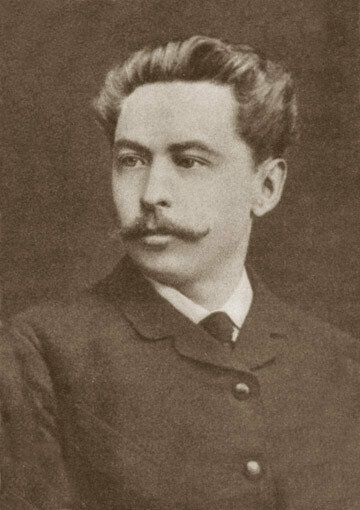
Aleksey Stepanovich Stepanov
Stepanov lost his parents at a very early age. From seven years old he was raised by a guardian, at whose insistence the young man in 1879 graduated from the Land Survey Institute in Moscow and acquired the profession of a surveyor.
However, he did not work in that profession, and in 1880 entered the Moscow School of Painting, Sculpture and Architecture (MUZHVZ). He studied in I. M. Pryanishnikov's class, was a successful student and in 1884 graduated from the school with a large silver medal.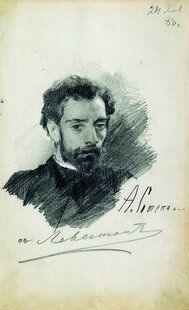
"Portrait of I. I. Levitan"
Paper, pencil. 21.5 x 13.4 cm
National Art Museum of the Republic of Belarus
In the second half of the 1880s Stepanov spent several summer seasons working together with I. I. Levitan — first near Zvenigorod, then on the Volga. Alongside Levitan he is considered one of the creators of the so-called mood landscape, when the artist not only seeks in nature a motif corresponding to his inner state but also psychologizes the landscape, projecting his own thoughts and feelings into it.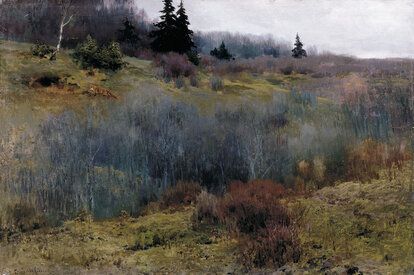
"Autumn"
Canvas, oil. 54 x 80 cm
Kirov Regional Vasnetsov Art Museum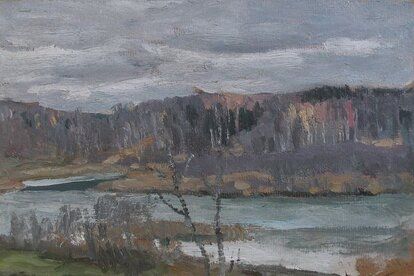
Autumn. 1896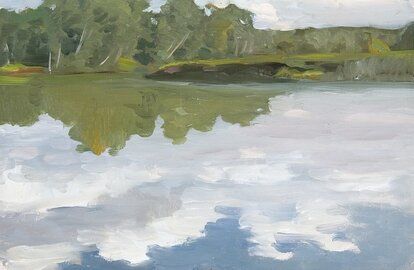
Lake Udomlya. 1912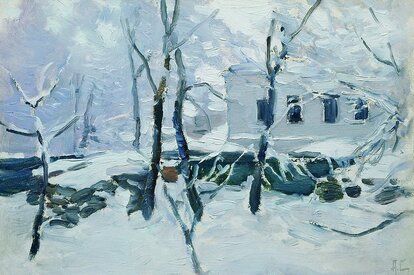
"Winter. Hoarfrost"
1900-1910
Canvas, oil
Memorial Museum-Estate of the Artist N. A. Yaroshenko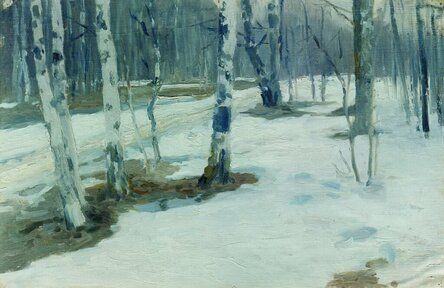
"Winter Landscape"
1910
Canvas, oil
Buryat Republican Art Museum named after Ts. S. Sampilov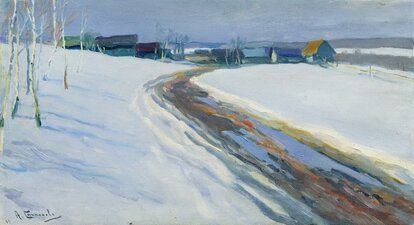
"March"
Canvas, oil
Nizhny Novgorod Art Museum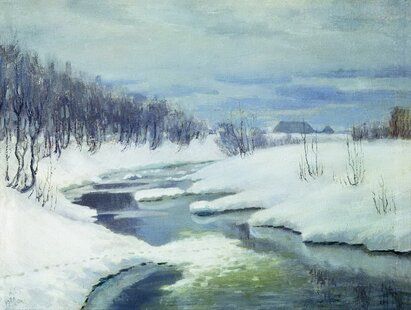
"Thaw"
1904
Canvas, oil. 58.3 x 79 cm
Khimki Picture Gallery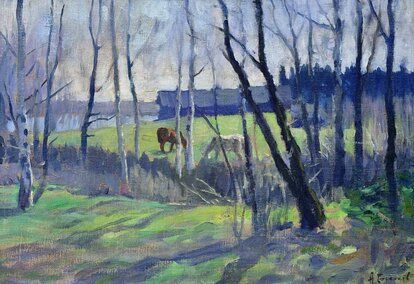
"Early Spring"
1900-1910
Canvas, oil
Volgograd Regional Museum of Fine Arts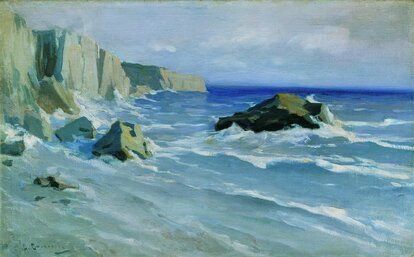
"The Sea"
1923
Canvas, oil
Ples State Historical-Architectural and Art Museum-Reserve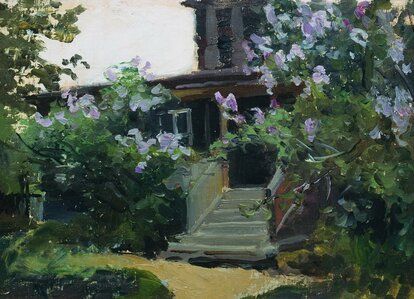
"Arbor under Flowers"
Study
Canvas, oil
Ples State Historical-Architectural and Art Museum-Reserve
In 1905 Stepanov was awarded the title of Academician of the Imperial Academy of Arts for the painting "Morning Greeting." The painting was exhibited at the 25th exhibition of the Peredvizhniki, the 24th exhibition of the Imperial Academy of Arts and in 1900 at the Exposition Universelle in Paris.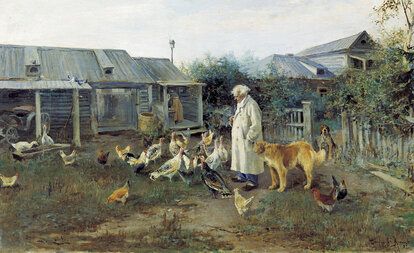
"Morning Greeting"
1897
Canvas, oil 61 x 99 cm
Pskov State United Historical-Architectural and Art Museum-Reserve
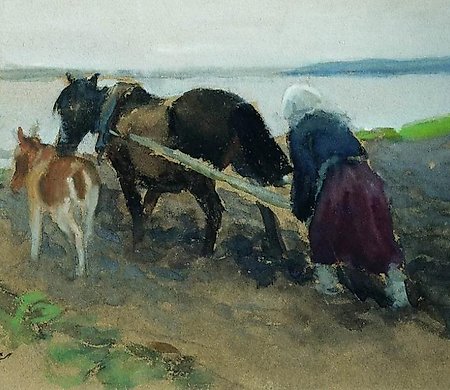
Stepanov's works are plein-air in character; they are painted broadly, sketchily, with a thin transparent stroke, very softly, using few colors ("Use fewer colors," he would later advise his students). Stepanov loved to depict a country road along which peasant horses pull sleighs or carts ("Gusek", 1910-15; "Along the Country Road in Winter", "At the Little Porch", both 1913-14; "They Left", 1914).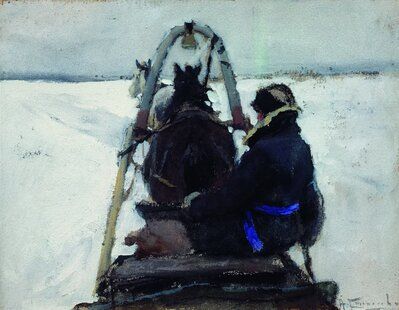
"Along the Winter Road"
Cardboard, watercolor
State Central Museum of Musical Culture named after M. I. Glinka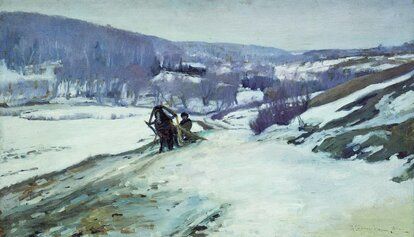
"Winter Landscape"
1910
Canvas, oil
State Tretyakov Gallery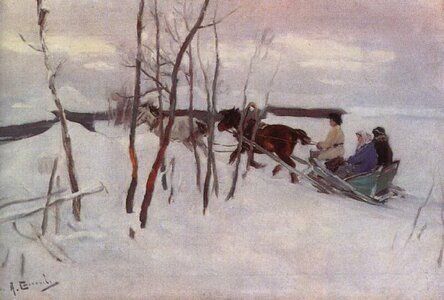
"In a Row"
1911-17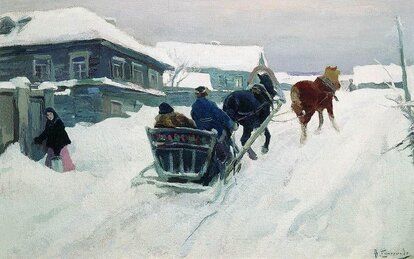
"Remote Province"
1900s
Canvas, oil. 62 x 97 cm
State Vladimir-Suzdal Historical-Architectural and Art Museum-Reserve
Each summer from 1906 to 1914 Stepanov lived in the estates Lubenkino, Garusovo and Berezhok of Vyshnevolotsky Uyezd (now Udomelsky district) of Tver Governorate. The house where Stepanov lived in Garusovo is depicted in the painting "They Left."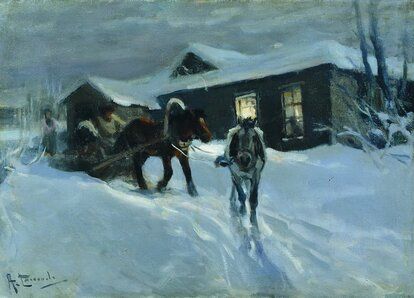
"They Left"
1914
Canvas, oil
State Tretyakov Gallery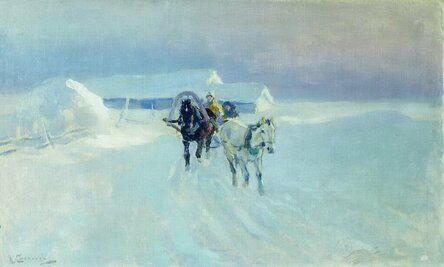
"In Winter"
1900-1910
Canvas, oil
Alupka State Palace and Park Museum-Reserve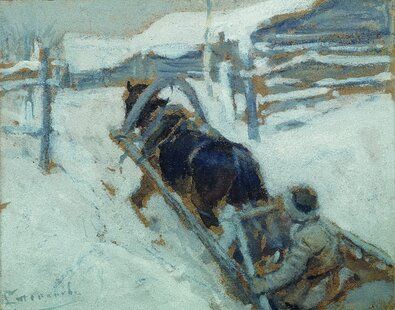
On the sleighs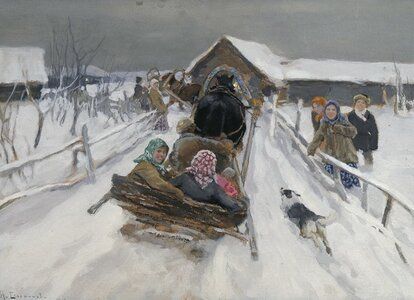
"Shrovetide Rides"
1910
Cardboard, tempera. 49 x 68 cm
Stavropol Regional Museum of Fine Arts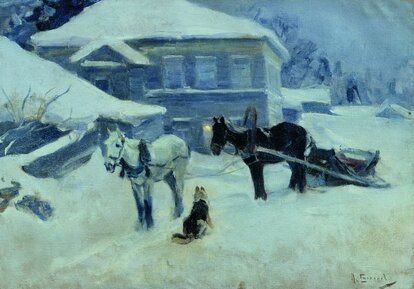
"Inn"
1912
Canvas, oil
North Ossetian Republican Art Museum named after M. S. Tuganov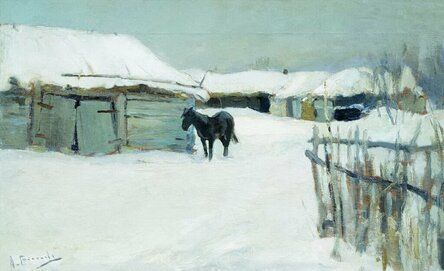
"Village in Winter"
1900-1910
Canvas, oil. 42 x 68 cm
Stavropol Regional Museum of Fine Arts
"At the Watering Place"
1916
Canvas, oil
Nizhny Novgorod Art Museum
He loved to depict peasant children watching the surrounding world — bare, poor, autumnal, but familiar and broad ("The Cranes Are Flying", 1891; "Children on the Brushwood", 1899; "At the Outskirts", 1915-16).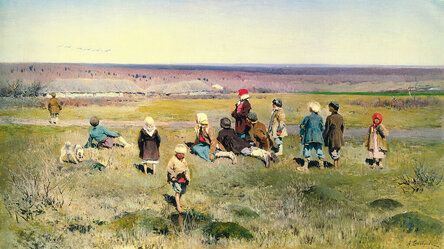
"The Cranes Are Flying"
1891
Canvas, oil 620 x 110 cm
State Tretyakov Gallery
Moscow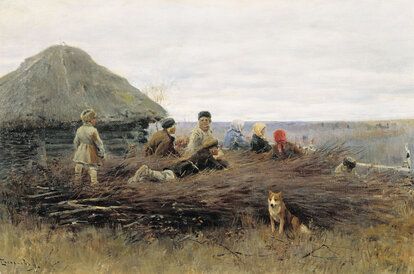
"Children on the Brushwood"
1899
Canvas, oil. 47.5 x 72 cm
Ulyanovsk Art Museum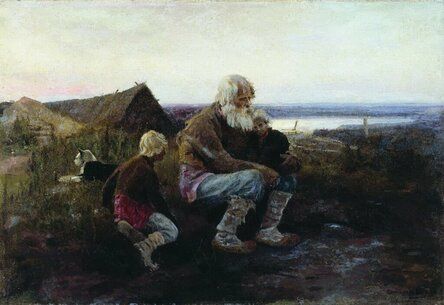
"Evening Dawn"
Canvas, oil
Krasnoyarsk Surikov Art Museum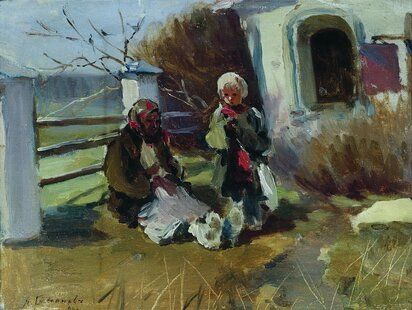
By the fence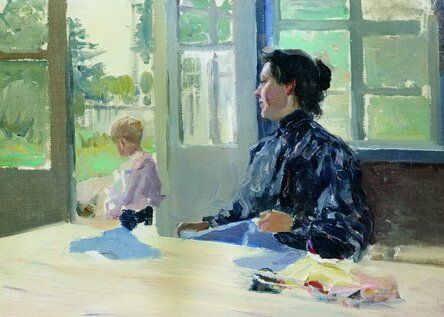
"On the Terrace"
1900-1910
Canvas, oil
Nizhny Novgorod Art Museum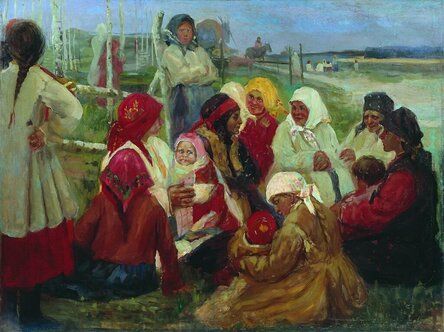
Conversation with the Godmother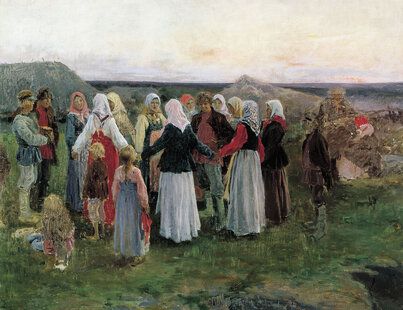
"Round Dance"
Canvas, oil
Buryat Republican Art Museum named after Ts. S. Sampilov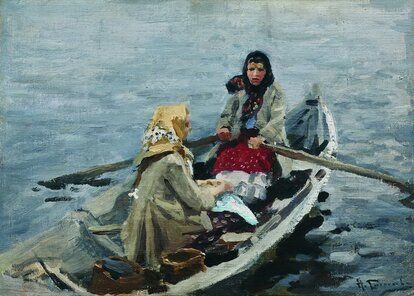
"In the Boat"
1900-1910
Canvas, oil
Irkutsk Regional Art Museum named after V. P. Sukachev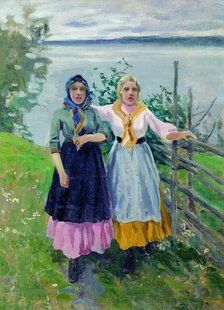
"Female Friends"
Canvas, oil
Tver Regional Picture Gallery
A trip to Europe, and specifically the painting of the French Impressionists, had a certain influence on the artist's work, although contemporaries denied it. As a result of the trip Stepanov painted "Washerwomen in Vichy."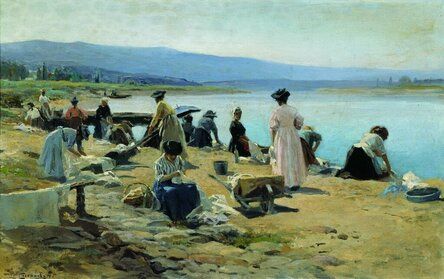
"Washerwomen in Vichy"
1895
Canvas, oil. 41 x 55.5 cm
State Tretyakov Gallery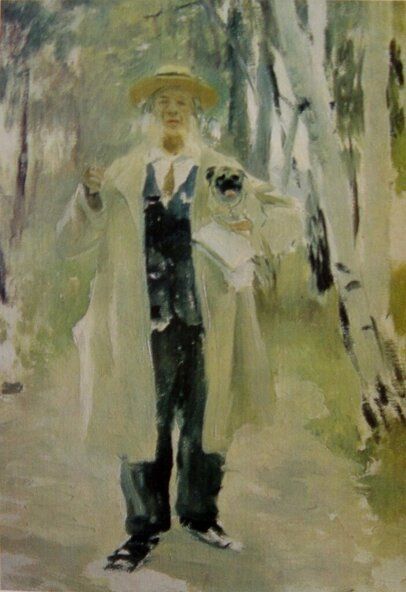
Old Alley
He enthusiastically painted hunting scenes ("After the Hunt. Return", 1907; "Killed Moose", 1900-10; "With Hounds", 1910s; "They Saw", 1917).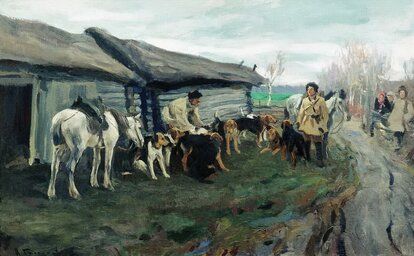
"Gathering for the Hunt"
1900s
Canvas, oil
Saratov State Art Museum named after A. N. Radishchev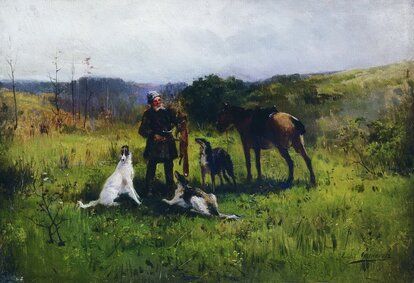
"Hunt"
1885
Canvas, oil
Memorial Museum-Estate of the Artist N. A. Yaroshenko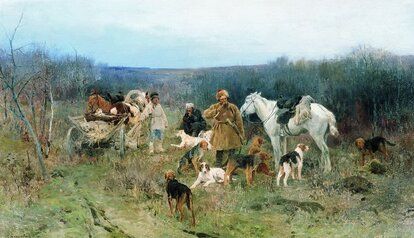
"After the Hunt"
1894
Canvas, oil 58.5 x 100.3 cm
State Museum of Fine Arts of the Republic of Tatarstan
Kazan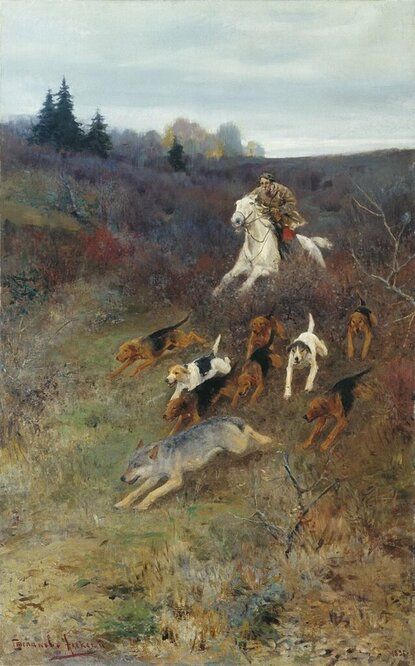
"Hunting the Wolf with Hounds"
1900-1910
Canvas, oil. 122.5 x 76 cm
Tyumen Museum of Fine Arts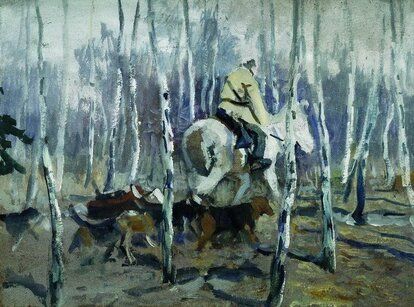
With hounds on the hunt. 1900-1910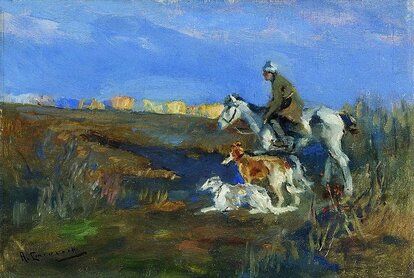
"Hunting with Greyhounds"
Study
Plywood, oil. 36 x 53 cm
Irkutsk Regional Art Museum named after V. P. Sukachev
Stepanov loved animals and possessed a rare ability to convey their habits and even their psychology ("Moose", 1889; "On the Hunt", 1909; "Moose and Laikas", 1910; "Wolves at Night", "Wolves by the Hedge", both 1910s; "Waiting for Dinner", 1910).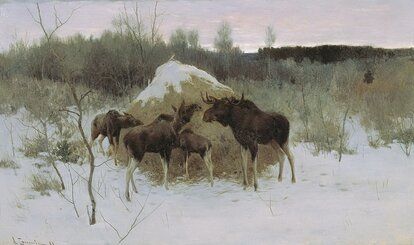
"Moose"
1889
Canvas, oil. 47.8 x 80.8 cm
State Tretyakov Gallery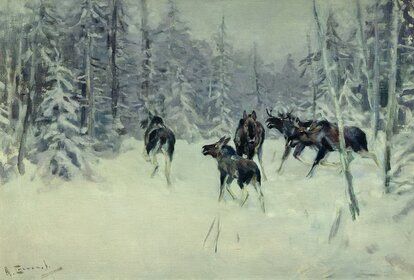
"Moose"
1919
Canvas, oil
North Ossetian Republican Art Museum named after M. S. Tuganov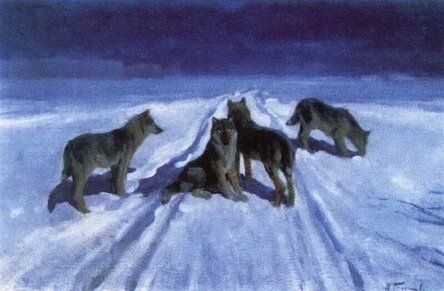
"Wolves at Night"
1910s.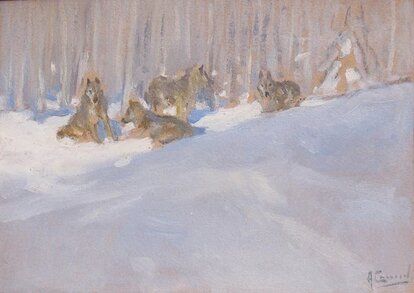
Wolves. 1912-1915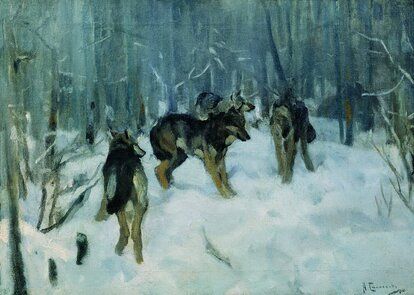
"Wolves in the Winter Forest"
1900-1910
Canvas, oil
State Tretyakov Gallery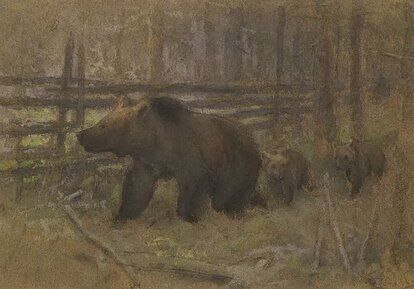
"She-Bear with Cubs"
Colored paper, gouache 23 x 33
Private collection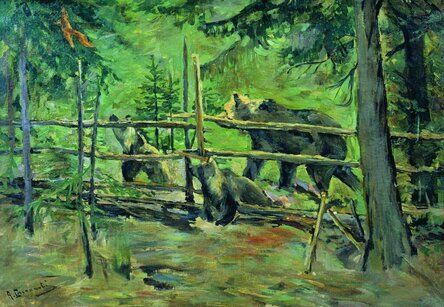
"She-Bear with Cubs"
1919
Canvas, oil
Nizhny Tagil Museum of Fine Arts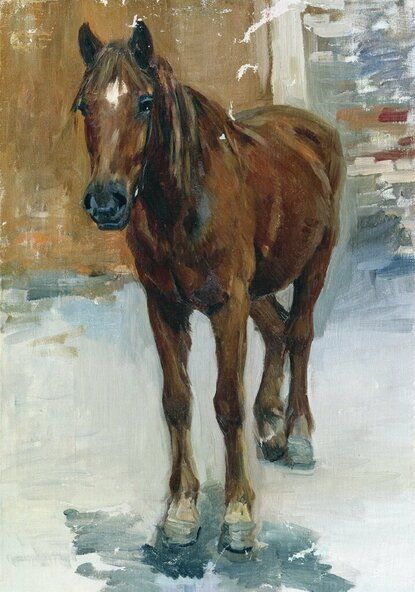
"Horse"
1911-1920
Canvas, oil
Nizhny Novgorod Art Museum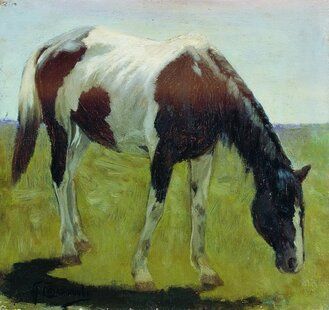
"Little Horse"
1900-1910
Canvas, oil
Nizhny Novgorod Art Museum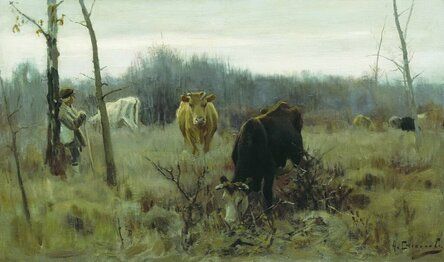
"At Pasture"
Canvas, oil
National Art Museum of the Republic of Belarus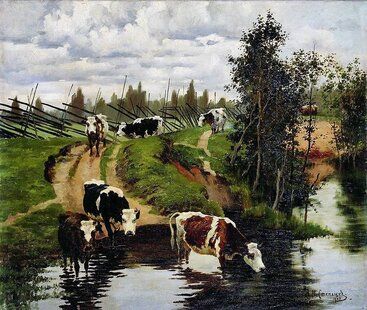
"Cows at the Watering Place"
1908
Canvas, oil. 67 x 80 cm
Sevastopol Art Museum named after P. M. Kroshitsky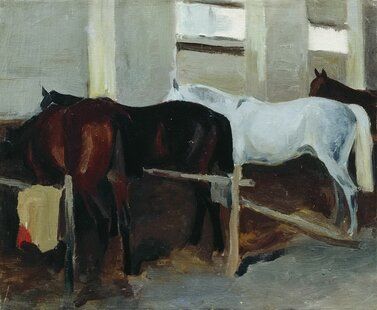
"Stall"
1910s
Canvas, oil
Ples State Historical-Architectural and Art Museum-Reserve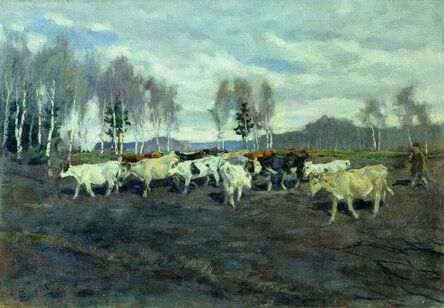
"Herd"
1910s
Canvas, oil
Taganrog Picture Gallery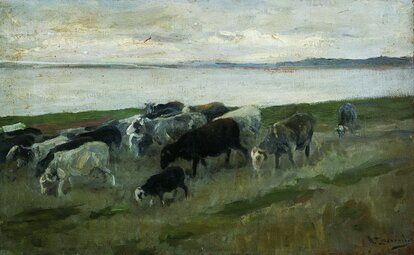
"Flock of Sheep"
1900s
Canvas, oil
Dagestan Museum of Fine Arts named after P. S. Gamzatova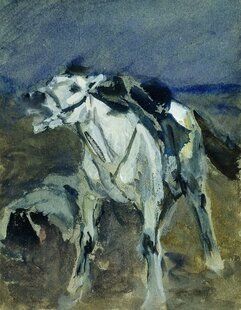
"The Killed"
1911-1920
Study
Paper, watercolor
Memorial Museum-Estate of the Artist N. A. Yaroshenko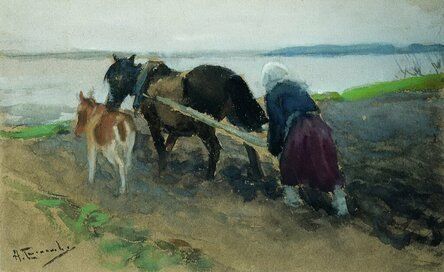
On the Arable Field. 1909 - 1911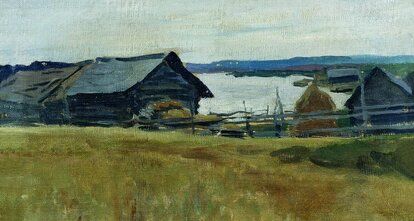
"At the Outskirts"
1914
Canvas, oil
Sumy Art Museum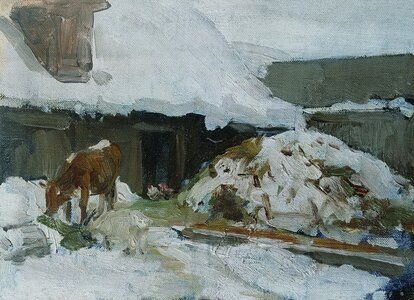
"Study with a Cow"
Study
Canvas, oil
Novokuznetsk Art Museum
The genre in which the artist preferred to work can be called landscape-animal painting. M. V. Nesterov considered Stepanov the best animal painter after V. A. Serov. Serov also highly valued this gift of the artist, and therefore insisted on inviting Stepanov as a teacher to the Moscow School of Painting, Sculpture and Architecture.
For about twenty years (1899-1918) Stepanov headed there the "animal class." His students loved him to adoration. Very little is known about the artist's personal life — shortly before his death he destroyed his archive. But he is fully present in his paintings.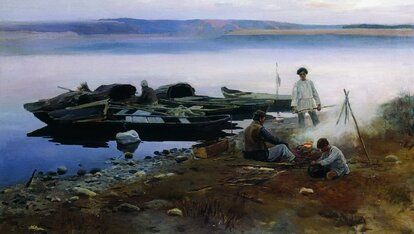
"On the Volga"
1897
Canvas, oil. 55 x 133 cm
Samara Art Museum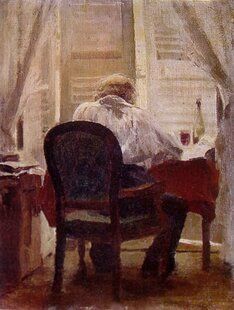
At Work. 1895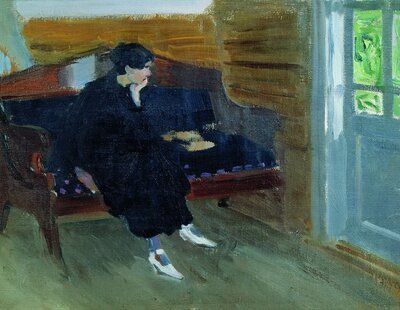
Woman on the Sofa. 1912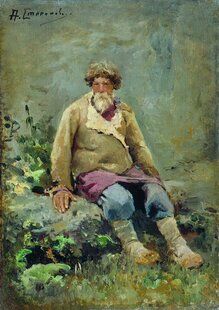
"Peasant"
Circa 1890
Canvas, oil
Ples State Historical-Architectural and Art Museum-Reserve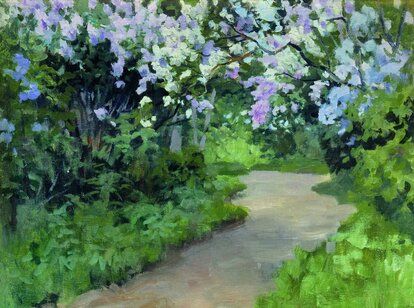
"Lilac Alley"
1900-1910
Canvas, oil
State Literary Museum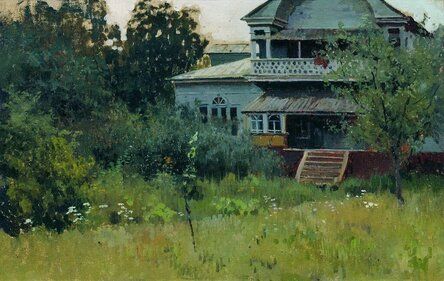
Estate in Summer. 1882
"Estate in Summer"
1882
Canvas, oil
State Tretyakov Gallery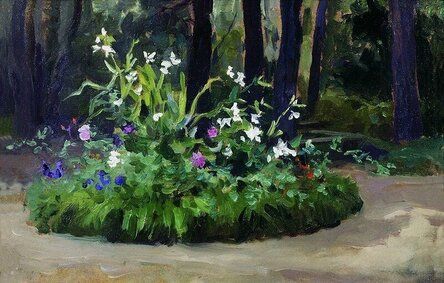
"Flowerbed in the Park"
Cardboard, oil. 23.3 x 33.7 cm
Khimki Picture Gallery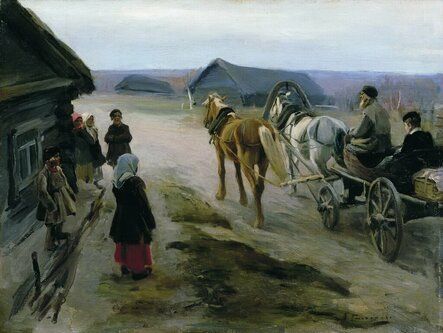
"Arrival of the Teacher"
1889
Canvas, oil. 58.5 x 79 cm
Chuvash State Art Museum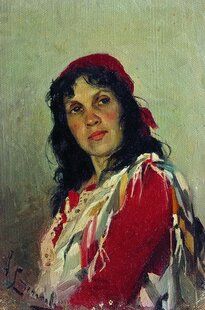
"Portrait of S. P. Kuvshinnikova"
1888-1889
Canvas, oil
State Literary Museum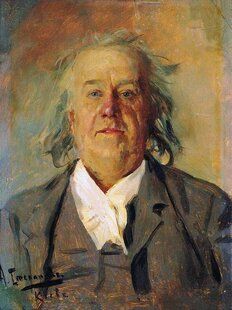
"Portrait of Medyntsev"
Canvas, oil
Tver Regional Picture Gallery
Nikolay Vasilievich Medyntsev — merchant, collector, father-in-law of the artist A. S. Stepanov (1902)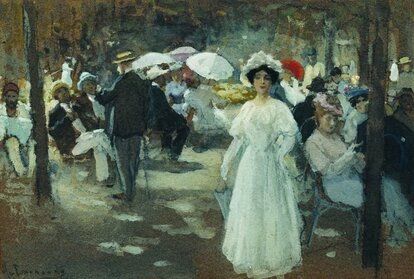
"Boulevard"
1919
Paper, watercolor
National Art Museum of the Republic of Belarus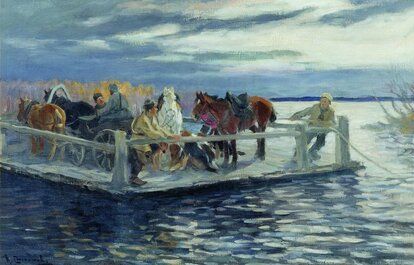
"Ferry"
1919
Canvas, oil
Rostov Regional Museum of Fine Arts
Ballet. 1908-1909
Particularly interesting is Stepanov's gouache "Grand Opera", executed, at first glance, in a manner so evidently and creatively inspired by the Impressionists that it could lead even major specialists in late 19th-century French art to make an attributional mistake. In "Grand Opera" (c. 1922), with free brushstrokes that are indeterminate and at the same time deep, though muted in color, with trembling, indistinct yet characteristic silhouettes of figures in the dim auditorium and the vaporous white shadows of ballerinas drifting across the brightly lit stage, Stepanov comes so close to Degas that many attributed this small study either to Degas himself or at least to one of the artists of his circle. M. A. Dobrov testified to Stepanov's admiration for Degas' work and his fascination with Degas' masterful drawing. But it would be wrong to see this study as blind imitation of French Impressionism. It is an inspired, excited, but essentially practical exercise, caused by the artist's characteristic desire to study until the end of his days. Deeply and truly what stirred Stepanov was only the Russian theme.
One should heed the statements of Stepanov's pupils denying the presence of Impressionism in his work (A. P. Panfilov, V. A. Filippov, B. N. Yakovlev and others).
There is a profound difference between the painting of the Impressionists and Stepanov's painting, rooted in the very principle of their art. The Impressionist masterfully conveys an instantaneous impression. But, faithful to the moment, his work loses something of the permanent that is present in every phenomenon, in every object.
Stepanov sought to capture the essential, precisely what gives tone and character to a phenomenon, discarding the unnecessary and probing to the very core of the subject. Behind his light, quick, airy painting there is much skill but also much labor.
"This is not Impressionism," says A. P. Panfilov. "He took gently, but thoroughly." Hence the fur is always "visible" in his animals, though it is hard to imagine anything further from naturalism than Stepanov's art.
Years of persistent work, thousands of field observations, painstaking study of animal anatomy and, along with all this, mastery in artistic practice of all painting materials — paints, solvents, canvas, cardboard — all this underlies Stepanov's method.
That is why he did not allow his students to imitate him. He knew that such imitation could only be superficial and harmful. He taught them to see, to choose the main thing, to remember; he taught them to train the eye to distinguish the finest tonal shades.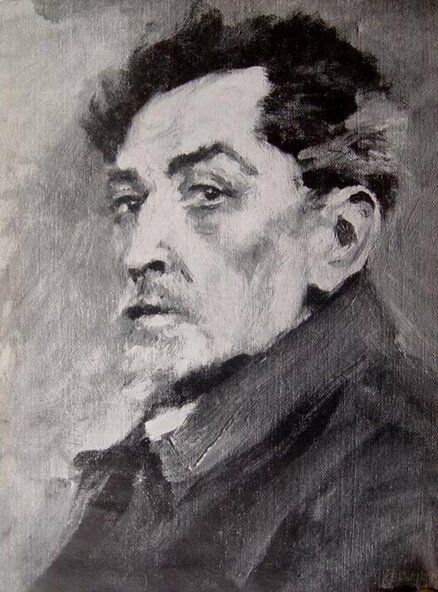
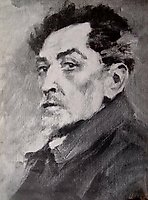
Self-portrait. 1922
In 1920 Stepanov became seriously ill, but continued to work. One of Stepanov's last works, "The Swing" (1923), was acquired for the Carnegie Institute's collection. Alexey Stepanovich Stepanov died in 1923 and was buried at the Vagankovo Cemetery.