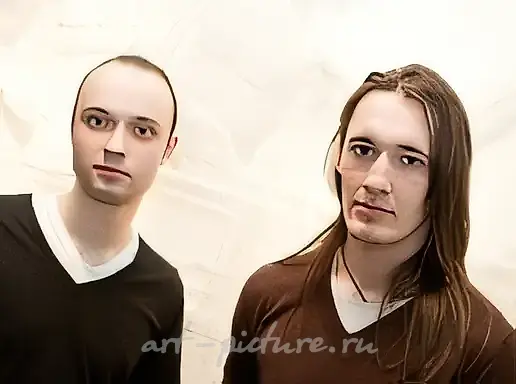
Andrey Blokhin
Born in 1987 году in Krasnodar, Russia.
Graduated from the liceum of Academy of industrial art in Krasnodar.
Georgiy Kuznetsov
Born in 1985 in Stavropol.
Graduated from Stavropol art college.
Andrey Blokhin
Some personal shows
2010 Reverse, M&J Guelman, Moscow
2008 Recycle project (installations, videoart). М`ARS gallery, Moscow, Russia
2007 Snow (together with Georgy Kuznetsov), Krasnodar, Russia
2006 Bird Flue H5N1, Krasnodar, Russia
Some group shows
2008 RUSSIAN POVERA. A SERGEY GORDEEV PROJECT,
RIVER STATION HALL, Perm, Russia
Young art session, S.-Petersburg, Russia
20th anniversary of M`ARS gallery, Moscow, Russia
"Art-Moscow", International art fair, CHA, Moscow, Russia
2007 M`ars Field. 2d international youth project, M`ARS, Moscow, Russia
"Art-Moscow", International art fair, CHA, Moscow, Russia
Synthetic project (together with Georgiy Kuznetsov), Kovalenko Krasnodar Regional Museum of Arts, Krasnodar, Russia
2006 Young palette. Central exhibition hall, Krasnodar, Russia
Solar square. CHA, Moscow, Russia
VI International festival of experimental art of installation and performance, Central exhibition hall Manege, S.-Petersburg, Russia г
Architext. Central exhibition hall, Krasnodar, Russia
2004 - 2005 participated in regional exhibitions of young artists
Georgiy Kuznetsov
Some personal shows
2010 Reverse, M&J Guelman, Moscow
2008 Recycle project (installations, videoart). М`ARS gallery, Moscow, Russia
2007 Snow (together with Georgy Kuznetsov), Krasnodar, Russia
2006 Personal show of graphical design and painting. Academy of Industrial Arts, Krasnodar, Russia
Some group shows
2008 RUSSIAN POVERA. A SERGEY GORDEEV PROJECT,
RIVER STATION HALL, Perm, Russia
Young art session, S.-Petersburg, Russia
20th anniversary of M`ARS gallery, Moscow, Russia
"Art-Moscow", International art fair, CHA, Moscow, Russia
2007 M`ars Field. 2d international youth project, M`ARS, Moscow, Russia
"Art-Moscow", International art fair, CHA, Moscow, Russia
Synthetic project (together with Georgiy Kuznetsov), Kovalenko Krasnodar Regional Museum of Arts, Krasnodar, Russia
2006 Young palette. Central exhibition hall, Krasnodar, Russia
Solar square. CHA, Moscow, Russia
VI International festival of experimental art of installation and performance, Central exhibition hall Manege, S.-Petersburg, Russia г
Architext. Central exhibition hall, Krasnodar, Russia
2004 - 2005 participated in regional exhibitions of young artists
The Recycle group is among those contemporary artists who do not announce their position too noisily, and, instead,
prefer not so much to uncover problems or provoke confrontation as to look for compromises and the means of making
peace between incompatible and competing aspects of the modern world – a world, of course, made up first and foremost
of concepts and images, which are the traditional territory of artists. Recycle`s approach, however, is less akin to
the work done by negotiators, lawyers, or psychologists and resembles more that of computer specialists. Like them,
members of Recycle concertedly dig through various cultural and visual "software," which has managed to grow into a
thick layer on the hardware of collective consciousness, and try to identify conflicting "programs" in order to force
them not to interfere with each other.
The most obvious conflict identified in the artists` new project, Reverse, has already been thoroughly explored by
contemporary art: it is the clash of the images and stories of classical art with the reality of contemporary life.
It is commonly thought that traditional art, which is familiar through illustrations if not through museum exposure,
is more accessible to the common man than the experiments of contemporary art. History, however, has by now also
absorbed the polemical statements of avant-garde artists. "The Academy and Pushkin are more inscrutable than hieroglyphics",
wrote the Russian Futurists in 1912 when they authored the manifesto "A Slap in the Face of Public Taste."
In its new project, Recycle does not really try to translate the "hieroglyphics" of classical art, but, rather,
to find new uses for them – i.e. recycle them, having looked at them from another side, from that very reverse side
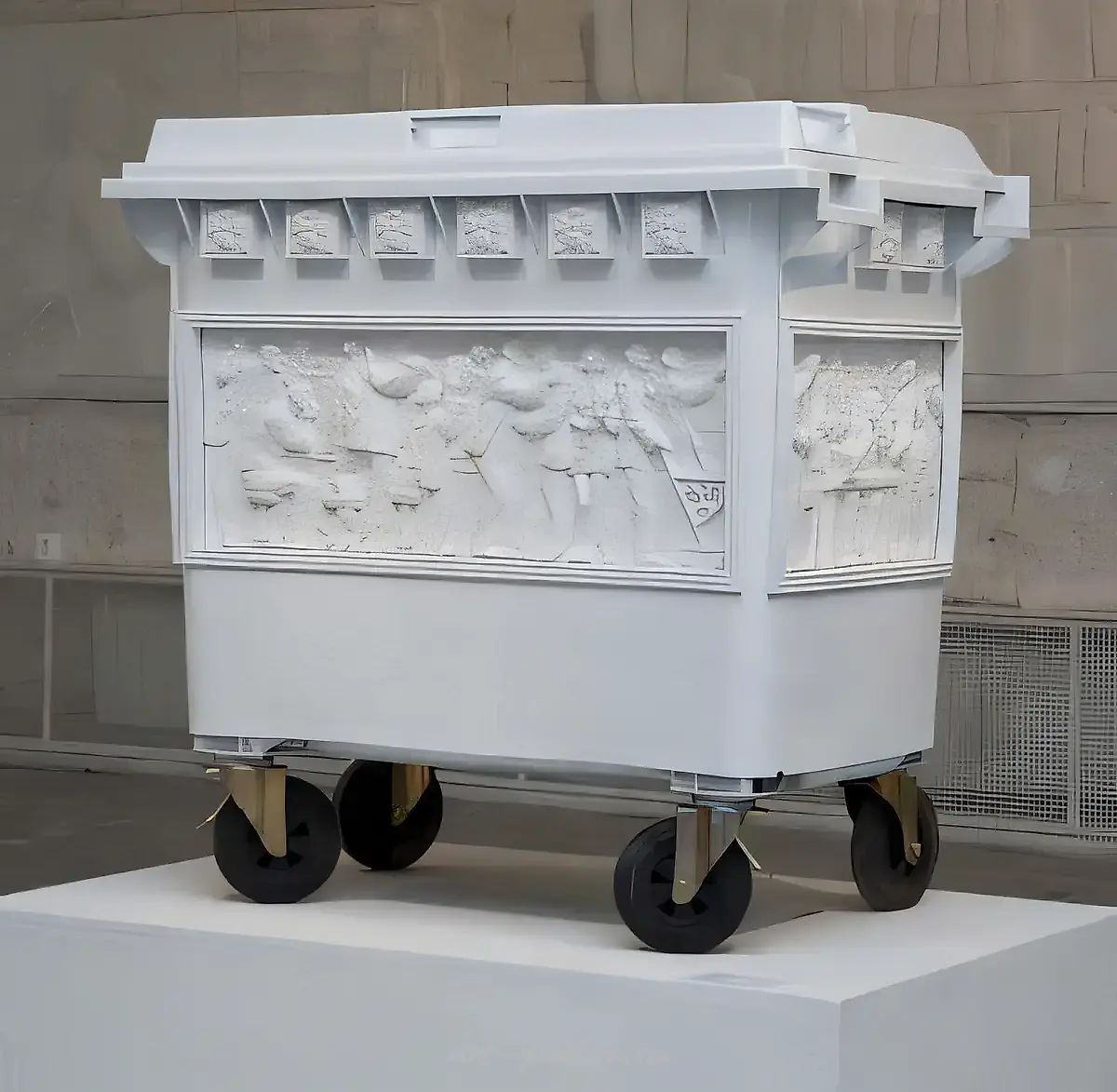
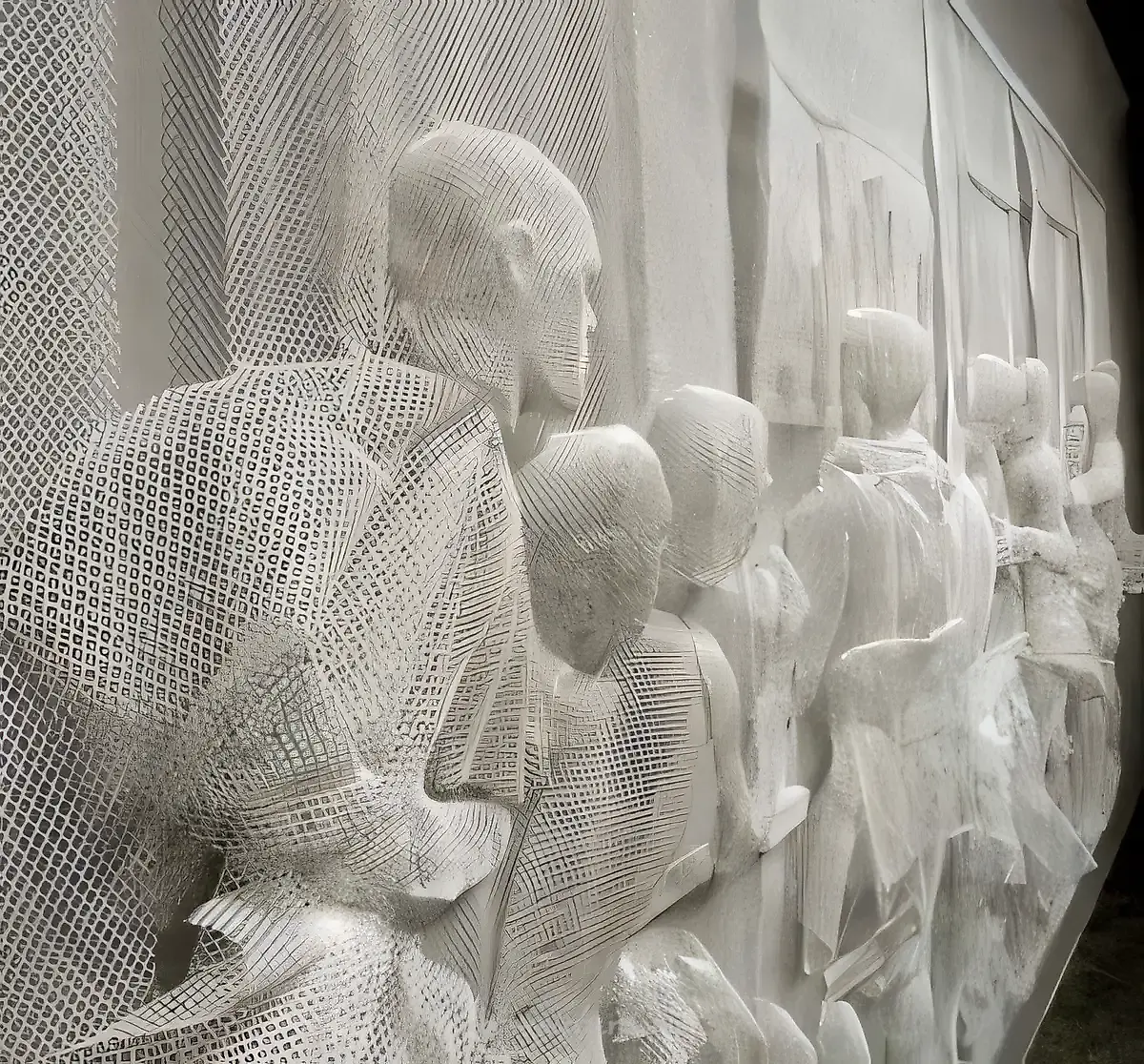
which points the classics in the direction of the present rather than the past. Thus, they see in a sarcophagus a trash
can, which immortalizes the paper battles of an office warrior; in The Last Supper, a tense business meeting; and propose
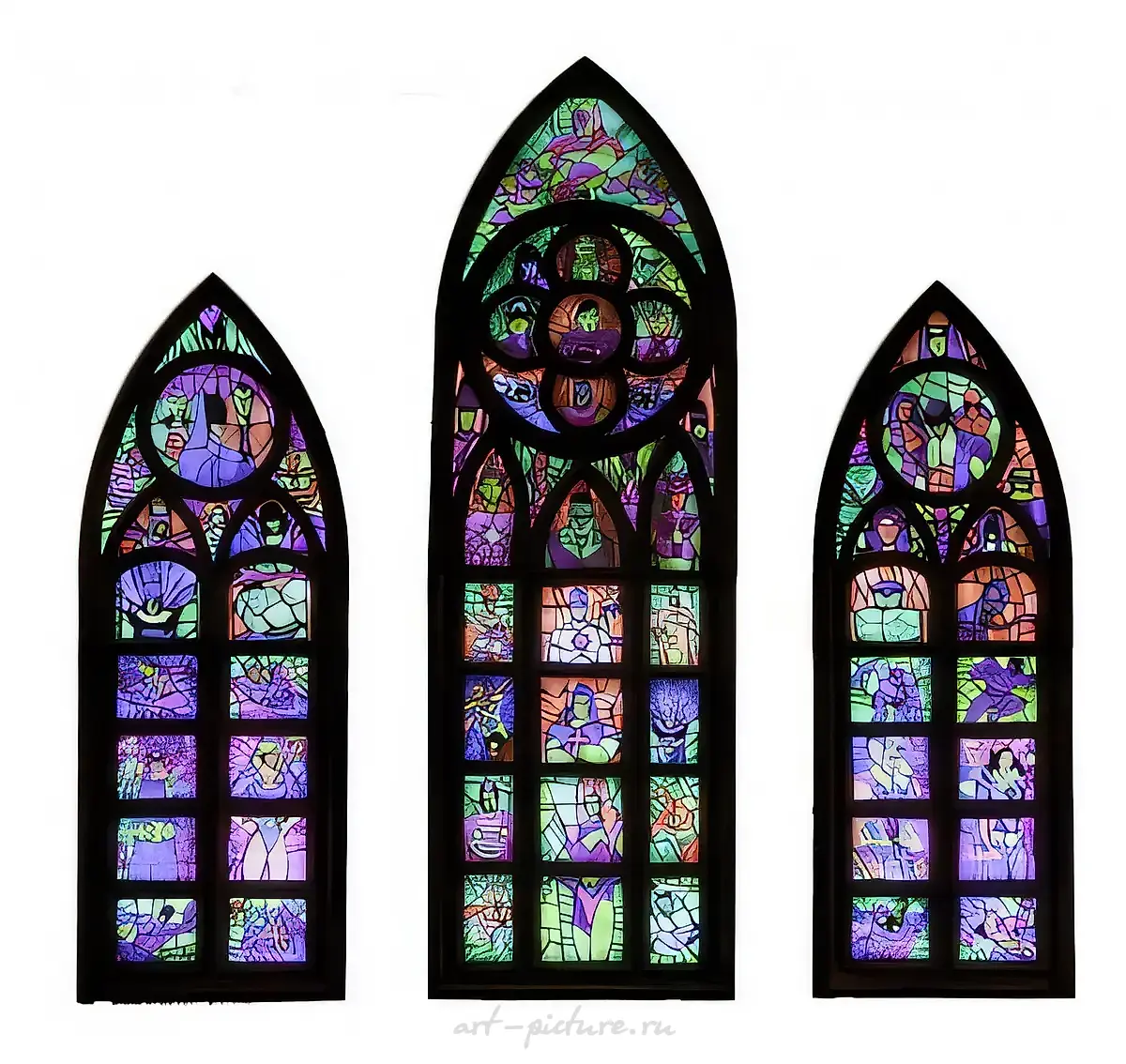
that the feats of modern-day "defenders of the faith" – comic book superheroes – are an ideal subject for stained glass
windows. Though it would seem that Recycle takes as its point of departure not so much contemporary subject matter as
contemporary materials. Plastics are hardly suitable for the "eternal," which is meant to accumulate the passing centuries;
their destiny, rather, is to be unchangeable in the same way as canned or frozen food.
The conflict of the classical with the contemporary, however, is only the first of the ones Recycle tries to reconcile,
and not even the most difficult one at that – if anything has been developed well in contemporary art, it`s the
technologies for solving those kinds of problems. What is much harder to do is reconcile the Western European artistic
tradition with Russia`s domestic realities. Recycle is obviously made up of "Western" artists, oriented towards European
and American contemporary art. And so Reverse, too, relies exclusively on the European classical tradition
(even the sarcophagus here is an ancient Greco-Roman rather than Egyptian one) and European contemporaneity;
the new project reminds one, for example, of Wim Delvoye, with his Gothic escalators, Baroque cement mixers, and
football goalposts enclosed in stained glass. The Belgian artist, however, worked with his own, i.e. European, classical
tradition, whereas our compatriots in Recycle are forced to work with imported material – so that their contemporaneity
turns out to be quite globalized, made up of nothing but offices and consumer culture. Their work, aimed at removing
conflicts between programs, succeeds too well; at the exhibition, one involuntarily feels happy that the world of
contemporary man is much more peaceful, safe, and bloodless than then one captured by classical art. For contemporary
collisions, the language of old dramas is useless anyway – one could hardly make a pseudo-antique sarcophagus with bas
reliefs representing battle scenes from modern-day hot spots.
Irina Kulik
Translation: Ksenya Gurshtein