Rybakov Nikolai Iosifovich
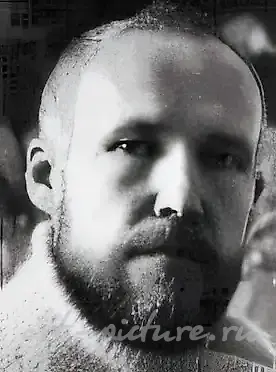
Born in 1947 in Transbaikalia.
From 1968 to 1972, he studied at the V.I. Surikov Krasnoyarsk Art College.
Works in collections
His works are in the Novokuznetsk Museum of Fine Arts, the Krasnoyarsk Regional Art Gallery, and in the collections of the 'M'ARS' and 'Art Modern' galleries in Moscow.
Exhibitions and auctions
1984 Report Exhibition of Graphics. Krasnoyarsk. Russia;
1986 Solo Graphics Exhibition. Norilsk. Russia;
1988 Solo Graphics Exhibition. Tbilisi;
1988 Solo Painting Exhibition. Krasnoyarsk. Russia;
1990 Solo Painting Exhibition. Moscow;
1990 Group Graphics Exhibition. Moscow;
1990 Group Exhibition 'Siberian Salon'. Moscow;
1990 London-90. International Contemporary Art Fair. UK;
1990 ART Los Angeles-90. Fifth International Contemporary Art Fair. USA;
1991 ART MIF 2. Moscow International Art Fair. Central Exhibition Hall 'Manege'. Moscow;
1991 Golden Brush - I. Moscow;
1991 ART London-91. Sixth International Contemporary Art Fair. UK;
1992 Solo Exhibition. Central House of Artists. Moscow;
1992 Golden Brush - II. Moscow;
1992 Tokyo-90. International Contemporary Art Fair. Japan;
1993 Solo Exhibition. Museum of New History. Ljubljana. Yugoslavia;
1993 Solo Exhibition. 'M'ARS' Gallery. Moscow.
Critic
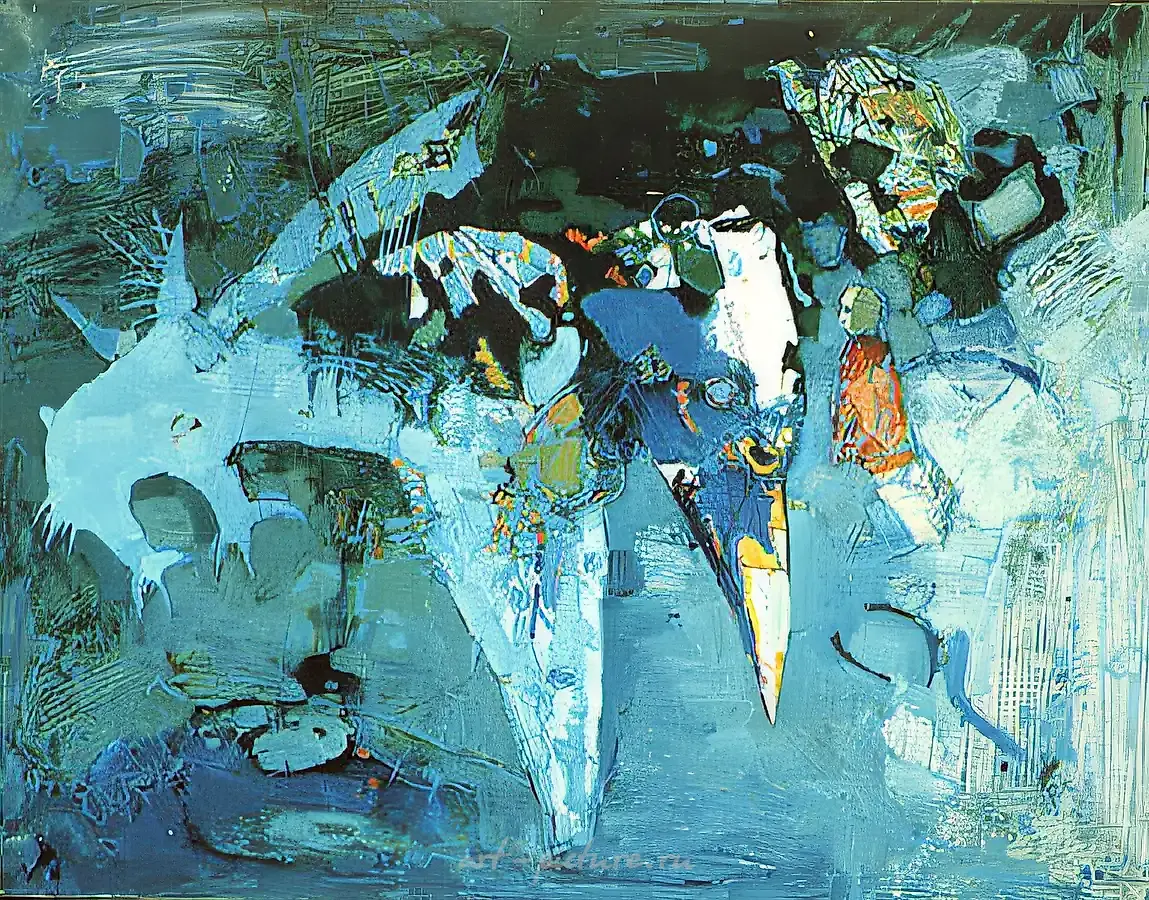
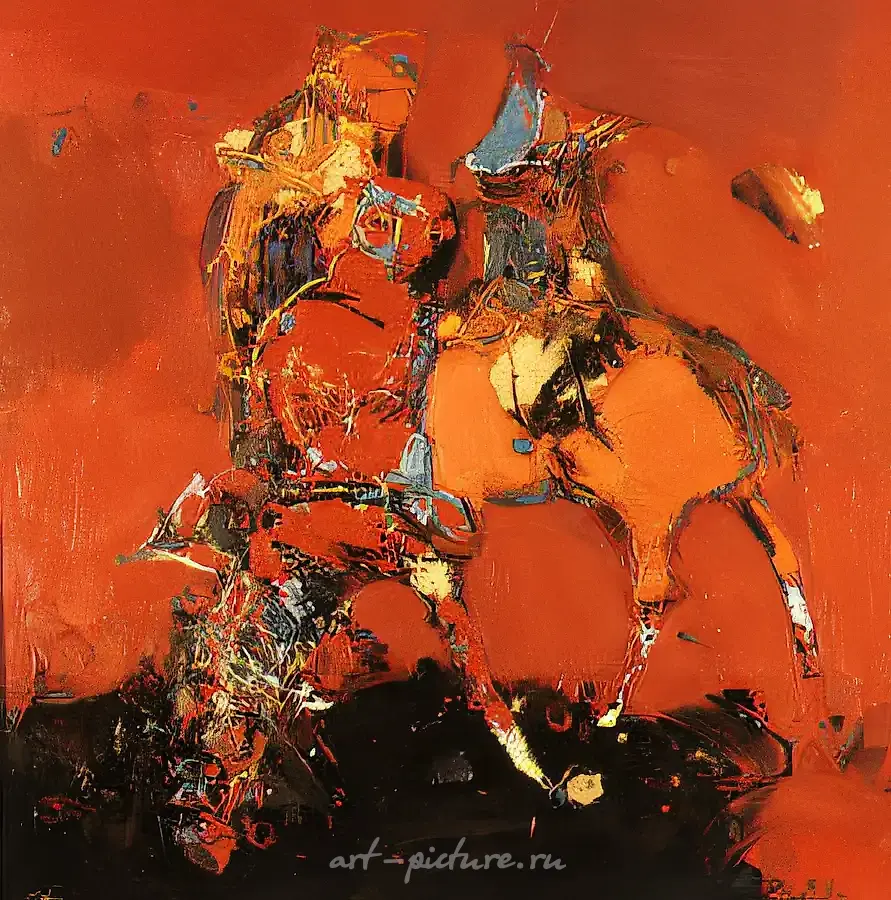
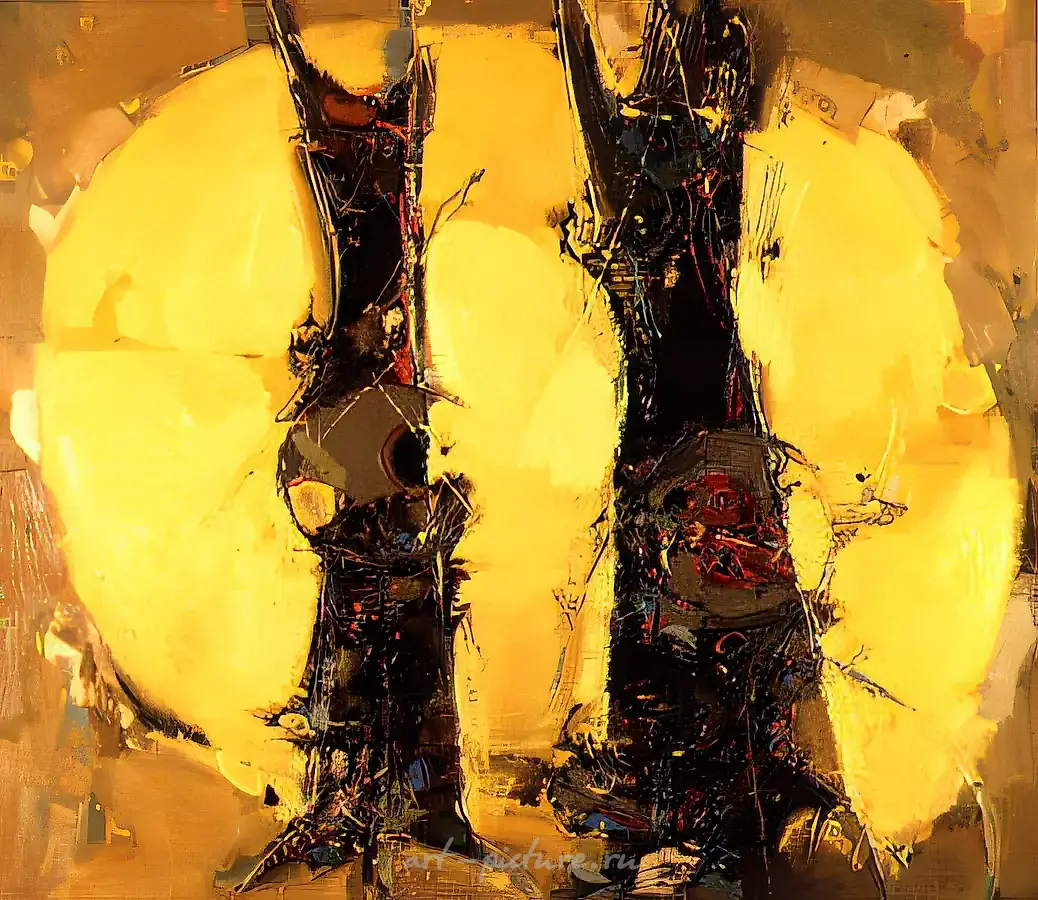
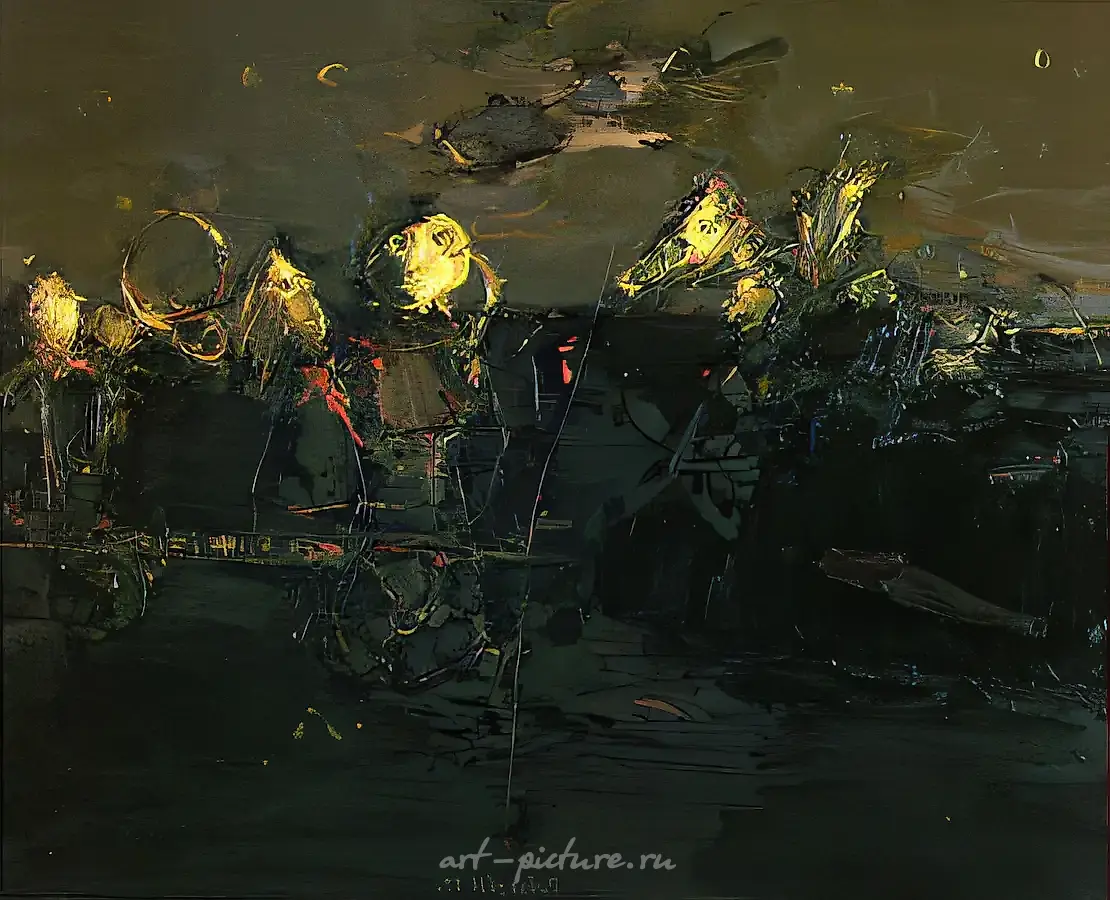
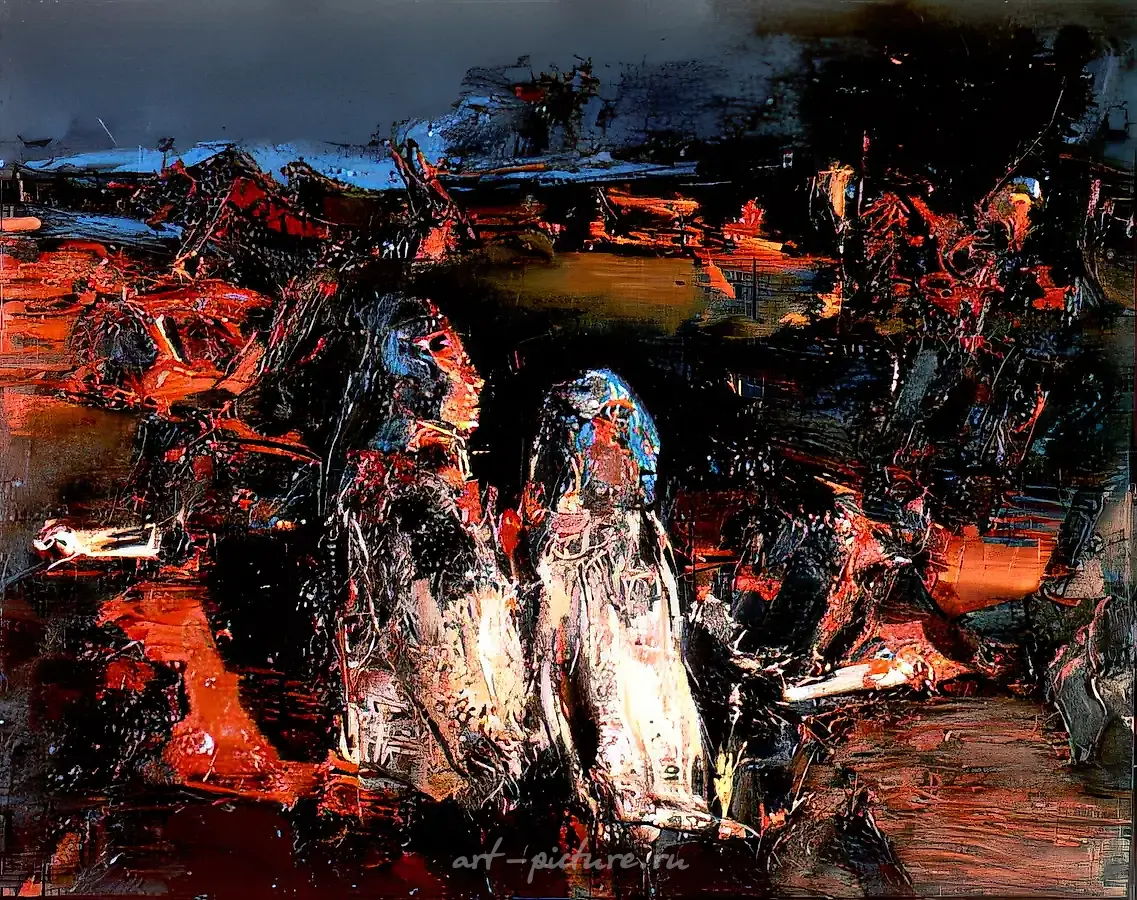
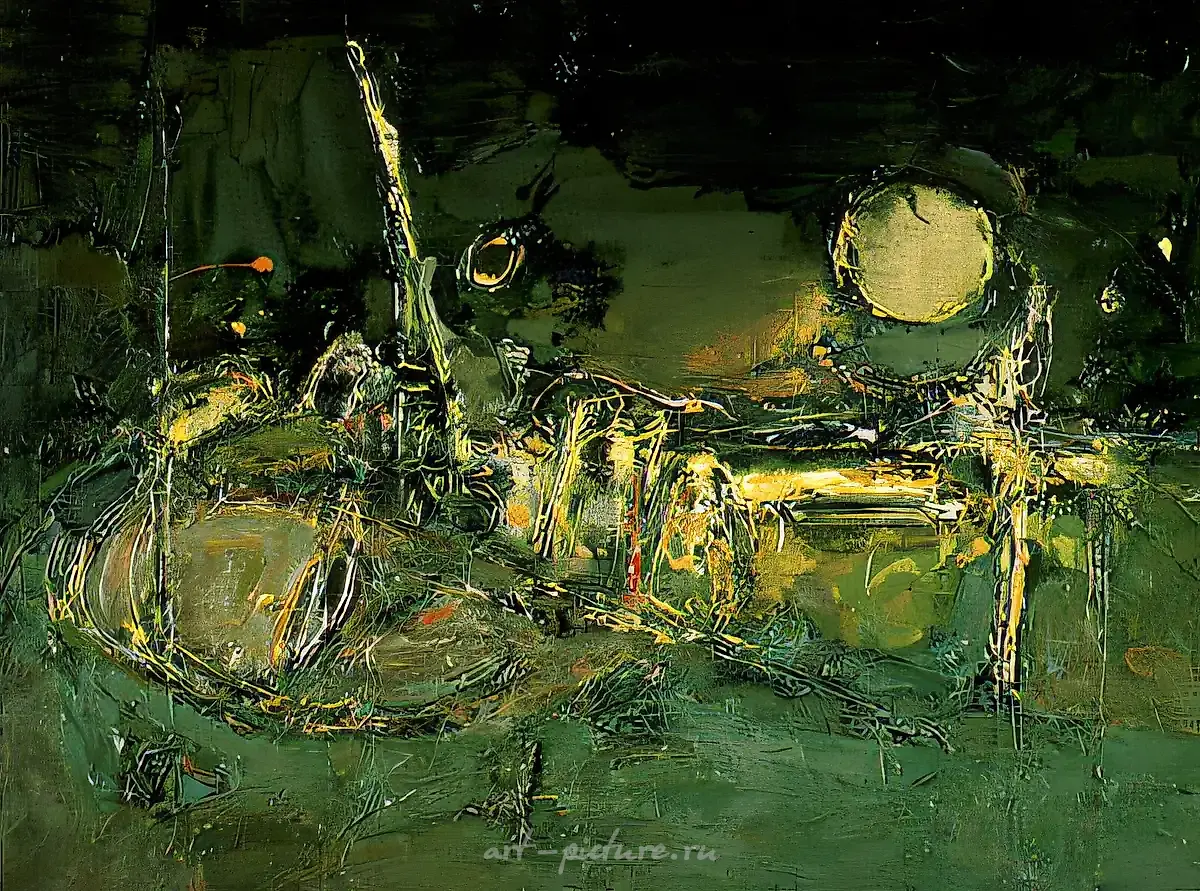
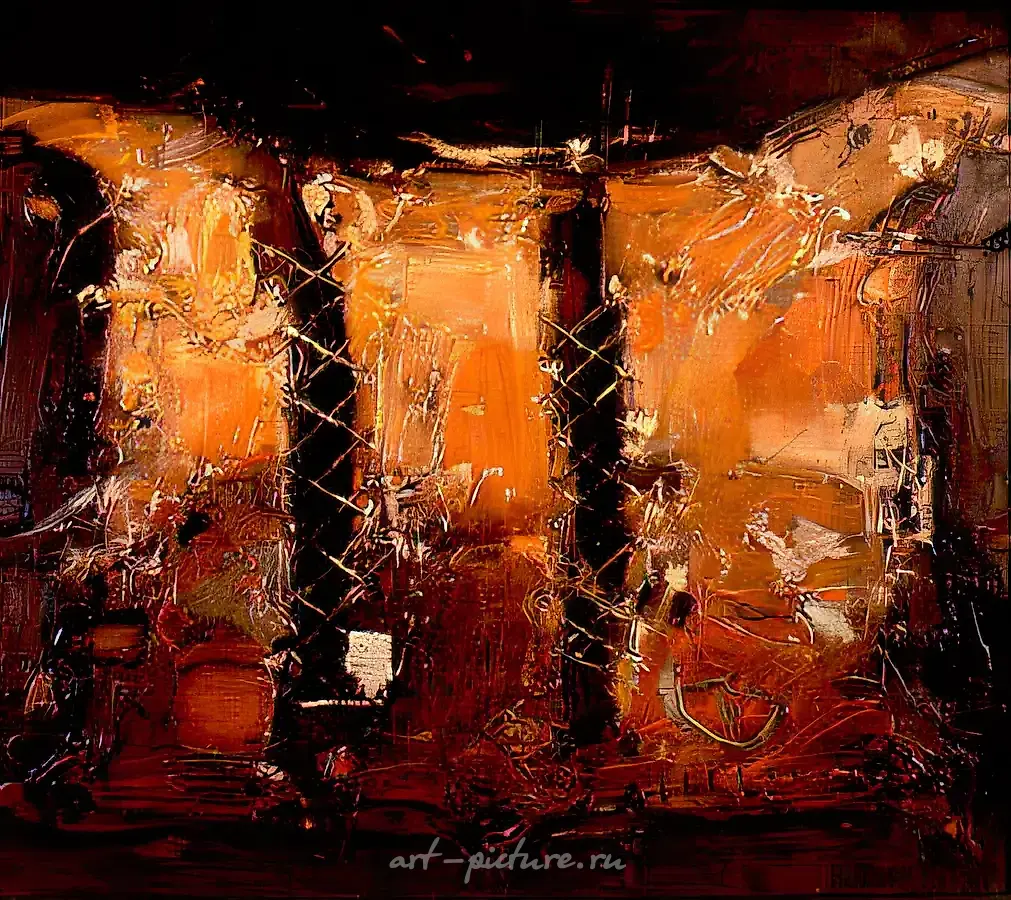
For many years now, Nikolai Rybakov has been working on the theme of Siberian Asia. He is fascinated by the synthetic fusion of the cultures of Siberian peoples, their ethnic roots organically linking the past and the present. The metaphoric nature of his language naturally arises from the meaningful reading of the theme, where everyone is free to find something of their own. Undoubtedly, much here is subjective, but doesn’t the author have the right to his own vision of the subject? Especially since it is only a part of the main question—what is a human being in the modern world, where are the root origins of their Being? It is Siberia— the concentration and collision of East and West. Not a 'pure' East nor a 'pure' West, but something new, a unity we have yet to achieve. A stratum of culture unexplored and almost unknown.
In Rybakov’s work, there is a strong preference for formal expressiveness of the material. But, knowing that prettiness kills beauty, that exquisitely sophisticated form deadens feeling, the artist constantly works from life. It is precisely the plein air sketch that forms the basis of the synthetic fusion in his Tuva and Khakassia series. The artist sensitively perceives the world, though landscape is virtually absent. Sky and earth, trees and grasses are parts of a vast space from which, like in a kaleidoscope, the figures of people and animals emerge.
E. Khudonogova.
Works 7