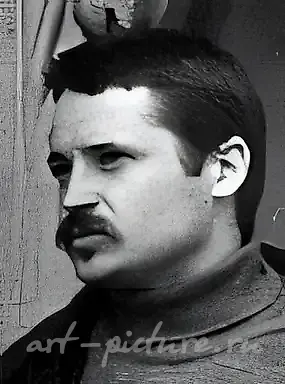
Dmitry Nikitovich Tugarinov
Born in 1955 in Moscow.
Graduated in 1979 from the Moscow State Art Institute named after V.I. Surikov. Laureate of the Moscow Komsomol Prize.
In 1996, awarded the title 'Honored Artist of the Russian Federation' and the gold medal of the Artists' Union.
Works in collections
Works are held in the State Tretyakov Gallery,
State Russian Museum,
Kaliningrad Museum,
Yaroslavl Museum,
Frunze Museum,
Komsomolsk-on-Amur Museum,
Caliphoff Sculpture Park in Belgium,
Berliner Bank in Germany,
Art Modern Gallery in Moscow,
J. Pool Gallery in England,
private collections in Russia, Italy, and Germany.
Exhibitions and auctions
1980 Solo exhibition. Biological Center. Pushchino-on-Oka, Russia;
1981 Salon in Paris;
1983 Group sculpture exhibition. Frankfurt an der Oder, Germany;
1991 Salon in Miami, USA;
1993 Solo exhibition. Art Modern Gallery, Moscow;
1993 Group exhibition. Olga Gallery, Moscow;
1994 Exhibition. Karina Gallery, Moscow;
1994 Open-air exhibition at Muzeon Sculpture Park, Moscow;
1994 Exhibition at Muzeon Association, Moscow;
1994 Group exhibition at Olga Gallery, Moscow;
1994 Art exhibition 'Flowers for Christmas.' Muzeon Association, Moscow;
1995 Christmas exhibition at Olga Gallery, Moscow;
1995 Exhibition dedicated to the 50th anniversary of Victory, Moscow (catalogue);
1995 Art exhibition 'Sculpture and Flowers.' Muzeon Association, Moscow;
1996 Solo exhibition (with Shchipachev). USSR Artists' Union;
1996 Solo exhibition. Shchusev Museum Gallery, Moscow;
1996 International Art Fair 'ART MANEGE-96.' Central Exhibition Hall 'Manege,' Moscow;
1996 'Russian Collection.' M'ARS Gallery, Moscow;
1996 'Art in Interior.' Small Manege, Moscow.
Author about himself
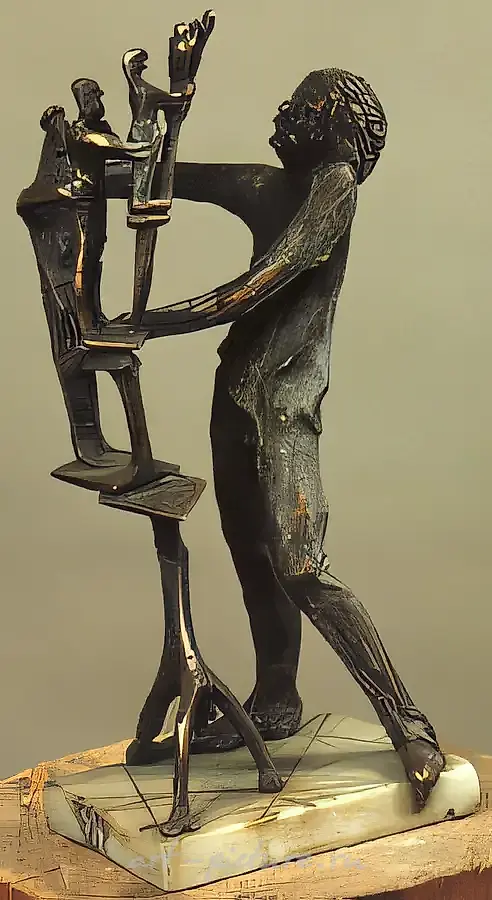
I wish to create realistic - figurative - sculpture. I believe that sculpture, in terms of its depth, can be compared to music.
To exhibit and pay for it is foolish.
Not to pay and not to exhibit is boring.
To pay and not to exhibit is unnecessary.
To exhibit and not to pay doesn't work.
Critic
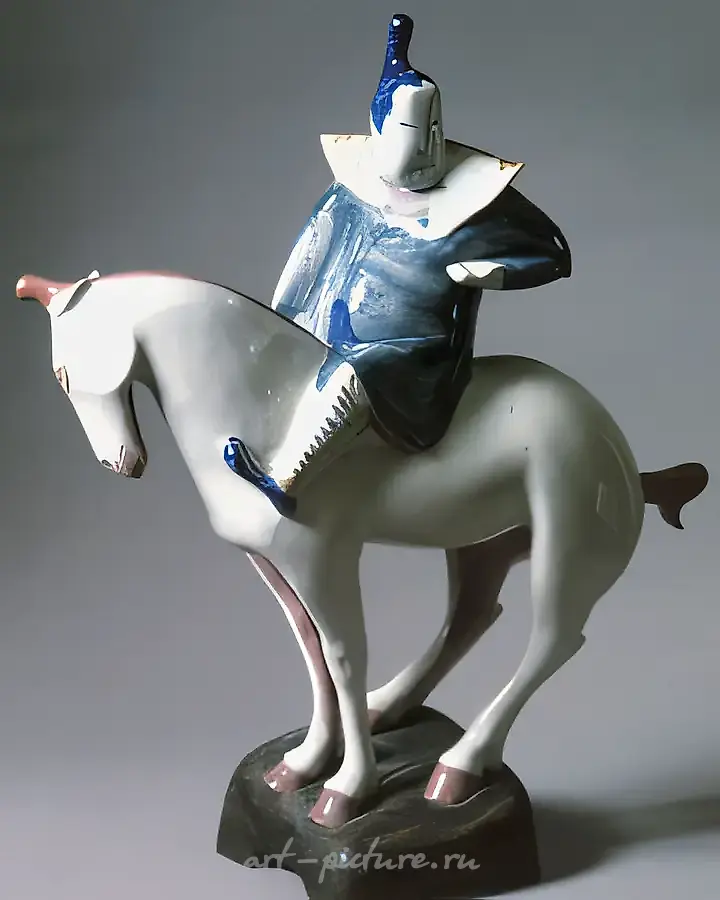
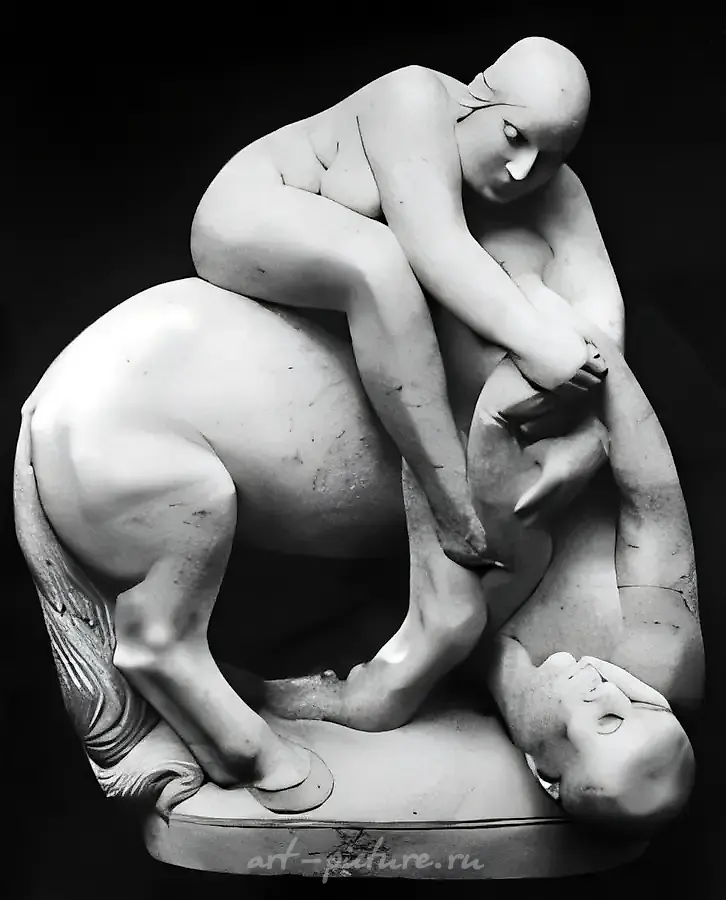
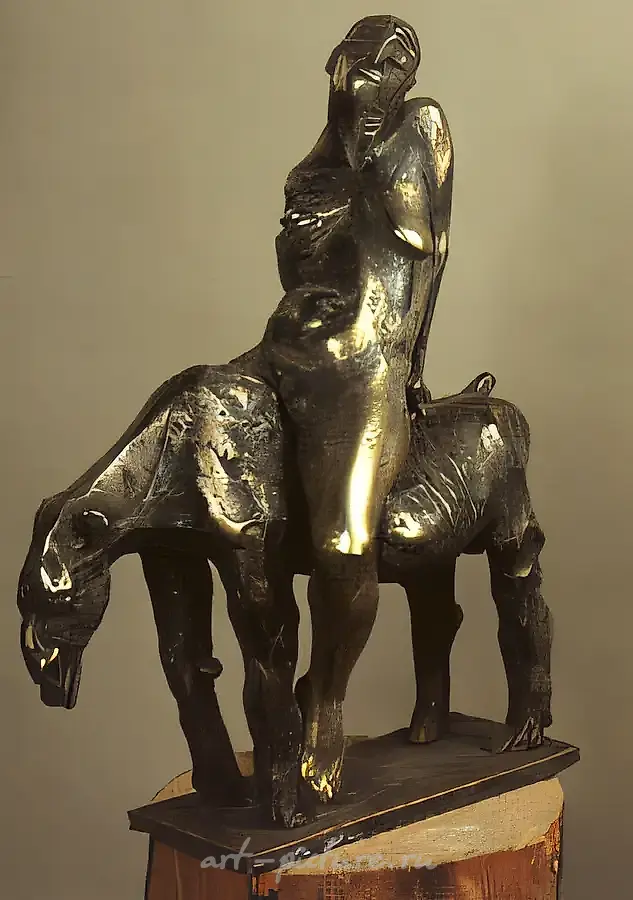
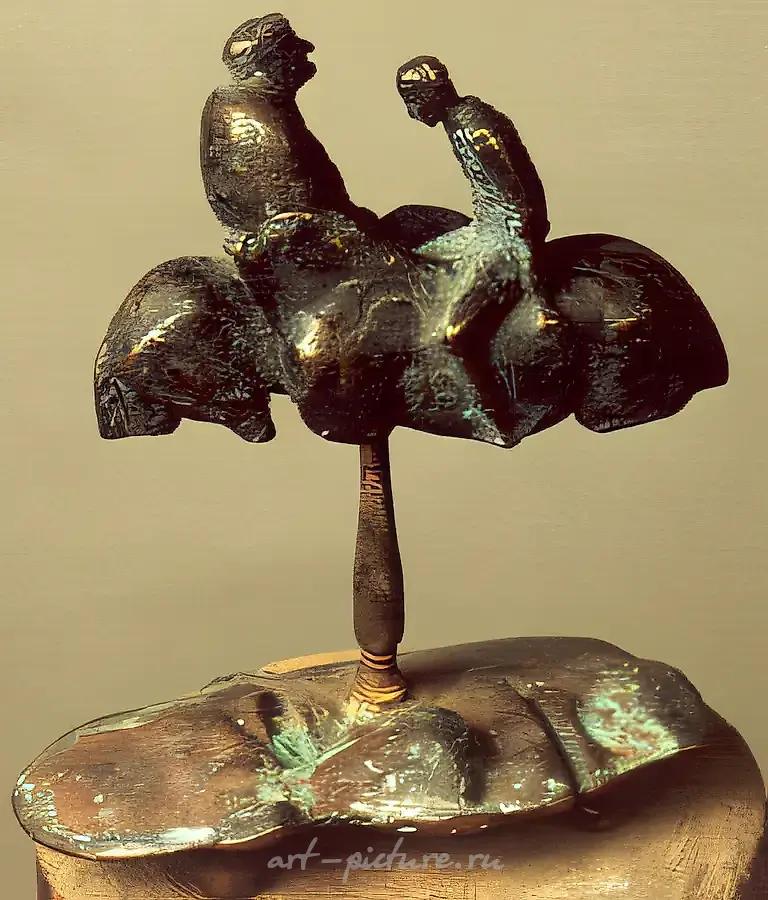
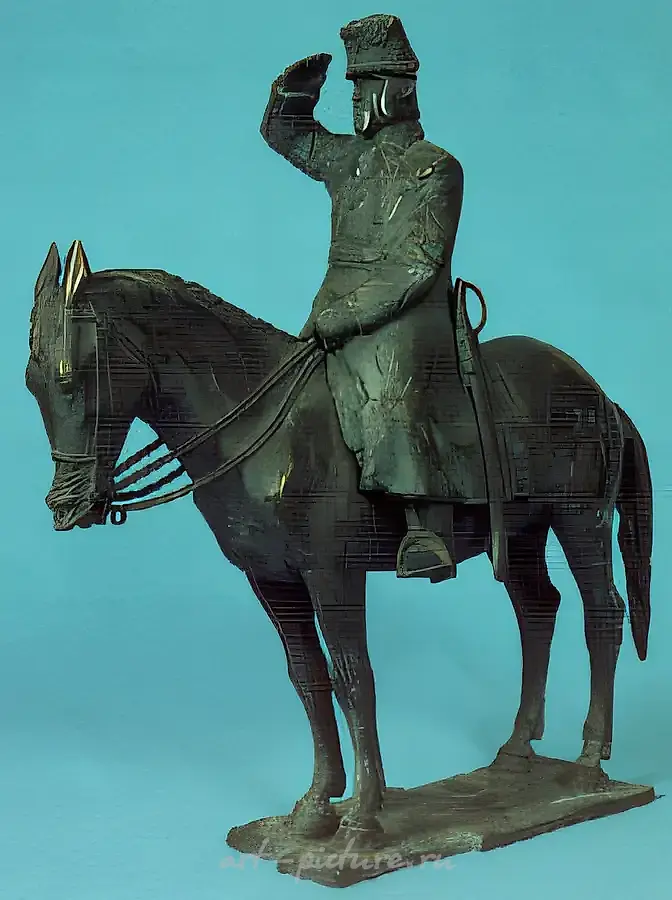
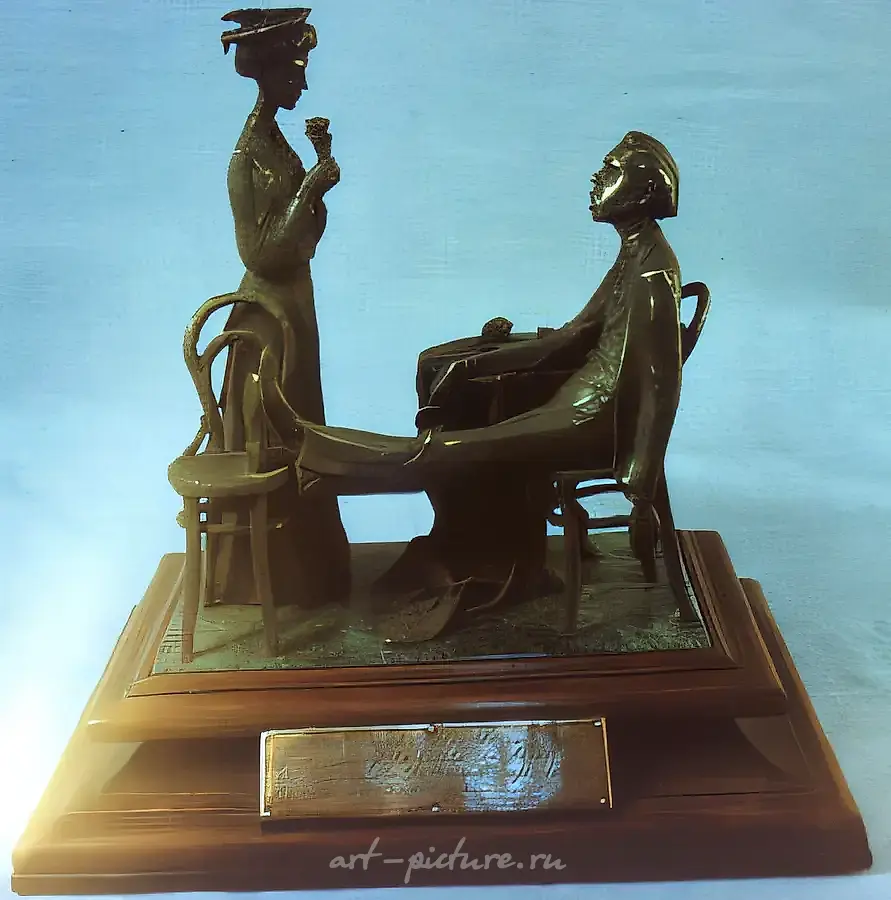
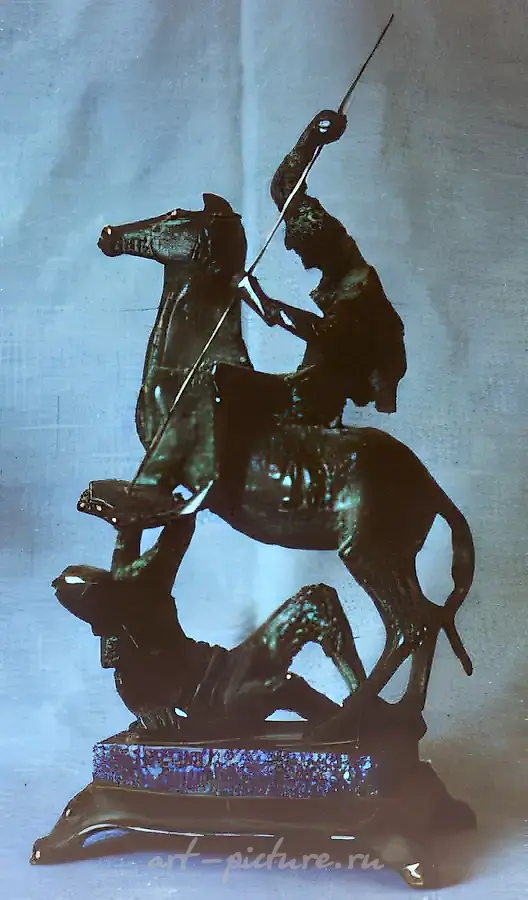
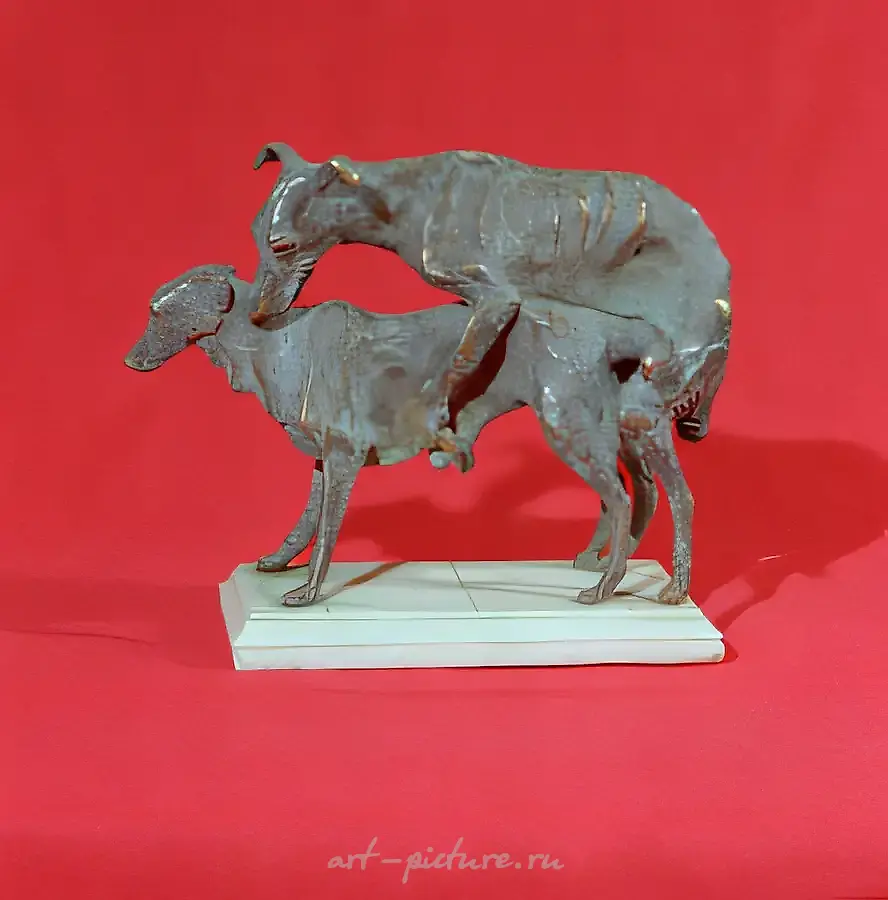
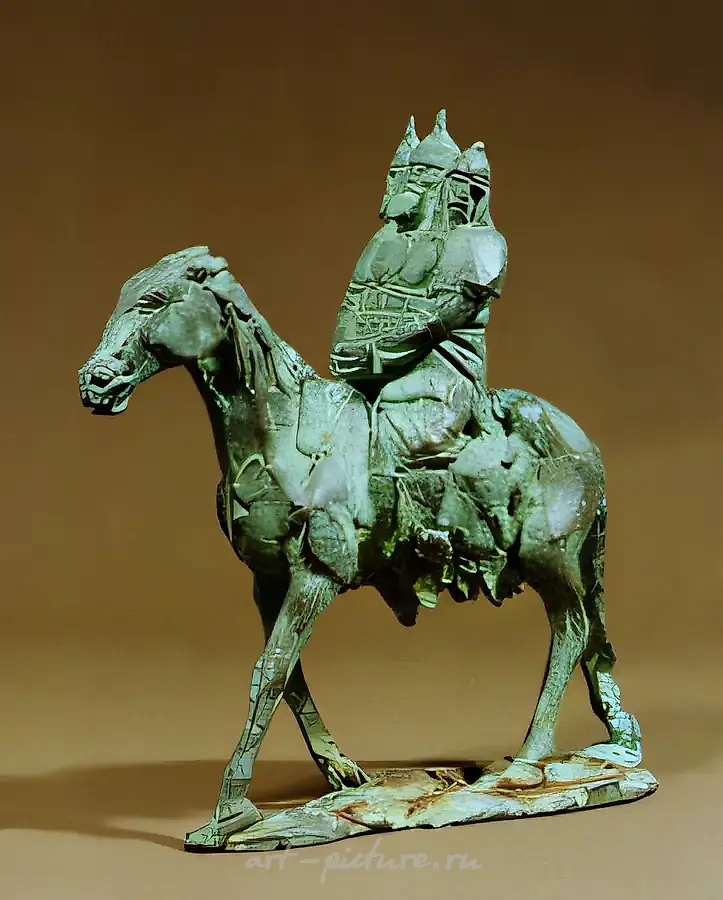
The initial and most important starting point for the sculptor's work is the immediate reaction to what has been experienced, seen, instantly noted by the eye, memory, or instinct. He admits that when he starts from an idea, from the rational, the sculpture does not succeed. But when he sees an old work by a nearly forgotten Russian battle artist, with minutely detailed veins on a horse's muzzle, he is stubbornly inspired to achieve the same precision and artistry. Or, he may set himself the seemingly formal goal of finding the only correct solution to the composition of two chairs and a person sitting on them. A sculpture is born, capturing that elusive situation, which unexpectedly for the author himself, during the working process, turns into the figure of Nestor Makhno—a man of a tragic, peculiar fate in the revolutionary turmoil, elevated to a people's leader and betrayed by the new 'revolutionary' power.
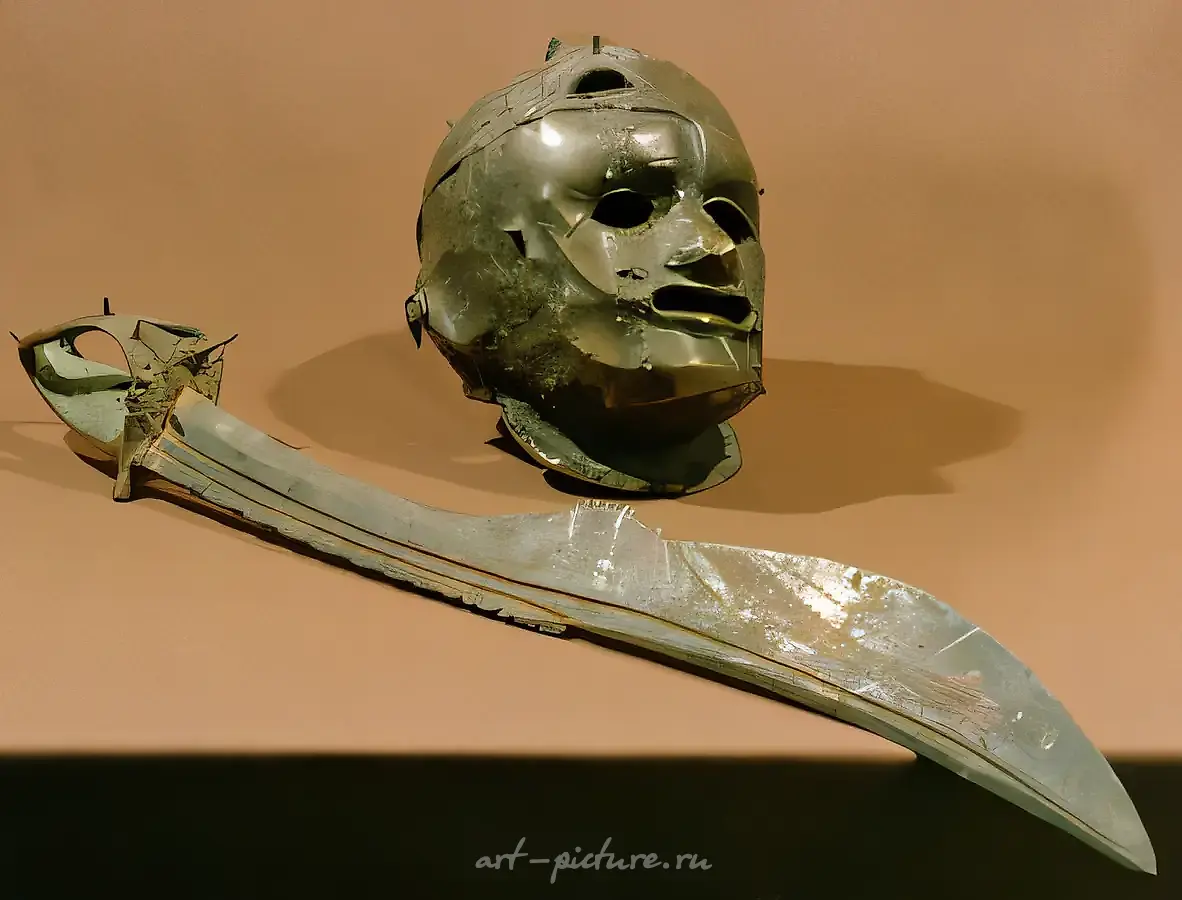
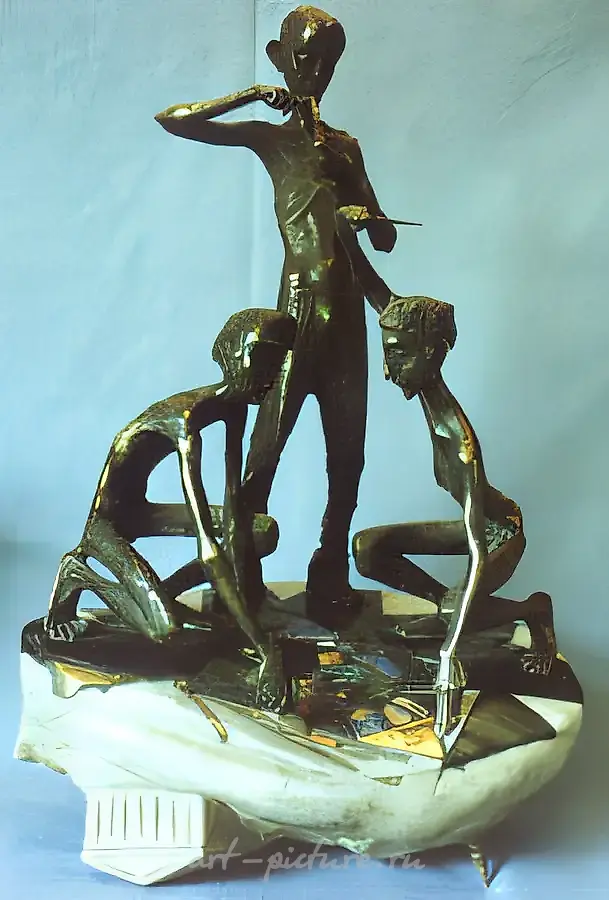
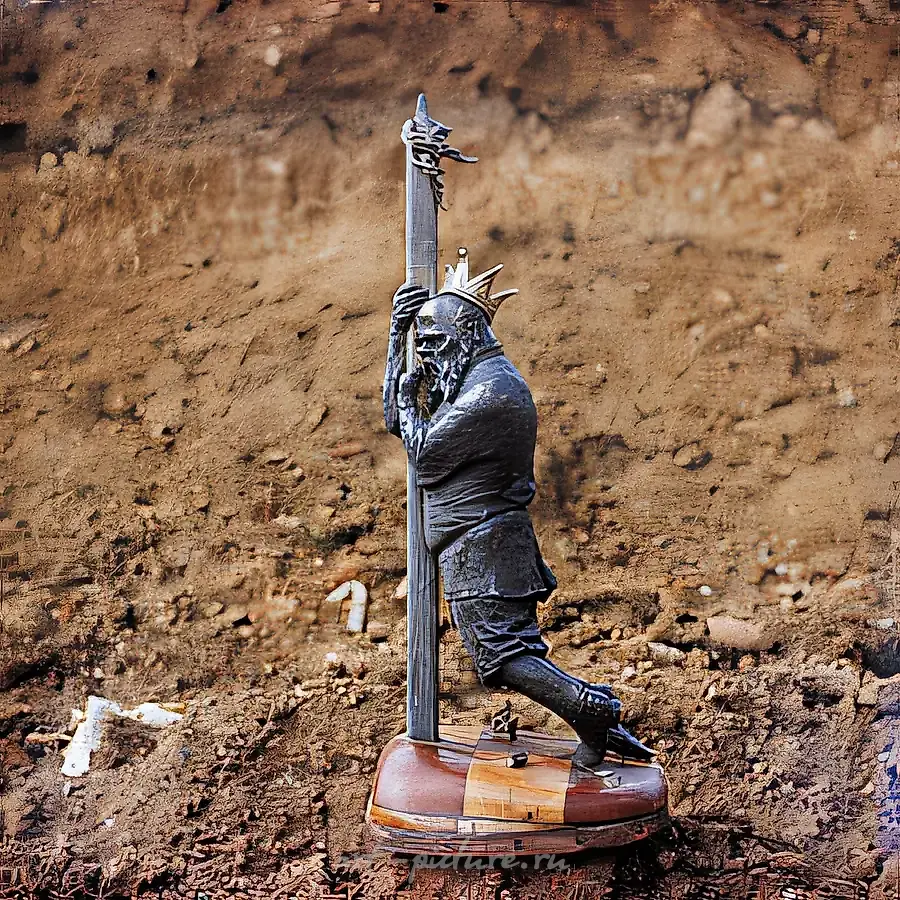
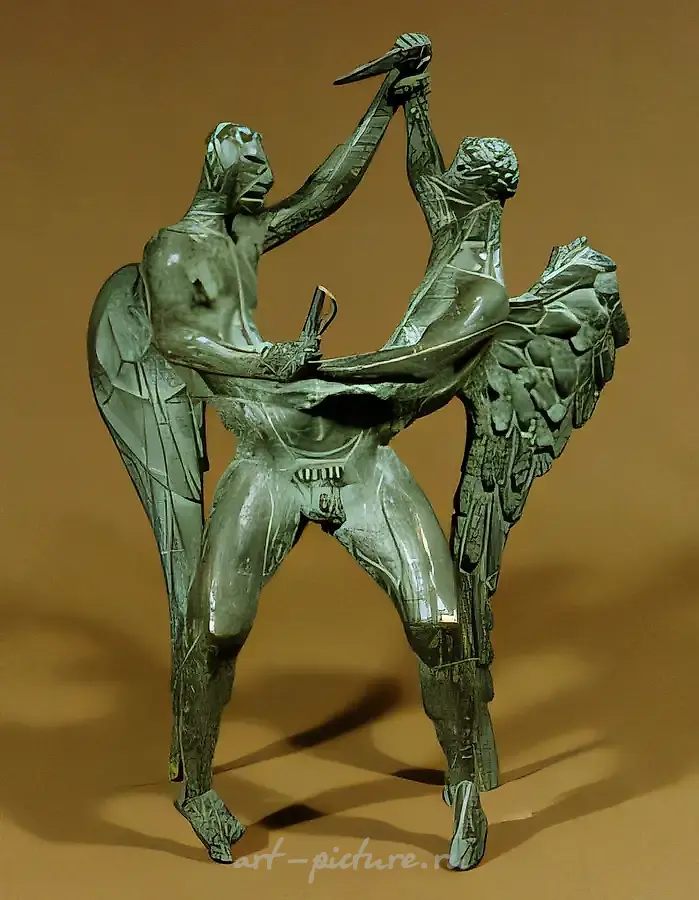
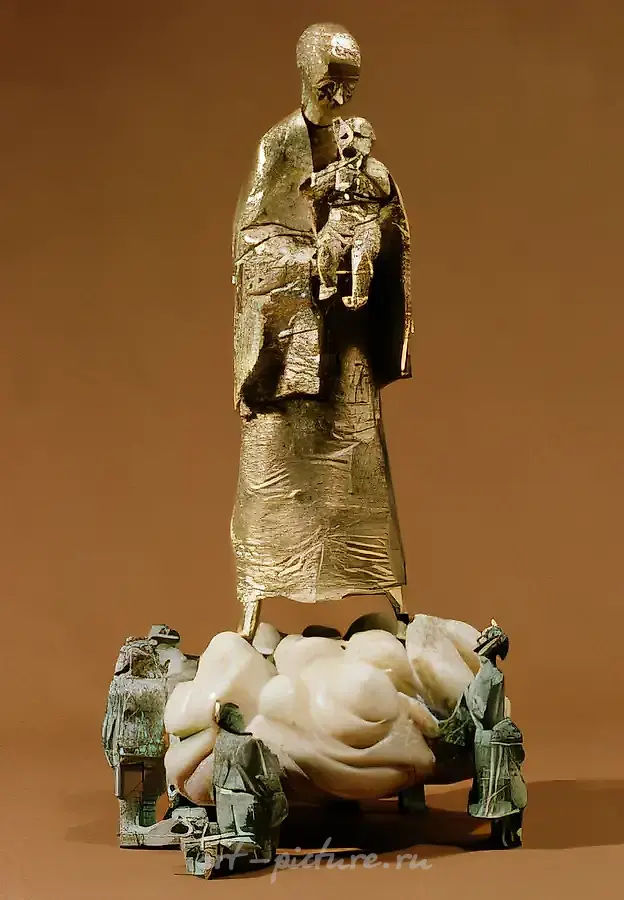
At another time, he works on a sculpture of a group of boys playing knifegames, and beneath their feet is not just the earth, but a planet, and on the reverse side of its marble likeness, outlines of some classical portico, perhaps an ancient temple, appear. Suddenly, the sculptor comes across a pile of useless bronze busts of a leader, and one of them finds its place in the composition, next to the temple—either as a dethroned idol, or as one of the testaments of the past...
All the sculptor's creativity is free and open to life, to people, to problems of all kinds.
About one of them—and the most important—should be said: Dmitry deserves scales as grand as his talent and visible from afar.
V.N. Polykarpov
Bibliography
V. Sysoev "Time of Ventures," Pravda, October 10, 1981, Moscow;
I. Kuptsov "Young People in the Academy," Moskovsky Komsomolets, September 24, 1981, Moscow;
T. Rykhlova "What are They Like - The Contemporaries?" Soviet Culture, December 20, 1983, Moscow;
"My Moscow," Moskovsky Khudozhnik, February 24, 1984, Moscow;
V. Pogodin "The Roads of the Sculptor," Vechernyaya Moskva, February 23, 1984, Moscow;
V. Pogodin "Festival - Creative Workshop of Artists," Moskovsky Khudozhnik, September 6, 1985, Moscow;
"Young Sculptors," Mirny Atom (newspaper of Kola NPP Construction Management), August 5, 1981, Karelia, Russia;
T. Rykhlova "In the House on the Krymskaya Embankment," Soviet Culture, April 3, 1984, Moscow;
T. Rykhlova "Race without a Leader," Soviet Culture, January 20, 1990, Moscow;
K. Krir "Notes from the Exhibition," Soviet Musician, April 13, 1976, Moscow;
L. Aleksandrova "In Search of Joy," Moskovskaya Pravda, August 8, 1980, Moscow;
V. Vansalov "On the Threshold of Maturity," Izvestia, October 12, 1981, Moscow;
"Stone Women of the Capital," AIF-Moscow, No.10’95, March 1995, Moscow;
V. Korneev "Sculpture in the Computer," Segodnya, September 1995, Pereslavl-Zalessky, Russia;
"Riders of the Revolution," Moskovsky Komsomolets, 1984, Moscow;
"While the Candle Burns," Moskovsky Komsomolets, October 18, 1995, Moscow;
"The Young Generation Chooses Shoes for Ages," Vechernyaya Moskva, September 1994, Moscow;
I. Dudinsky "Megapolis Express Observer Fired from a Cannon," Megapolis Express, October 1996, Moscow;
Moscow Times, February 1995, Moscow;
"Gallery M’ARS," Russian Collection Catalogue, 1996, Moscow;
Art Manege-96, Moscow International Art Fair Catalogue, 1996, Moscow;
Journal 'Tvorchestvo' No.9, p.7, 1982;
Journal 'Khudozhnik' No.6, pp.28-29, 1982;
Journal 'Tvorchestvo' No. 6, 1985;
Journal 'Soviet Sculpture' No.8, 1984;
Journal 'Sculpture in the City,' pp.184-188, 1990;
Journal 'Art-Media' No.1, 1993;
Journal 'InterDesign' No.1, 1994;
'Visual Art. Russia 20th Century.' Encyclopedic Guide, pp.246-247, 1995;
Russian Collection Catalogue, 1996;
ART Manege Catalogue, 1996.
Works 20