Geyur Yunusov - Abil ogly
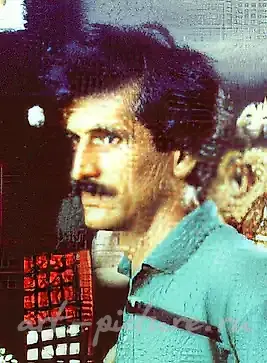
Born on March 26, 1948, in Baku.
In 1971, he graduated from the Azerbaijan State Art School named after Azimzade.
In 1977, he graduated from the Tbilisi Academy of Arts.
Works in collections
His works are held in the State Tretyakov Gallery,
The Museum of Oriental Art in Moscow,
The Museum of Friendship of Peoples in Tbilisi,
The Azerbaijan State Museum of Art named after R. Mustafayev in Baku,
as well as in private collections in Russia, USA, Germany, France, Turkey, England, Bulgaria, Czechoslovakia, Yugoslavia.
Exhibitions and auctions
1988 Solo exhibition. Baku;
1988 Solo exhibition. Kostanai, Kazakhstan;
1988 Solo exhibition. Pavlodar, Kazakhstan;
1989 Solo exhibition. Alma-Ata, Kazakhstan;
1990 Perestroika'art Year 5. L`orangeraie Gallery, Saint Paul de Vence, France;
1990 Exhibition of Soviet artists. Istanbul, Turkey;
1992 Solo exhibition. Baku, Azerbaijan.
Critic
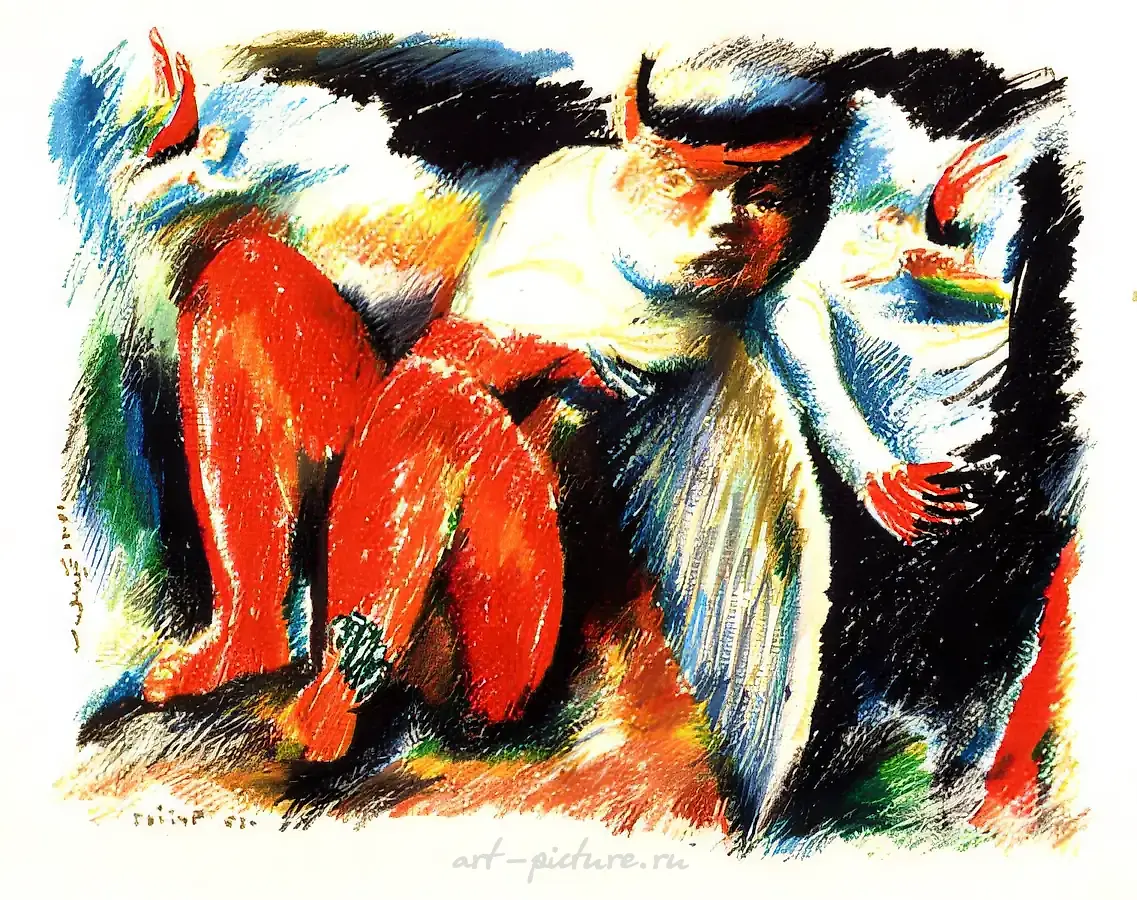
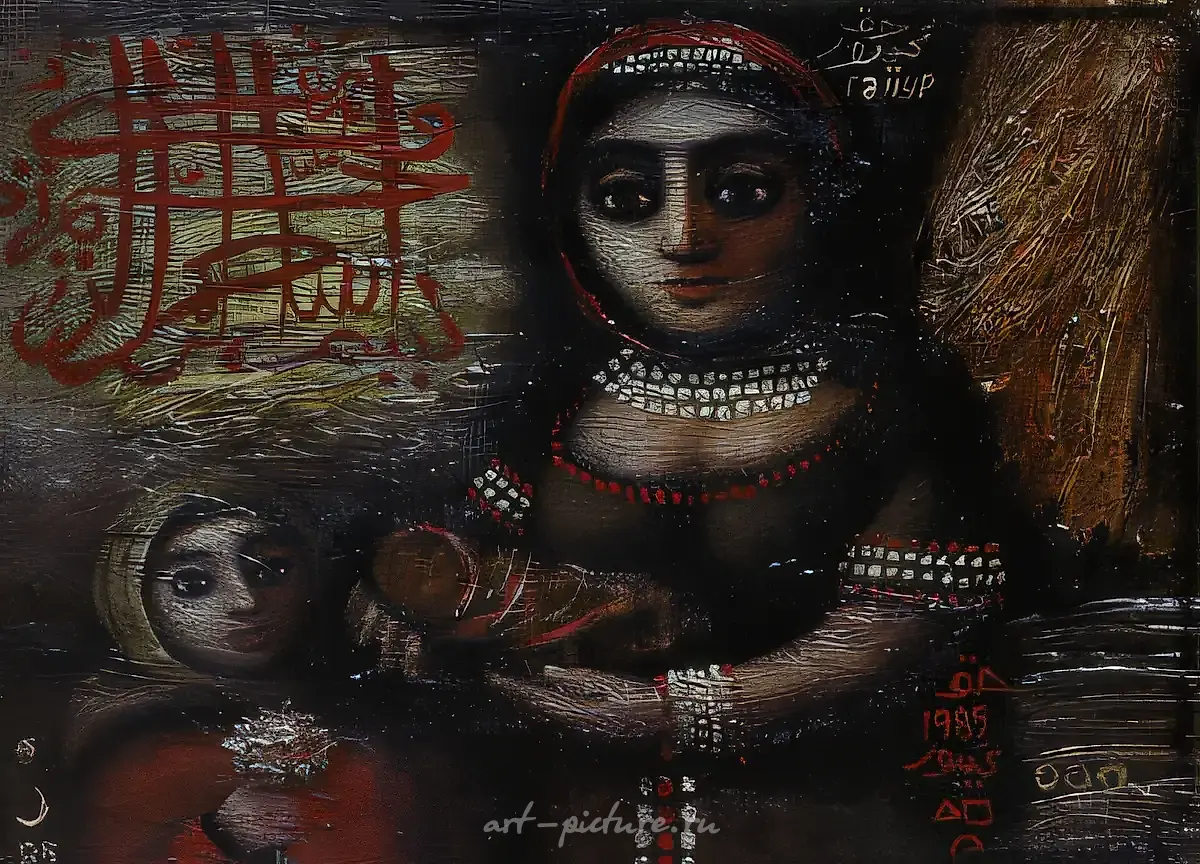
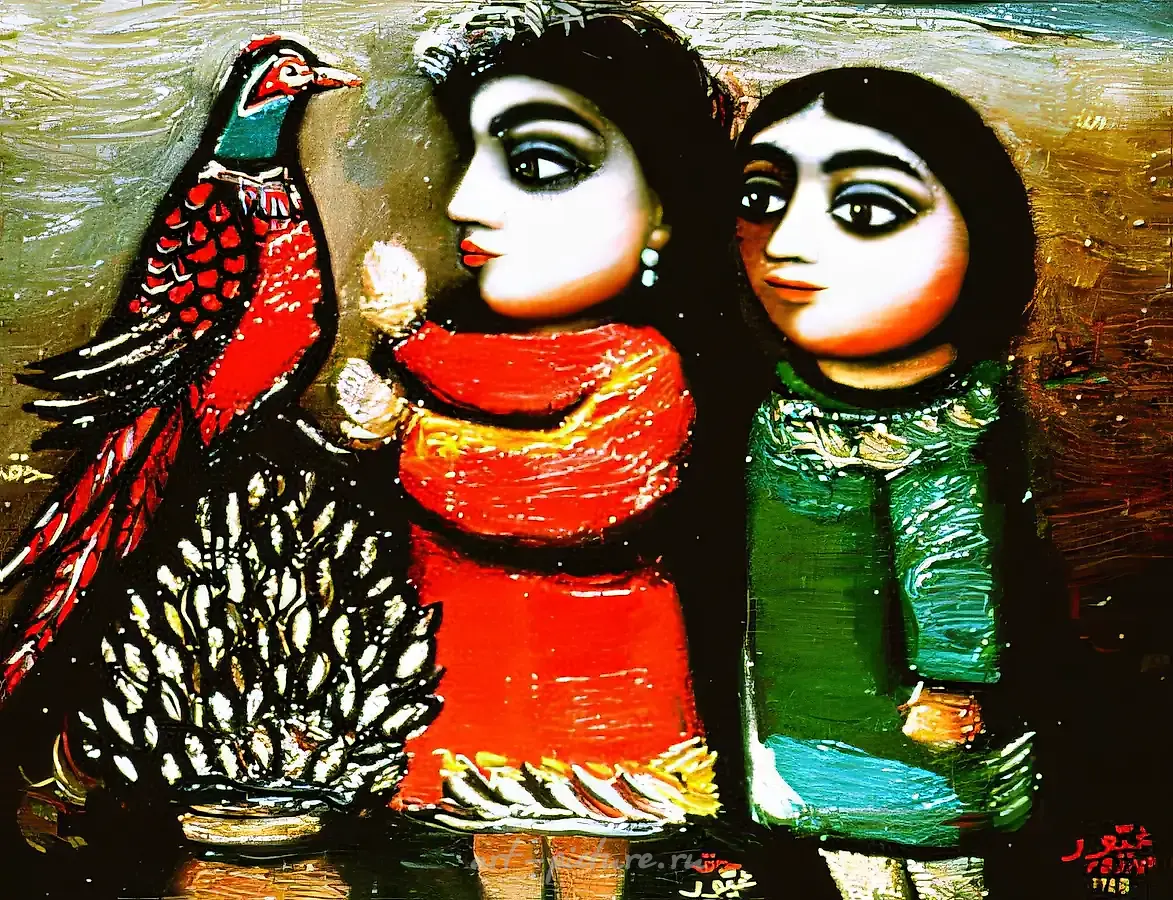
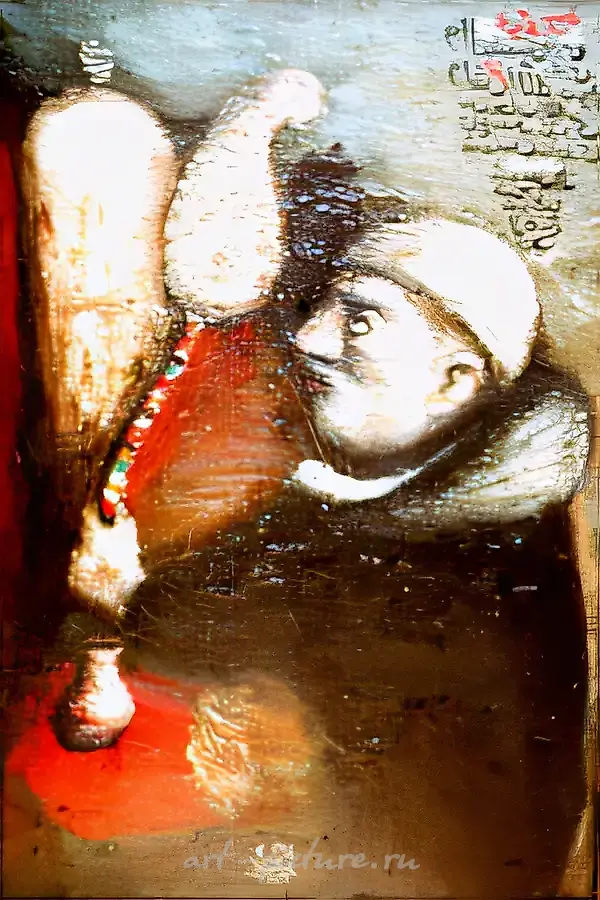
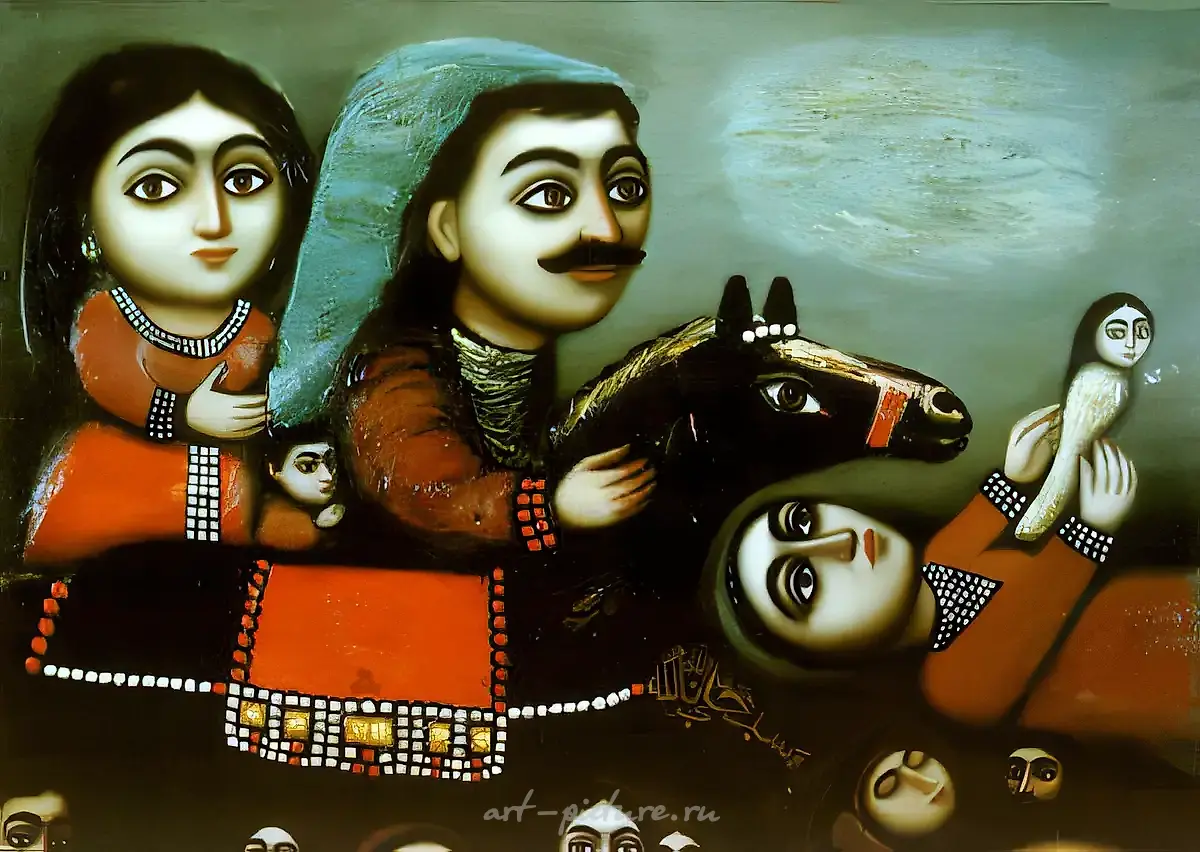
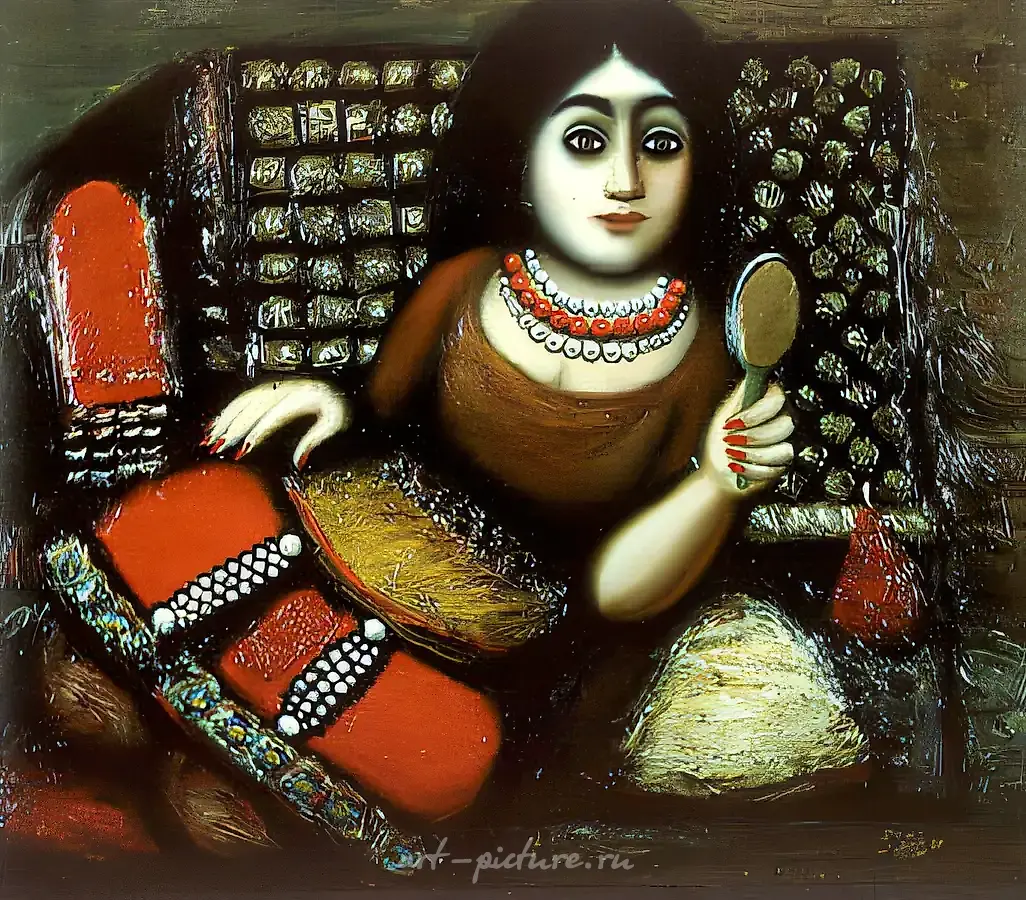
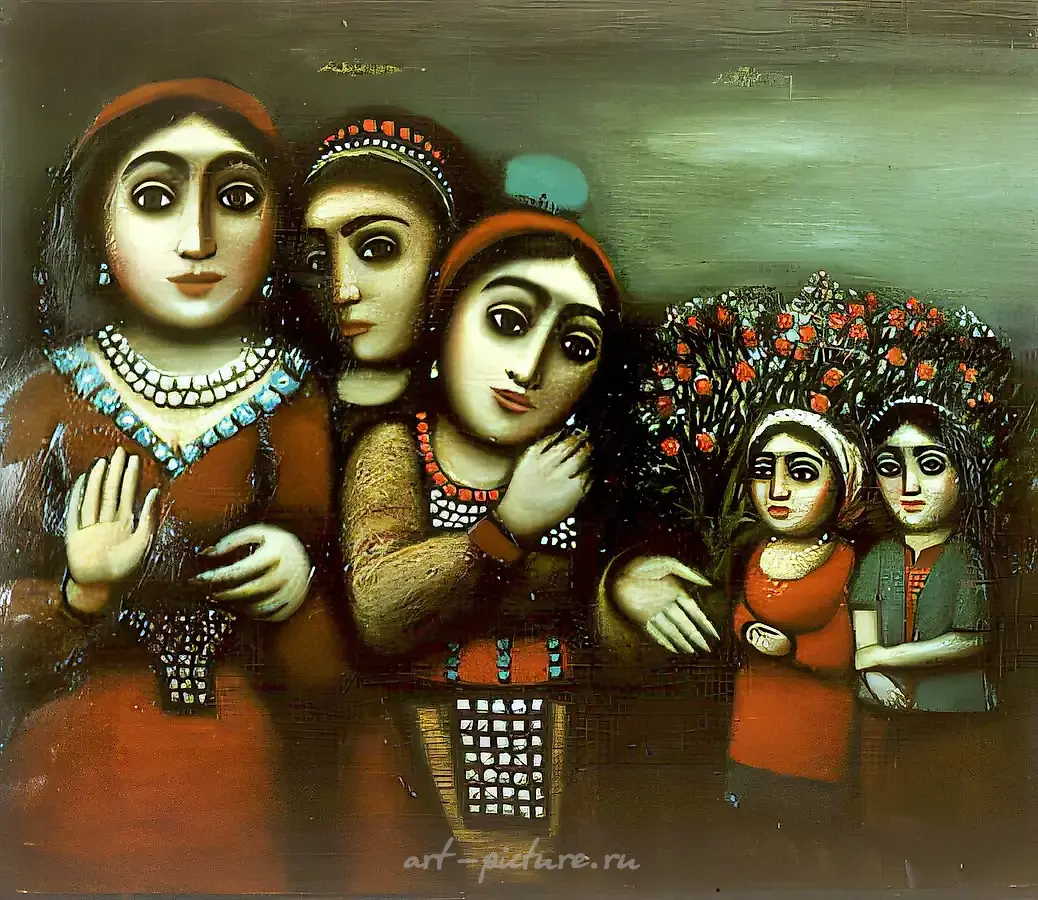
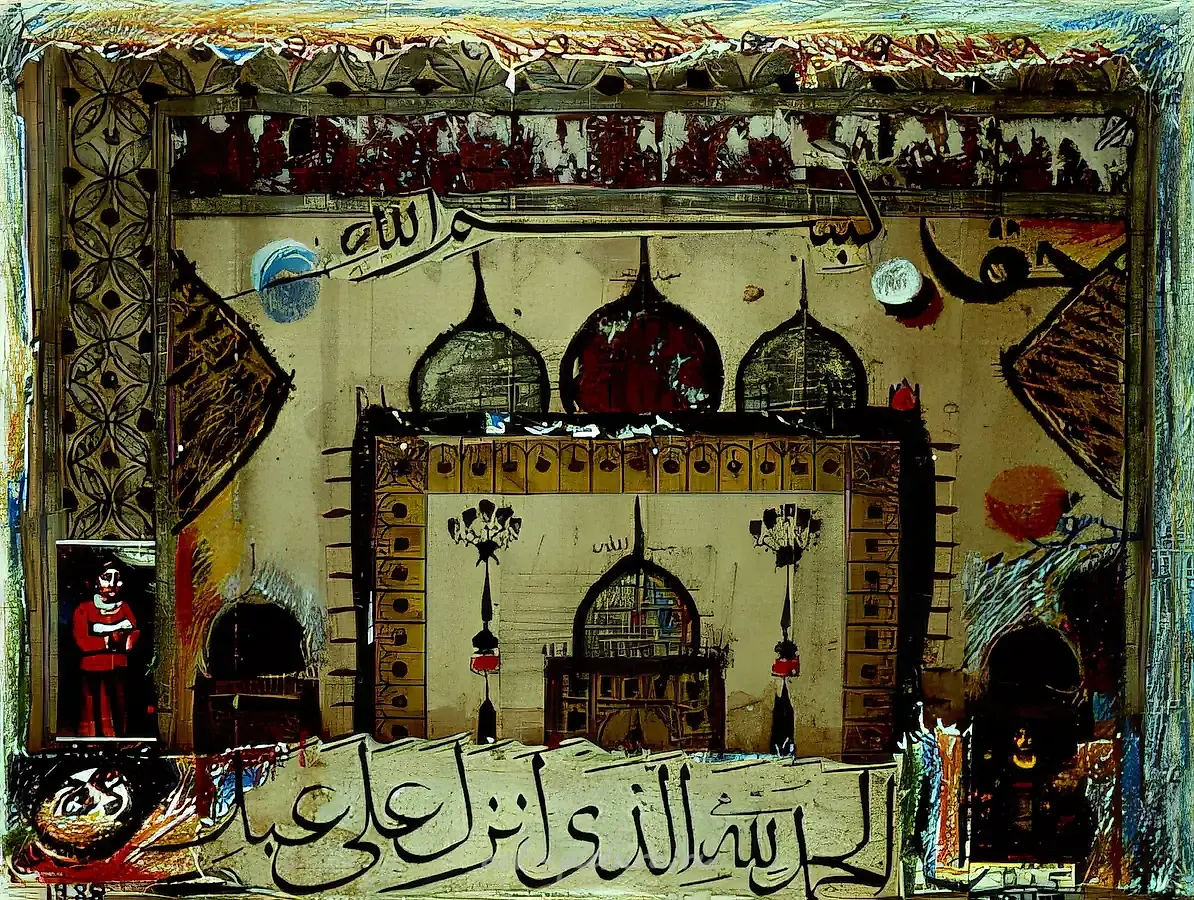
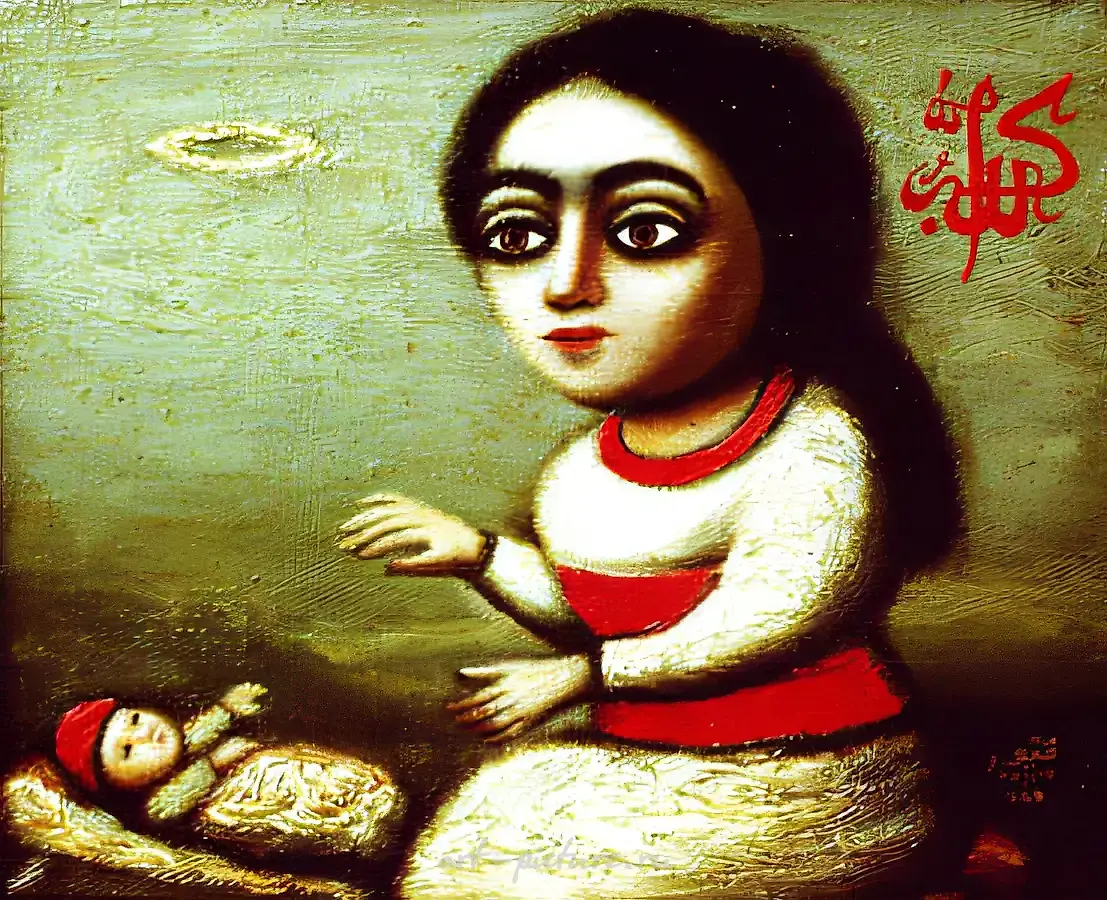
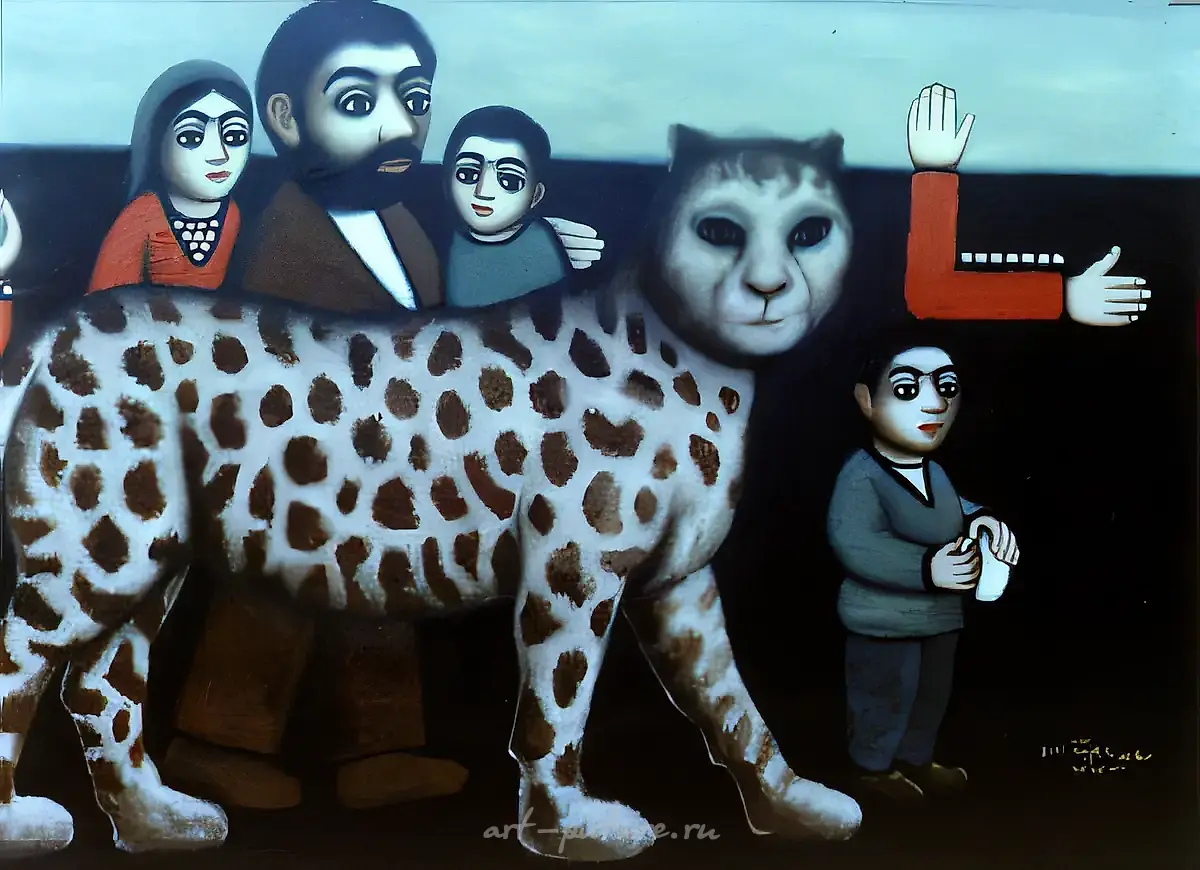
The action in G. Yunusov's paintings rarely takes place against the specific background of an Amirajan landscape on the outskirts of Baku. More often, it is a space not so much existing in reality as born in the depths of consciousness, seen through the inner vision of a person who deeply reflects on the foundations of existence, the connection of times, and the succession of generations. Wherever we encounter Yunusov's works—whether in his studio or spacious museum halls—their concentrated epic effect is always evident, achieved by the intense play of color and the symbolism of silent forebodings. Before us unfolds a long procession of figures—big-eyed, sorrowful Eastern women in red and brown national costumes, shrouded in swirling darkness and thick shadows. Even more static and detached from worldly vanity are the figures and calm faces of men. Alongside them, or behind their shoulders, mysterious mythical creatures often appear, whose ancient Muslim origins are suggested by horns or wings of unknown bulls and birds. Their appearance on the canvas in the most mundane scenes of patriarchal life seems as natural as the appearance of domestic animals in the walled courtyards of old Amirajan. Essentially, Yunusov is clearly oriented towards the archaic, towards what Pushkin called 'reverence for tradition.' Hence his inclination for eternal artistic categories and proven sign systems. The intricate Arabic script of ancient sayings and quotations from the Quran is organically integrated into the pictorial structure of the canvas and begins to exist alongside tree crowns, swirling clouds, or rich heaps of fruits and bouquets of flowers...
It is pleasant that the artist's development can be clearly traced through a number of consecutive stages of the formation of his painting style, starting from the student period of the early 1970s, when his own worldview relied significantly on borrowed means of expression, to relatively recent times (late 1970s - early 1980s), when the expressive painting technique occasionally took on a self-sufficient character, and finally, finding himself in the works of the second half of the 1980s, when the artist truly felt the roots of national tradition.
'I like artists who can contradict themselves,' says the self-analytical painter. And, of course, we can apply this statement to his own work, which does not tend towards self-conservation. Examples are the artist's new forays into various graphic techniques, whether it is colored pastel (panda), regular pencil drawings, or pen drawings in small diary-albums. Yet, no matter how successful individual graphic series by Yunusov may be, his main passion is painting. All exploratory sketches and constant daily observations are devoted to it; it is about its mysterious laws that the artist reflects, peering into the works of the great masters of the past and his outstanding contemporaries, repeating to himself: 'Painting, painting...'
We hope that Geyur Yunusov's main discoveries lie ahead, although much has already been accomplished to date.
V. Meiland
Bibliography
Z. Aliyev on the art of G. Yunusov, 'Ulduz' magazine, No. 3, 1986, Baku, Azerbaijan;
Catalogue of the exhibition 'Perestroika'art Year 5', 1990, Saint Paul de Vence, France;
Catalogue of the exhibition at "Art Modern" gallery, 1990, Moscow;
Catalogue of "Modus - Vivendi" gallery exhibition, Istanbul, 1990;
V. Meiland "Time of Free Choice," 'Literaturnaya Ucheba' magazine, No. 5, 1987.
Works 10