Bogdalov Farid Yahyaevich
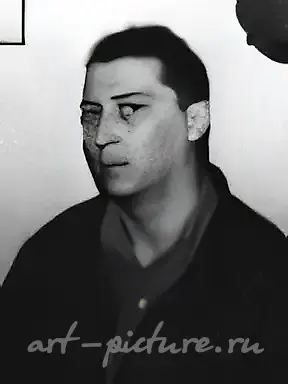
Farid Yahyaevich Bogdalov (born 1963, Lukhoviцы, Moscow Region) is a Russian artist, one of the co-founders of the Moscow art squat 'Furmanny Lane.'
Biography
Born in 1963 in the city of Lukhoviцы, Moscow Region. Champion of Moscow and the Moscow Region in judo. From 1984 to 1986, studied at the Surikov Moscow State Art Institute, Faculty of Painting. In 1989, joined the Moscow City Committee of Graphic Artists. In 1987, became one of the founders of the art squat 'Furmanny Lane.' In 1990, together with Georgy Litichevsky, founded the art group 'BOLI' (Bogdalov-Litichevsky), in which he worked until 1992. In collaboration with Sergey Kalinin, he created a remake of Repin's famous 'Solemn Session of the State Council on May 7, 1901,' titled 'Solemn Session of the Federal Assembly,' measuring 4x9 meters. Since 1994, he has been a member of the Moscow Union of Artists. In 1995, together with O. Mavromatti, founded the art group 'The Sect of Absolute Love,' which also included Emperor VAVA, Dmitry Pimenov, Mikhail and Tatyana Nikitin, and Alena Martynova.
Works in collections
Kolodzei Art Foundation, USA.
Christian Keesee, USA.
Sam Harrell, USA.
Boris Dorofeev, USA.
Pierre-Christian Brochet, France.
Julian Gori, Italy.
Paolo Sprovieri, Rome, Italy.
Bern Jollis, Sweden.
Collection of Anton Kozlov, Moscow.
Exhibitions and auctions
GROUP EXHIBITIONS
1979 Group exhibition. City Exhibition Hall, Kolomna
1989 'Exhibition of Unfinished Works.' Workshop of K. Zvezdochetov. Furmanny Lane, Moscow
1989 'Furmanny Zaulek.' Dawne Zaklady Norblina, Warsaw, Poland
1990 'Les ateliers de la rue Furmann.' Zurich, Switzerland
1990 'The Quest for Self-Expression. Painting in Moscow and Leningrad 1965-90.' Columbus Museum of Art, Columbus, USA
1990 'Traditions of Russian Painting.' Museum of the History and Reconstruction of Moscow, Moscow
1990 '13 Positionen zur Zeit.' Stadtmuseum Linz-Nordico, Galerie Maerz, Linz, Austria
1990 'Chistoprudny Boulevard.' Opening exhibition of Galeria XXI, Madrid, Spain
1990 'Repentant Art' (exhibition-event). Moscow Zoo, Moscow
1991 'Festival of Russian Art.' The Lab, San Francisco, USA
1991 'Aesthetic Experiments.' Kuskovo Estate, Moscow
1991 'Strastnaya.' First Gallery, Moscow
1991 'Milano-poesia.' Seven Capitals of the World Festival, Milan, Italy
1991 'Novecento.' L Gallery. Central House of Artists, Moscow
1991 'Reading Lectures at the Prato Museum.' Prato, Italy
1992 '3rd International Istanbul Biennale.' The Greater Istanbul Municipality Nejat F. Eczacibasi Art Museum, Istanbul, Turkey
1992 'Stilleven.' Velta Gallery, Moscow
1992 'a Mosca... a Mosca...'. Villa Campoleto, Ercolano; Galleria Comunale d’Arte Moderna, Bologna, Italy
1992-93 'Battle and Idyll.' Velta Gallery, Moscow
1993 'Across Facets and Borders.' Culture Foundation, Moscow
1993 'ART MYTH 3.' Yakut Gallery. Manezh, Moscow
1993 'Monuments: Transformation for the Future,' ICA, New York, ISI, Moscow
1993 Central House of Artists, Moscow
1994 'May Exhibition.' 'Moscow Gallery', Kuznetsky Most 20, Moscow
1994 'Works On Paper.' Selections from The Kolodzei Collection of Contemporary Russian Art. City Arts Center, Oklahoma, USA
1994 'Black Staircase' (exhibition-action). Staircase of an apartment house on Krylienko St., Moscow
1995 'Ice Cream - Art' (exhibition-action). Moscow Ice Cream Factory 'Ice-Fili', Moscow
1995 'Spirit and Soil II.' 'Kashirka', Moscow
1995 'Time to Get Up.' TV Gallery, Moscow
1995 'From the Collection of Tanya and Natasha Kolodzei.' 'Seven Nails' Gallery, Russian-American Information Press Center, Moscow
1995 'New Russian Art: Paintings from the Christian Keesee Collection.' City Art Center, Oklahoma City, USA
1995 'In Moscow... In Moscow...'. Badischer Kunstverein. Karlsruhe, Germany
1996 'From the Collection of Tanya and Natasha Kolodzei.' 'Seven Nails' Gallery, Russian-American Information Press Center, Moscow
1997 'New Russian Art: Paintings from the Christian Keesee Collection.' City Art Center, Oklahoma City, USA
1997 'In Moscow... In Moscow...'. Badischer Kunstverein. Karlsruhe, Germany
1997 'Reflection of Time' (from the Tatiana and Natalia Kolodzei Collection). House of Europe, Moscow
1998 'What Shall We Do About Monumental Propaganda?' (2nd edition, expanded). Together with V. Bachchanian, K. Boym, G. Kizelwater, I. Kitup, V. Komar, O. Kulik, D. Koshut, L. Lamm, A. Litvin, G. Litichevsky, S. Martynchik, A. Melamid, V. Paperny, P. Pepperstein, A. Reuters, L. Romanova, L. Sokov, I. Stepin, S. Faibisovich, O. Chernysheva, Scherer and Uporov, and others. Marat Gelman Gallery together with the INSTITUTE OF CONTEMPORARY ART, Moscow
1999 'Motherland or Death' (together with N. Alekseev, I. Valdron, K. Zvezdochetov, B. Matrosov, group 'Mitki', group 'Peppers', A. Filippov). Zverev Museum, Moscow
ACTIONS
1990 'White Action' (a gesture of renunciation of the Moscow norm). Chistoprudny Boulevard, Moscow
1990 'Cubes' (group 'BOLI'). 'ChP' Gallery, Moscow
1990 'Opening of Litichevsky' (group 'BOLI'). 'ChP' Gallery, Moscow
1990 'Mothers of Buratino' (group 'BOLI'). 'ChP' Gallery, Moscow
1990 'Dumpling House' (group 'BOLI'). Dumpling café on Chernyshevsky St., Moscow
1990 'Collector' (group 'BOLI'). 'ChP' Gallery, Moscow
1990-91 'Cubotherapy' (group 'BOLI'). 'ChP' Gallery, Moscow; 'The Lab', San Francisco; Juliano Gori Museum, Florence; Museo Poesia, Milan
1992 'The Fish of Moscow Avant-garde.' Chistoprudny Boulevard, Moscow
Since 1995, actions as part of 'The Sect of Absolute Love' — 'Mirror Disease.' Kutafya Tower, Kremlin, Moscow
1995 'Life for a Cat.' Sadovaya Triumph Street, Moscow
1995 'Suicide of Angels.' Sadovnicheskaya Embankment (on the site of a demolished school), Moscow
1995 'Lord of the Flies.' Moscow
1995 'Love Triangle.' Gagarin Square (Gagarin Monument), Savvinskaya Embankment, October Square, Moscow
1995 'Popkorm. Durov Corner.' Durov's Corner, Moscow
1995 'Sunstroke.' CDSA Garden, Moscow
1995 'Gomorrah.' Dynamo Water Stadium, Moscow
Author about himself
Creative credo:
'Make not to yourself idols, nor graven images, nor shall you set up pillars, nor shall you place figured stones in your land, to bow down unto them.'
Bible, Leviticus, chapter 26, I
Critic
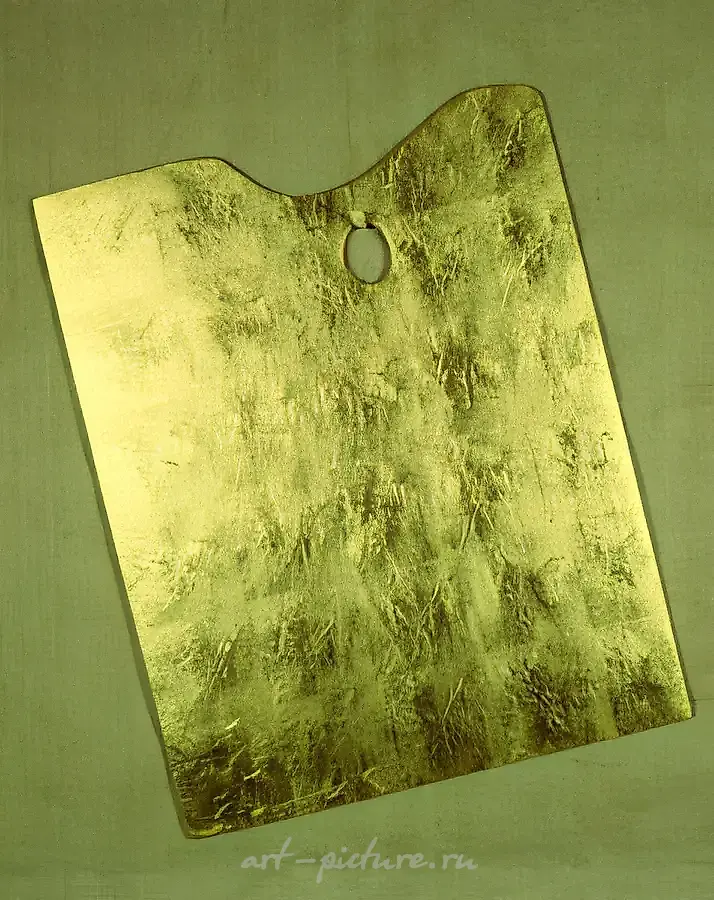
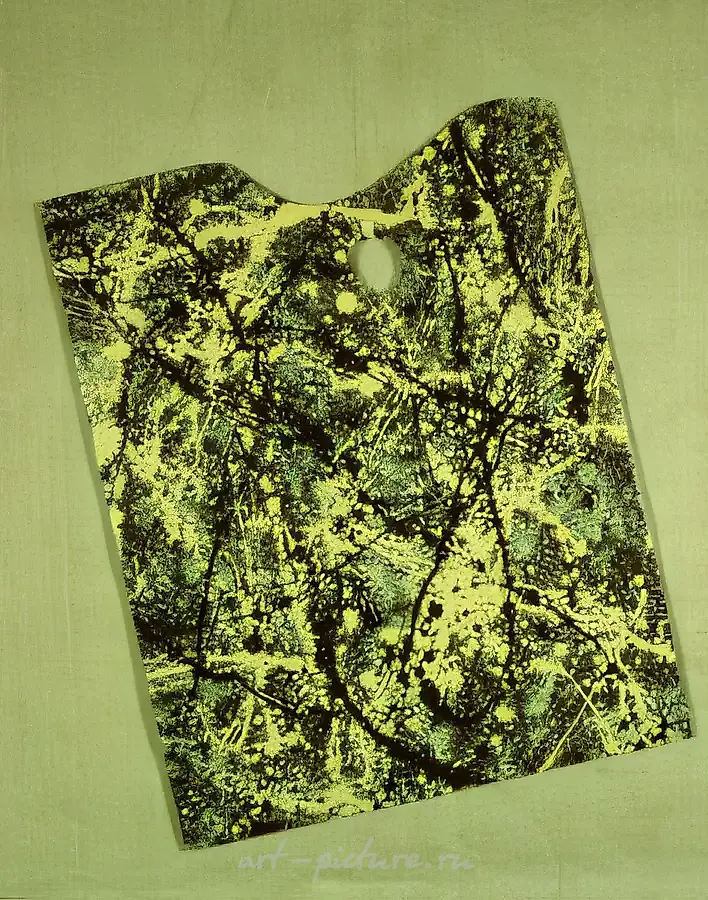
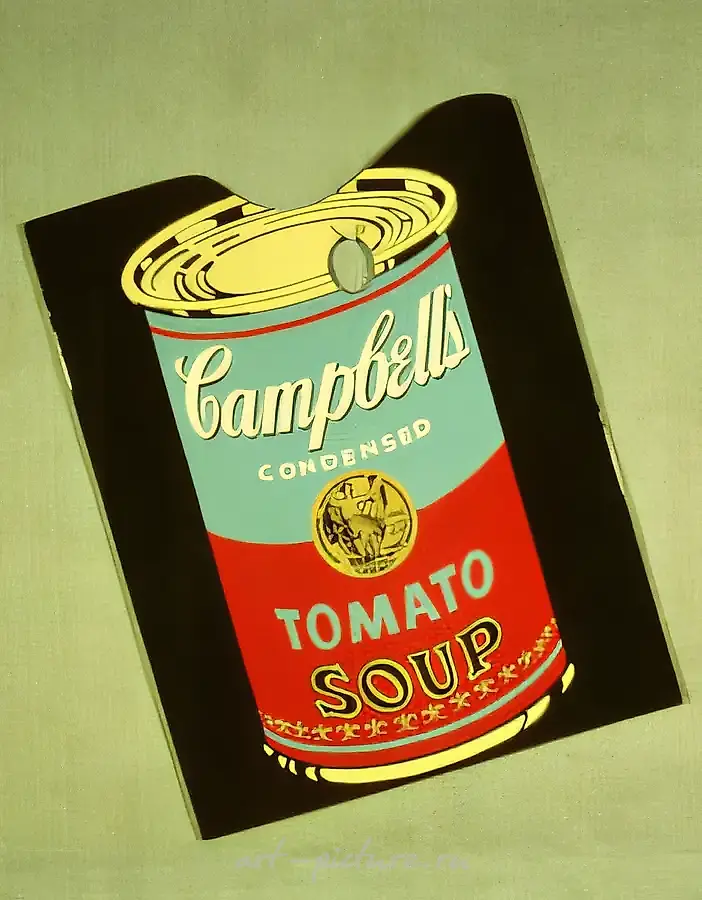
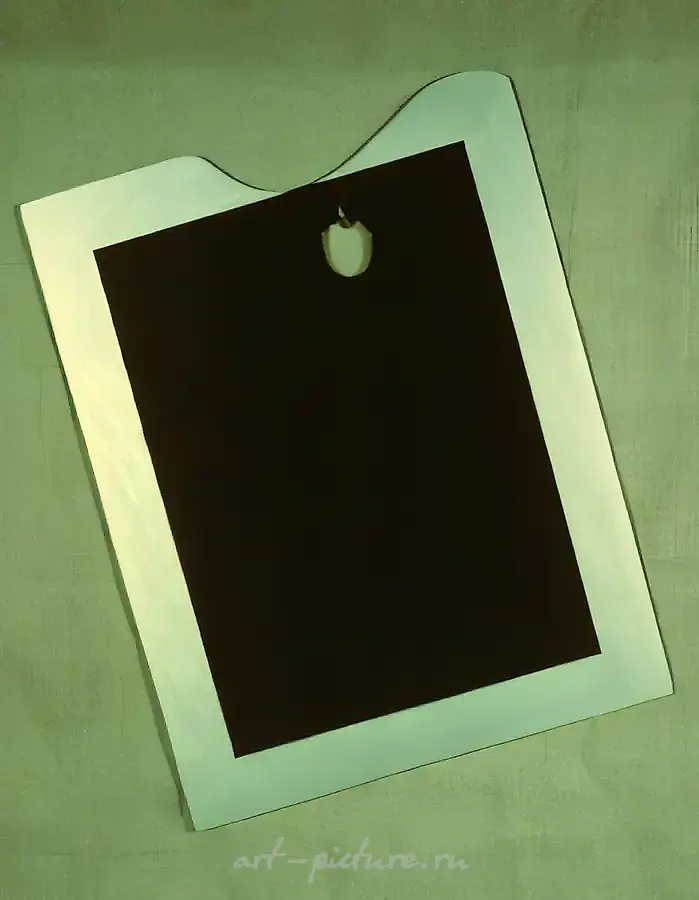
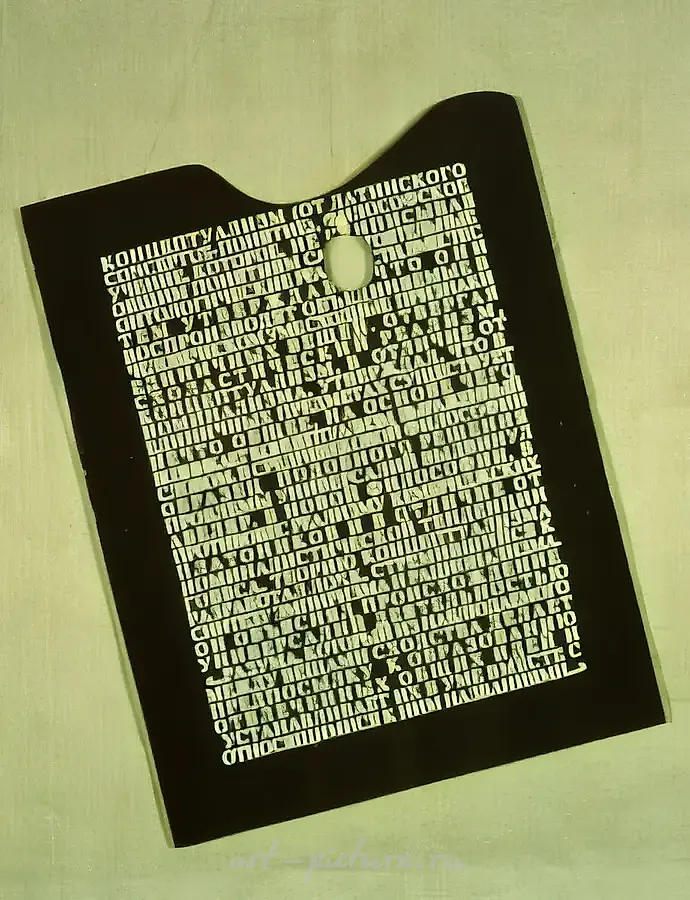
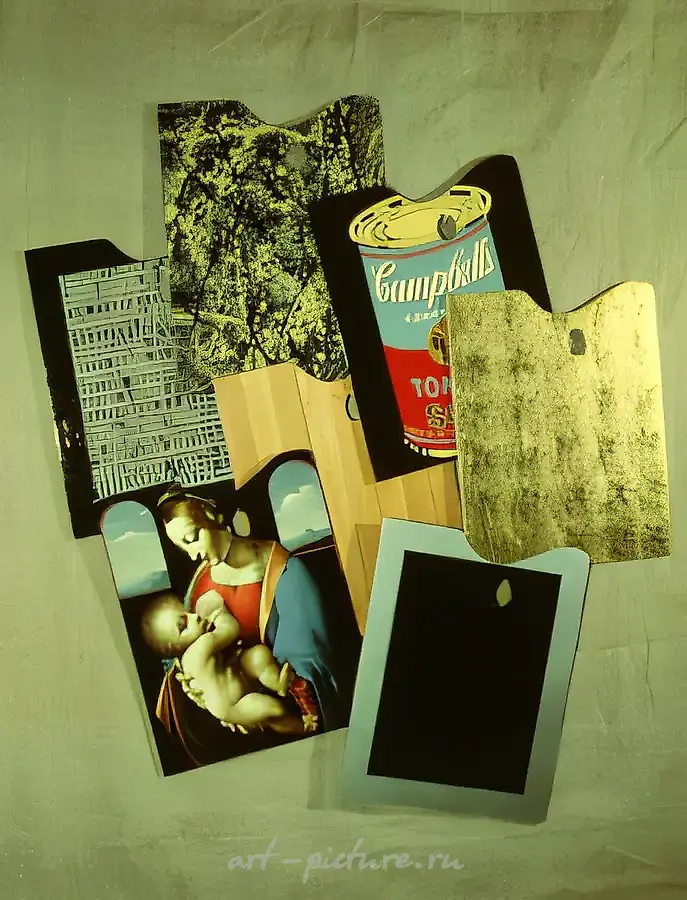
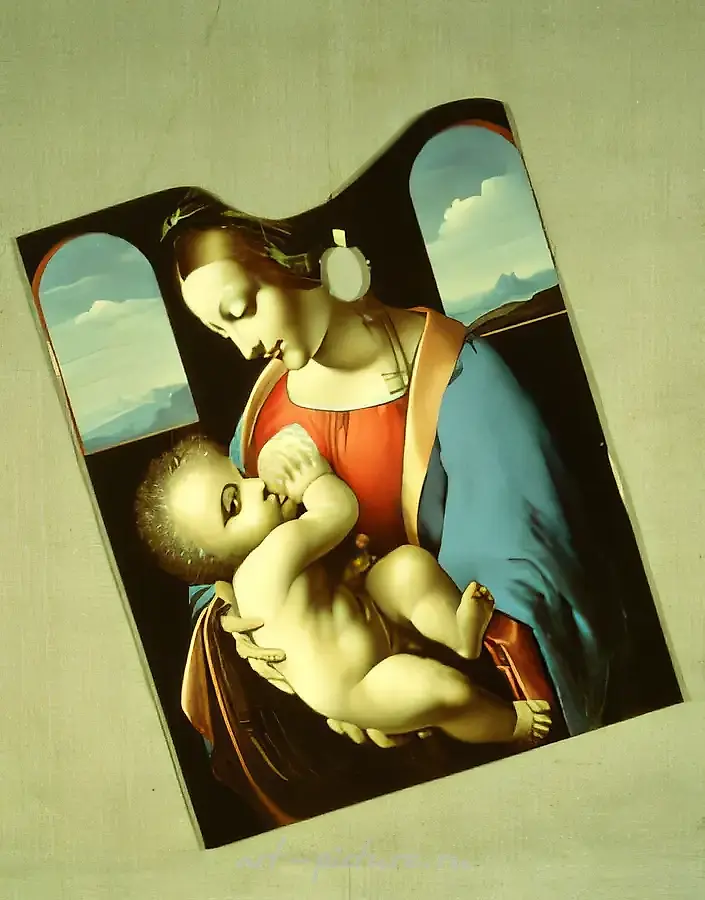
By the stylistic mixture of quotes, Farid Bogdalov's 'Domino' (1992) unquestionably belongs to postmodernism. Demonstrating the egalitarianism, or pluralism, characteristic of the movement, Bogdalov appropriates Warhol's Marilyn Monroe, a fragment of Pollock's painting, Malevich's suprematist square, and a smashed violin à la Arman; all this is 'integrated' through minimalist seriality. At the same time, everything is marked by a certain suffering, the pain of art unable to choose priorities or establish a hierarchy of values. The end result is powerful and elegantly conceptual thanks to the creation of a series of irreconcilable contrasts—such as between Malevich's black square and Warhol's golden square (the black of the anarchist flag, the gold of capitalism) or, most skilfully, between Pollock's dark linearity and lines of Russian text. Altogether, this forms a kind of concrete visual poetry created from once-poetic, now-prosaic images. Connotations multiply capriciously, but the most important—along with the denotation—is explained by the title: art has become a construction of dominoes, where tipping one tile makes everything fall. In other words, Bogdalov delivers, with magnificent intellectual irony, all the nihilism of postmodernism. Creating art is not just a game, but a race, where every artist tries to outrun and outdo the others, yet in the end, no one really emerges ahead—no one is really better in quality or more intellectually significant. Bogdalov's work is brilliantly entropic and absurd: it precisely expresses that visible dead end, and at the same time the unending multiplication, that terrifying, inescapable labyrinth in which postmodern art finds itself. Bogdalov creates a system where the parts can be rearranged at any moment, without essentially changing either the system or the elements themselves. All of them are like ironic suprematist squares. One modernist image is no better than another; any traditional image is just as good. There is an abundance of art, and perhaps Bogdalov appropriates all these once-avant-garde images of American and Russian art also to show that Russia can become as rich a capitalist society as America, and art can become as crucial a commodity in Russia as in America—but it's far from clear what it all means. Or perhaps it simply symbolizes the success of art, as well as its mass (over?)production in capitalist society, since many other works could have been constructed in the same way. Bogdalov's piece is a tour de force of artistic borrowing, but the author seems to be more aware than most of the irony of postmodernism.
D. Kuspit, 'The New Russian Art.' Catalogue of the exhibition 'New Russian Art: Paintings from the Christian Keesee Collection.' City Art Center, Oklahoma City, USA, 1994.
Works 9