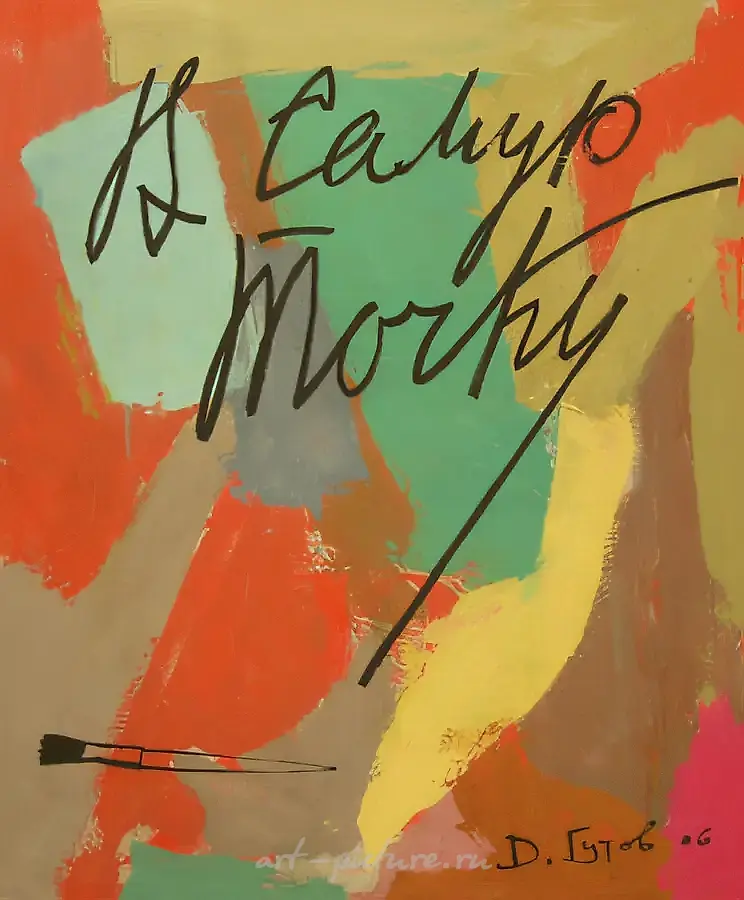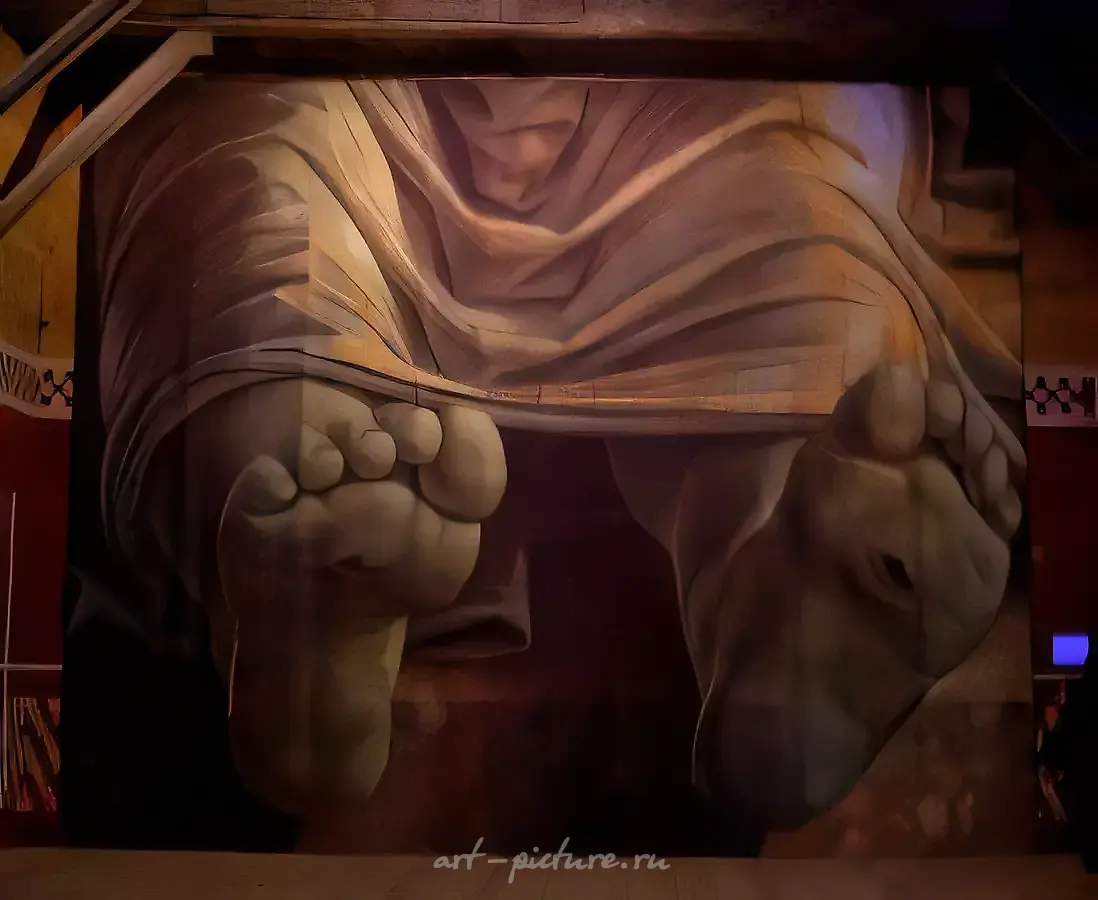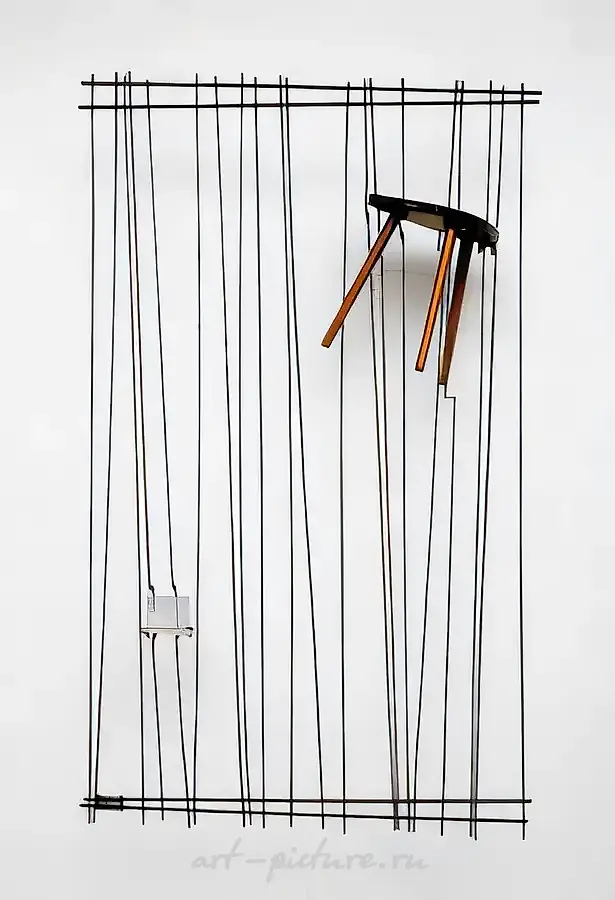
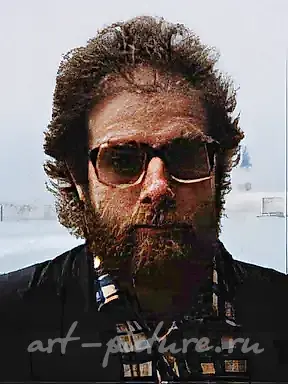
Gutov Dmitry Gennadievich
Born in 1960 in Moscow. Studied at the Moscow State Pedagogical Institute from 1978-80. Graduated from the I.E. Repin Institute of Painting, Sculpture, and Architecture, St. Petersburg (Department of Theory and History of Art) in 1992. Since 1988, has participated in over 90 exhibitions worldwide. Participant of major contemporary art biennials (Venice, Istanbul, São Paulo, Valencia, etc.). In 1993, became an editorial board member of the 'Art Journal.' In 1994, organized the 'Mikhail Lifshitz Institute' in Moscow. In 2002, named 'Person of the Year' in the arts section by Rambler. Participant in major world exhibitions: Venice Biennale (1995), Istanbul Biennale (1992), Manifesta, Rotterdam (1996), Valencia Biennale (2001), São Paulo Biennale (2002), Documenta 12 in Kassel (2007). Lives and works in Moscow. Personal website: http://www.gutov.ru
Works in collections
M. Gelman Gallery, Moscow; State Tretyakov Gallery, Moscow; State Russian Museum, St. Petersburg; State Center for Contemporary Art, Moscow; Contemporary Art Collection of the State Tsaritsyno Museum-Reserve, Moscow; Kurgan Regional Art Museum, Kurgan; Moderna Galerija, Museum of Eastern European Contemporary Art, Ljubljana, Slovenia; Museum of Actual Art ART4.RU, Moscow; Museum of Contemporary Art Sarajevo, Bosnia; DaimlerChrysler Collection, Berlin, Germany; Valencia Art Museum, Spain; Stella Art Foundation, Moscow.
Exhibitions and auctions
SOLO EXHIBITIONS:
1991 "Trifles of Our Life", Gallery on Trekhprudny Lane, Moscow;
1992 "How I Became an Artist" (with Y. Albert), "Laboratory", CCA, Moscow;
1992-93 "Portraits" (event), Regina Gallery, Moscow;
1993 "The 60s: Once Again About Love" (with E. Andreeva), CCA, Moscow;
1994 "Over Black Dirt" (with T. Hengstler), Regina Gallery, Moscow;
1995 "Mikhail Lifshitz: 90th Anniversary", CCA, Moscow;
1996 "Dilettantism in Art", M. Gelman Gallery, Moscow;
1999 "Morning Exercises", M. Gelman Gallery, Moscow;
2001 "The Blind", Non-conformist Art Museum, St. Petersburg;
2001 "Mom, Dad, and the TV", M. Gelman Gallery, Moscow;
2002 "Mom, Dad & Champions League", M. Gelman Gallery, Moscow;
2003 "I am an Outsider at This Celebration of Life", Moscow Fine Art, Moscow;
2004 "Conversation about Unclear Brush Strokes" (with K. Bokhorov), Fine Art Gallery, Moscow;
2005 "Everything I Created Before 70 Doesn't Count", M. Gelman Gallery, Moscow;
2005 "The Deep Blue Color of His Skin Speaks of a High Degree of Introspection", Matthew Bown Gallery, London;
2005 "Excess of Disinterested Contemplation", Cinefantom Club, Fitil Cinema;
2006 "Thaw", Nina Lumer Gallery, Milan;
2006 "Repetition, Canon, Return, Deceleration, Stupor", State Tretyakov Gallery, Moscow;
2006 "For the Right Movement of the Wrist", M. Gelman Gallery, Moscow;
2008 "Used", M & Y Gelman Gallery, Moscow.
GROUP EXHIBITIONS:
Highlights from 1988 to 2008 include youth exhibitions in Moscow, "Eidos" at the Youth Palace (Moscow), various shows at the Regina Gallery, the 3rd International Istanbul Biennale (1992), Venice Biennale (1995, 2007), Documenta 12 (Kassel, 2007), Manifesta (Rotterdam, 1996), São Paulo Biennale (2002), exhibitions across Russia and internationally (Berlin, Vienna, Düsseldorf, Helsinki, Florence, etc.), and representation in shows on Soviet and post-Soviet art.
Author about himself
Frankly, I really don't like my art. Every time I look at my own work, I think—My God, I went through so much, I had such emotional storms and turmoil. And this is all that's left of them. My timid, trembling metaphysical constructions are an admission of my own insecurity and anxiety.
Interview: Dmitry Gutov – Andrey Kovalev // Art Journal, 1994, No. 4, p. 43
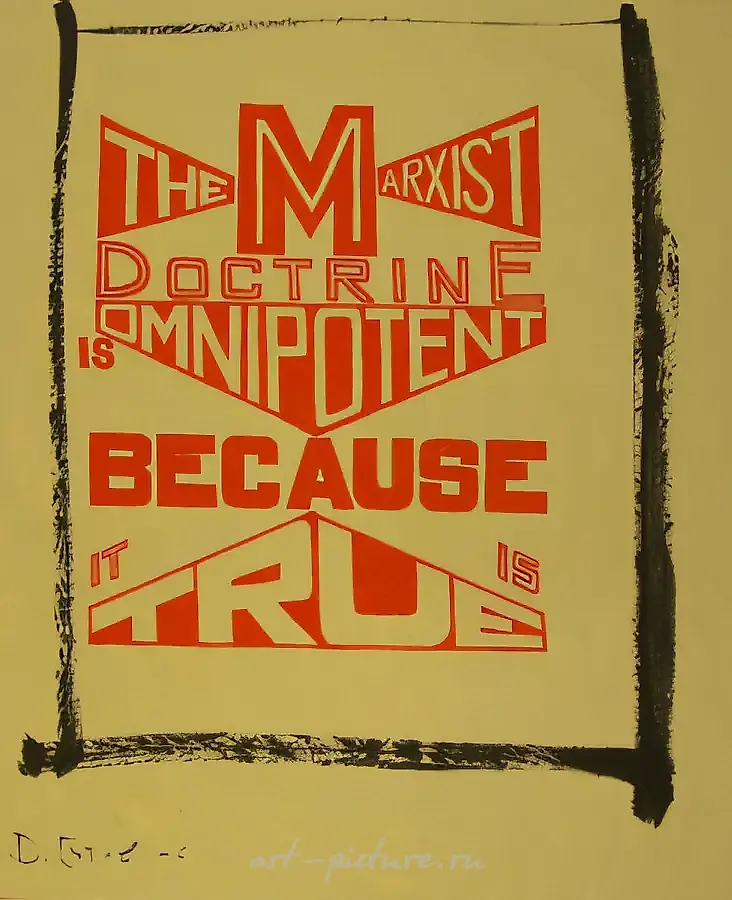
"For me, Lifshitz's texts remain sharp and relevant. Yes, naturally, Marxism, since our world is unable to organically cope with its problems. In fact, the description of the modern world, which I consider the most accurate, is found in the works of Karl Marx and, within the Soviet tradition, in the writings of Lifshitz."
"Simultaneously, I study various Chinese and Japanese texts on calligraphy and ink painting. About how to properly focus attention, how to correctly free the wrist and hand. This is in no way connected to postmodernism."
From the interview “Lifshitz lived, Lifshitz lives, Lifshitz will live! By default...”, by Dmitry Barabanov with Konstantin Bokhorov and Dmitry Gutov. Source: Artinfo.ru, 15.10.2004.
Critic
The innovative nature of Gutov's work lies in his remarkable ability to synthesize a unique personal amalgam and novel aesthetic alloy from disparate sources—purely painterly explorations (sometimes bordering on abstraction), graphic design, Eastern calligraphy, conceptual tradition, and intellectual studies in Soviet and world culture. The phenomenon of Soviet culture—analyzed by Moscow conceptualists—was fundamentally reinterpreted by Dmitry Gutov. He uncovered the legacy of the Marxist philosopher of art Mikhail Lifshitz—a living current, full of meanings relevant for the artist and tied not so much to the past as to the future. Gutov has actualized this legacy, turning it into a regular intellectual event (the Lifshitz Institute). His direct artistic work often involves translating intellectual fetishes into the painterly tremulousness of the traditional canvas.
Alexander Evangeli
Within the strategy of mastering reality, Gutov's poetics are highly individual: it can be described as the poetics of critical reality. The principles of this poetics are polemical both to the conservative preservationism of Vadim Zakharov and the 'hermeneutists', and yet do not align with the vitalism of Anatoly Osmolovsky and Oleg Kulik: reality, in his point of view, is not meaningless but pregnant with significance. The main thing is to direct consciousness to its thoughtful understanding, to decipher the meanings rooted within it. Therefore, the primary issue of the poetics of critical reality is attaining the ability to make objective judgments, where the reference point would not be text, but reality itself. Hence, its understanding of deconstruction as pure scholasticism and its demand for critical clarity and analytical richness from any expression. In artistic practice, this results in a drive for maximum reduction of language: reality manifests itself where language is minimized and transparent. In other words, existence becomes apparent where art disappears. This aesthetic asceticism signals an inner ethical pathos of the poetics of critical reality, its fundamental continuity with the tradition of Russian critical realism of the 19th and 20th centuries. However, the ethical strictness of this poetics does not prevent it from giving exceptional importance to the act of representation: after all, an objective judgment, once acquired, must be loudly proclaimed. Thus, art is first reduced, then exalted to spectacular theatricality. But how referential are objective statements in the poetics of critical reality? After all, they are nothing more than installation variations of works from the distant and recent past. In other words, the referent of Gutov's works is not authentic reality, but artistic reality. The self-reduction of language does not reveal reality but merely enacts tautological procedures, i.e., closing language in on itself. Thus, harsh critical realism turns into refined aestheticism. The symptoms of this poetics reveal the contradictions inherent in the formation of new critical consciousness: the ideological basis of Gutov's poetics is the resurrected Marxism, the so-called 'Leninist theory of reflection,' the theoretical legacy of Mikhail Lifshitz. Consistent in its focus on analytical rational opposition to the domain of nonsense and entropy, the new criticism nonetheless lacks an autonomous methodology and ends up being a result of recycling. Gutov professes his new orthodoxy with no less obsession than Osmolovsky and Kulik evoke the demons of power and chaos.
V. Miziano. "Fatal strategies." Exhibition catalog "No Man's Land. Art From the Near Abroad", vol. 1. Copenhagen, Denmark, 1995.
Works 17
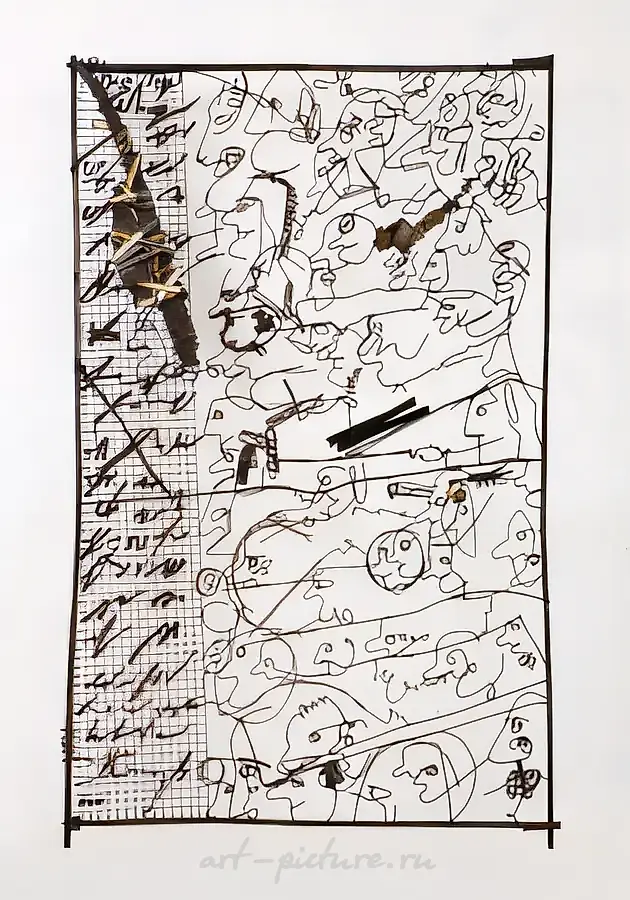
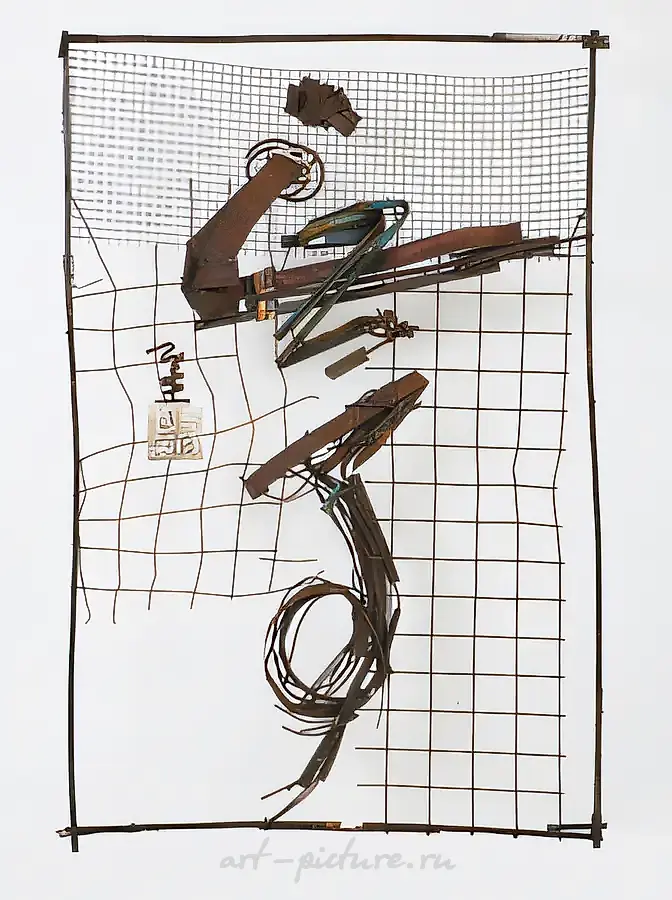
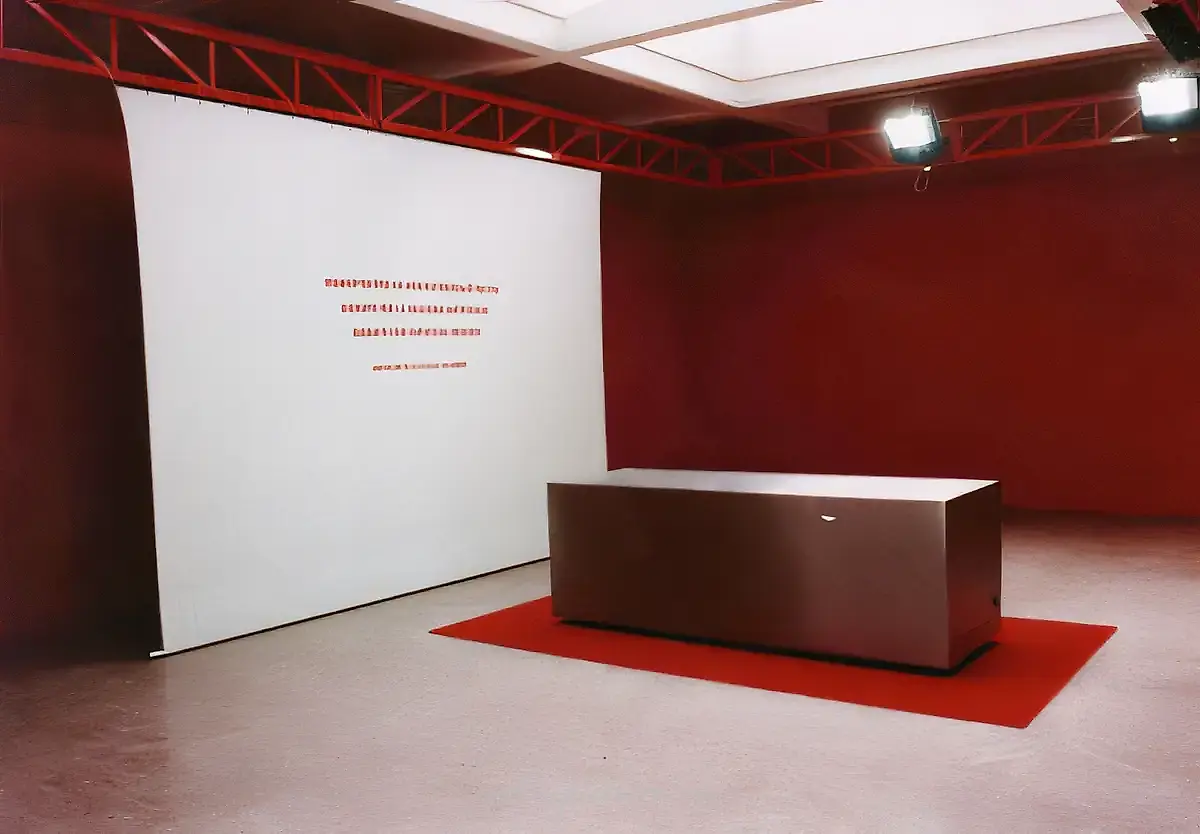
A page of the manuscript of "The German Ideology", From the chapter “Feuerbach”.