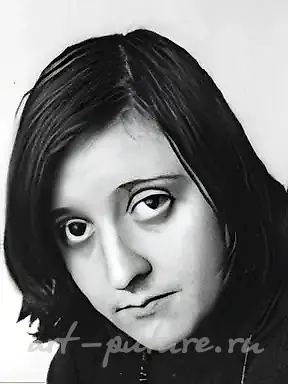
Yelagina Elena Vladimirovna
Elena Vladimirovna Yelagina (July 4, 1949, Moscow – September 25, 2022) was a Soviet and Russian artist, one of the leading figures of Moscow Conceptualism, and an author of objects and installations. She was an honorary member of the Russian Academy of Arts. Yelagina was the co-author and wife of artist Igor Makarevich (b. 1943); their partnership was one of the most successful and long-standing collaborations on the Russian art scene.
Biography
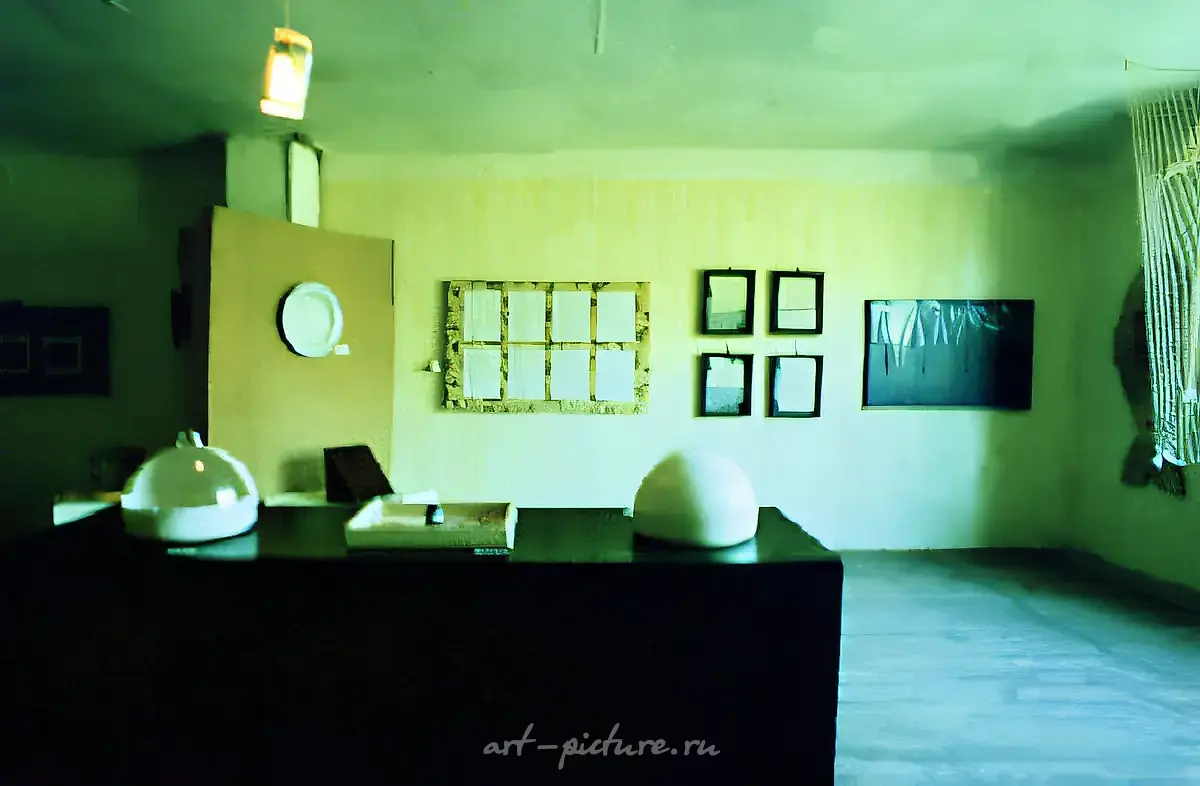
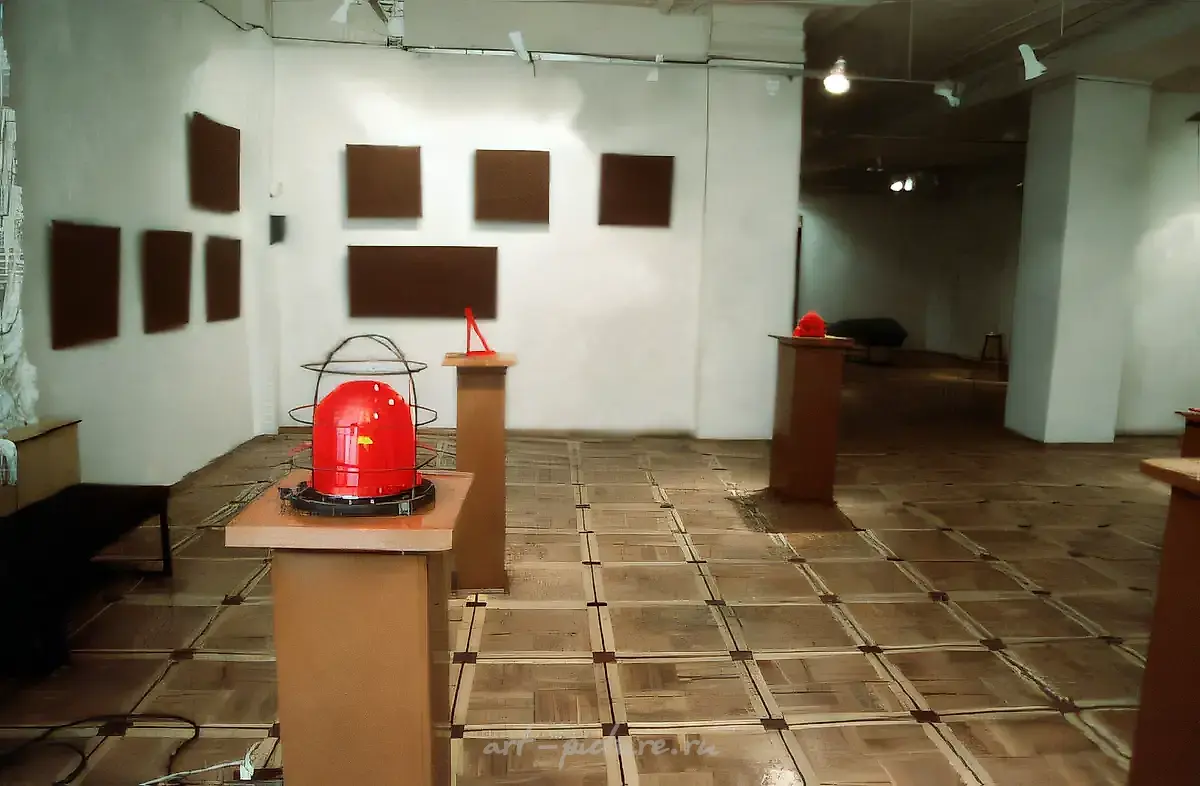
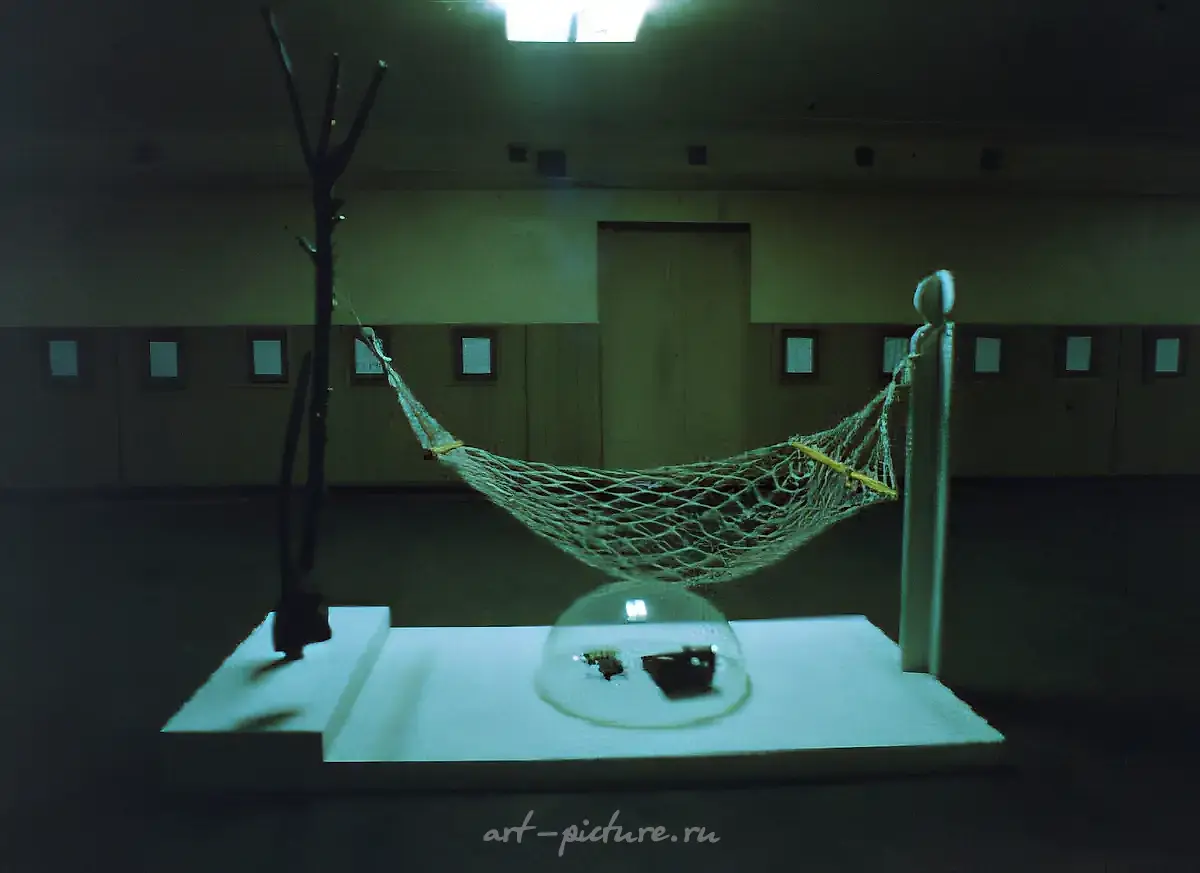
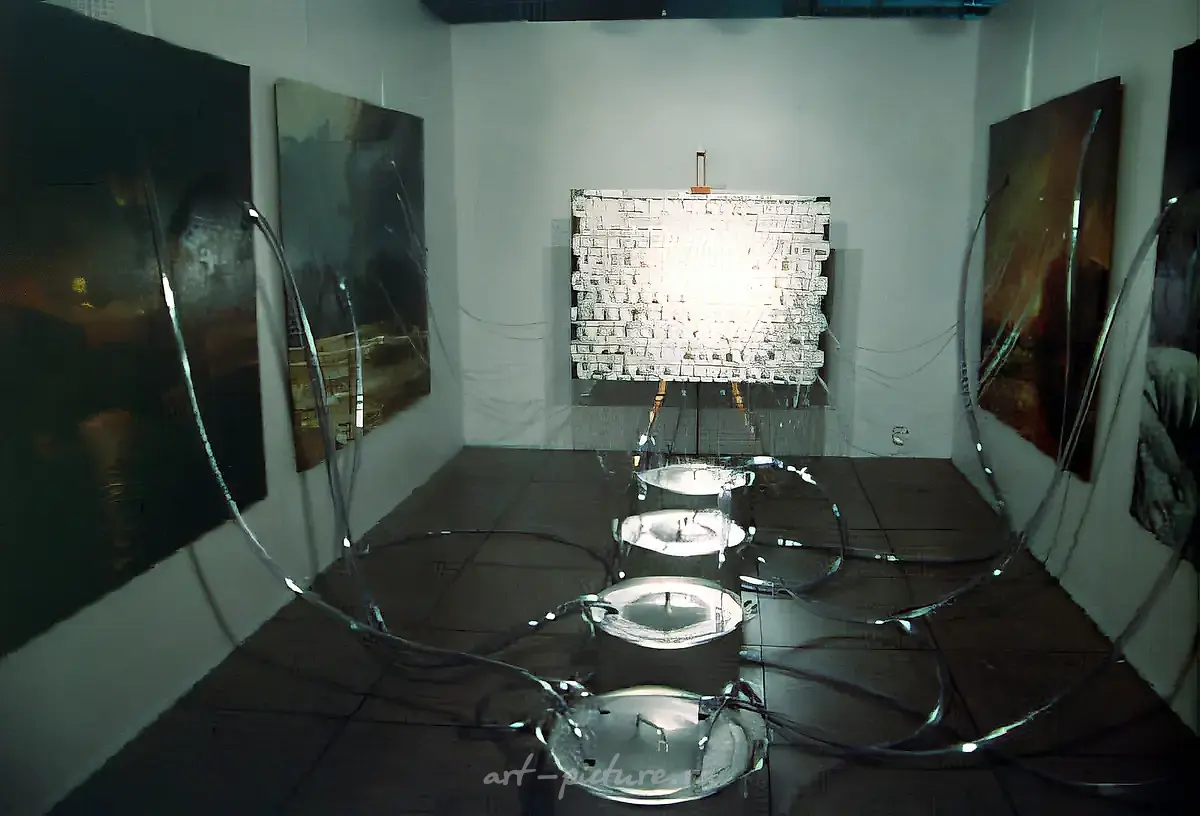
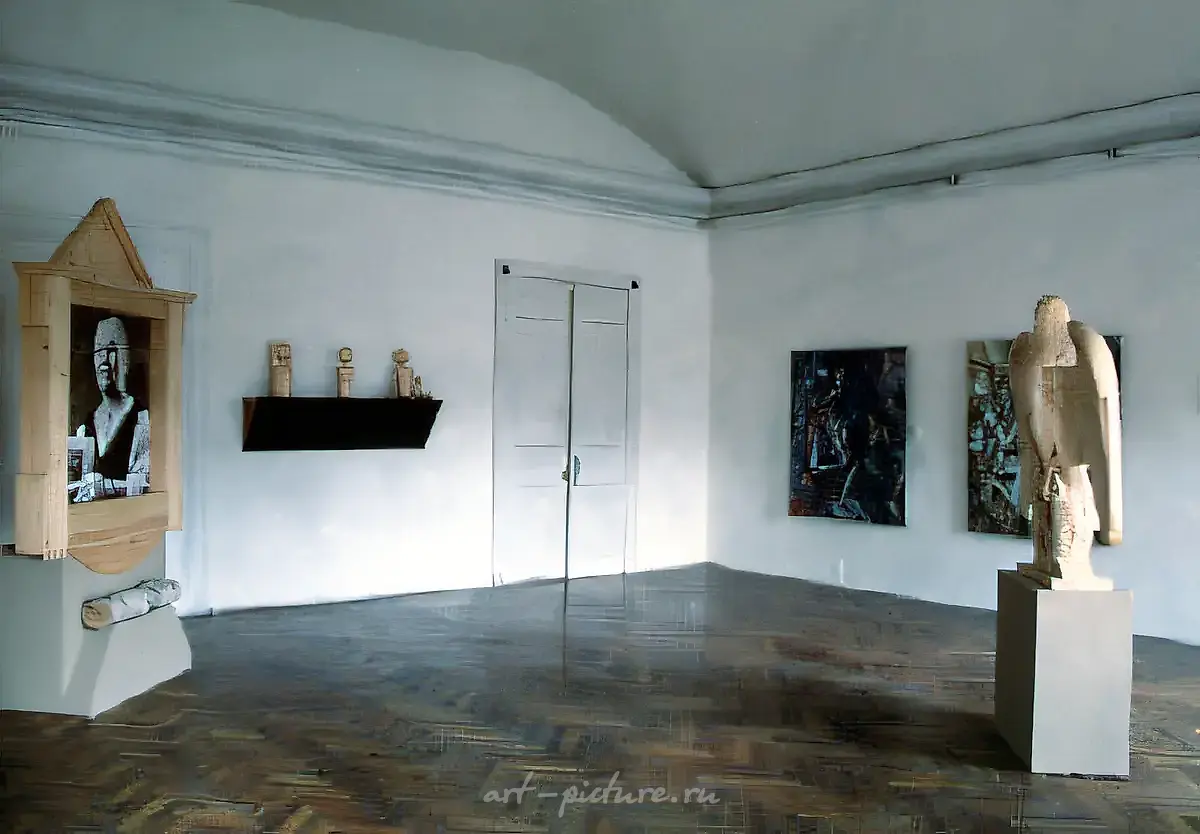
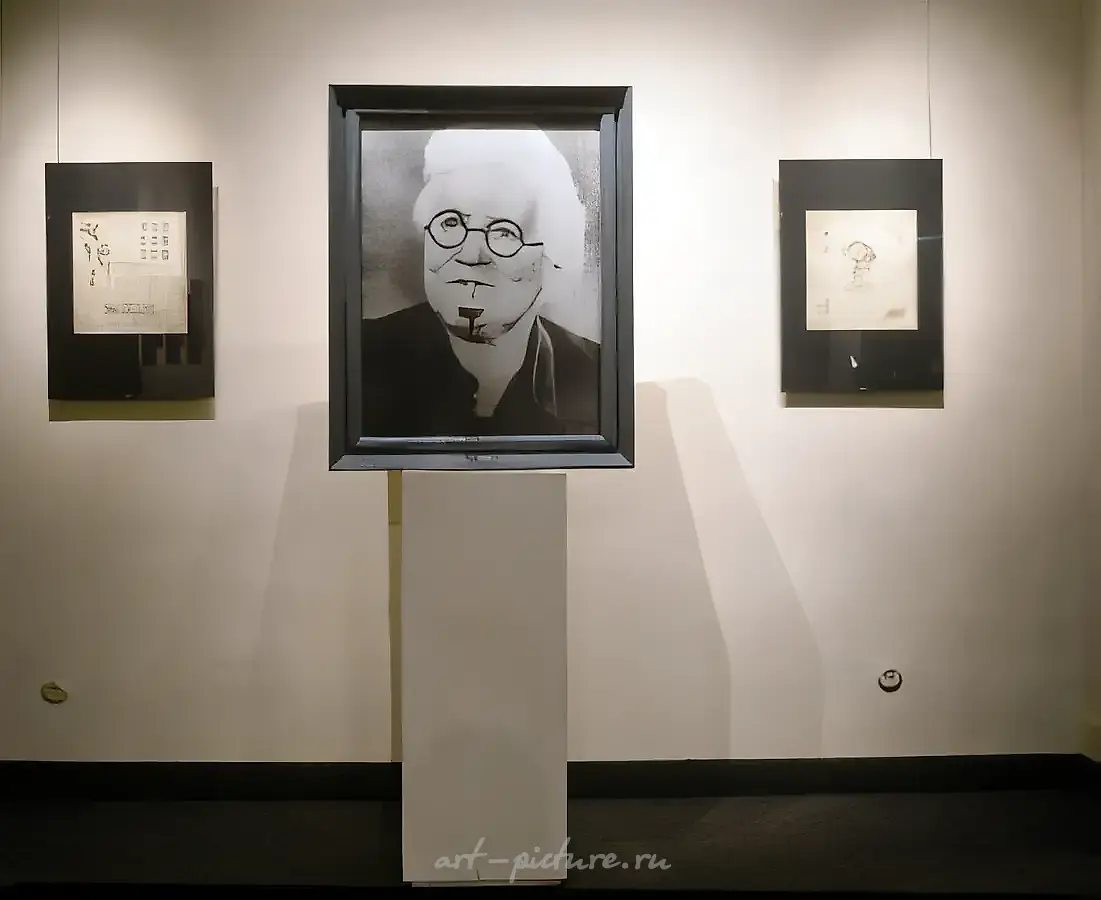
She was born on July 4, 1949. In 1967, she graduated from the Moscow Secondary Art School at the Surikov Institute. Until 1972, she studied under Alisa Poret, and almost simultaneously (1964–1976), she worked with Ernst Neizvestny. In 1976, she graduated from Orekhovo-Zuevsky State Pedagogical Institute. Since 1979, she was a regular participant in the “Collective Actions” group. From 1987, member of the Club of Avant-gardists (KLAVA). Since 1990, Yelagina often created major projects in collaboration with Igor Makarevich. Their first large-scale project was the “Closed Fish Exhibition.” Together, they prepared over 50 solo exhibitions, including shows at the State Tretyakov Gallery and “In situ” at the Kunsthistorisches Museum (Vienna).
In 2000, Yelagina co-founded and chaired the board of the "Artistic Projects" foundation. In 2011, she co-founded the public award "Caryatid" (Nizhny Novgorod). She passed away on September 25, 2022.
Works in collections
State Russian Museum, St. Petersburg
Contemporary art collection of the State Museum-Reserve Tsaritsyno, Moscow
Ludwig Museum, Cologne, Germany
North Carolina Museum of Art, USA
Duke University Museum of Art, Durham, USA
Berliner Gallery, Berlin, Germany
Galerie Art 5 III Inge Herbert, Berlin, Germany
Ogein Lombard, New York, USA
Exhibitions and auctions
SOLO EXHIBITIONS
1990 "Closed Fish Exhibition" (with I. Makarevich), MANI Museum, Moscow region
1992 "Within the Beautiful" (with I. Makarevich), L Gallery, Moscow
1993 "Girls and Death" (with I. Makarevich), Velta Gallery, Moscow
"Closed Fish Exhibition and Other Installations" (with I. Makarevich), Krings-Ernst Galerie, Cologne, Germany
1994 "Life on Snow," State Russian Museum, St. Petersburg
"Writer's Tale," Central House of Artists, Moscow
1995 "Croquet Game" (with I. Makarevich), Obscuri viri Gallery, Moscow
"Life on Snow. Journey on an Ice Floe," Krings-Ernst Galerie, Cologne, Germany
"How to Survive Summer Snow," Palto Gallery, Moscow
"Flight – Departure – Disappearance. Moscow Conceptual Art," Prague, Czech Republic; Berlin, Kiel, Germany
1996 "Laboratory of the Great Work," Obscuri Viri Gallery, Moscow
"How to Draw a Horse (Part Two)," Central House of Artists, Moscow
"Visiting a Fairy Tale" (curator O. Sargsyan), CSI, Moscow (catalog)
"FLUXUS. Yesterday. Today. Tomorrow. History Without Borders," Central House of Artists, Moscow
"Artoteka," National Center for Contemporary Arts, Central House of Artists, Moscow
International Art Fair ART-MOSCOW, Central House of Artists, Moscow
"Zone," State Tretyakov Gallery, Moscow
"10 Years of the Club of Avant-gardists," Peresvetov Lane, Moscow
"Three Cards," ROSIZO, Moscow
"Russian Atelier," Amsterdam, Netherlands
"Borders of Interpretation," Russian State University for the Humanities, Moscow (catalog)
"Moscow Studio," Chemistyle Gallery, Washington, USA
... [and numerous others]
GROUP EXHIBITIONS
1988–1995: Participated in major group shows in Moscow, Cologne, New York, Hamburg, Paris, Amsterdam, Tokyo, Munich, and other cities.
Author about himself
I was born in Moscow in 1949. My father was a children's writer, and my mother was a chemist; they were people of their era. Family albums hold photographs of my mother as a schoolgirl sitting next to Valery Chkalov and my father as a young naturalist captured with the plant-breeder Michurin. From an early age, I had a contradictory interest in word and image, which I later identified as two creative realms within me. I wrote ironic plays and studied at the Moscow Secondary Art School. Later, I studied sculpture with Ernst Neizvestny and painting with Alisa Poret, while also attending lectures at the Faculty of Philology. The Neizvestny studio, where I worked for twelve years until his departure, could be considered the intellectual and artistic heart of an entire era of our unofficial art.
Alisa Ivanovna Poret would have me create 'cheerful little still lifes,' relate stories about her teachers Petrov-Vodkin and Filonov, and show me surrealist staged photographs of OBERIU members. As a close friend of Kharms and Vvedensky, she possessed unpublished archival manuscripts, diaries, and unique photographs.
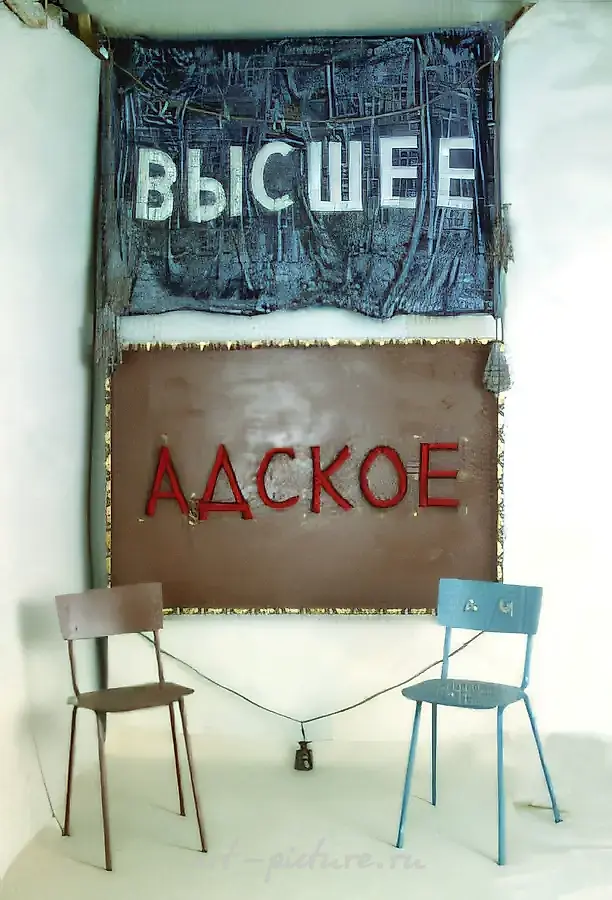
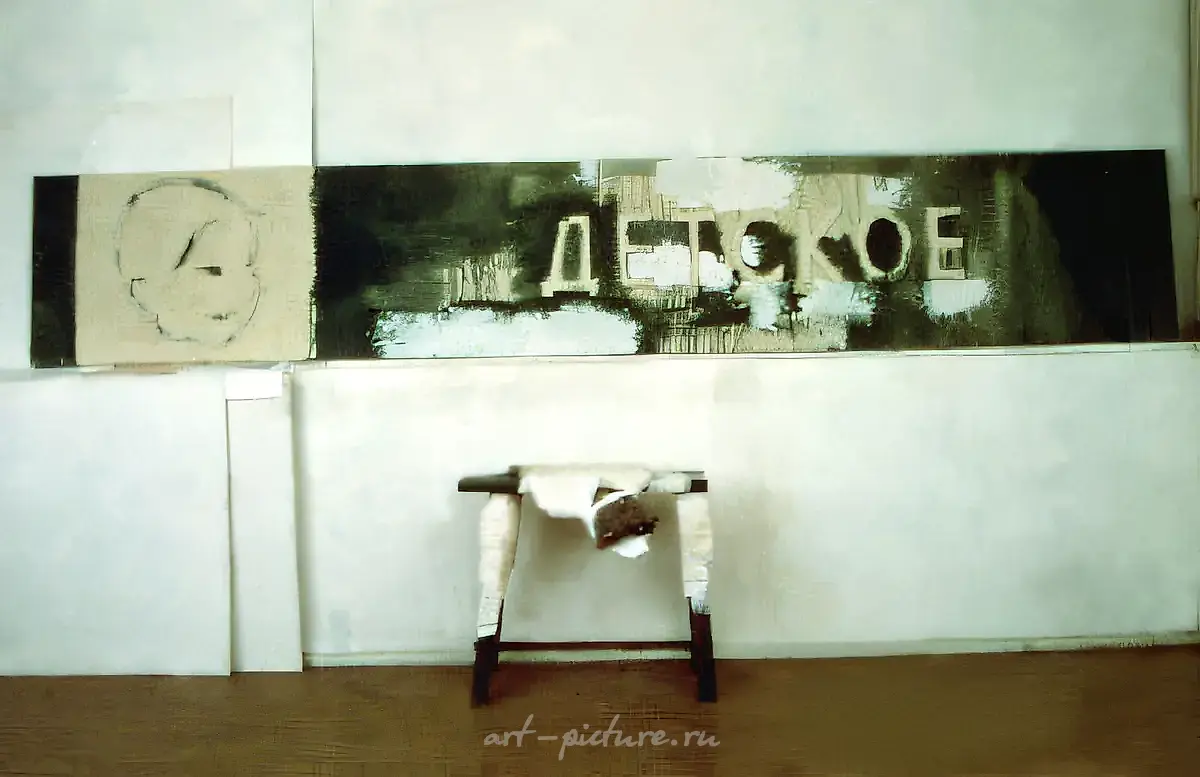
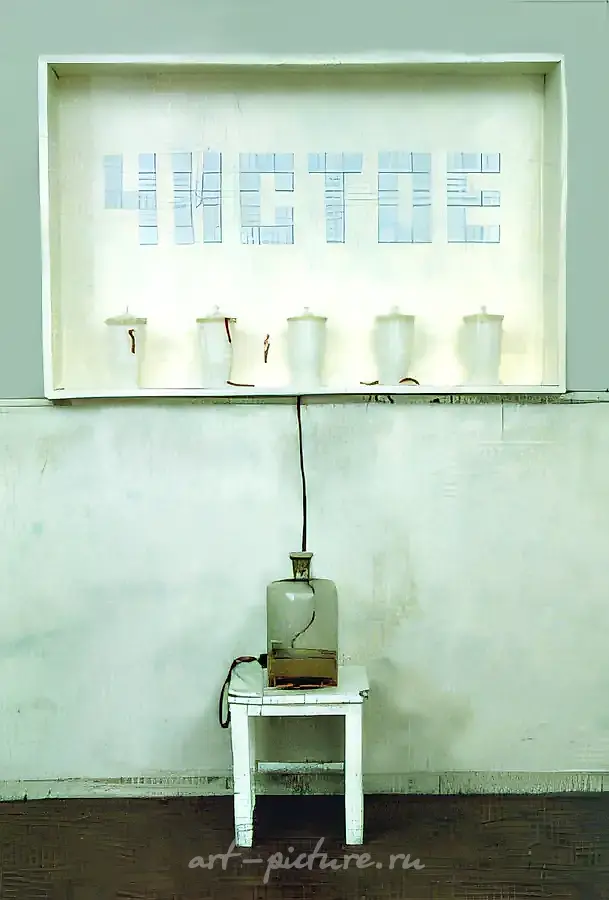
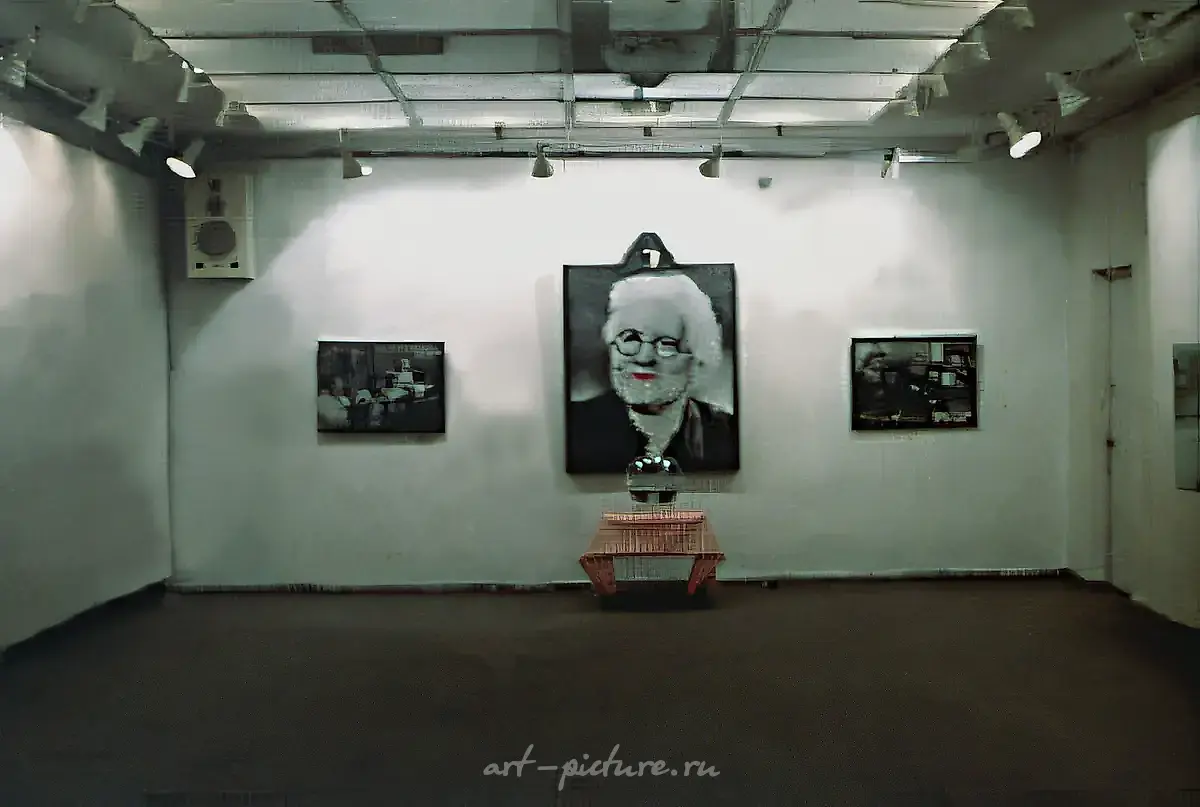
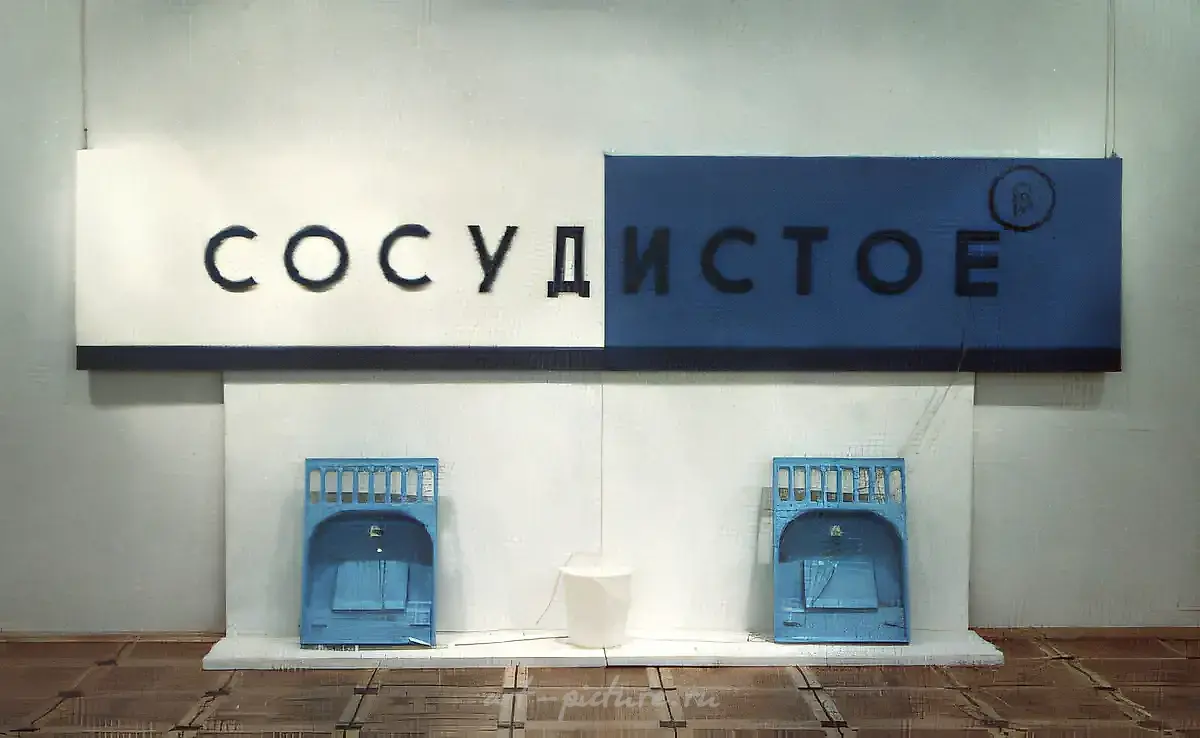
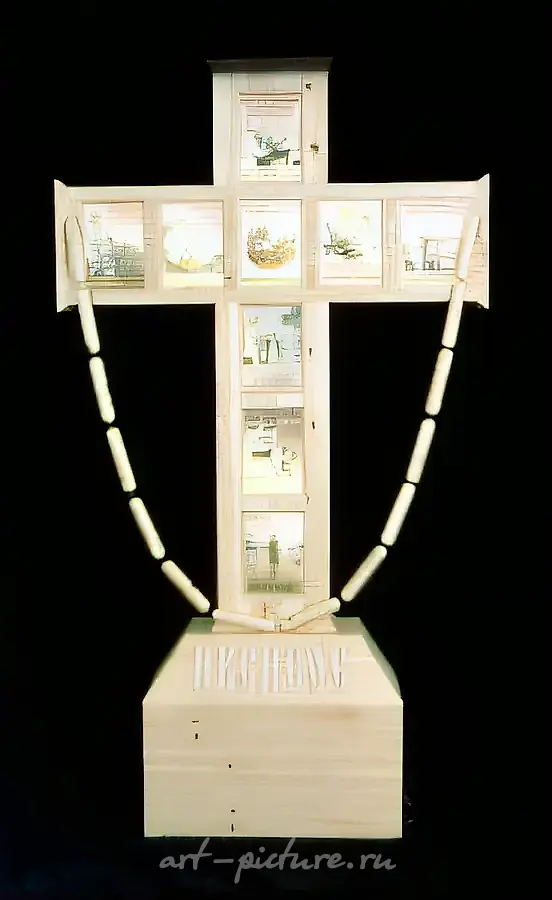
From 1979, I became a regular participant in the "Collective Actions" group. In the late 1980s, I managed to unite in my creativity two previously divergent impulses. Now, a separated word is accompanied in my objects by illustrative elements that comment on it and enter into diverse relationships with it. Working with the word, I found what I call "pathos of the neuter gender," focusing on the process of substantivizing adjectives and participles in the neuter: thereby, the word loses its original concrete meaning and acquires something abstract and elevated. Thus, the tautology of the verbal-image series generates a specific illusive cultural-semantic space. The external structure of the objects uses various types of traditional ideological clichés. On one hand, verbal stereotypes can take tangible forms when materialized; on the other, utilitarian objects acquire the status of a global symbol. Since 1990, in major projects I often work in collaboration with Igor Makarevich.
Critic
Elena Yelagina and Igor Makarevich have, for many years, been engaged in the archaeology of Soviet-ness, uncovering the history of the signs of self-evidence that marked us for decades. Behind their installations lie anonymous texts from the Stalinist period, once extremely mass in reach and now securely forgotten; under the humble guise of artists-restorers, they seek visual equivalents for these texts, reviving their spontaneity and immediacy of impact. Rendering narrative into visual form is associated with a certain theatricality—viewers are required to believe in the fiction presented to them and learn to move within it.
– M. Ryklin, catalogue of the exhibition "Life on Snow and Other Installations," State Russian Museum, St. Petersburg, 1994.
The vein of contemporary artistic consciousness represented not only by Makarevich and Yelagina, but also, for example, by writer Vladimir Sorokin, aims not to rationally describe or analyze, but to respond somehow to the cultural task at hand—a task still unfinished, for both the book of the elderly crippled peasant woman and the instructions for Red Army soldiers on how to properly bury their remains in the snow belong not to the realm of professional culture but to the layer between culture and reality that, in the 20th century, generated some of the most astonishing and curious phenomena, evoking envy in post-totalitarian generations. Only an author such as Platonov, whose name is immediately recalled in the atmosphere of this exhibition, might compare. Makarevich and Yelagina are myth-making artists. Their installations possess the heavy atmosphere of a romantic fairy tale with a tragic ending. They describe the world of ideology but on the fundamental level where only the problem of survival remains. The local-exotic (sleds and snowshoes) appears here as something primal and universal.
"Glass, tin, wood"—three magnificent exceptions describing the "nature of things," become in Makarevich and Yelagina's work "wooden, snowy, fishy." The exceptional, the incorrect, the strange, are essential. It is the combination of universality and marginality, significance and insignificance, that made not only the charm but also the fame of the reflective art of the 1970s, from which Makarevich and Yelagina emerged, both former members of the legendary conceptualist group "Collective Actions." After the major representatives of this line of Russian art left the country, de jure or de facto, and others considered themselves retired, Makarevich and Yelagina stayed at their post awaiting a historically significant change that's not yet in sight. One might sense a degree of fatigue and decadence in their installations—but it is the decadence of a great era with which they endlessly and deeply, if pessimistically, bid farewell.
– E. Degot', "Life on Snow Ends Tragically," Kommersant-DAILY, June 6, 1994
The gesture of Makarevich and Yelagina is thus almost contrary to Sots Art: not in adding another, ironic subtext under ideology, as a new 'edology,' but rather in stressing the plan of the signifier—the material presence of the artwork, open to view. The 'upper floor' of the sign is free of connotations, which their system avoids (significantly, for the 'Fish Exhibition,' it's important to restore words to their denotative, i.e., literal meaning). All this constitutes the aforementioned rejection of ideology in favor of ontology.
– E. Degot', 'The Name of the Fish,' Artograph, 1993, No.1
Works 12