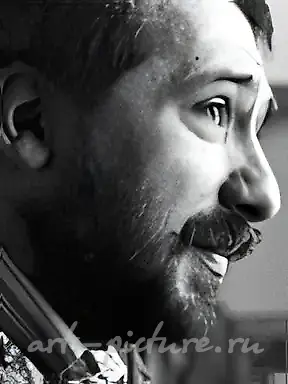
Kupriyanov Vladimir
1954 Born in Moscow
1976 Graduated from the Institute of Culture (major in Theatre Directing)
1984-94 Associate Professor at the Moscow Printing Institute
Currently teaches the 'Art Photography' course at the A. Rodchenko School.
Works in collections
Stedelijk Museum, Amsterdam, Netherlands
Moscow House of Photography, Moscow
National Centre for Contemporary Arts, Moscow
Incombank, Moscow
Museum of Modern Art, Ljubljana, Slovenia
Pacific Press Service, Seoul, South Korea
P. Halonen, Helsinki, Finland
Landeskulturzentrum Salzau, Kiel, Germany
Galerie Wewerka & Weiss, Berlin, Germany
M. Pausebach, Cologne, Germany
San Francisco Museum of Modern Art, San Francisco, USA
Joseph Baio, New York, USA
Joshua Smith, Washington, DC, USA
Zimmerli Art Museum at Rutgers University, New Brunswick, NJ, USA
Works are held in collections in the UK, Germany, Spain, Italy, Russia, USA, Finland, France, Japan.
Exhibitions and auctions
SOLO EXHIBITIONS
1983 Editorial Office of 'Construction Newspaper', Moscow
1990 'Mittelrussische Landschaft', InterArt Agentur fur Kunst, Berlin, Germany
1991 'Forum Stadtpark', Graz, Austria
1992 'Rodionovy', 'School' Gallery, Moscow
1994 'On the Ghostly', 'School' Gallery, Moscow
1995 'Hermitage', 'Gallery 21', St. Petersburg
'Photoarbeiten 1981-1995', Haus am Waldsee, Berlin, Germany
'Miniatures', Art 5 III. Galerie Inge Herbert, Berlin, Germany
1996 'Methods for Resolving Vanishing Quantities' (with D. Prigov), XL Gallery, Moscow
'PreHistory', State Russian Museum, St. Petersburg
1997 'Power—Territory—Art', 'Today' Gallery, Moscow
1998 'Return of Time', Architect's House, Nizhny Novgorod
'Central Russian Landscape', Museum of Northern Development, Gubkinsky, Western Siberia
'Area', Palais Jalta, Frankfurt am Main, Germany
1999 'Russia – Siberia – Gubkinsky', Museum of Northern Development, Gubkinsky, Western Siberia
'Les Infants', 'New Collection' Gallery, Moscow
'Province', National Centre for Contemporary Arts, St. Petersburg
'Art Manezh', Central Exhibition Hall 'Manezh', Moscow
2000 'Faces', Museum Project, 'Proarte', Museum of the History of St. Petersburg State University, St. Petersburg
'Main_Berg', 'ARCO 2000' International Contemporary Art Fair, Madrid
'Faces', Queen Elizabeth II Conference Centre, London
'24.07.1954, 15.09.1959, 15.04.61, 6.09.1964', 'Regina' Gallery, Moscow
Solo Exhibition, 'Carre Noir' Gallery, Paris
2002 'Inventories', Moscow House of Photography, Moscow
2003 'Romantic Cycle', Empire Art, Mainz (catalogue)
'About the Eighties. 1981-1989', Moscow House of Photography, Moscow (catalogue)
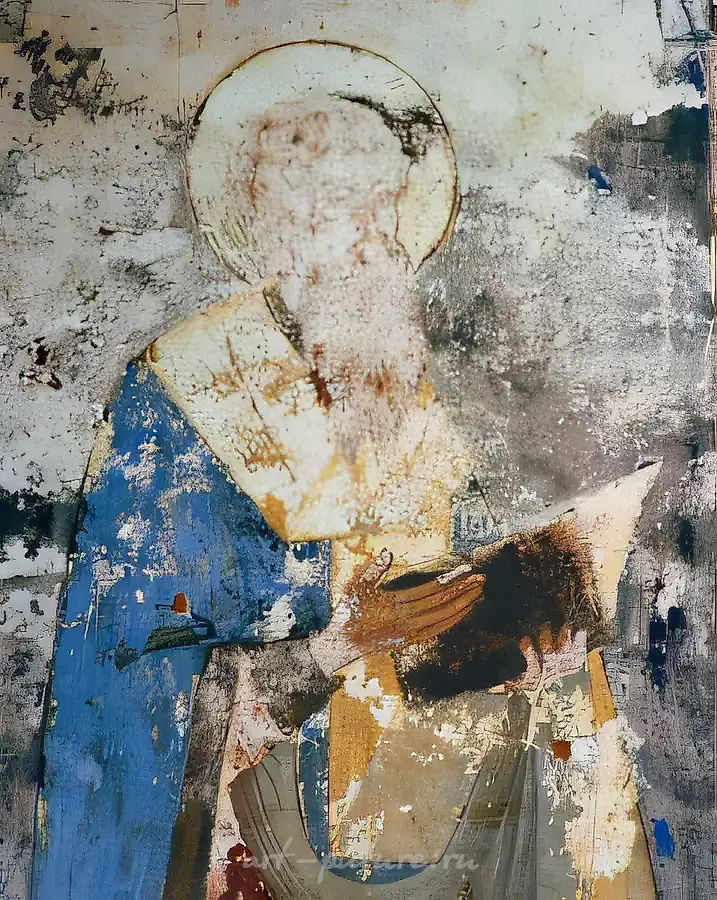
2004 'Central Russian Antiquity. Last Judgment', Photo Project, WAM Gallery, Moscow
'Faith, Hope, Love', VP Gallery, Moscow
2005 'Glaube, Liebe, Hoffnung', Gallery & Edition J.J. Heckenhauer, Berlin
'Central Russian Antiquity. Last Judgment', Works 1995-2005, Photo Project, Ars-Forum Centre of Contemporary Art, Yaroslavl
'Central Russian Antiquity. Last Judgment', Works 1995-2005, Photo Project, Russian Gallery, Tallinn
2006 'Volga Facades', National Centre for Contemporary Arts, Nizhny Novgorod Branch, Arsenal of Nizhny Novgorod Kremlin
GROUP EXHIBITIONS (excerpted)
1980 'Five Young Photographers', Youth Club 'Rainbow', Moscow
1987 'Kupriyanov and Shcherbakov', Sculptor's House, Moscow
1988 'Contemporary Soviet Photography', Photography Museum, Lausanne, Switzerland
1990 'Da Mosca', Turin, Italy
'Op-positions: Commitment and Cultural Identity in Contemporary Photography'
II International Biennale of Photography, Center for Photography, Rotterdam, Netherlands
1990-91 'The Missing Picture: Kupriyanov, Mikhailov, Piganov, Serebryakova, Shulgin', MIT, Boston, USA
1992 'Internationale Foto-Triennale', Esslingen, Germany
III International Istanbul Biennial, Istanbul, Turkey
'a Mosca... a Mosca...', Villa Campoleto, Ercolano; Municipal Modern Art Gallery, Bologna, Italy
1995 'Beyond the Borders', Kwangju Biennale 1995, Korea (catalogue)
1996 'Face à l'Histoire. 1933–1996', Centre Georges Pompidou, Paris, France (catalogue)
1997 'Moscow 1980-1990', in the framework of the photo-festival 'The History of Moscow Through the Eyes of Russian and Foreign Photographers', dedicated to the 850th Anniversary of Moscow, Manezh, Moscow (catalogue)
'Real and Imaginary Russia', Russian Cultural Center, Budapest, Hungary
1998 'Exploitation of Photography' (with V. Efimov, V. Koshlyakov, I. Piganov, G. Chahal), Central Exhibition Hall 'Manezh', Moscow
II Moscow International Photo Biennale, Central Exhibition Hall 'Manezh', Moscow
'Transformation', Mostra internazionale d’arte contemporanea, Teatro Miela, Trieste, Italy (catalogue)
'Fauna', National Centre for Contemporary Arts project, 'New Manezh' Exhibition Hall, Moscow - Zachęta Gallery of Contemporary Art, Warsaw
'Dedicated to A.S.P.', NCCA exhibition project, Ars Forum Center of Contemporary Art, Yaroslavl - Municipal Art Gallery, Kostroma – Ples State Historical, Architectural and Art Museum Reserve - Nizhny Novgorod Art Museum - Nizhny Tagil Art Museum, Nizhny Tagil - Ekaterinburg Regional Museum of Fine Arts, Ekaterinburg - State Art Museum named after Nesterov, Ufa - Samara Art Museum, Samara - Kazan Art Museum, Kazan
1999 'Transformation', Mostra internazionale d’arte contemporanea, as part of Venice Biennale, Venice, Italy
2000 III Moscow International Photo Biennale, Moscow
Festival Garonne, Toulouse, France
'2000+ARTEST COLLECTION', Museum of Modern Art, Ljubljana, Slovenia
2001 'Artistenmetaphysik – Friedrich Nietzsche in der Kunst der Nachmoderne', Haus am Waldsee, Berlin (catalogue)
'Manufactory', Fashion and Style in Photography, 'New Manezh' Hall, Moscow
'Communication between the arts', 1st Valencia Biennale, Valencia, Spain (catalogue)
'The Art of Eastern Europe', Orangerie Congress – Innsbruck, Austria
2002 'Moskvos Laikas', Center for Contemporary Art, Vilnius, Lithuania
IV Moscow International Photo Biennale, Moscow
2003 'Horizons of Reality', MuHKA, Antwerp (catalogue)
'Neue Ansätze - Contemporary Art from Moscow', Kunsthalle, Dusseldorf (catalogue)
'Berlin Moscow - Moscow Berlin 1950–2000', Martin-Gropius-Bau, Berlin (catalogue)
'ART Constitution', Moscow Museum of Modern Art, Moscow (catalogue)
2004 'Moscow Berlin - Berlin Moscow 1950–2000', State Historical Museum, Moscow (catalogue)
V Moscow International Photo Biennale, Moscow (catalogue)
2005 1st Moscow Biennale of Contemporary Art, parallel program project 'Do Not Be Afraid' – 'The Guards Met Me, Patrolling the City…'
REFLEXION, exhibition project of NCCA, Moscow (catalogue)
MOSCOW BREAKTHROUGH, Academia Rossica, London
2006 'Belief' – Singapore Biennale 2006, Singapore (catalogue)
2007 'Time of the Storytellers – Narrative and Distant Gaze in Post-Soviet Art', Museum of Contemporary Art KIASMA, Helsinki, Finland (catalogue)
'Progressive Nostalgia', Centro per l’arte contemporanea Luigi Pecci, Prato, Italy (catalogue)
'Returning of Memory', Kumu Art Museum, Tallinn, Estonia (catalogue)
'On Geekdom', Benaki Museum, Athens, Greece (catalogue)
Author about himself
Do you have an artistic credo?
Through real and simple analogies to an indefinable unity.
Does the category of the new exist for you in art?
It does exist, but most of it lies not in the territory of art itself, but in those new reference points of life's movement that need to be identified and determined first and then try to predict their direction.
How is the originality of an art project defined?
By the clarity of those very definitions.
In your opinion, what are the criteria for 'truth' in art?
'Truth' is the correctness of the proposed directions, verified by history.
Do you target any specific audience, and who is it?
Initially, it was specific artists. In the process of working, it was necessary to set a high bar, with the basis being their professionalism and demands. Then there arose a need to consider a wider audience, not as a mass satisfying the artist's vanity, but as different levels of consciousness.
How do you feel in the contemporary post-Soviet reality?
I feel fine in the post-Soviet era, since the complexity of the work and its implementation depends on myself. The Perestroika time was very difficult; for two or three years I did almost nothing. The opportunities seemed deceptive, there were not enough exhibition venues, and previous experience was founded on personal resistance.
The way out of this state was the work 'Central Russian Landscape 3' (1990).
Do you have a specific strategy for the art market?
I do, because nowadays it's hard to imagine a professional without choosing a certain territory.
Have you achieved a certain 'Kupriyanov' stylistic mainstream?
If I understand the word correctly—as something connected to the mainstream of water—then yes, this mainstream exists, and its presence is necessary for someone who pecks at one point for so long. In a sense, it gives solidity and there is diligence behind it. Although there is less of that mysterious unknown, which hides behind any formal manoeuvre and its accompanying fantastic openness, to preserve which one must work much harder than when this mainstream is not apparent at all. As to its current viability, I can certainly judge it myself, but why expose myself to condescending looks?
- Fragments from an interview with D. Vilensky
Critic
Vladimir Kupriyanov was born in 1954 in Moscow. He is one of the best-known Russian artists and an active participant in Moscow's artistic life.
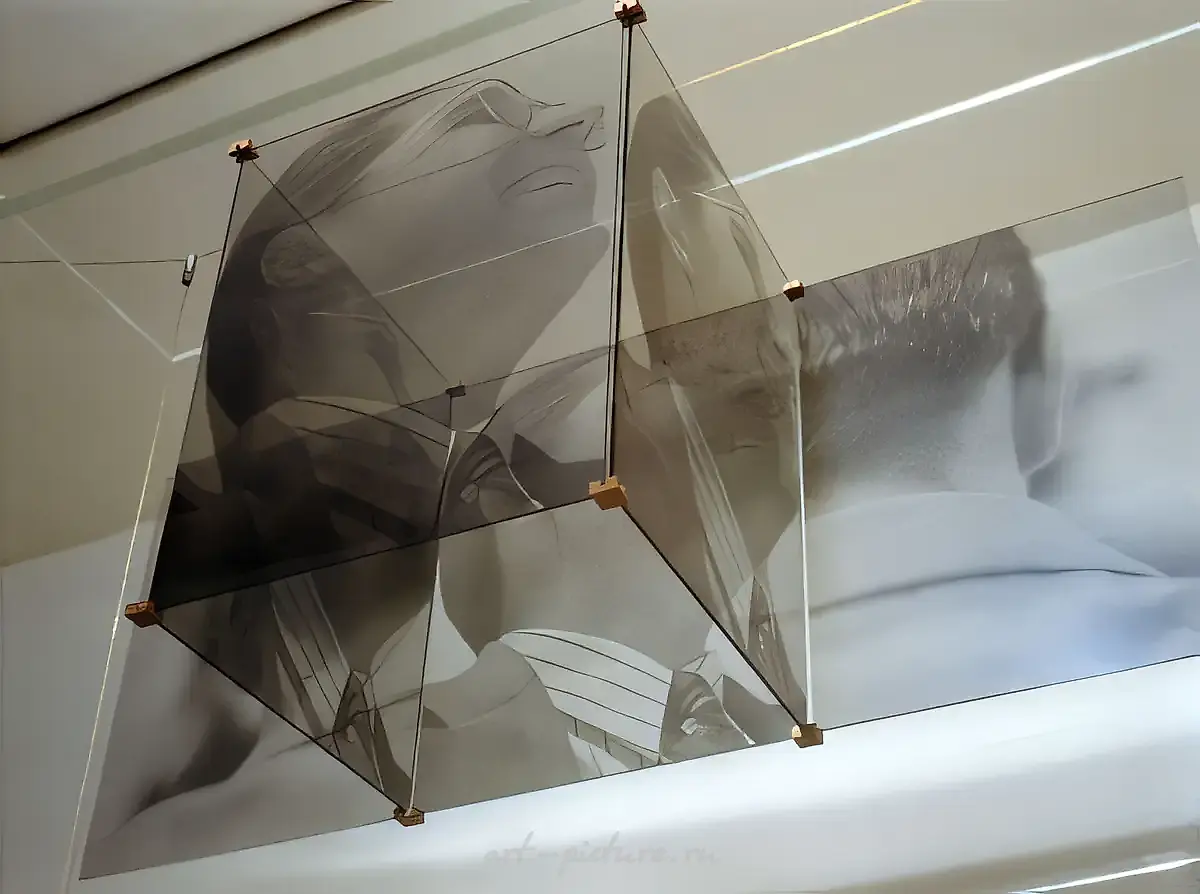
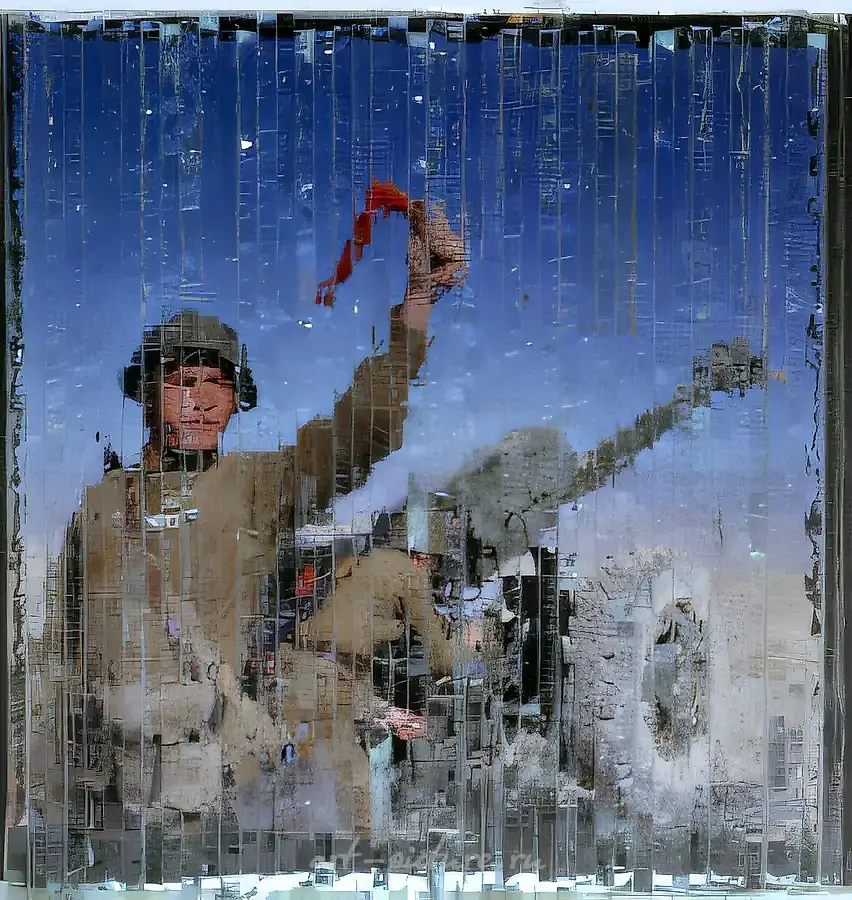
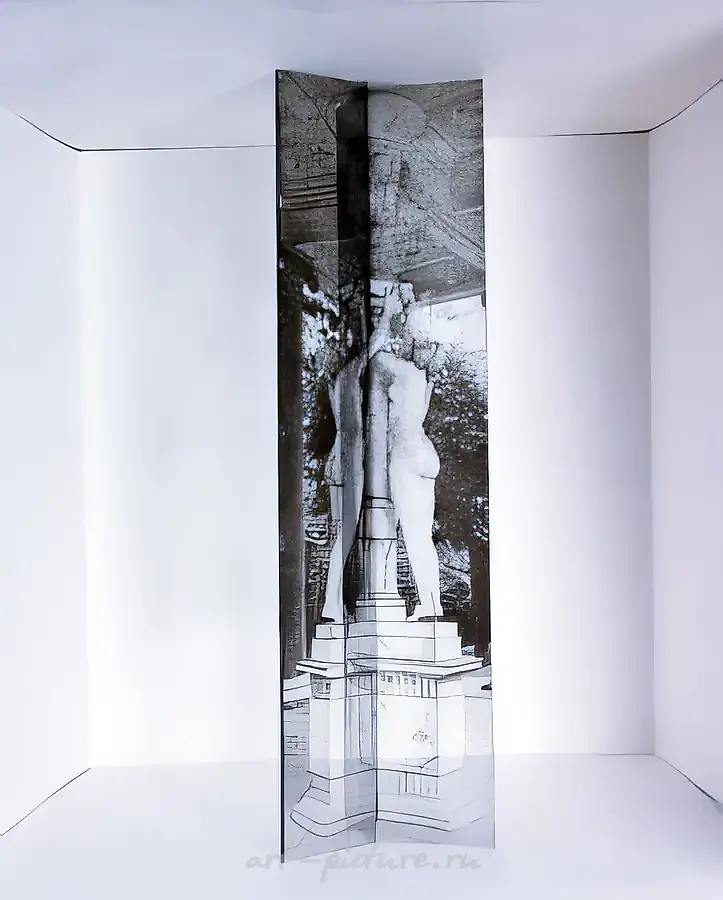
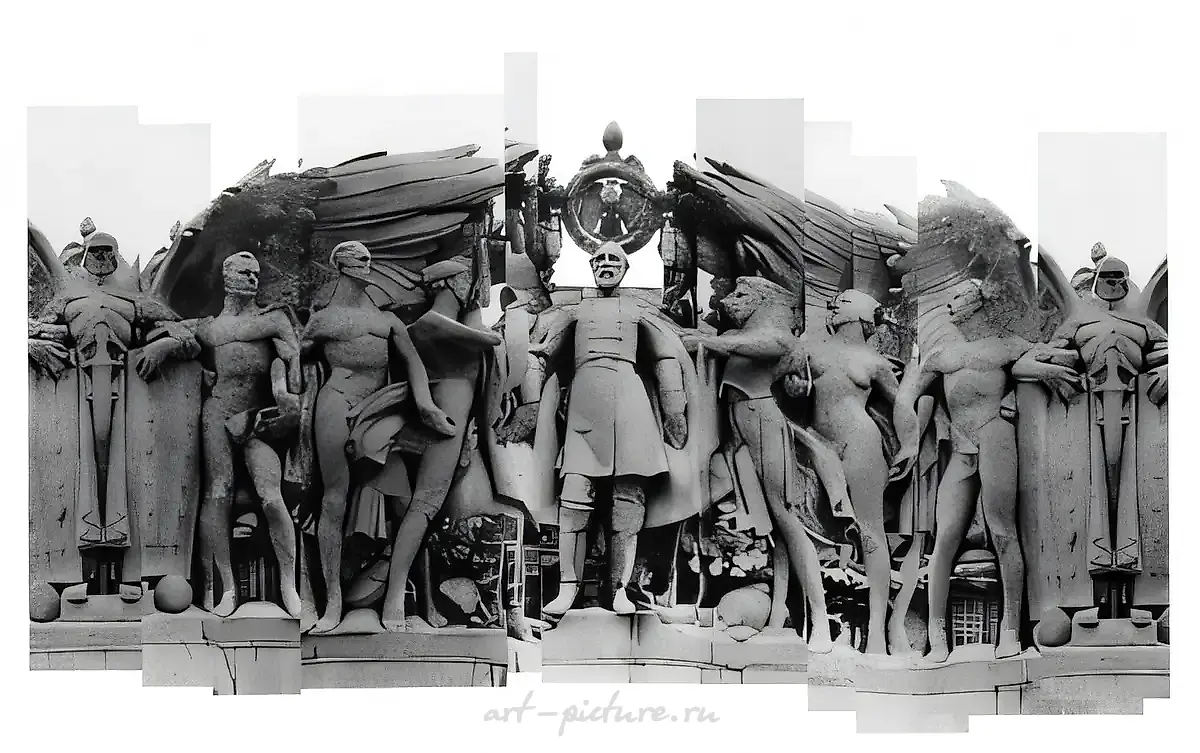
Kupriyanov works with a variety of materials, techniques, and sign systems. He is interested in those forms of artistic activity that are as open as possible to the past, present, and future of culture, to the real everyday attitudes toward the universe, people, and society. The ambiguity and 'multilinearity' of his artistic constructions, which refer us to the natural and dramatic variability of life, are aimed at communication and dialogue with a viewer who seeks an answer to the question of the possibility of existing in the shimmering and colorful space of today's life. The emerging contact between artist and viewer on this ground creates a particular tension that requires careful and prolonged 'examination.'
Moving from one technology to another, using for creative purposes the situation of an excess of signifiers in which meanings arise at the intersection of all existing texts, Kupriyanov is not attached to those 'current' practices that Jean-François Lyotard called postmodernism, unworthy of respect. The artist's realized objects and photo installations are evidence of his distancing from any mono-idea, meta-narrative, or certain cultural dominations.
For Kupriyanov, the study of the material he works with and careful, delicate handling of it seem important. Working with cultural contexts and constantly feeling the natural resistance of the material, the artist overcomes the demiurgic complex specific to avant-garde artistic (and not only artistic) strategies. The proof of the artist's real 'elusiveness' from Enlightenment super codes and avant-garde discourse is the fear he experiences at the moment when he has to sign, confirming authorship. Not aspiring to be a 'guru' or charismatic art leader, he emphasizes the necessary presence of his Mentor, who always helps to maintain flexibility, readiness for change, and an attempt 'to be better.'
Thus existing within the boundaries of a Christian-Orthodox cultural sphere, Kupriyanov includes values of other cultures in his work not to lose his anchor points and turn into a nomadic cosmopolitan but to find in wandering at the borders with other cultural entities the philosophical and aesthetic foundation for his work.
L. Zybailo
The poetics of Vladimir Kupriyanov are defined by three main categories—reality, art, and sincerity. Early debut works guaranteed their conjunction as something elementary. Reality was rooted in the documentary nature of the photographic image; art in the task of revealing the plastic perfection of the true motif and in organizing individual prints into a thematic sequence; sincerity in the intentional nature of shooting. The equivalence of these categories in Kupriyanov’s poetics was predetermined by the debut nature of this stage: these categories were studied as self-sufficient.
At the next stage, the leading categories stop being only means and become ends. That is, reality, art, and sincerity (ontology, aesthetics, and the personal principle) are understood as problems. For Kupriyanov, their conjunction within a single poetic organism itself becomes problematic and becomes the theme of his works.
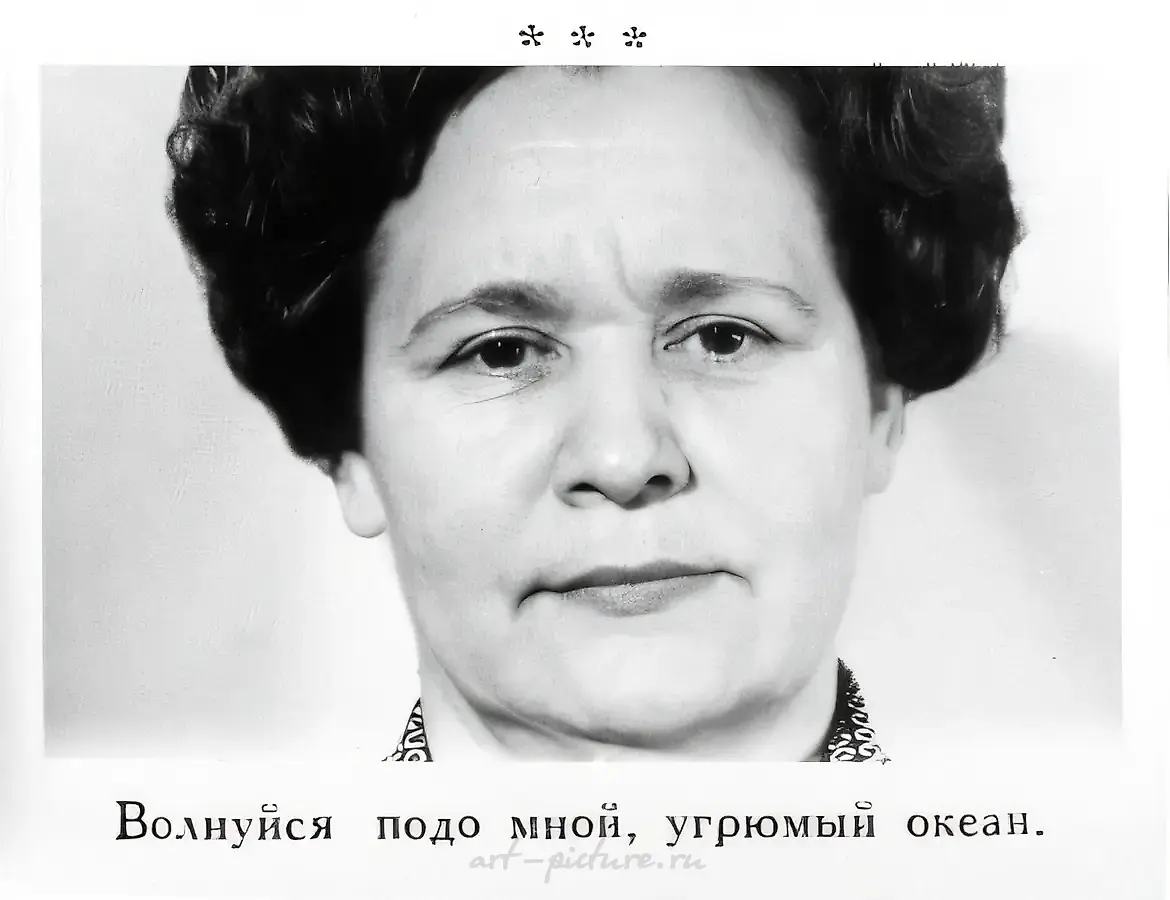
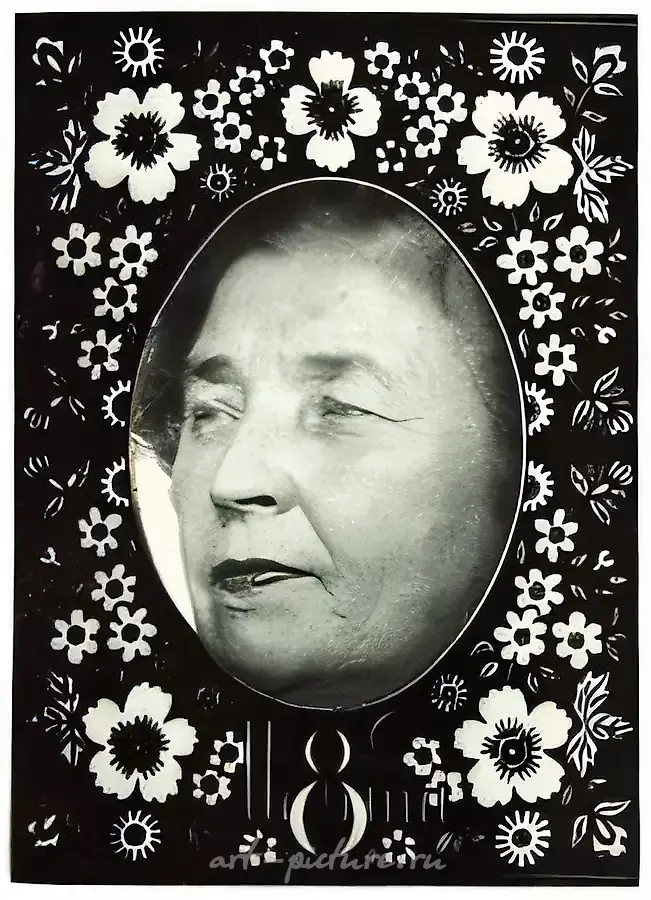
In the “To the Memory of Pushkin” sequence (1985), the reality category acquires double semioticity. It is not enough for Kupriyanov to assert reality through the fact of the documentary nature of photography; here, reality is also affirmed through the fact that these images were commissioned for the honor board of a Moscow telephone exchange. Thus, the works are recognized as a fact of reality and are further used as “objet trouvé.” The art category also acquires double semioticity, being visually shown as “objet trouvé”—a literary quote from Pushkin. In this case, there is more contrast than resonance between the main categories: reality and art are subject to semantic transformation and reduction. Sincerity is also reduced, since total breakdown of semantic connections occurs, but it continues as a component of Kupriyanov’s poetics: after all, the photographic “objet trouvé” are his own works. At this stage, art becomes central in the poetic organism: immanent manipulation procedures are used for 'social-artistic' deconstruction; art transforms reality and guards the personal principle.
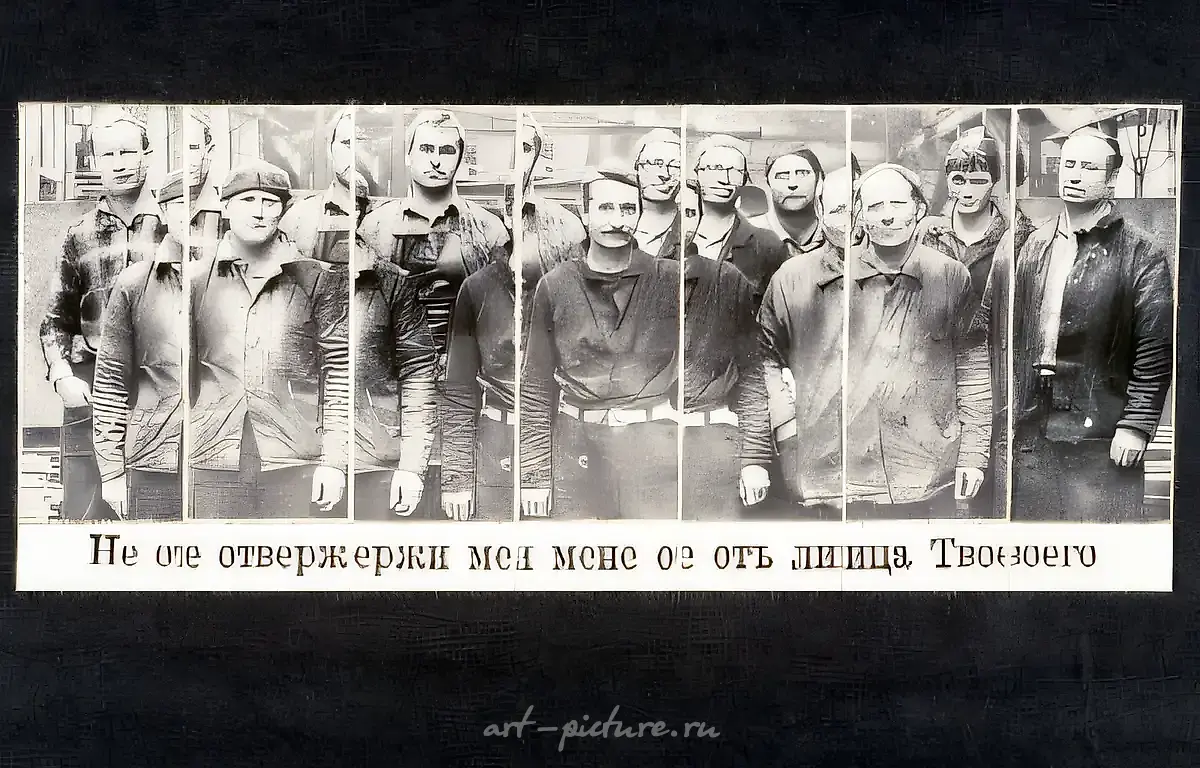
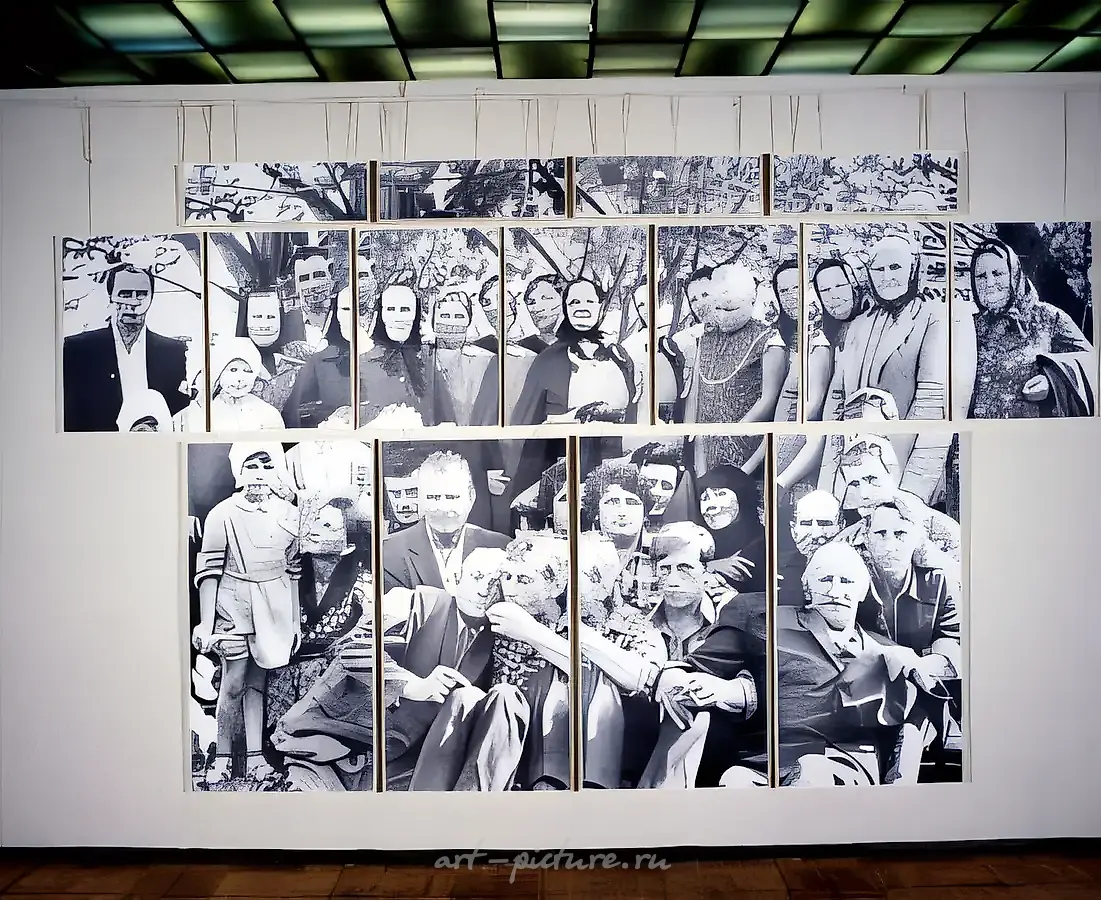
The work “Do not cast me off from Your face...” (1990) defines the next stage. The previously formulated principles are complemented by new effects: the reality category is amplified by large scale, bringing true motifs to life size, while constructive shifts in the image and text insert, thematically resonant, mark a new hypostasis for art—the hypostasis of rhetoric. Sincerity is intensified by the willingness to withstand the characters’ direct gaze—a readiness to trust reality unconditionally, to proclaim its apology. Clearly, at this stage, reality becomes dominant in the poetic organism: the powerfully dynamic reality (the work was created in 1990!) suggests a constructive artistic strategy and gives new meaning to the personal principle.
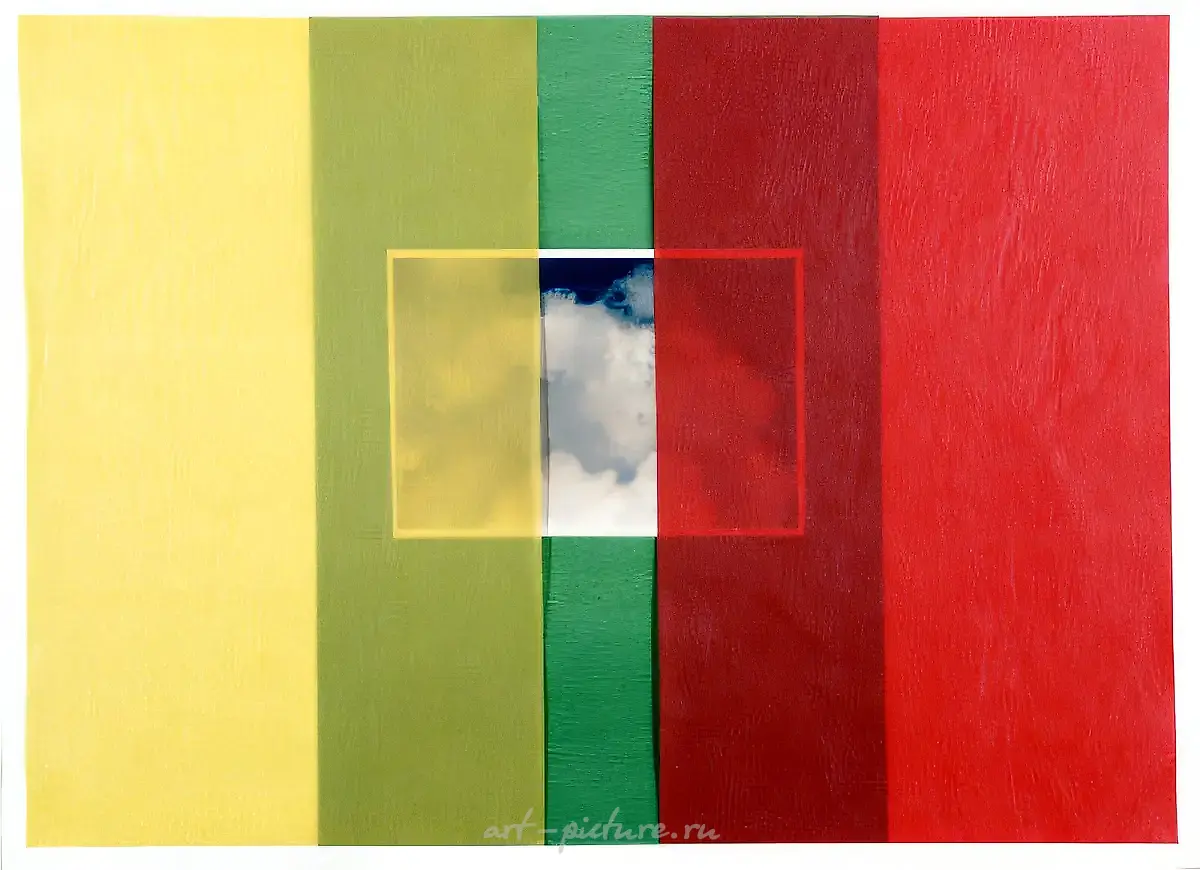
The cycle using colored monochrome backgrounds is key to Kupriyanov’s current poetics.
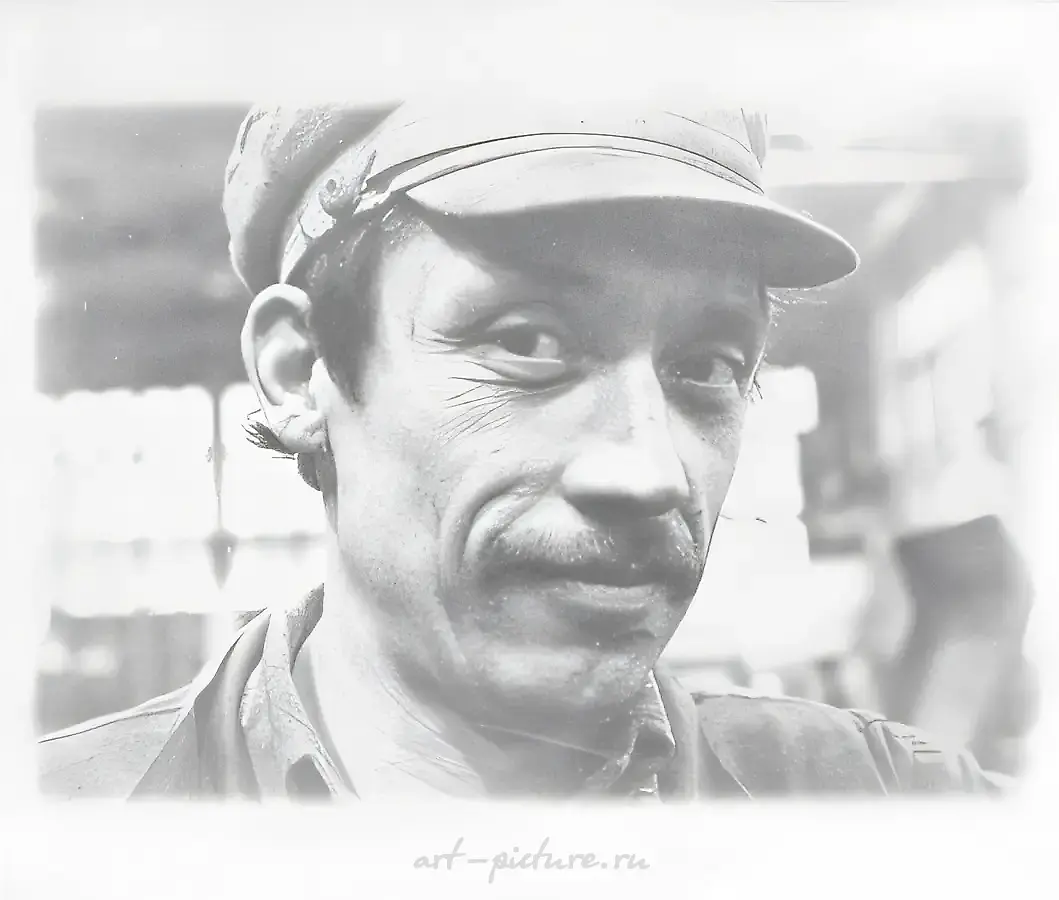
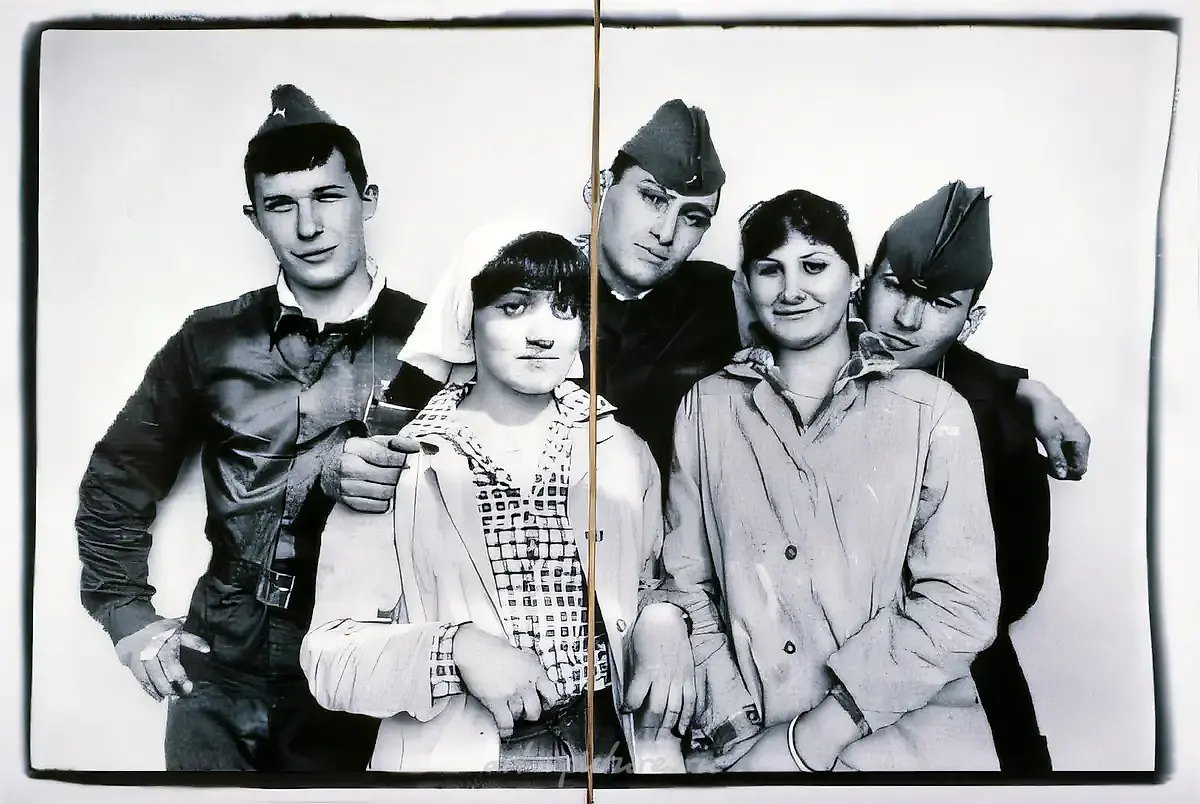
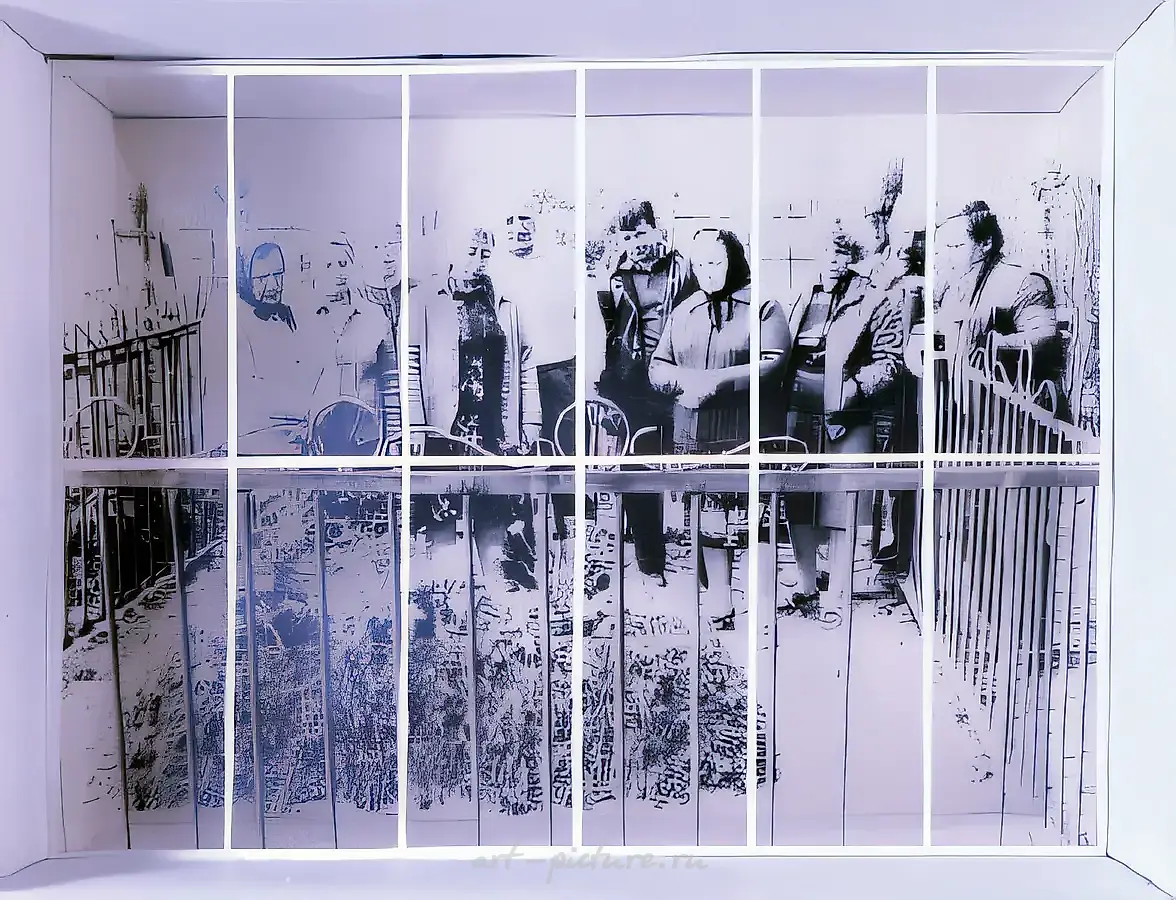
Associated works like 'Rodionov', emphasizing reality, or the diptych 'At Rest', revealing the conditional nature of the photographic image and thus emphasizing the art category, are derivatives of the cycle’s problems. The colored backgrounds give the photo images an unexpected decorative effect; transparent zones reveal the real materiality of the color—a banal wrapping paper. The colored monochrome background also reveals the photographic film with its emulsion. Finally, the decorative color enables the specifics of the photo image: this is an amateur photograph from a family album, and its expressive value is revealed.
At this stage, sincerity becomes the main category: the personal principle is realized as reality and art become objects of focused intentional consideration. As a result, Kupriyanov’s new poetics again ensures the conjunction of the main categories and the convergence of deconstructivist and constructivist procedures. His creative path has led Kupriyanov to realize the simulacral nature of reality and the intentional nature of the image—in other words, the deep structure underlying any photographic poetics. This discovery apparently should serve as the starting point for Vladimir Kupriyanov’s next creative journey.
Viktor Miziano
Bibliography
Due Zeitgenossische Photographie in der Sowjet Union, Edition Stemmie, 1988
Soviet Photo, 1989, № 10
Contemporanea, 1989, September, pp. 64-71
Gumanitarny Fond, 1990
New York Times Weekend, April 13, 1990
New York Observer, April 16, 1990
Erosion. Soviet Conceptual Art and Photography of the 1980s, Helsinki, 1990
Amos Anderson Art Museum Publications New Series, 1990, № 5
Photo Manifesto. Contemporary photography in the USSR. New York, 1991
Durch, 1991 № 6/7 pp 91-102
Camera Austria, 1992, № 39, pp. 12-21
Flash Art № 166 October 1992 pp. 70-72
Camera Austria, 1993, № 41, pp. 27-33
PHOTONEWS Nr 10, 1995 pp. 12-13
Kudozhestvennyi Zhurnal, № 13, pp. 70-73
'100 X Photo', 100 Photographs from the Collection, Stedelijk Museum Amsterdam, 1996, pp. 186-187
IMAGO 1996, № 2б, pp. 54-60
Russian WHO is WHO, № 2, 1997, pp. 44-45
RUSSIA, № 11, 1997, pp. 90-91
Kommersant-daily, March 26, 1998 № 52
Russian Telegraph, March 27, 1998 № 53 (125)
ITOGI, March 31, 1998
BIRZHA PLUS KARYERA, № 14/15.04.98
Kudozhestvennyi Zhurnal, #18, 1998
Camera Obscura, #5, 19
Kultura, #35, 1999
Nezavisimaya Gazeta, September 16, 1999
Vechernyaya Moskva, September 23, 1999
The Moscow Times, October 1-7
Afisha, October 4-17, 1999
Itogi, September 21, 1999
Russian Journal, October 10, 2000
Itogi, October 11, 2000
Johnnie Walker, October 13, 2000
Nezavisimaya Gazeta, October 13, 2000
Vedomosti, October 25, 2000
Afisha, October 16-29, 2000
Izvestiya, November 20, 2000
ARTchronika, #1, 2001
Itogi, March 6, 2002
Weekly Journal, March 3, 2002
Afisha. Vremya Novostey, March 1, 2002
Gazeta.ru, February 27, 2002
Afisha, March 4-17, 2002
ARTchronika, #1, 2002
Kommuna (Voronezh), August 19, 2003
WAM, #7, 2004
'Here and Now. Contemporary Art in Russia', catalogue, November 2004 NCCA, Moscow
Works 20