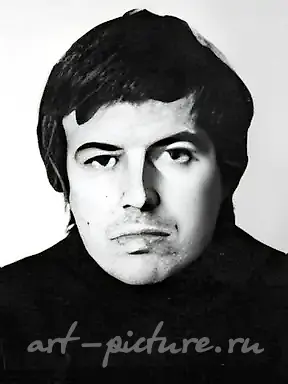
Makarevich Igor Glebovich
1943 Born in Tripoli village, Georgia
1951 Moved to Moscow
1955-62 Studied at the Moscow Secondary Art School
1968 Graduated from the All-Union State Institute of Cinematography (Art Department)
From 1979 Member of the group "Collective Actions"
Works in collections
State Tretyakov Gallery, Moscow
Collection of Contemporary Art of the State Museum-Reserve Tsaritsyno, Moscow
MANI Museum, Moscow
State Russian Museum, St. Petersburg
Musee National d'Art Moderne, Paris, France
Berliner Gallery, Berlin, Germany
Krings-Ernst Galerie, Cologne, Germany
Private collection, USA
"Incombank", Moscow
Private collection, USA
Museum Ludwig, Cologne, Germany
Zimmerli Art Museum, Rutgers University, New Brunswick, New Jersey, USA
P.Sprovieri, F.Sollante, Rome, Italy
Ch.Cowles, New York, USA
Q.Johansen, Oslo, Norway
Exhibitions and auctions
SOLO EXHIBITIONS
1979 Exhibition Hall of MOSH on Vavilova St., 65, Moscow
"Abramov. Chuikov. Makarevich." Centre Georges Pompidou, Paris, France
1990 "Closed Fish Exhibition" (with E. Elagina). MANI, Lobnya, Moscow region
"Freedom - Liberty." Phyllis Kind Gallery, New York, USA
1992 "Within the Beautiful" (with E. Elagina). L Gallery, Moscow
1993 "Girls and Death" (with E. Elagina). Velta Gallery, Moscow
"Between Abandonment and Hope." Velta Gallery, Moscow
"Closed Fish Exhibition and Other Installations" (with E. Elagina). Krings-Ernst Galerie, Cologne, Germany
1994 "Life on Snow." SRM (Marble Palace), St. Petersburg
"The Writer's Tale." Central House of Artists, Moscow
1995 "The Game of Croquet." Obscuri Viri Gallery, Moscow
1996 "Lignomania." XL Gallery, Moscow (catalogue)
"Die Möwe." Karin Hertin. Berlin, Germany
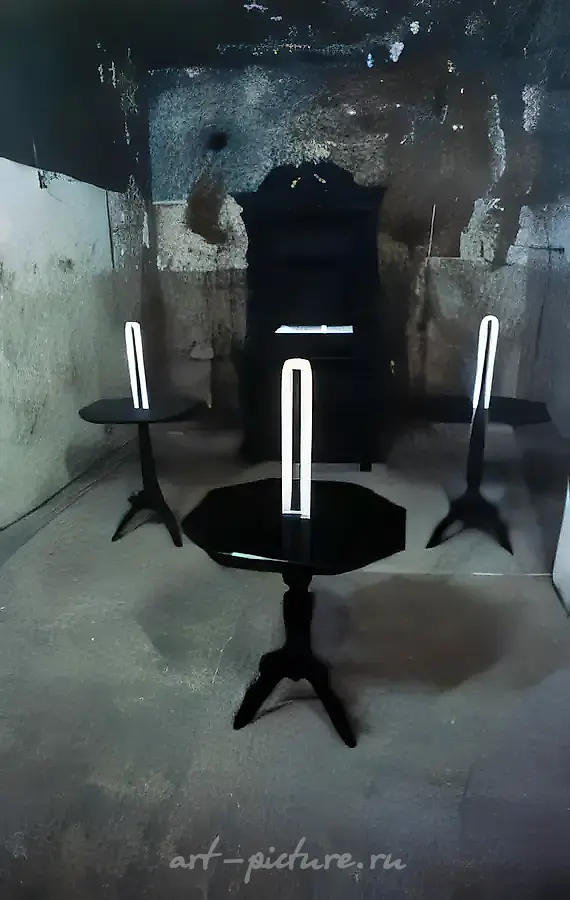
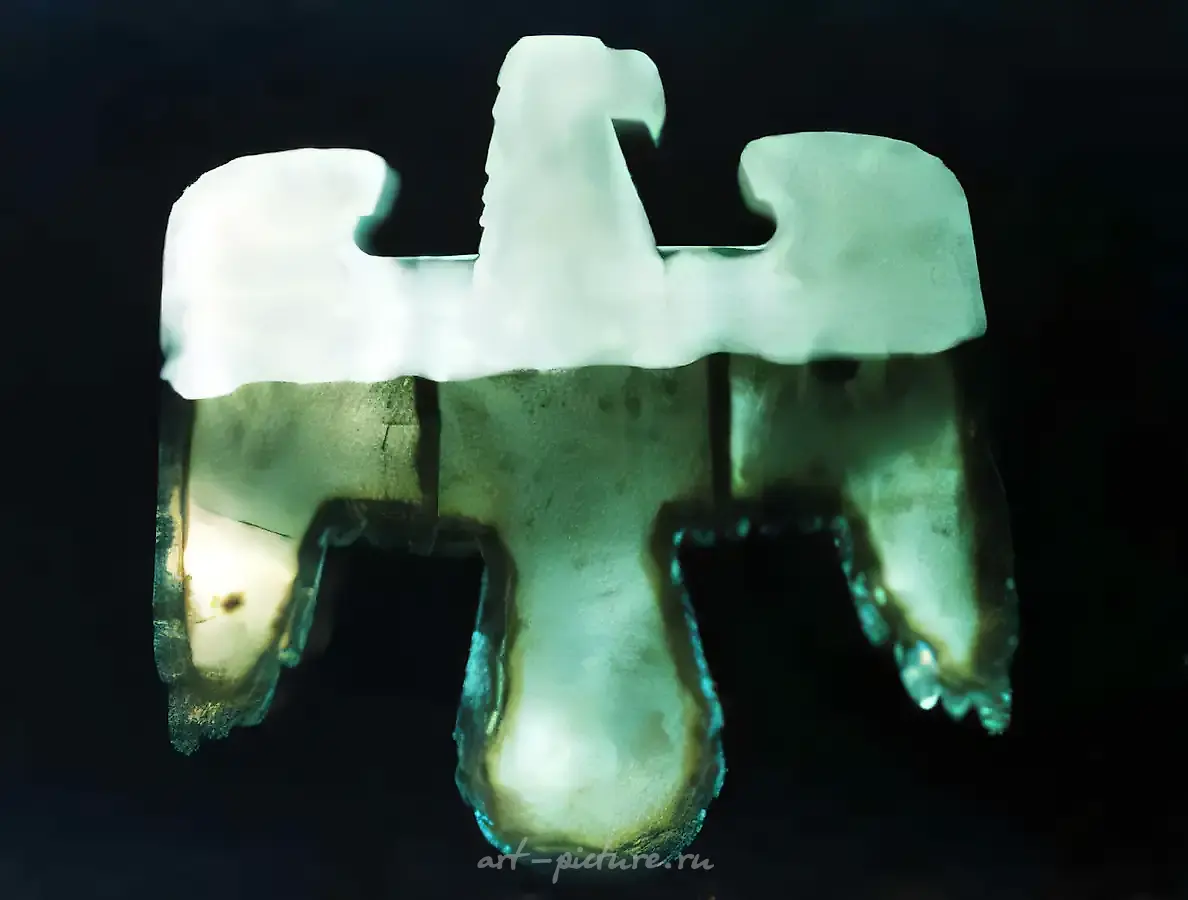
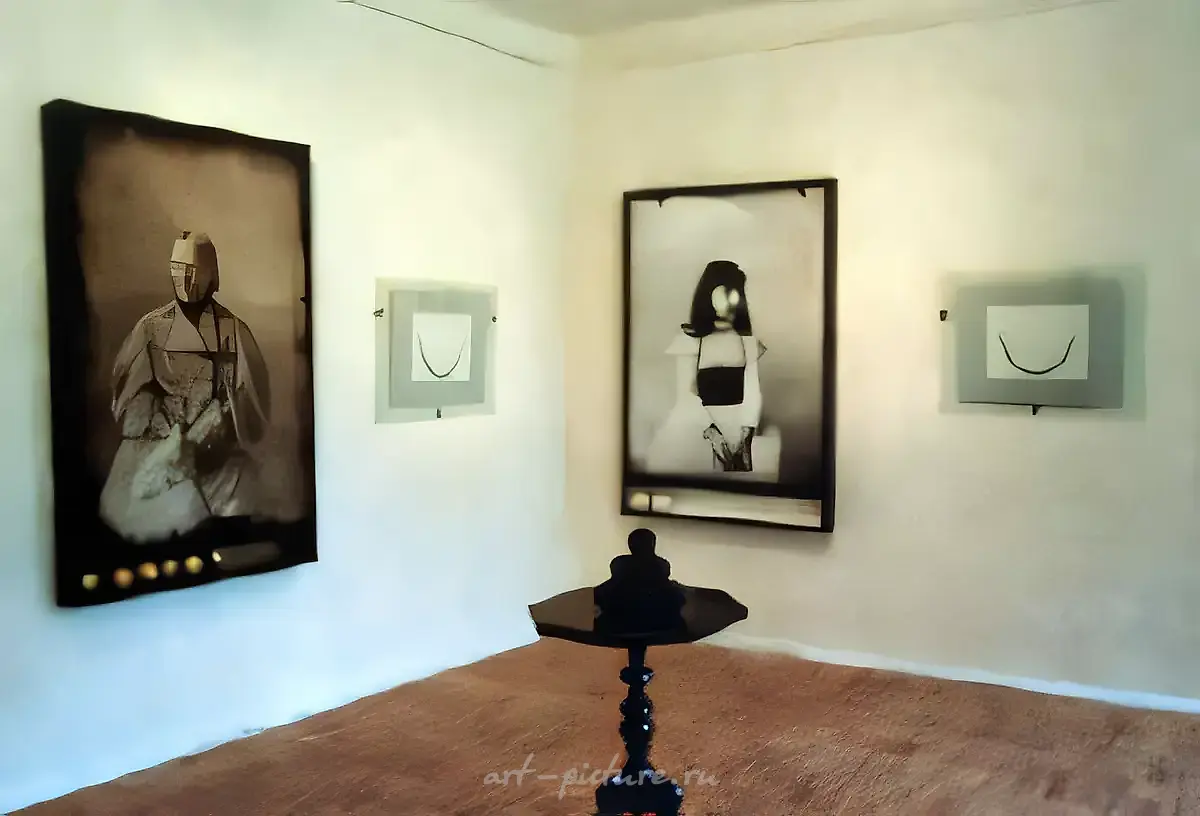
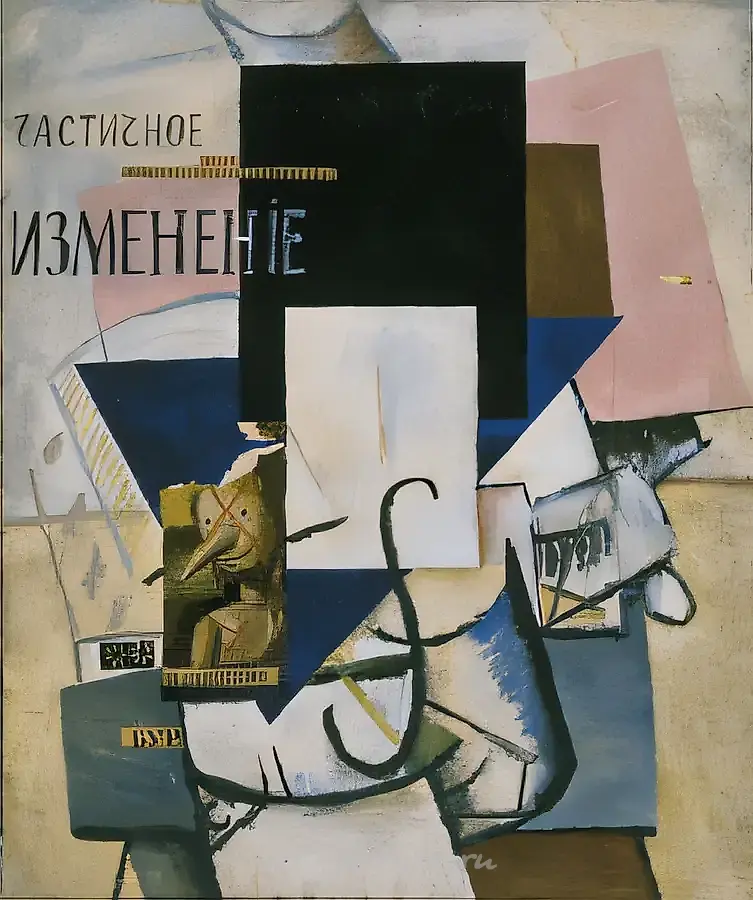
1997 "Partial Change." Obscuri Viri Gallery, Moscow (catalogue)
"Homo Lignum." XL Gallery, Moscow
GROUP EXHIBITIONS
1968-78 Participation in exhibitions of the Union of Artists
1979 "Photography." City Committee of Graphic Artists. Moscow
"20 Years of Independent Art from the Soviet Union." Museum Bochum, Germany
1980 "Nonconformists. Contemporary Commentary from the Soviet Union." University of Maryland Art Gallery, USA
"New Tendencies in Russian Non-official Art." New York, USA
[... extensive list continues ...]
(More details upon request)
Author about himself
I was born in 1943 in Georgia, in a mountainous village where my grandfather worked on the construction of a hydroelectric power station on the Khrami River. My mother was there, and my father went to war. Both were architects. I can't help but add some characterization of that place where I was destined to be born, as I am sure it influenced my destiny and creativity. In my mature years, I found by Zabolotsky a poem "Khramges", dated 1947, describing exactly this "Tsalki plateau." The village had four names: Tsalkine in Georgian, Molotovo in Soviet times, Tripoli in Greek, and Rosenberg in German (from Catherine's times until the time of my birth, Germans—colonists—lived there.)
Of course, it would be naive to say that my "archaeological" inclinations originated in those times, but it is impossible not to mention that even during the war, in these mountains, gilded chariots and Greek amphoras were extracted from the ground.
I arrived in Moscow in 1951. I graduated from secondary art school, then the art faculty of the Institute of Cinematography. I worked as a book illustrator, monumental artist, theater artist, and photographer. My creativity and worldview were influenced by Ilya Kabakov and Andrei Monastyrsky. I was a member of the "Collective Actions" group. Since 1990, most projects have been carried out jointly with Elena Elagina. The mythology of the grand period of Soviet history continues to stimulate my creative energy. I often want to combine it with a "romantic tale with a bad ending," as E. Degot aptly put it.
Critic
Out of respect for the truth, it should be noted that any general (monographic) text about a living artist differs from the version of an involuntary obituary by the time of its narration, the unfinished rows, and, at best, a lack of pretension to objectivity. But while discursive articulations desacralize the existential levels of the creative process, shaping and packaging the more external manifestations of the author's principle, they are not without certain magical consequences. Thus, an enlightened reader will of course know that the first "coffin" of Igor Makarevich was "constructed" by A. Monastyrsky: "Thematically, almost all the presented works form a single row. In various ways and materials, the artist depicts attributes from 'this' side of death: tombstones, dissection tools, coffins, etc." (A-Ya N3, p.34)... The list can be extended to almost all of Igor Makarevich's subsequent works, and the detection of the depicted attributes could, if necessary, unmistakably identify the authorship of his works. The stable inclusion of the theme of death ensures the external nature of his explorations, too frank to be missed, and too unproblematic in articulation (a device typical for artists of the Collective Actions circle) to bear the label necrophobia or necrophilia. The existential author's experience seems initially overcome, as if replaced by the sum of all artistic manipulations, craftsmanship, work...
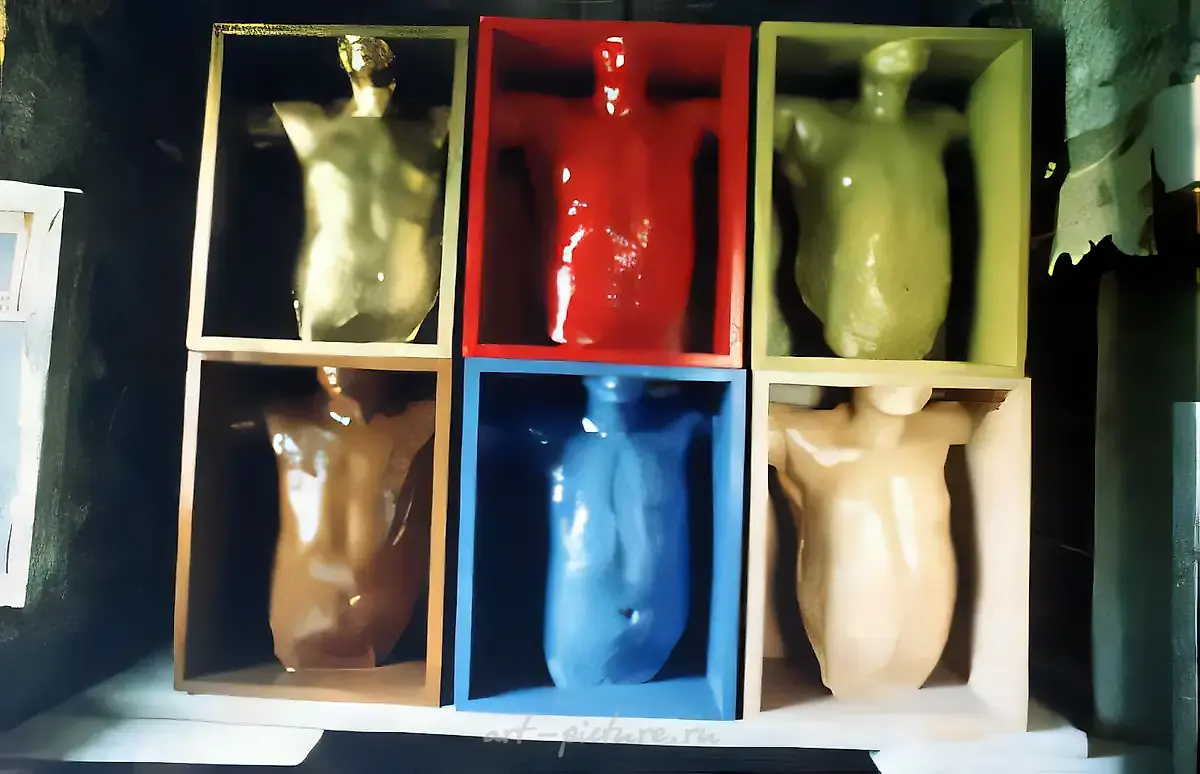
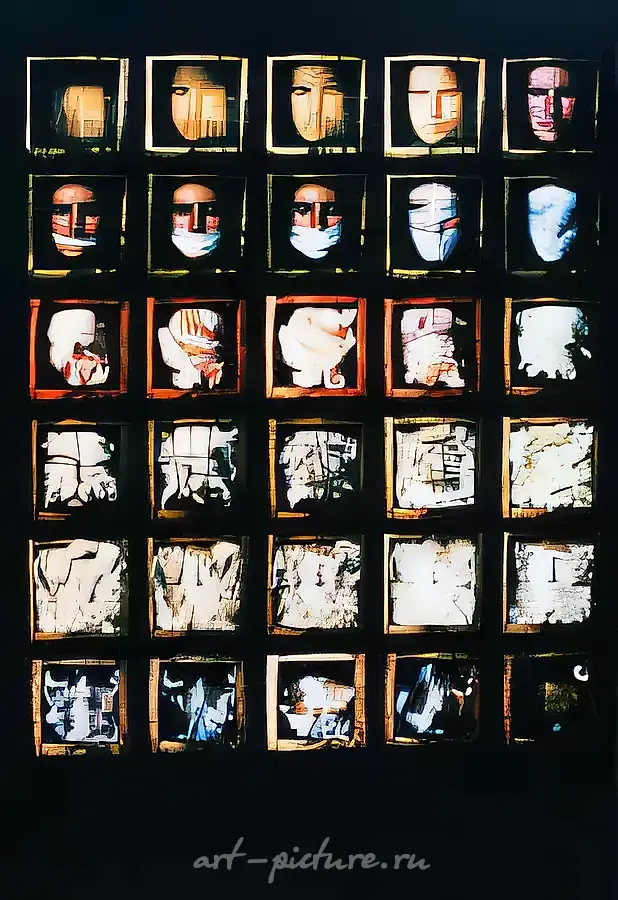
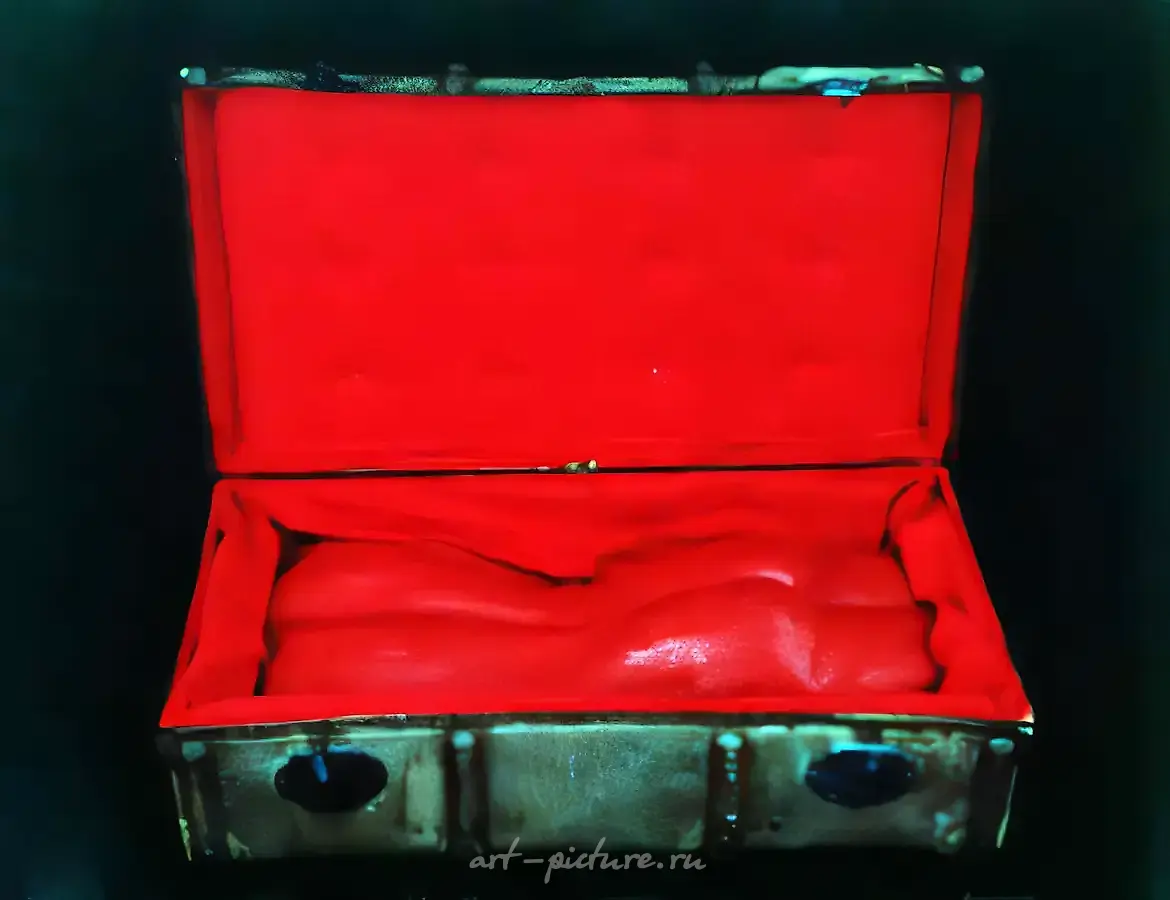
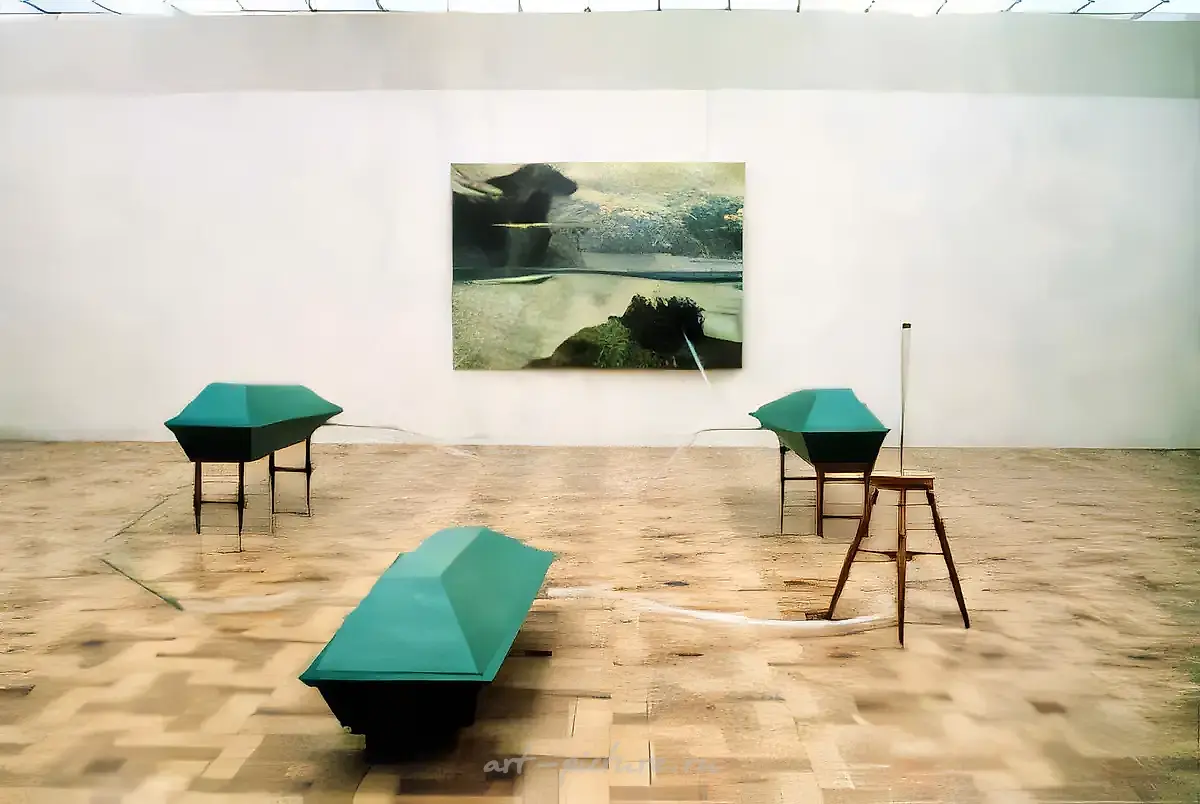
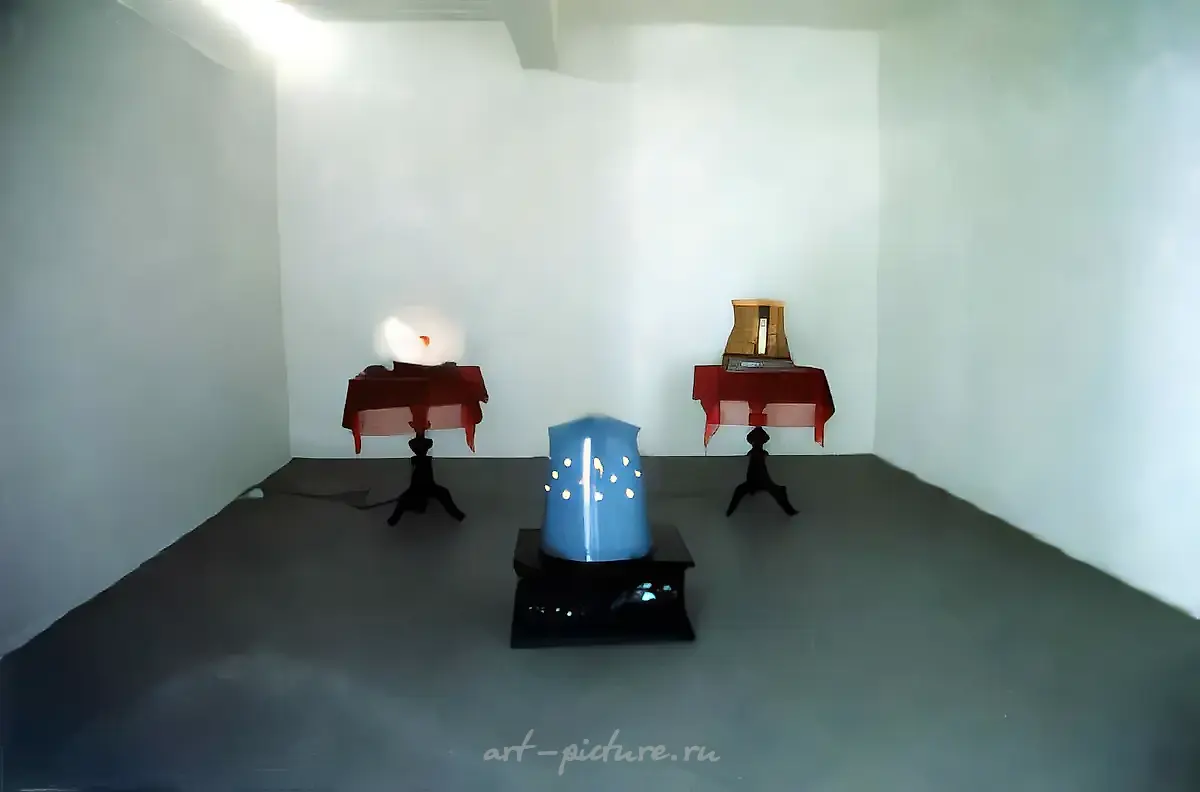
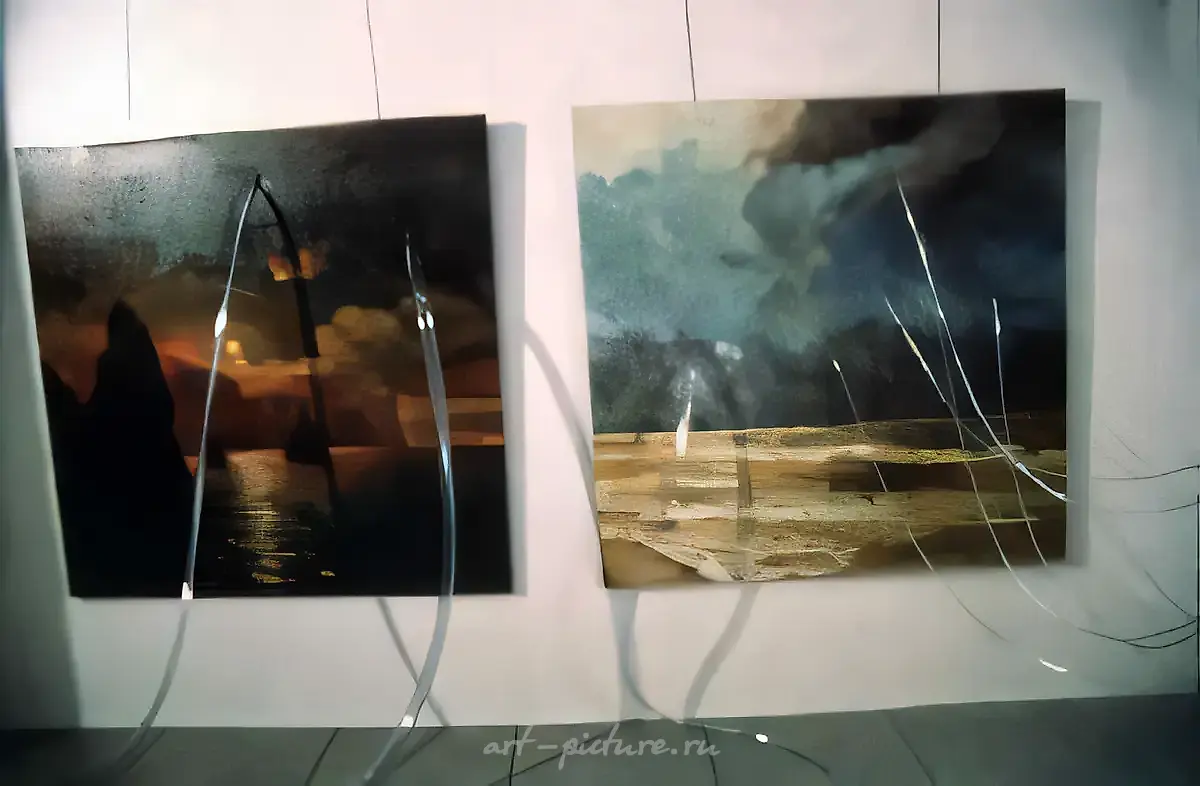
As an artist, what first distinguishes Igor Makarevich is the high professional level of his actions, brought to formal perfection, a particular "design," "craftedness" of works, detail orientation, an appeal to traditional aesthetic codes, and mastery of techniques, whether it be book graphics (illustrations for Kafka, Thackeray), photography, monumental projects, or the "culturing" of the exhibition space (it was he who developed a certain exhibition design style for the Club of Avant-gardists)... Such universality in itself is already quite unique and cannot escape the naive, but not devoid of special appeal (within the logic of cultural studies), temptation to imagine Igor Makarevich's creative studio as a sort of Ritual Services Bureau with all the resulting understandings of the semantic space of the artist's works. Aesthetically autonomous sculptural objects of different years turn out to be part of a rather self-contained, consistent logical system, not having undergone significant mental evolution, but varying a wide selection of means of expression in permissible external forms. Starting with himself and having formalized the fact of experiencing his own "dematerialization" during his lifetime (the process of removing the mask in the work "Changes") as an artistic gesture, through "25 Memories of a Friend," "Dispersion of the Ascending Soul" and other objects of the 1970s, Igor Makarevich moved to expand the space of the traditional modernist gesture: from fingerprinting in "The Mobile Gallery of Russian Art" (1981) to the obituary "Stationary Gallery" with portraits of three "good" artists: I. Chuikov, M. Kabakov, and E. Bulatov (let us recall here that "A good artist is a dead artist"), and further to the "burial" of the entire pre-modernist cultural civilization in "The Reincarnation of the Relics of St. Ignatius" (1991).
T. Salzurn
Works 15
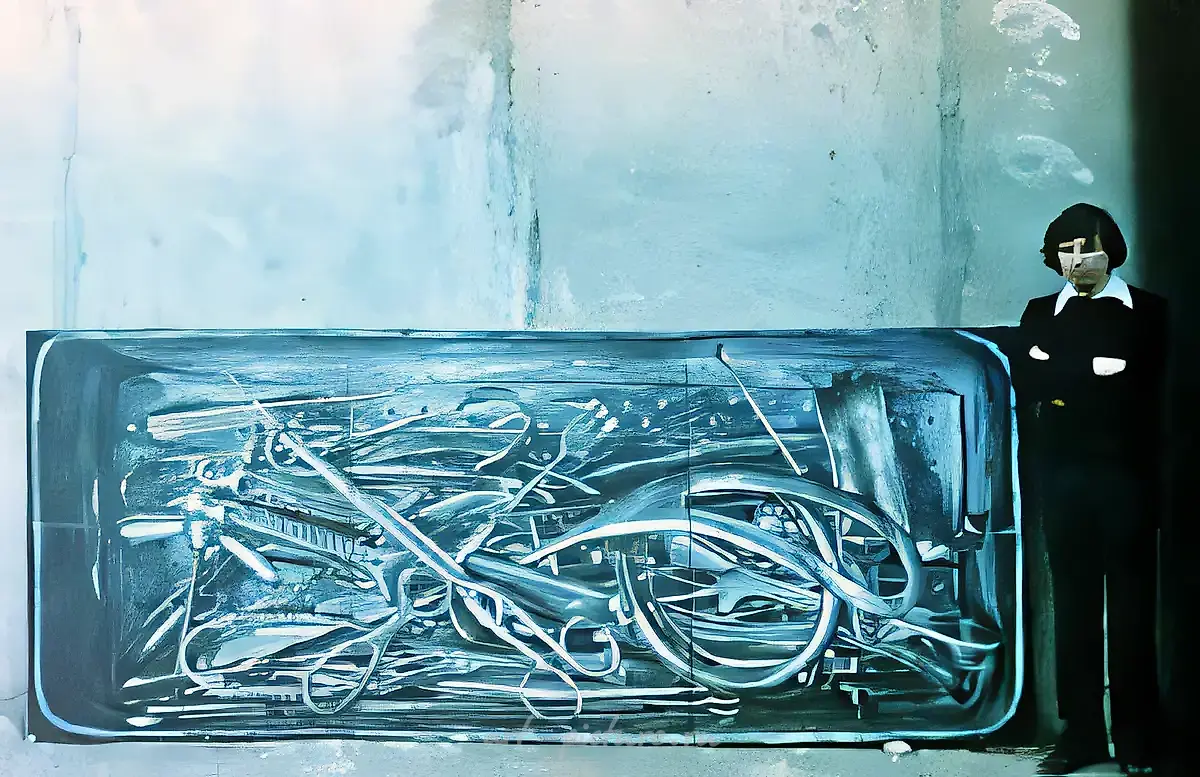
"Partial change "., 1997, ,