Mamonov Bogdan Kirillovich
1964 Born in Moscow
1987 Graduated from the Moscow Polygraphic Institute (Department of Artistic and Technical Design of Book Products)
1985-87 Member of the group 'Panaev and Skabichevsky' (with A. Alekseev)
1987-90 Member of the group '5+1' (with A. Kuznetsov, A. Layko, A. Orlovsky, A. Sokolov, D. Tsykalov)
1993-94 Member of the 'Group without a Name' (with A. Brener, A. Zubarzhuk, A. Litvin, A. Revizorov)
Since 1993 Member of MOSH (Moscow Union of Artists)
1998-2006 Participant in the ESCAPE program (with Valery Aizenberg, Liza Morozova, and Anton Litvin)
2005 As part of ESCAPE, represented Russia at the 51st Venice Biennale
As part of the ESCAPE program, laureate of the 'Black Square' and 'Arsenal' prizes.
Curator of the 'Russian Gallery' in Tallinn.
Regular contributor to Art Magazine.
Works in collections
M. Gelman Gallery, Moscow
The State Tretyakov Gallery, Moscow
New Jersey Museum of Contemporary Art, USA
Oklahoma Museum of Contemporary Art, USA
Galerie im Alten Kloster, Cologne, Germany
Galerie Mur Mur, Paris, France
Gallery Peter Ford, Bristol, United Kingdom
Kristian Keesee Collection, Oklahoma City, USA
E. Goy, Moscow
Private collections in Russia, United Kingdom, Germany, Spain, Portugal, France, Switzerland
Exhibitions and auctions
SOLO EXHIBITIONS
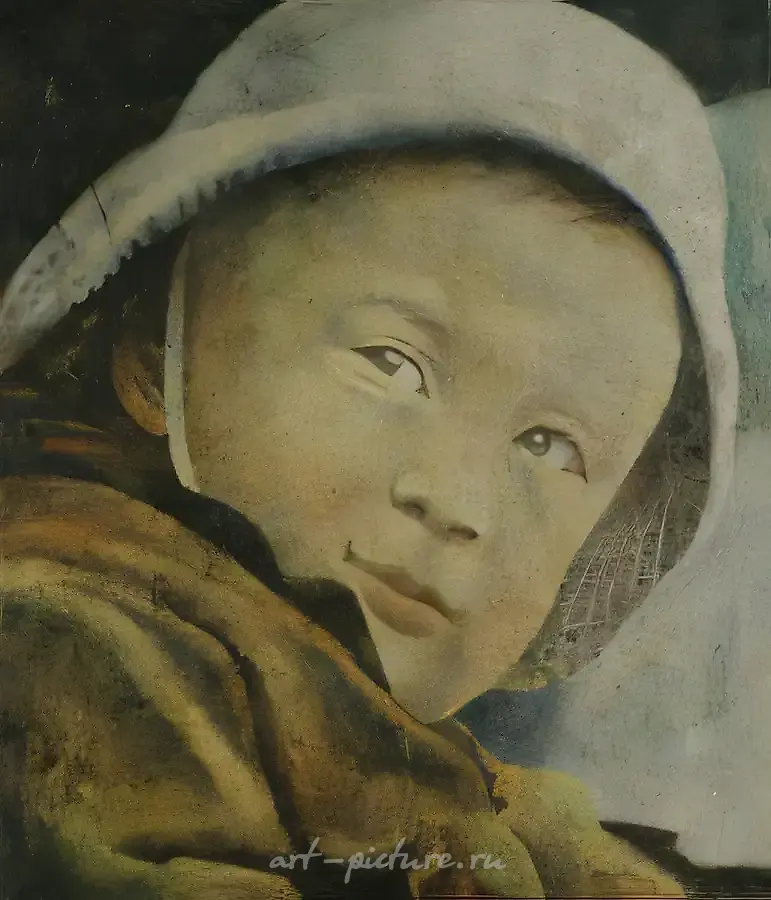
1991 "Right After the War with the Eskimos". Museum of Revolution, Moscow
1992 "Fundamental Infantilism". M. Gelman Gallery, Moscow
"Six Unknowns". M. Gelman Gallery, Moscow
1994 "Conformists" (with A. Brener). M. Gelman Gallery. Central House of Artists, Moscow
1998 — "Tranquilization of Memory". TV Gallery, Moscow
“Caligula”. TV Gallery, Moscow
“Caligula”. Museum of Cinema, Moscow
1999 — “Top Sambo”. Sakharov Museum, Moscow
2000 — “Zverev and Chirik”. Zverev Center for Contemporary Art, Moscow
“Presents”. Fine Art Gallery, Moscow
2002 — “1270919”. Escape Gallery, Moscow
“History of Art” (as part of the Youth Art Festival “Halt! Who goes there?”). Escape Gallery, Moscow
2006 “Versions”, Fine Art Gallery, Moscow
2008 “Intimate Life of Grigory Shpeyer”, pARTner project gallery, Moscow
2009 “Weapons and Tools” (with Ekaterina Rozhkova), PROJECT_FABRIKA, Moscow
GROUP EXHIBITIONS include: 'Eidos', Palace of Youth, Moscow (1988); 'Glasnost in Zundorf', Gallery im Alten Kloster, Cologne, Germany (1989); 'Junge Sovjetische Kunst', Kassel, Germany (1990); 'Triade', Grassi Museum, Leipzig (1992); 'New Russian Art', City Art Center, Oklahoma City, USA (1995); 'Women Without Men', Russian Gallery, Tallinn, Estonia (2005), and many others worldwide.
ACTIONS & ESCAPE Projects include: performances with groups 'Panaev and Skabichevsky' and 'Group without a Name'; and ESCAPE projects such as 'Motherland Exchange', Art Frankfurt (2002), 'Too long to escape', Russian Pavilion, Venice Biennale (2005), etc.
Author about himself
My father is a well-known artist, the last of the Mohicans of drypoint – a specific etching technique that hardly anyone practices today; his works are in the Tretyakov Gallery, the Russian Museum, and foreign collections. Now he has gone into some kind of internal underground, but soon he will have a jubilee exhibition on his 70th birthday. My mother was also a wonderful artist — she illustrated children's fairy tales. My fate turned out so that when my mother was still pregnant with me, my parents planned that I would become an artist, specifically an abstract artist.
Perhaps my understanding of art as politics comes from my father. The same could be said about Alexander Brener, with whom I was closely associated in the early 1990s.
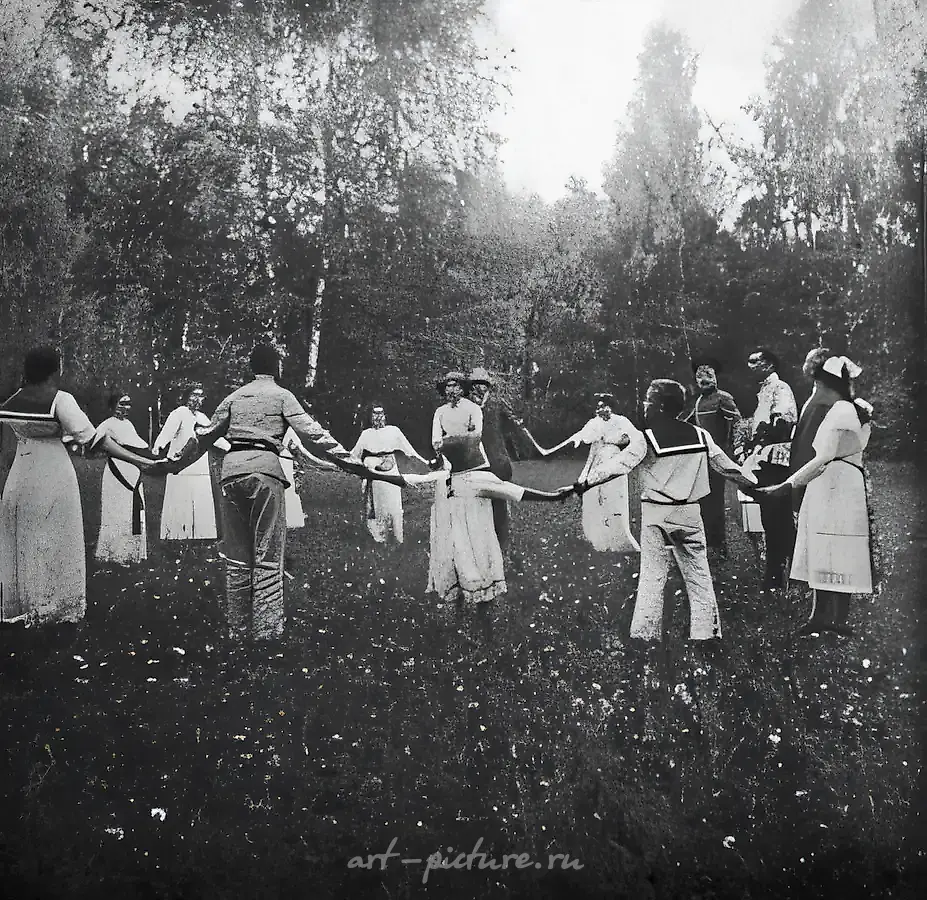
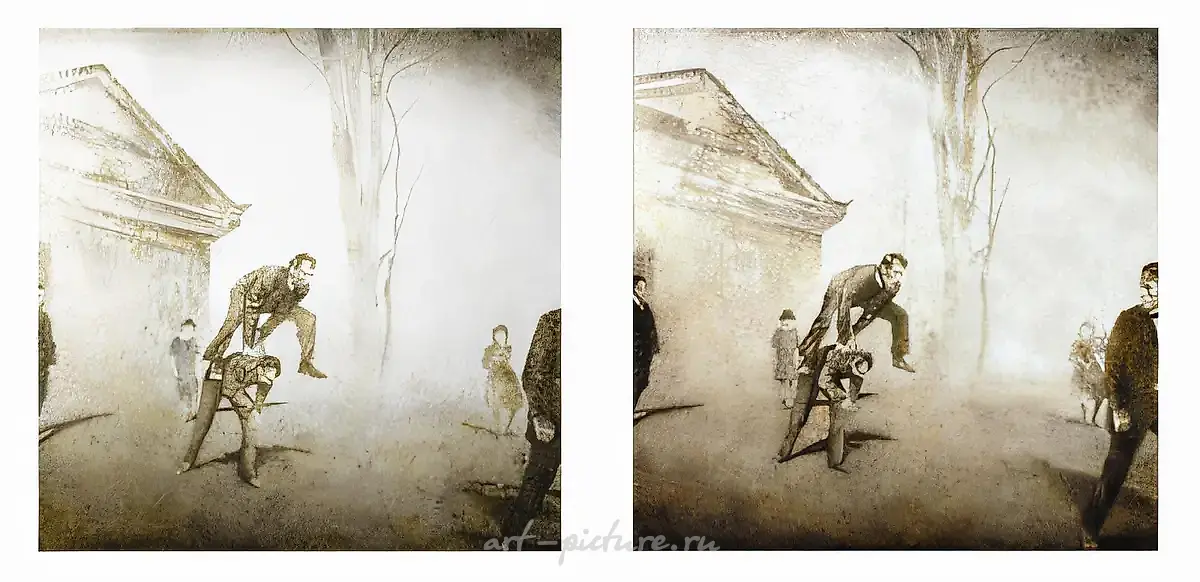
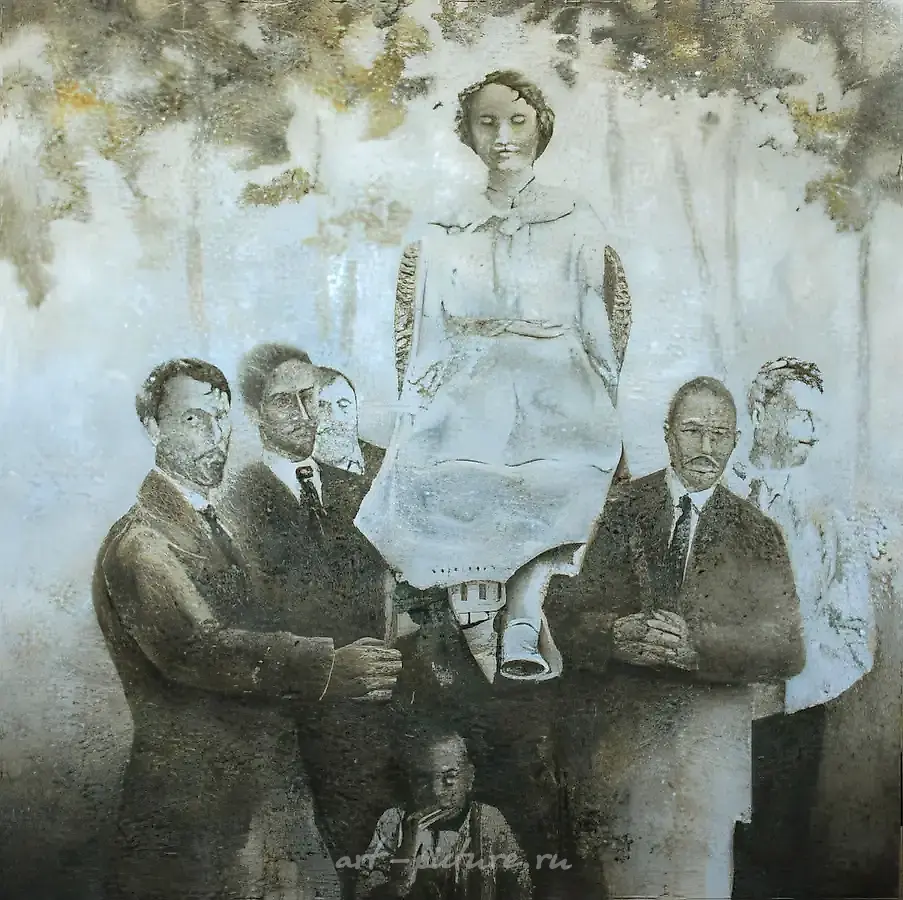
I work with the archive of one person, Grigory Shpeer, whom I consider a co-author of my current work, like an alter ego. Shpeer was a German engineer who built bridges, and in his free time was involved in photography, more precisely in stereoscopic photography, which was quite unique for his time. He was an amazing photographer, although an amateur. Unlike the staged photos common at the time, he captured real life. Shpeer was a wealthy man, owned an estate, and documented its essentially Chekhovian lifestyle. After his arrest, all his property vanished, but the archive miraculously survived. In the mid-1990s, I worked with this archive. The film 'Caligula', which became part of the 'Tranquilization of Memory' project, was made then. Now that I've parted ways with the 'Escape' group, I've returned to this old story and it genuinely inspires me.
(From an interview with Irina Kartina, 03.10.2007)
Art is not a 'what', but a 'how'!
By the mid-1990s, I felt the urge to put an end to so-called 'contemporary art' and its inevitable satellites—installation, simulation. I wanted to present such art, which, in the eyes of everyone except the artist himself, seems so private, so personal that it's even awkward to look at it.
Critic
Born in Moscow in 1964. The artistic life of a boy from a good family is tough! Father is an artist, mother is an artist. By the age of thirty, Bogdan Mamonov, having enjoyed success as a painter, found himself among the so-called 'figures of radical Moscow art'. In 1994, gallerist M. A. Gelman presented B. K. Mamonov's canvases-portraits in the Central House of Artists as a dialectical counterpoint (and static backdrop) to the dynamic performances of artist A. D. Brener. These collaborating artists in the context of exhibition-actions were dubbed 'Conformists' by the gallerist. But Gelman was sly, pitting obvious allies against each other. Conformism as a socially proper modus vivendi was already alien to Mamonov at that blessed time. The 'conformism' of Mamonov the painter, compared to the passionate Brener, consisted in the fact that even in 1993, Bogdan became a member of Brener's 'Group without a Name' and participated in several scandalous acts. Suffice it to recall that it was Mamonov who assisted Alexander Davidovich in his famous defecation out of delight before Van Gogh’s painting 'The Red Vineyard' at the Pushkin Museum. It was Mamonov, among other members of the 'Group without a Name', who signed the 'Manifest as Manifest', which shouted about 'tired and satiated people from the art environment', about 'an attempt at new art aimed at the street', about 'genuine art' as a 'deadly and joyful struggle'. However, soon enough, a break with Brener and Gelman awaited Mamonov—moreover, a creative pause (colloquially known as a crisis). Nonetheless, Mamonov's profession of faith as a nonconformist remains seemingly unchanged. In Mamonov's texts in 'Art Magazine', there is still a passionate and naive talk about the unbearable power of money and institutions, about anti-careerism and, most importantly, about 'resistance art'.
Fyodor Romer, "Who is Bogdan Mamonov", 7.10.2003
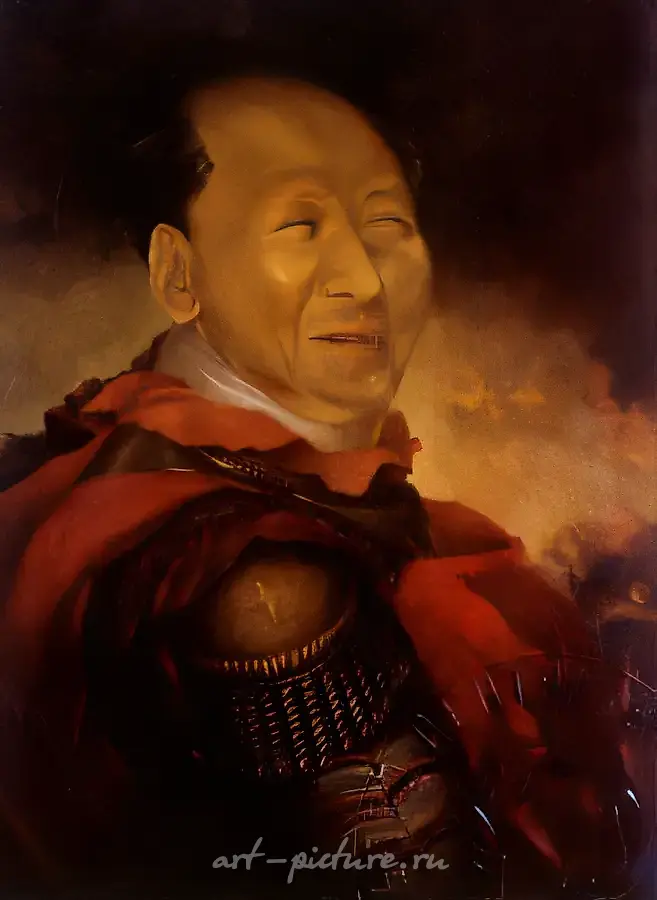
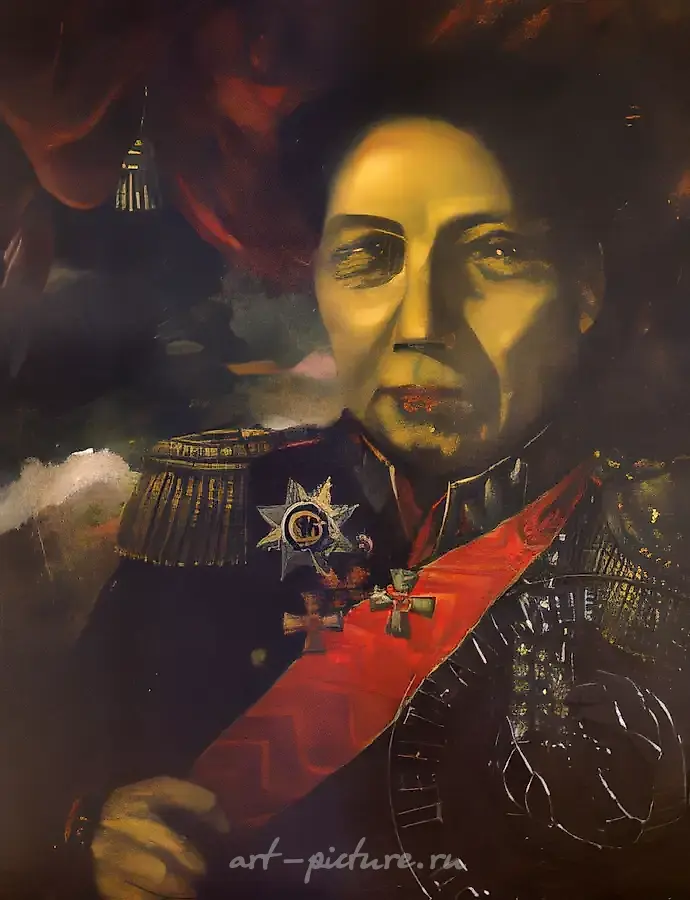
"Portrait of an Unknown" by Bogdan Mamonov is yet another example of appropriation painting. The portrayed is, of course, too well known: it is Mao, whose face has become as familiar as that of another star—Marilyn Monroe. Warhol in his appropriation of these figures reduced them to pure decorative meaninglessness or rather affirmed this quality as it had already evolved in public consciousness. But Mamonov achieves a specific political resonance by dressing Mao in a 19th-century officer's uniform and posing him quasi-classically against a traditional landscape: after all, the supposedly proletarian leader Mao was essentially a military aristocrat. Truly, radicals debase themselves as they acquire radical chic.
By dressing Mao in a reactionary-monarchical uniform, Mamonov rips the revolutionary mask off—unveiling him. In fact, by all but designation, he was a communist king.
D. Kuspit, "New Russian Art". Catalogue of the exhibition "New Russian Art: Paintings from the Christian Keesee Collection", City Art Centre, Oklahoma City, USA, 1994
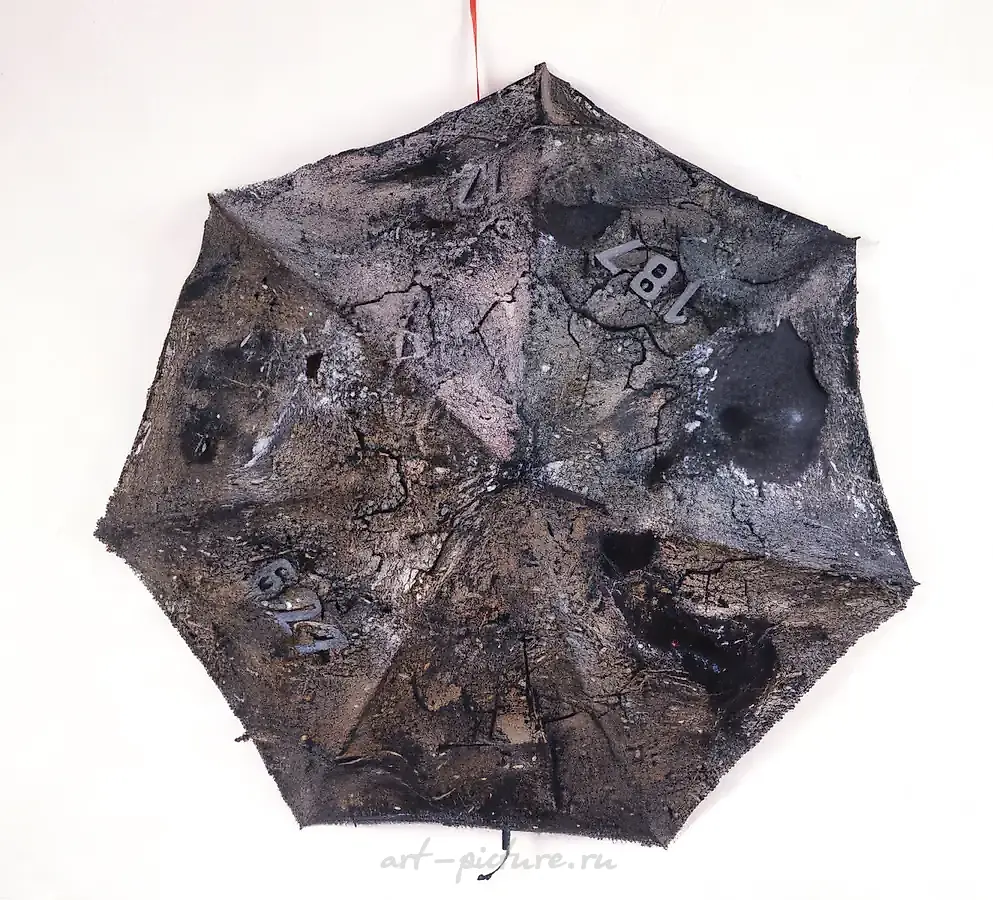
Mamonov focuses on working with material carriers of communication—banalized iconic signs (portraits of Mao, his own stereotyped images, museum paraphernalia). His strategy implies reductionism and rational brutality: he quashes, drains the message—depriving it of sense while overflowing it with potential meanings. This strategy holds extraordinary destructive effectiveness—his creative acts are akin to communicational terrorist acts. And if we accept that the main danger facing Mamonov is self-identification with the object of description, dissolving in the entropy and degradation he promotes, then it can be noted: Mamonov forestalls this danger with the rigorous lapidary nature of his gestures, revealed by the reductionism of his initial statement structure.
V. Miziano. Untitled Introduction. Catalogue "Conformists". M. Gelman Gallery, Moscow, 1994
One of the younger artists presented by Gelman – Bogdan Mamonov – exhibited last winter an installation that could be dubbed an art detective story. It was an attempt to recreate the situation of a 'masterpiece' theft (also presented by the artist), with evidence, traces, etc., left—as if—by robbers who stole it from a museum.
J. Gambrell, "Report from Moscow" – Art in America, No.11, 1992
Bogdan Mamonov is a radical of the 90s, a companion of Anatoly Osmolovsky and Alexander Brener, co-founder of the high-concept group Escape.
However, as an individual artist, Mamonov is gentle and fluffy, invites no one, shocks no one. As is common for the most progressive forms of contemporary art, at the center of his work lies a hazy and elegiac literary text.
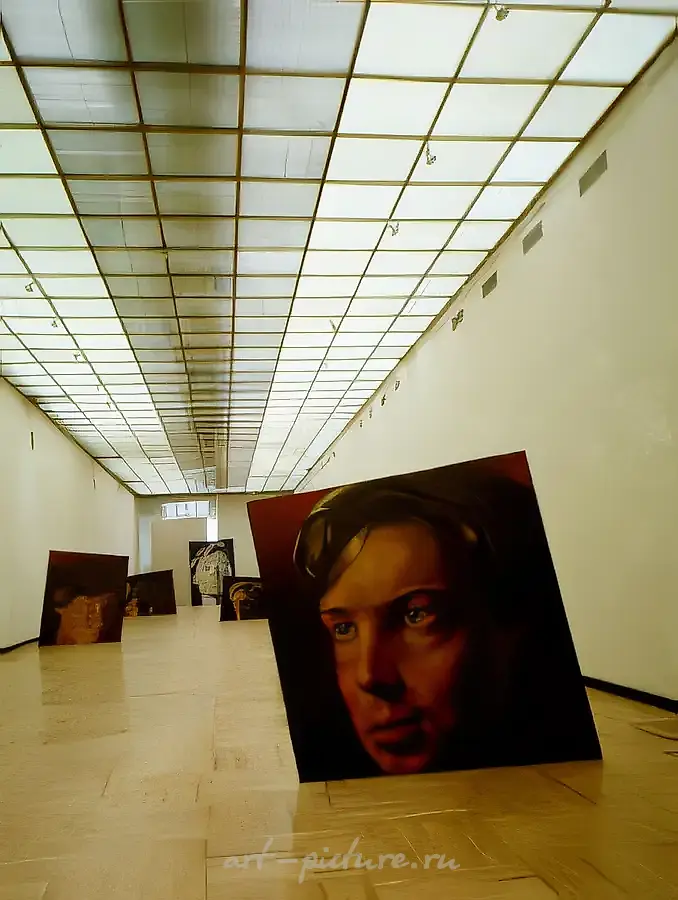
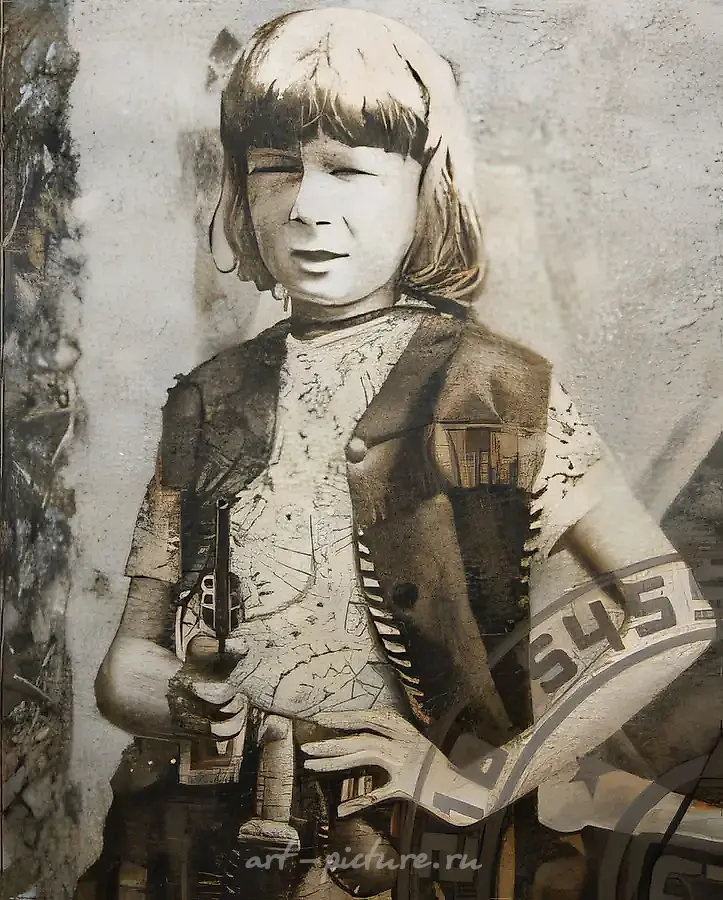
It talks about the artist himself, who inherited a taxiphote device from his German grandfather-engineer Grigory Shpeer—for viewing stereoscopic photographs. In the exhibition space, all this Freudian phantasmagoria is represented as 12 double paintings reproducing magical machine portraits painted in murky grisaille, the device itself, and a childhood self-portrait of the artist.
Andrey Kovalev. “Bogdan Mamonov. The Intimate Life of Grigory Shpeer”, TimeOut Moscow, March 17, 2008
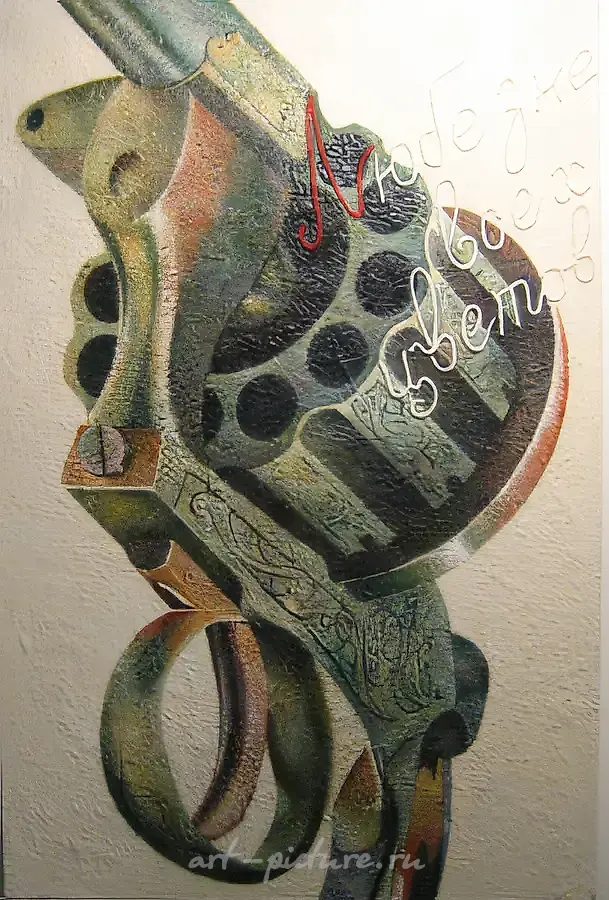
If in 'ESCAPE' Mamonov built instrumental relations with the viewer, in his new paintings he takes distinctly 'male', aggressive positions. His revolver fragments in bizarre angles resemble monstrous meat grinders.
From the press release for the exhibition “WEAPONS AND TOOLS” (Bogdan Mamonov & Ekaterina Rozhkova, PROJECT_FABRIKA)
Bibliography
F. Romer. Cultural Heroes of the 21st Century. Bogdan Mamonov. 2000 (catalogue)
F. Romer. Glory & Compassion. Capital Perspective. No. 1. 2000.
I. Bazileva. Artists' Revolt. Art Magazine. Nos. 30/31. 2000.
A. Penzin. “Presents”. Bogdan Mamonov. Art Magazine. Nos.37/38. 2001
E. Kikodze. The Problem of Visuality. Creativity. No.2. 2001.
S. Nadezhdin. Bogdan Mamonov “Versions”. Art. No.1. 2006.
Works 12
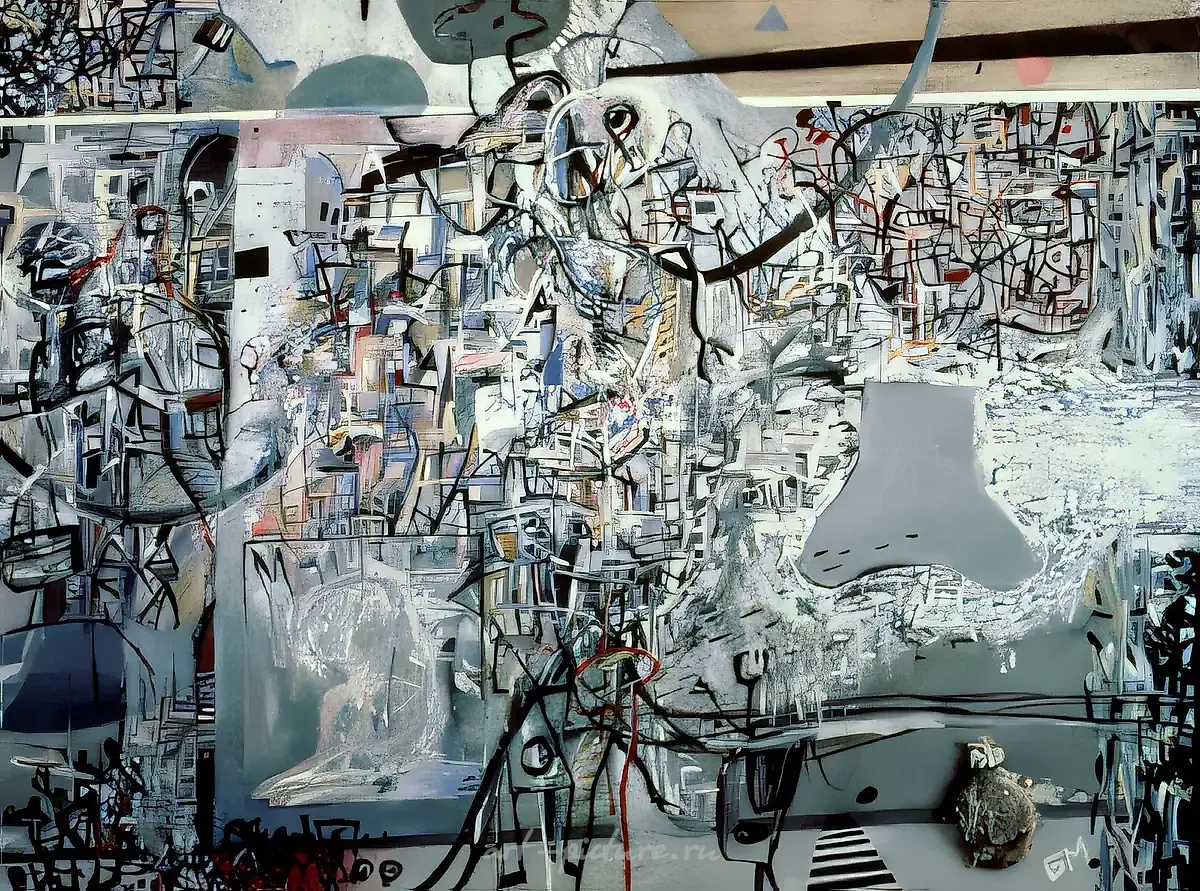
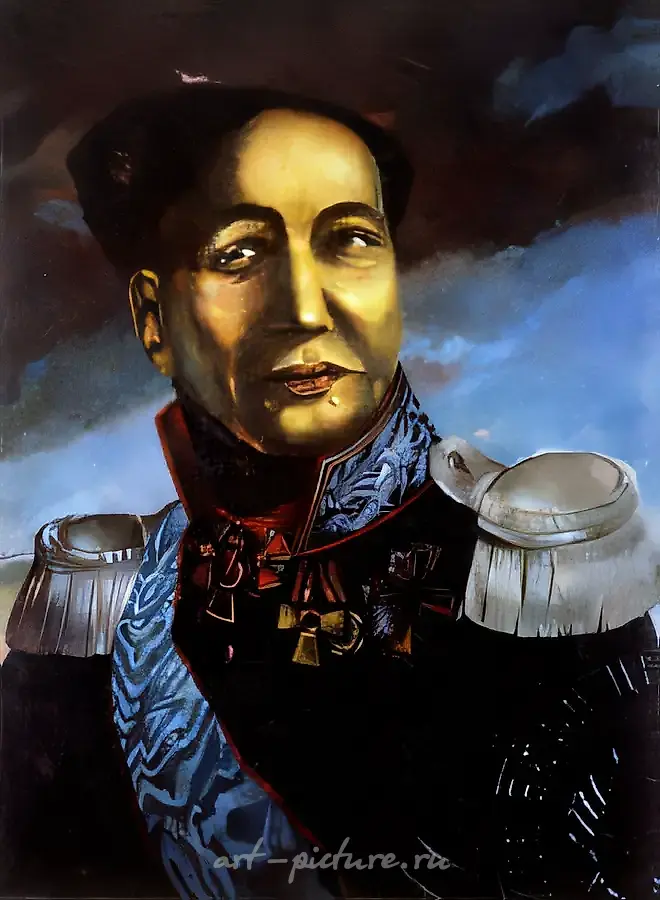
s portrait with a Blue Ribbon, 1992, oil on canvas, 200x150 authors property