Orlov Boris Konstantinovich
1941 Born in Khimki, Moscow region
1960-66 Studied at the Moscow Higher School of Industrial Art (Department of Monumental and Decorative Sculpture)
Since 1975 Member of the Union of Artists of the USSR
1976-86 One of the organizers of regular evenings and one-day exhibitions at the Sculptors' Club in the Artists' House on Kuznetsky Most
1987 One of the founders of the First Creative Association of Moscow Artists
Works in collections
The Pushkin State Museum of Fine Arts, Moscow
The State Tretyakov Gallery, Moscow
The Contemporary Art Collection of the Tsaritsyno Museum-Reserve, Moscow
Guggenheim Museum, New York, USA
Art Institute Museum, Chicago, USA
Museum fur Modern Kunst im Martin Gropius Bau, Berlin, Germany
Neue Galerie - Sammlung Ludwig, Aachen, Germany
Collection of contemporary sculpture. Seoul Olympic Park, Seoul, Korea
Nancy and Norton Dodge Collection, Zimmerli Art Museum, Rutgers University, New Brunswick, USA
J.Gory, Pistoia, Italy
M.Cogan, New York, USA
V.Ovcharenko, Moscow
A.Sidorov, Moscow
Exhibitions and auctions
SOLO EXHIBITIONS
1980 One-day exhibition. Artists' House on Kuznetsky Most, Moscow
1988 "Orlov and Prigov". Struve Gallery, Chicago, USA
1990 "Orlov". Struve Gallery, Chicago, USA
"Boris Orlov". Sonsbeek Art Center, Sonsbeek, Netherlands
1991 "The Death of Gods". Regina Gallery, Moscow
1994 "Parade of Astral Bodies". Regina Gallery, Moscow
1995 “Farewell Anniversary” (with Semyon Faibisovich). Regina Gallery, Moscow
1995 “Boris Orlov”. Tsaritsyno Museum-Reserve, Moscow
1998 “Architecture with Excesses”. Velta Gallery, Moscow
2002 “Victory over the Sun”. Regina Gallery, Moscow
2004 “Process”. Contours of Time. State Center for Contemporary Art, Moscow
2004 “Retrospection”. XL Gallery, Moscow
2005 “Author’s Property”. 1973-2000. Collectors Club, Moscow
2006 “Boris Orlov”. Yakut Gallery, Moscow
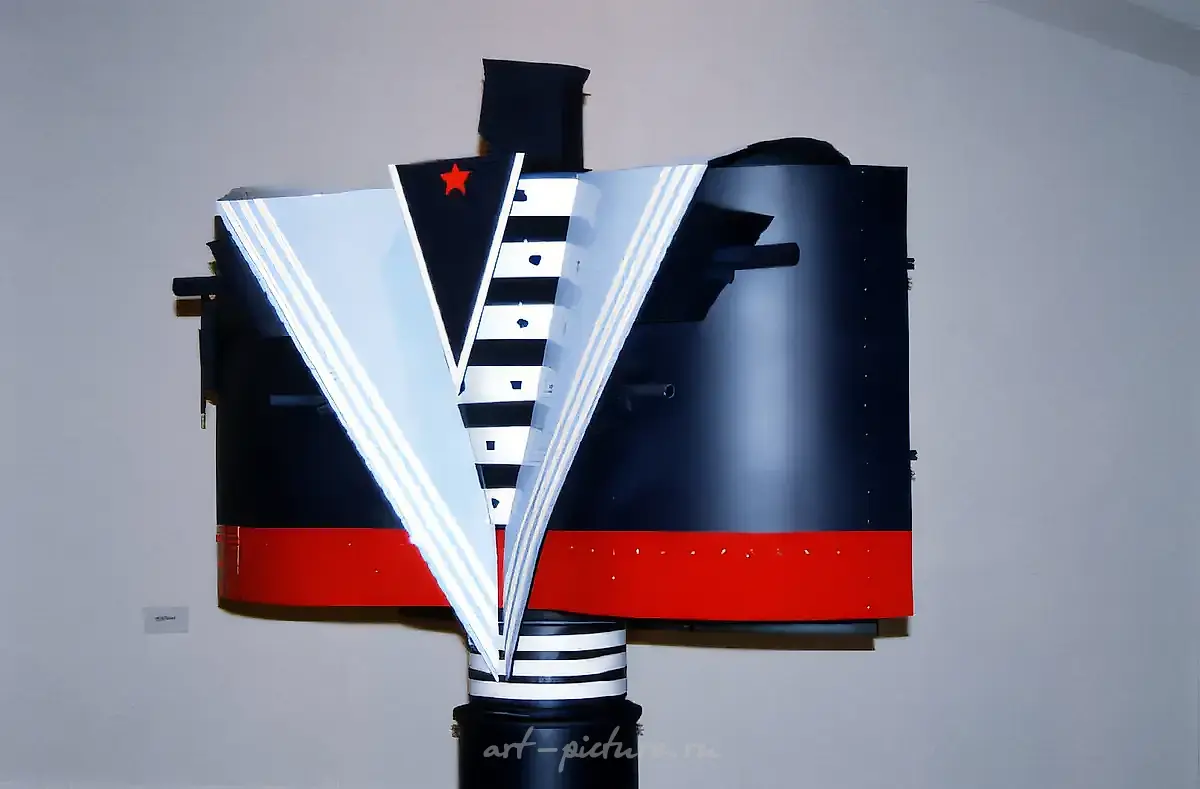
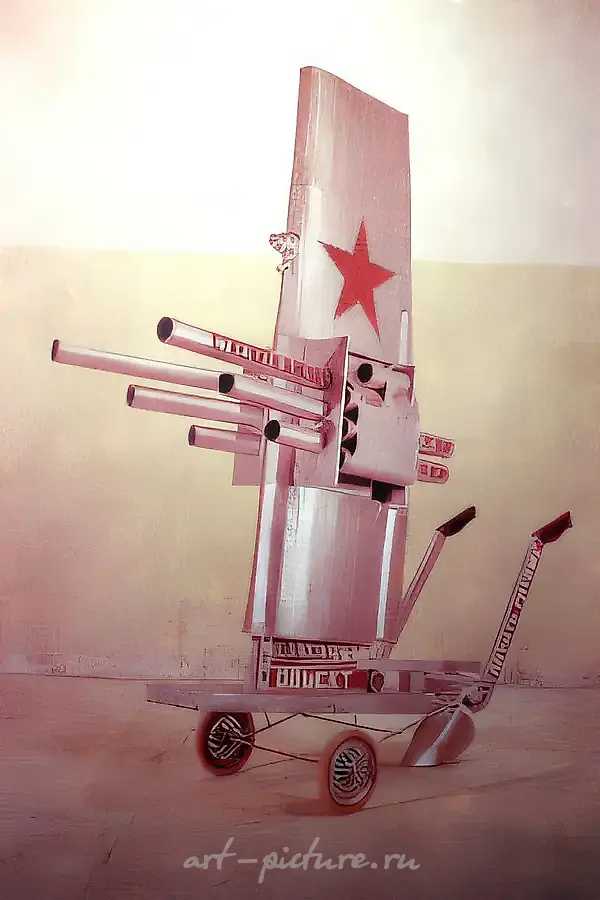
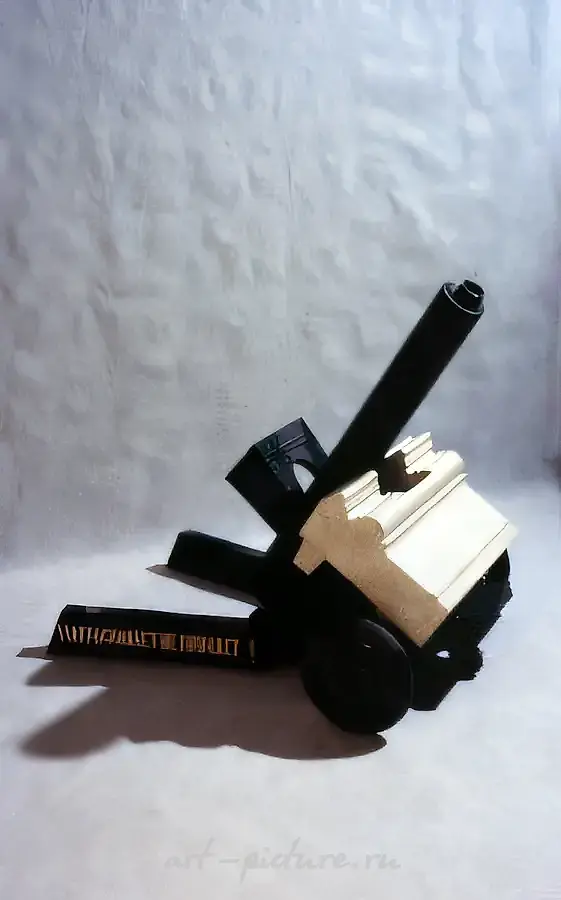
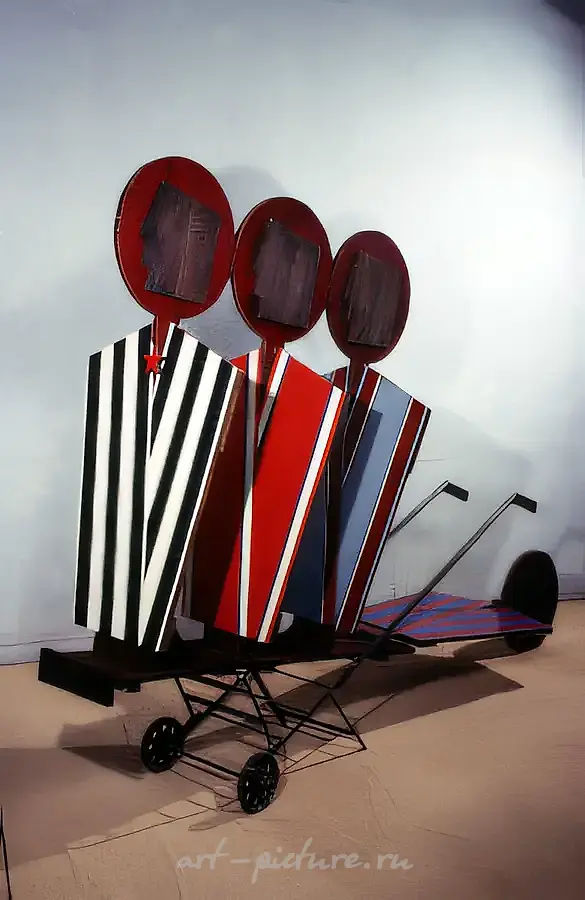
2008 “Earthly Army and Heavenly Army”. Moscow Museum of Modern Art, Moscow
GROUP EXHIBITIONS
[Extensive list omitted for brevity, see source text]
Author about himself
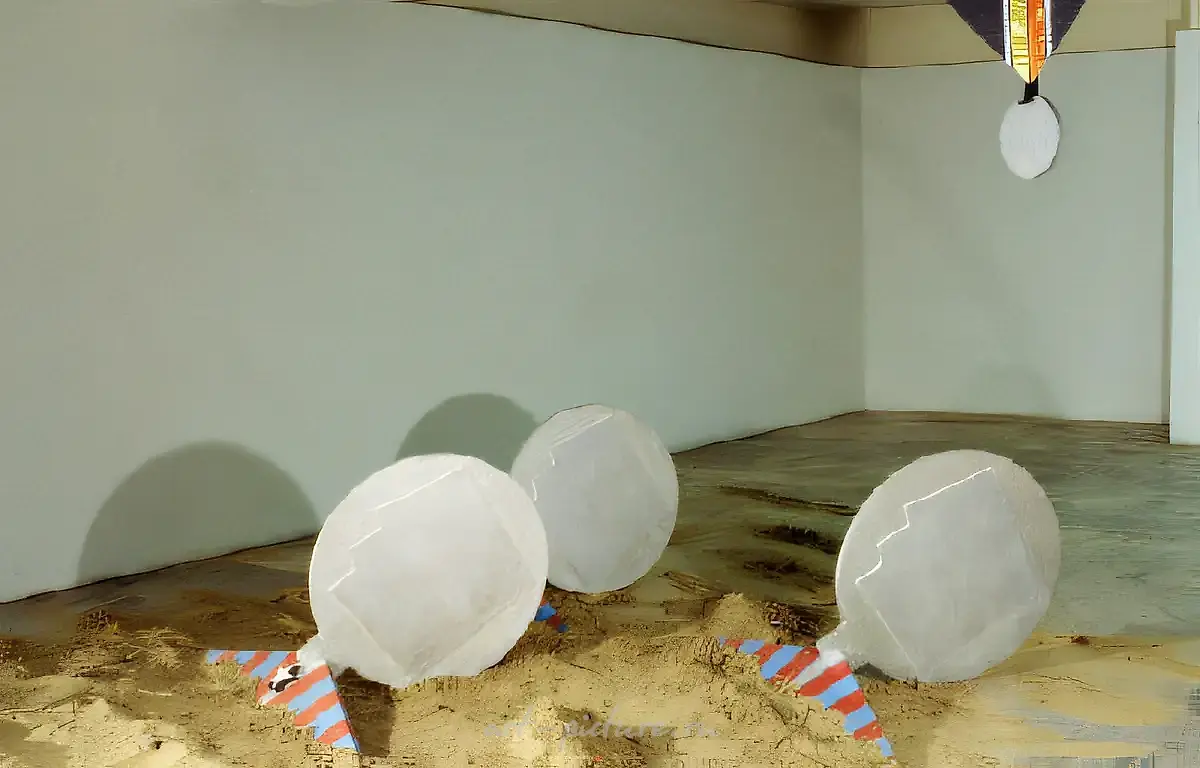
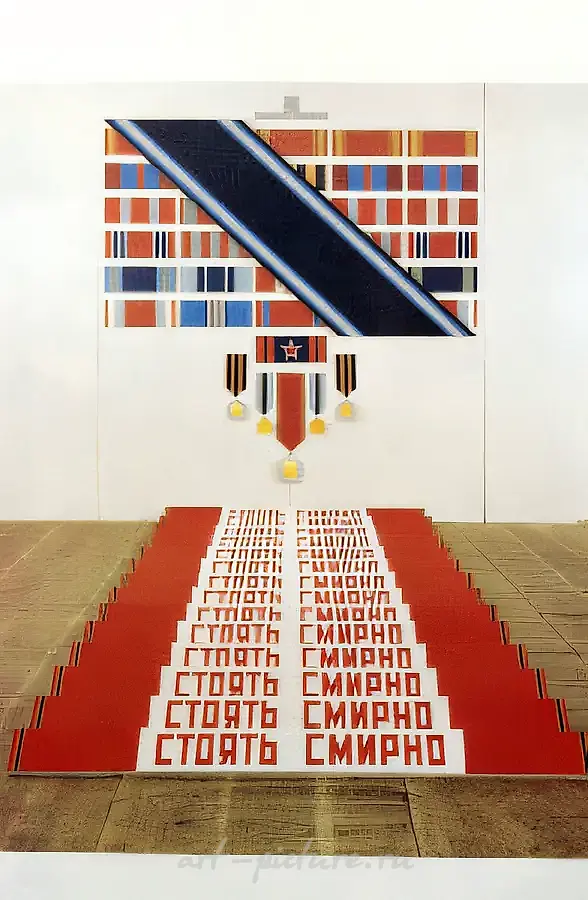
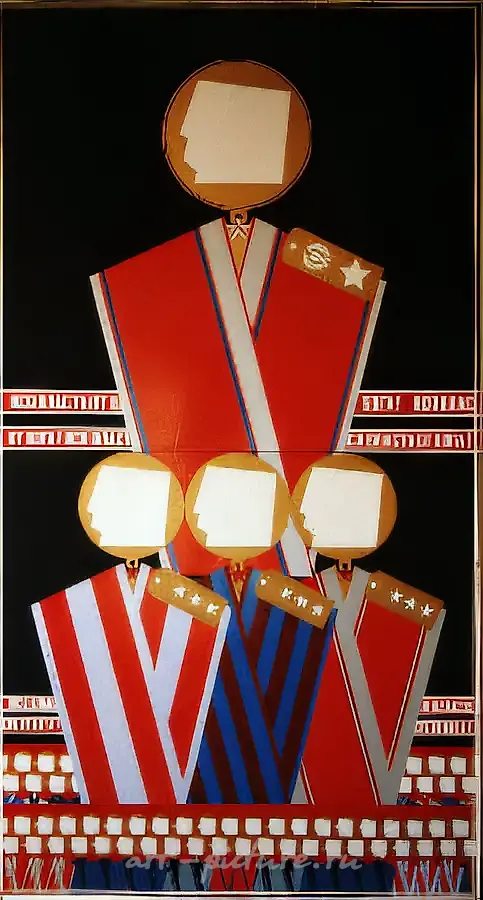
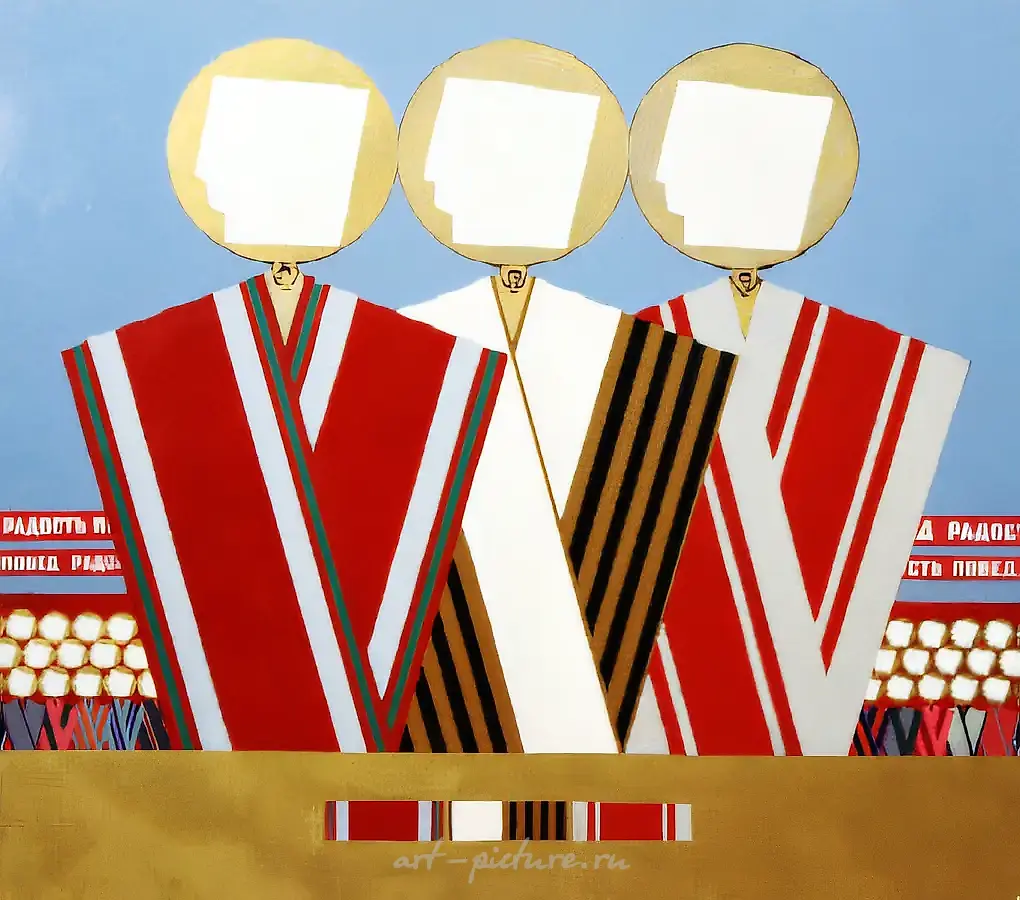
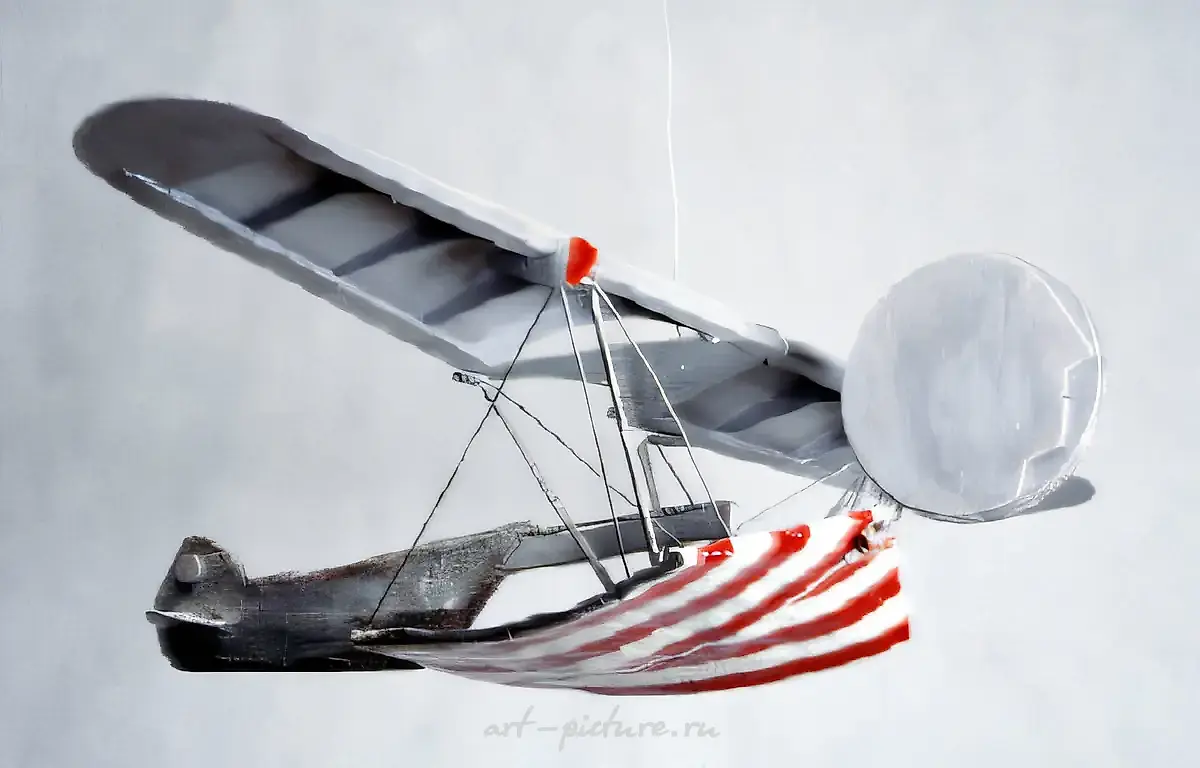
At the end of the 1970s, sensing the coming end of the empire, I decided to create its "generalized image." The position was vacant. It was first necessary to extract the arch-model of imperial art as a thing-in-itself and then color it with the realities of surrounding life. It was an absolutely free, individual action, the result of which was an eclectic style in form and magical in content.
Critic
At the center of Boris Orlov’s creative work lies neither style, nor form (despite their vividness and originality), nor metaphysics, nor folklore motifs, nor social mythology. Each of these elements acquires its own aesthetic significance, distinctness, and new meanings only in relation to what they serve. And what they serve is the artist’s own myth, into which they are entirely immersed and by whose energy they are charged. For this myth is a myth about the possibility of epiphany and artistic representation of the Super-individual Image.
Of course, in this artist’s myth, we are not talking about religious images, about the cult metaphysics of the icon or the mandala. Rather, it is postmodernist reflection on the themes of Freud’s “super-ego” or Jung’s teaching about the archetypes of “leader” and “hero” emerging from the collective unconscious. Naturally, this reflection, transferred into art, itself becomes a myth—the artist's myth of the Supra-personal Image. It is this myth that is the central point where the force lines of deep archaics and the avant-garde utopian projectivism, the ancient Roman ceremonial portrait and sacred Byzantine mosaics, monumental propaganda art of totalitarian regimes, and mass culture products converge "of their own accord."
However, this myth about the myth is not only a reference to the postmodern paradigm of recoding and deconstruction; it is also the artist’s response to the tragic experience of unfreedom gained in the Soviet empire, and a testimony to the liberation initiated by the art of the avant-garde, which was banned there for decades.
Orlov was one of the first artists to turn to recode the dominant social-ideological sign system. Like the artists of “Sots Art”, he also uses the language of irony, grotesque, simulation, carnival transformation. But for him, this language is not aimed at "exposing," not at enlightening "demythologization," but at revealing the deep mythological structures and archetypal images underlying socio-political metaphysics. Like a travesty, he himself took on the role of the artist and, on his own initiative, set out to create the "real" art of the empire—art that is regulated, canonical, iconographically precise—art of unlimited Triumph, Grandeur, Valor, Heroism.
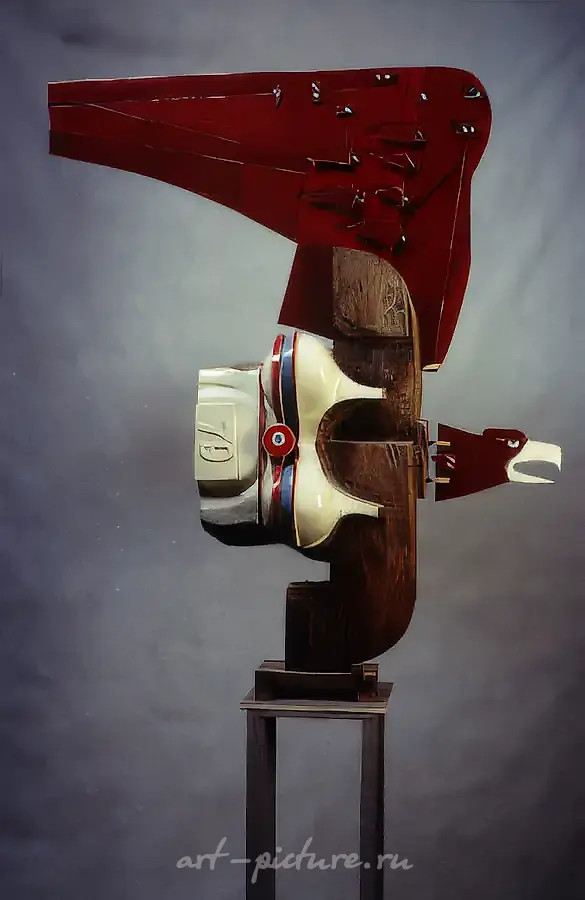
The starting point for the creation of such art was the distinction between face, personality, mask, disguise. Thus, the role of the independent mass of social virtues, ritual "totemic signs" in modern social heraldry became clear. A totemic line was formed—a construction of the totem, in which the ceremonial classical portrait fit, encouraged in any imperial era. The figure invariably became a hero, as if repeating the magical function of archaic heroes: the Great Man, the Man Above All, the Indicating, the Leading, the Big Man, the Most Important Man... Thus arose the system of ceremonial portraits, imperial busts, totems, heroes of revolution, war, labor, sport. These images, ascending to the myth-generating image of the Most Important Man, whose hierarchical emanations they are, are self-sufficient in their existence, and therefore can be executed in different styles: baroque or suprematism, constructivism or pop art. However, it will always be the image of the dominant facade—its triumph, dazzling temptation, supra-personal grandeur, radiance of glory.
But, being the totems of the Spirit of Empire, Orlov’s images, together with their Apollonian clarity, also carry imperial asymmetry: ambivalence, duality, the persistent irreconcilable contradictions between facade and everyday life, order and nature, sacred and profane, the finished and the emerging. The fundamental dualism of the empire is associated by the artist with the aesthetic play of the ambivalence of the sign and the denotate, emblematic and meaning.
At the same time, now, when the Kingdom of the Third Rome has developed deep cracks and there is every reason to believe that Soviet imperial cult art will soon become the domain of archaeologists, the sculptural images and objects of Boris Orlov acquire a new dimension: they become the representation of the only possible, indestructible, eternal Empire—the Heavenly Empire of myths, legends, and artistic fantasies.
(E. Barabanov, from the article 'The Singer of Imperial Freedom.' Catalogue for the exhibition 'Orlov', Struve Gallery, Chicago, USA, 1990)
Works 10