Nikolay Lvovich Selivanov
1961 Born in Baku
1977-81 Studied at the Moscow Art School in memory of 1905
1982-87 Studied at the Moscow Higher School of Art and Industry (ceramics department)
Since 1987 Head of an artist's studio at the 'Krasnopresnenskaya' Children's Art School
Since 1990 Founder and Artistic Director of 'Workshop of the Future. Artistic Technologies and Education'
1991 Invented an optical image creation method (RAIS certificate, 1993)
Since 1994 One of the curators of the educational project 'United Artistic Workshops'. CSI, Moscow
1994 Developed an author's curriculum in Visual Culture for various student age groups in specialized educational institutions
Works in collections
Ministry of Culture of the Russian Federation, Moscow
Champ libre Video Archive, Montreal, Canada
Exhibitions and auctions
SOLO EXHIBITIONS
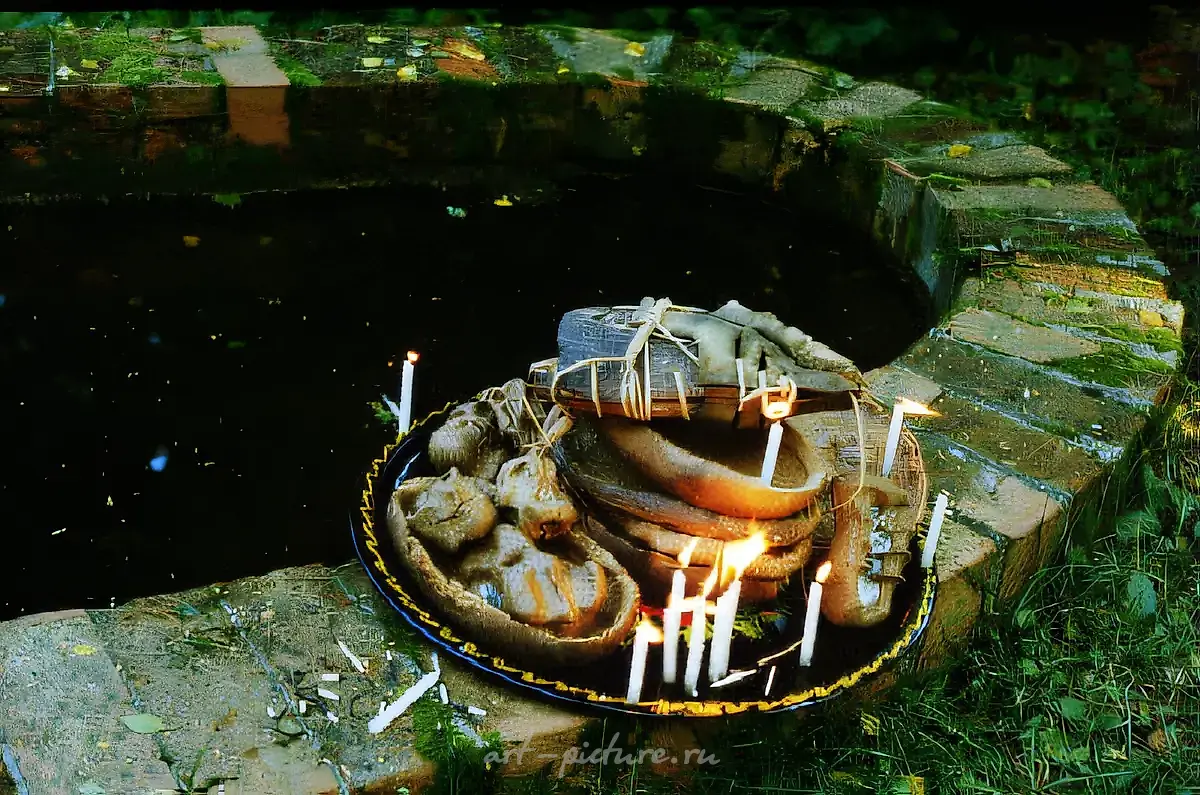
1991 'Kizhi' (author's project). Kizhi Island, Karelia; Moscow
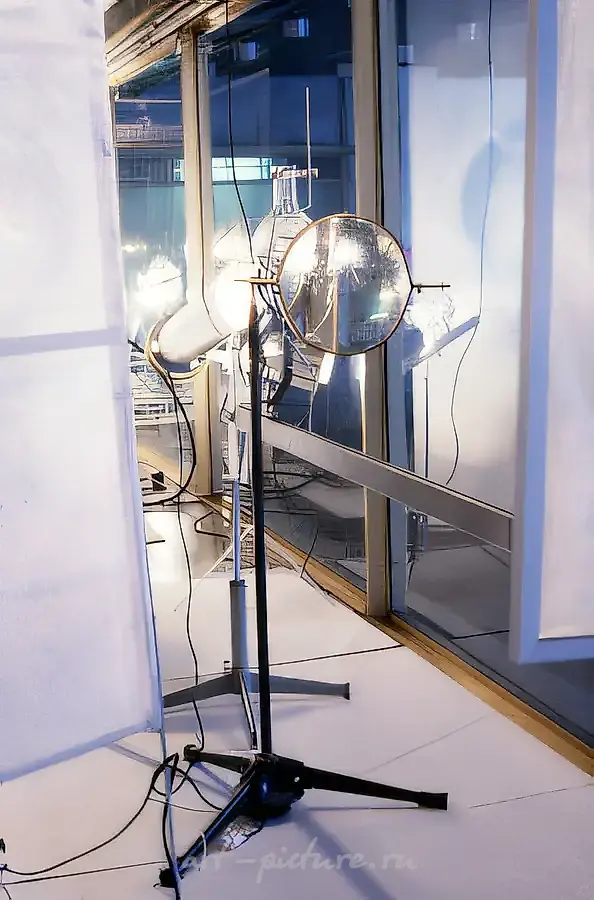
1992 'Optimization of Illusions'. Display windows of the Design Center VNIITE, Moscow
'Danaya' (performance and live model). Design Center, VNIITE, Moscow
1993 'Moscow Modern' (exhibition project). Moscow
'Purple Pyramid'. Gallery 'School', Moscow
1994 'After Surgery'. Gallery 'School', Moscow
1995-96 Author's courses 'Fundamentals of Visual Culture', 'Information Technologies in Culture', 'Video Technology in Knowledge Art', 'Multimedia' at RSUH
GROUP EXHIBITIONS
1987 XVII Youth Exhibition. House of Artists on Kuznetsky Most, Moscow
1988 XVIII Youth Exhibition. Manege, Moscow
'Eidos'. Youth Palace, Moscow
1989 XIX Youth Exhibition. House of Artists on Kuznetsky Most, Moscow
1993 'Superobject'. Central House of Artists, Moscow
'ART MYTH 3'. Gallery 'School'. Manege, Moscow
'New Territories of Art'. State Art Museum, Krasnoyarsk
1994 'NewMediaTopia'. Central House of Artists, Moscow
1995 '19th Manifestation of International Video and Electronic Art'. Montreal, Canada
1996 'Workshop of Creators'. Museum Center of the Russian State University for the Humanities. Moscow
International Art Fair 'Art-Manege', ('Multi'). Manege, Moscow
International Art Fair ART-MOSCOW ('Meyerhold's Carpet'). Central House of Artists, Moscow (catalogue)
1997 ARS ELECTRONICA`97 ('Moscow Colossus'). Linz, Austria
VIDEOGRAPHY
1995 'Skeleton. Frame', Hi-8 master, 11 minutes
'Winners and Their Wives', Hi-8 master, 6 minutes
'Warning. Transgression', Hi-8 master, 30 minutes
'Hermitage', Hi-8 master, 30 minutes
1996 'Drawing a Pattern', Hi8 master, 6 minutes
NETWORK PROJECTS
1997 'Moscow Colossus'. Virtual Museum
'Carpet'. Virtual Museum
'Nothing'. WEB poetry
'Open Museum'. Educational and Scientific Museum of the Russian State University for the Humanities (in collaboration with the Soros Center for Contemporary Art, Moscow). Moscow
1998 'TAM (tamogochi)'. Netart
Author about himself
The fact is that for postmodernist strategies, electronic technology is only one of many methods of representation, such as painting, installation, or the body itself. The central place in the postmodern paradigm is given to justifying the choice of a particular form of representation. These intellectual arguments are described in a special vocabulary, mostly translated from French. However, this lexicon became so convincing, charming, and self-sufficient that it often began to push out all the 'superfluous' from the art project, leaving only the most necessary in order not to lose the territory of artistic culture. In fact, two canonical forms of representation have emerged: the first resembles two sheets of paper - a representational description and a reflection, a critique of that description, with an optional intermediate artistic act; the second, simpler canon is when the representational description is replaced by a vague act of affectation, opening limitless possibilities for critical interpretation. Despite the artistic value of these phenomena, their dependence on literary description is obvious. And this is natural, since they are the result of constructs realized within a structuralist vocabulary. This lexicon, created for the analysis of written literary text, in the sphere of artistic culture transformed from a means of description into an end in itself, losing the very object of art.
The situation began to change when electronic technologies started penetrating art culture. These electronic media opened up new spaces for artistic activity. However, it's noteworthy that the artistic intelligentsia, having mastered the structuralist and postmodernist experience, mostly ignored the opportunity to be part of this process. This is not due to formal difficulties—in terms of cost or technical complexity—but rather in the rejection of electronic means for artistic expression as something alien. This rejection is highly symptomatic, based on the heterogeneity of two types of culture—literary and visual. Electronics, aside from serving the dominant literary culture, turned out to be such a powerful and universal tool that it became the basis for a new visual culture. This young, non-canonical culture, like any culture, has its own characteristics. They appear primarily in the worldview of its carriers. These views are just being formed, but the most significant are already known: the global unity of the information space and artificial intelligence. Based on these ideas, it becomes possible to reflect on the specifics of artistic expression in electronic technologies.
Critic
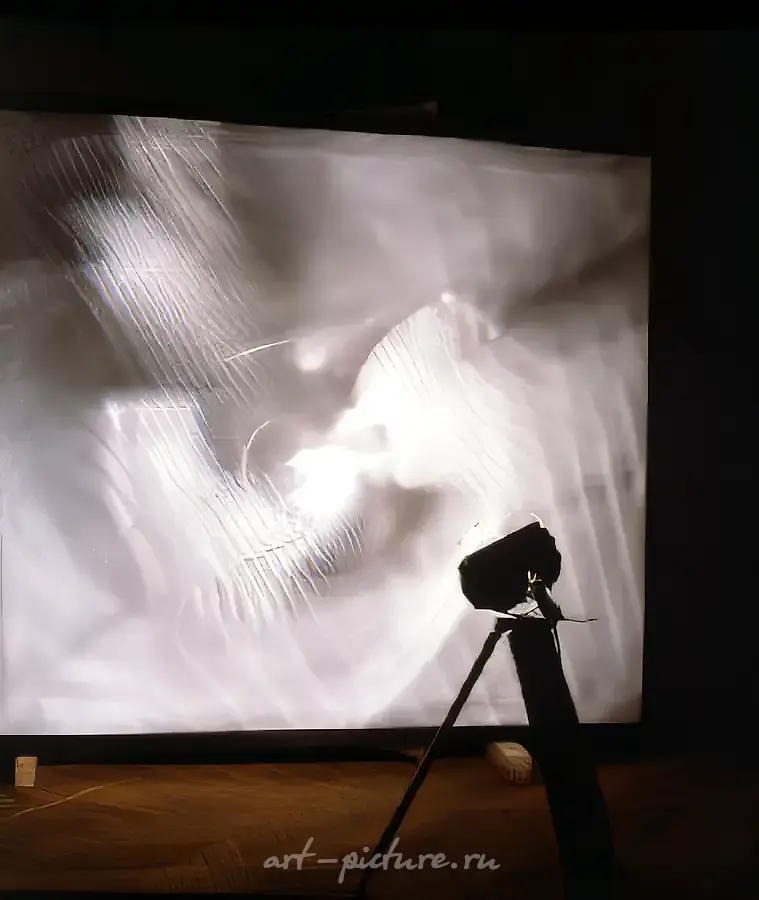
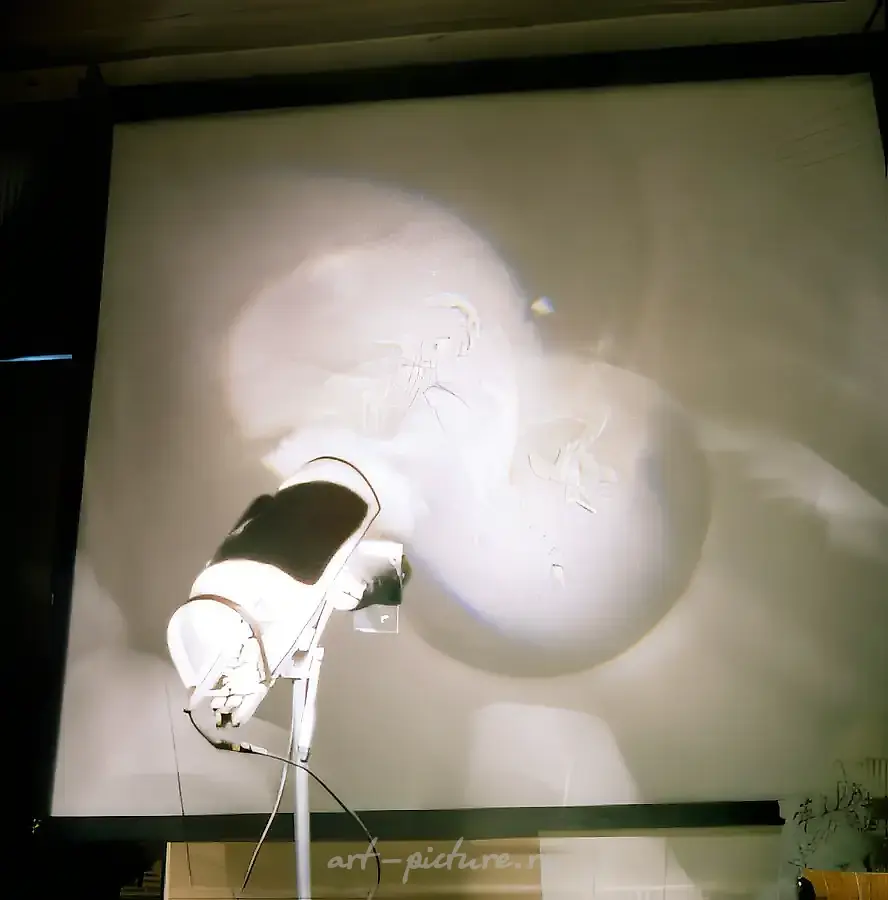
In a half-darkened hall, two glowing eyes gaze from the wall. Or perhaps we, like ophthalmologists, peer into someone's retina and find there the simplest structures—patterns discovered by Malevich and Tatlin, the first surgeons of Russian art: circle, triangle, square, cross.
According to Arnheim, perception strives to achieve the simplest structural configuration. Regardless of whether an object is flat or three-dimensional, perception is always based on visual images projected by the eye lens onto the retina. The images reflected on the retina are two-dimensional, like a picture drawn on the bottom of a bowl.
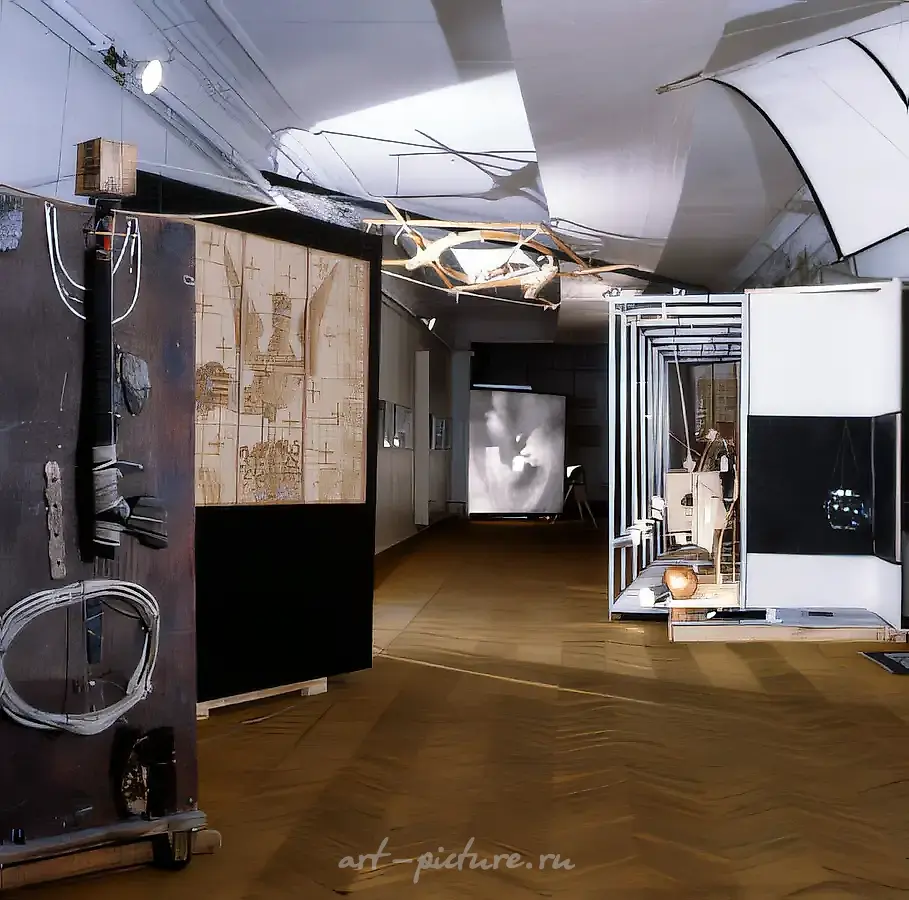
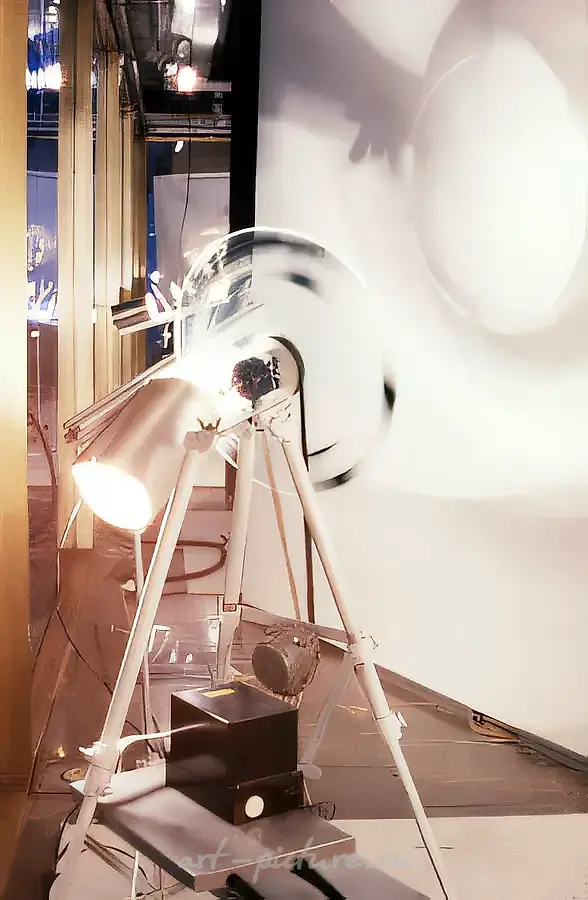
Each projection on the wall consists of three layers: as if the retina of an eyeball, a black symbol, and an inverted candle flame. Nikolay Selivanov, who has long and seriously explored the theory of visual perception, conducts alchemical research in search of a new universe and, as a scientist, comprehends the familiar in a completely new light. His works are not interpreted unambiguously, offering each viewer a corridor for exploration. Two black and white projections sit in niches where the shadow is so deep it creates a background of black 'nothingness.' The first projection: a magical Star of David and the 'God-chosen' phallus; the second—a Greek omega letter, inside which is a giant ant shadow. During the exhibition opening, a small ant performs a dance of death, projecting its movements onto the retina. Conquerors of the earth, ants sense the world with antennae. The segments of the antennae have different functions: the twelfth segment detects the spirit of the native nest, the tenth perceives pheromone trails, the sixth and seventh—enemy smells. The eyes of worker ants distinguish only light and dark. They themselves strive to flee into the shadow, into the gloom. Red color is invisible to ants; for them it is indistinguishable from black, from darkness. Moreover, other colors appear differently to ants than to humans. Ants see things invisible to us. Their eyes are like a unique time magnifier, which, compared to human eyes, increases the number of moments per unit of time and enhances the resolution of vision. This means that, like super-sensitive photographic plates, ants can record phenomena that elude observation: moments of transition or phases of flight.
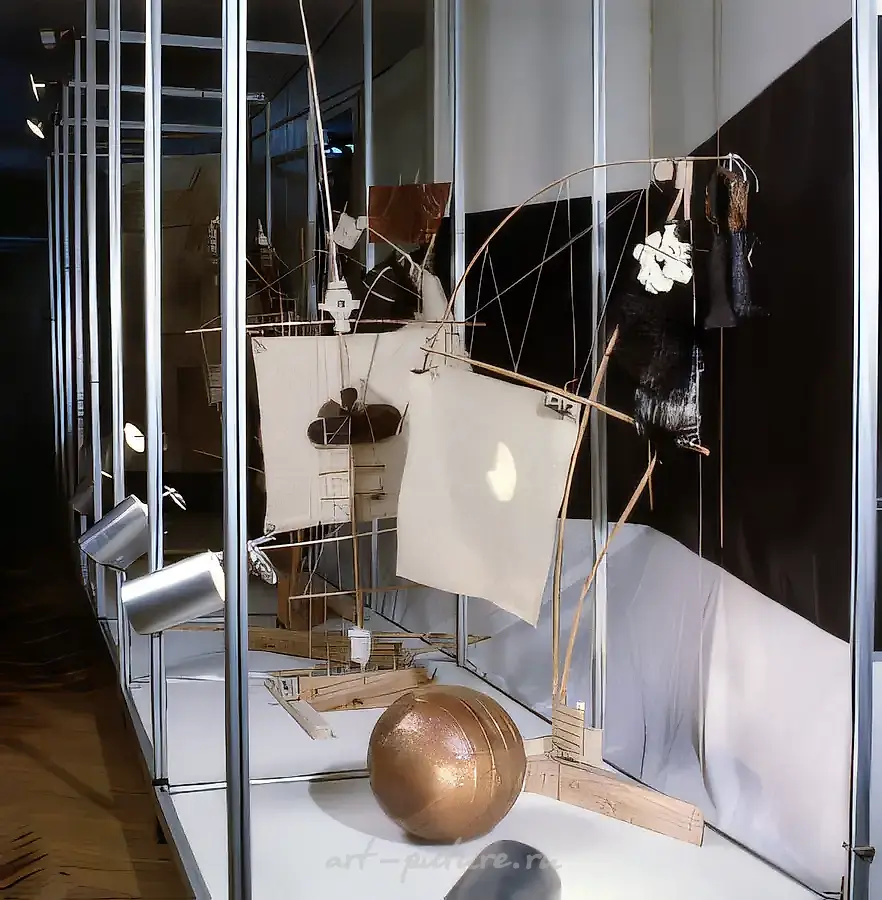
The exhibition captures the laws of visual perception. These include: figure-ground contrast, part-whole relationships, verticals and horizontals, and the constancy of image retention. We see all this rational mechanics, and at the same time, only think we see: when the gallery lights are switched off, the walls become perfectly clean. The magic of mirages lingers for fractions of a second in inertia on our retina.
E. Rukhina. Ant's 'dance macabre' — Segodnya, April 27, 1994
Works 11