TOTART
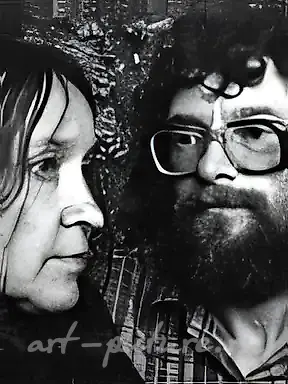
ABALAKOVA Natalya Borisovna
1941 born in Gorky
1961 graduated from the Moscow State Pedagogical Institute named after V. I. Lenin (Faculty of Philology)
from 1979 Project "Researching the Essence of Art in Relation to Life and Art" (together with A. Zhigalov); from 1983 - TOTART
since 1981 one of the founders of MANI (Moscow Archive of New Art)
since 1982 one of the organizers and participants in all actions of the APTART movement
since 1985 member of the Youth Artists Club of Hungary
since 1987 member of the Avant-Garde Club
ZHIGALOV Anatoly Ivanovich
1941 born in Arzamas, Gorky region
1964 graduated from the Moscow Regional Pedagogical Institute (Faculty of Philology)
Has been engaged in poetry and painting since the late 1950s
from 1979 Project "Researching the Essence of Art in Relation to Life and Art" (together with N. Abalakova); from 1983 - TOTART
since 1981 participated in the creation of MANI (Moscow Archive of New Art)
since 1982 active participant of the APTART movement
since 1985 member of the Youth Artists Club of Hungary
since 1987 member of the Avant-Garde Club (KLAVA)
since 1993 member of the Union of Artists and the Union of Writers
Works in collections
Collection of Contemporary Art of the State Museum-Reserve Tsaritsyno, Moscow
National Museum, Prague, Czech Republic
Culture Center, Brno, Czech Republic
Gallery "ASPEX", Portsmouth, England
Museum of Portsmouth, England
Collection of A. Babulevich, Moscow
Kolodzei Art Foundation, USA
L. Talochkin, Moscow
M. Milius, Tartu, Estonia
P. Novitsky, Warsaw, Poland
Kostaki Gallery, Athens, Greece
Young Artist’s House, Budapest, Hungary
MAILART
Exhibitions and auctions
SOLO EXHIBITIONS
1989 "Natalya Abalakova and Anatoly Zhigalov. Works 1961-89." Gallery "Third Eye", Glasgow, UK
1990 "TOTART. N. Abalakova and A. Zhigalov. 1960-90". "Kashirka", Moscow
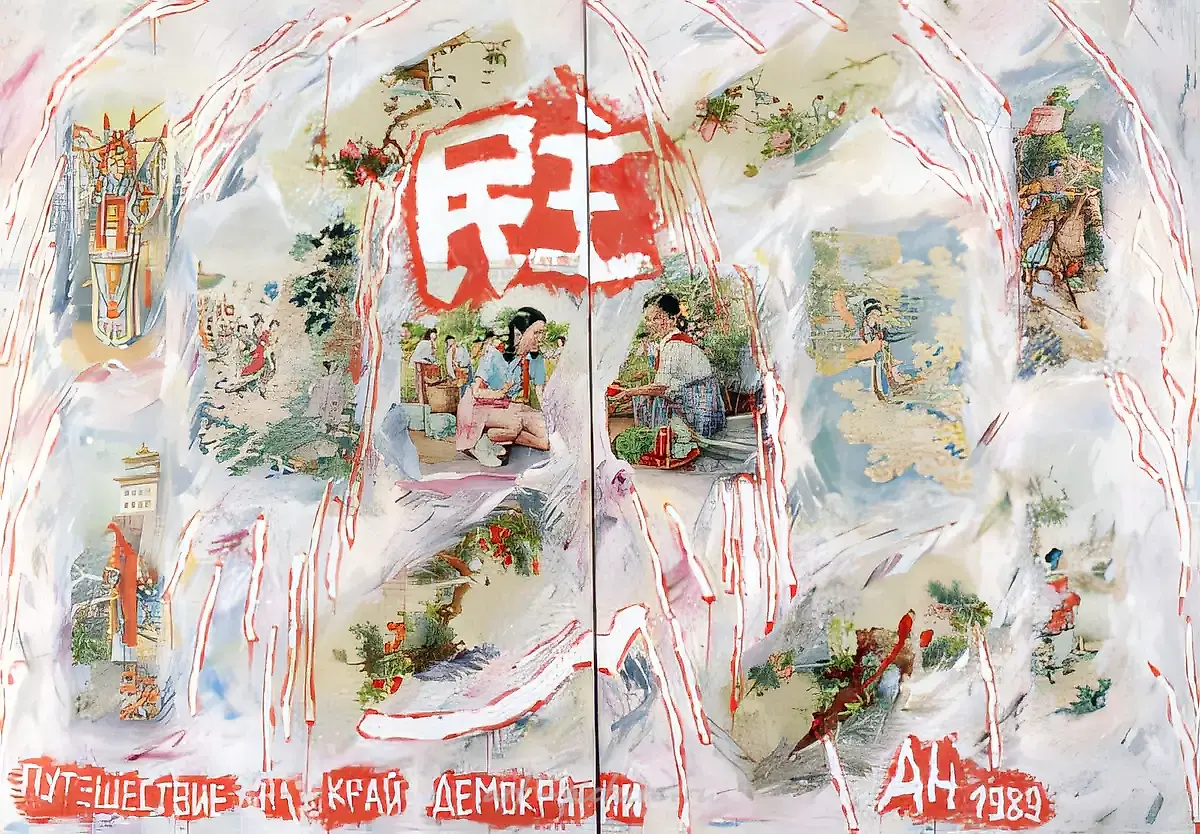
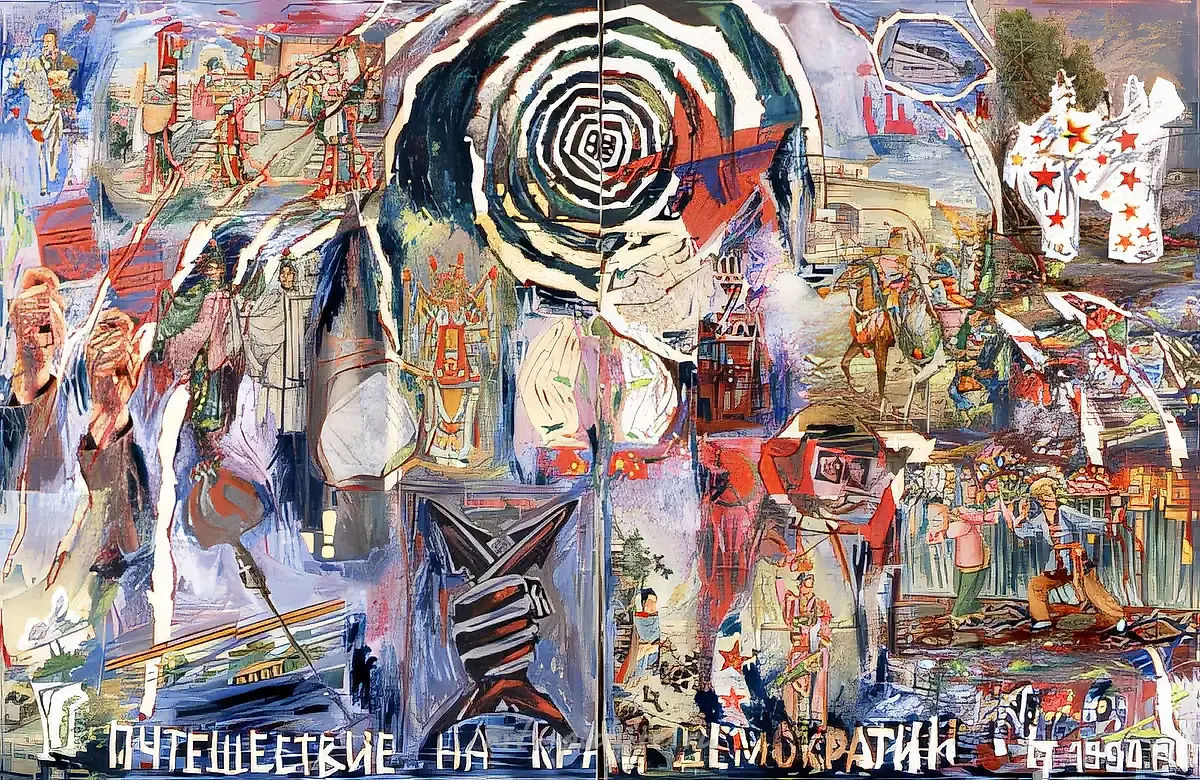
1991 "Journey to the Edge of D. (New Works 1990-91)." "Kashirka", Moscow
"Natalya Abalakova and Anatoly Zhigalov. 1960-91." Manege, St. Petersburg
"N. Abalakova and A. Zhigalov. Graphics". Brno, Czechoslovakia
1993 "The Unexplored Leaves Its Mark in Unpredictable Consequences." L Gallery, Moscow
"Ave, Eva" (Eva Zhigalova). "Laboratory 'Anatomy of Art. Graphics and Projects 1989-93.'" Gallery "Velta", Moscow
1994 "21 Finger". Gallery "21", St. Petersburg
1995 "North Wind" (performance-installation). Gallery "21", St. Petersburg
"Nord Wind" (performance-installation). Kunstraum, Wuppertal, Germany
GROUP EXHIBITIONS
1974 Graphics exhibition. Library named after Korolenko, Moscow
Exhibition of works from the A. Glezer collection. A. Glezer’s Apartment, Moscow
1975 "Preliminary Apartment Previews for the All-Union Exhibition." Moscow
"Exhibition of works by Moscow artists." VDNKh, pavilion "House of Culture", Moscow
1976 "Exposition au Musee en Exil" (A. Zhigalov (collection of A. Glezer)). Mongeron, France
First exhibition of the Fine Arts section at the City Committee of Graphic Artists. (A. Zhigalov) M. Gruzinskaya, 28, Moscow
Exhibition at the apartment of V. Nikolaev (A. Danilov, A. Zhigalov, V. Nikolaev), Moscow
1977 "La nuova arte Sovietica". (A. Zhigalov) La Biennale di Venezia, Venice, Italy
1977-80 Annual spring and autumn exhibitions. M. Gruzinskaya, 28, Moscow
1978 "Rassegna sul dissenso culturale nell'Est europio". (A. Zhigalov) Scuola Art e Mestiert, Aula Magna Scuola cantonale di Commercio, Aula Magna Municipio, Sala Patriziale, Bellinzona, Switzerland
1979 "Color, space, form" (A. Zhigalov). M. Gruzinskaya, 28, Moscow
1980 Exhibition-review of unofficial artists’ works. MOSKH Exhibition Hall on Vavilov St., Moscow
"La Lumiere." Arts Festival. Avignon, France
"Le Temps qui court." France
1981 Painting exhibition. M. Gruzinskaya, 28, Moscow
1981-82 "Russian New Wave." Contemporary Russian Art Center of America. Soho, International Art Center, New York, USA
1982 First APTART exhibition. APTART Gallery, Moscow
1982-84 "Russian Samizdat Art." New York, Rochester, Westchester, Washington, Richmond, Seattle, Pittsburgh, Los Angeles, USA; Vancouver, Canada
1983 "Russian women artists: 1930-82" (N. Abalakova). Contemporary Russian Art Center, New York, USA
"APTART in Nature." Kalistovo, Moscow region
"Victory over the Sun." APTART Gallery, Moscow
"APTART over the Fence." Tarasovka, Moscow region
"Come Yesterday and You’ll Be First." City Without Walls: an urban artists collective Inc. Contemporary Russian Art Center of America. Newark, New Jersey, New York, USA
1984 "APTART in Tribeca". Contemporary Russian Art Center of America, New York, USA
"Le Vivant et l'Artificiel." Avignon, France
1985 Festival of Contemporary Art. AZLK Club, Moscow
First festival of underground cinema. S. Sokhranskaya’s studio, Moscow
"International Experimental Art." Young Artists Club. Budapest, Hungary
"Russian Art Show." Danceteria, New York, USA
"APTART." Washington Project for the Arts, Washington, USA
Exhibition of Soviet artists. Gallery "City Without Walls." New York, USA
One-day graphics exhibition. Central House of Artists, Moscow
Numerous Mail Art exhibitions and projects in Europe and America
Exhibition-discussion of conceptualists and metametaphorists. TsDRI, Moscow
1986 "Arts of Today." International Exhibition. Hotel Hilton, Budapest, Hungary
One-day exhibition "Laboratory" (as part of XVII Youth Exhibition). House of Artists on Kuznetsky Most, Moscow
"Nude in Contemporary Art" (exhibition-symposium). House of Artists on Kuznetsky Most, Moscow
Lecture and demonstration of the works of N. Abalakova and A. Zhigalov. House of Poets, Leningrad
Action "Art Against Commerce." Bitsevsky Park, Moscow
"Primitive Art" (exhibition-symposium). House of Artists on Kuznetsky Most, Moscow
1987 Exhibition of unofficial art. Pavilion in the Harbour, Leningrad
"Object-1". M. Gruzinskaya, 28, Moscow
"Retrospective of Moscow artists' work. 1957-1987". Hermitage reading society, Profsoyuznaya St., 100, Moscow
"InterArt." Poznan, Poland
"Art of Today." 2nd International Exhibition. Budapest Galeria, Budapest, Hungary
1987-88 "In Hell" (exhibition-action). Avant-Garde Club, Moscow
1988 Mail Art exhibitions in Poland, Netherlands, USA, Germany, Switzerland
"Labyrinth." Youth Palace, Moscow
"Geometry in Art." "Kashirka", Moscow
Performance Festival. Poznan, Poland
1989 "Dear Art." Youth Palace, Moscow
1991 "3rd Art of Today." Budapest, Hungary
"Der Weg." Bergen, Germany
1992 Exhibition of the "Molot" group. Manege, Moscow
"Diaspora." Central House of Artists, Moscow
"Diaspora 2." Central House of Artists, Moscow
"Artist and Book." Peresvetov Lane, Moscow
"The Gate." European project. "Art Space" Gallery. Portsmouth, UK
"A Healthy Mind in a Healthy Body." Festival of Contemporary Art. Smolensk
1993 "777 Distance Communication." Aspex Gallery, Portsmouth, UK; Kunstnernes Hus, Aarhus, Denmark; Storm Gallery, Amsterdam, Netherlands; Galeria Nova, Bratislava, Slovakia; Reykjavik Art Museum, Reykjavik, Iceland; M. Gelman Gallery, Moscow
1994 "Walking Through the Darkness at Midnight." Video art festival. Petrovsky Boulevard; Cinema Center, Moscow
"May Exhibition." Kuznetsky most, 20, Moscow
"Leap into the Void: Artist Instead of Artwork." European and American avant-garde 1910–90. Central House of Artists, Moscow
"Intergraphica." Triennial of Graphics. Krakow, Poland
Cetinje Biennale II. Cetinje, Montenegro
1995 "Artist and New Technologies" (seminar). Pereslavl-Zalessky
Triennial of Graphics. Tokyo, Japan
"Inter-Kontakt-Grafika." Prague, Czech Republic; Krakow, Poland
"Kunst im verborgenen. Nonkonformisten Russland 1957-1995." Collection of Contemporary Art of the Tsaritsyno Museum-Reserve. Wilhelm-Hack Museum, Ludwigshafen am Rhein; Documenta-Halle, Kassel; Staatliches Lindenau Museum, Altenburg, Germany
PERFORMANCES (main)
1980 "The Burial of a Flower", "White Cube", "Black Cube". Authors’ Apartment, Moscow
"Homage to Prague". Unofficial performance festival. Prague, Czechoslovakia
"Snow". Moscow
1981 First performance festival. Pogorelovo village, Kostroma region. "Operation 'House';" performances-installations "Staircase", "The Last Action", "Death of Lalai", "In Memory of Lalai". Living sculpture. Pogorelovo village, Kostroma region.
"School of Arts." Living sculpture. Pogorelovo village, Kostroma region.
"Our Best Creation" (the birth of Eva on August 12, 1981)
1982 "Retro-1". APTART Gallery, Moscow
"Our Anthill", Piligino village, Moscow region.
"Commandant Series" (1982-1985), Moscow
1983 "Work." S. Sokhranskaya’s studio, Moscow
"Window 1". TOTART performance. Tarasovka, Moscow region.
"Window 2". Courtyard of S. Sokhranskaya & I. Makarevich’s studio, Moscow
1984 "Sign of the Avant-Garde". Musical performance with participation of V. Goncharova & S. Letov. Authors’ Apartment, Moscow
"Praesence, praesence". S. Sokhranskaya’s studio, Moscow
"DisputArt I". S. Sokhranskaya’s studio, Moscow
"In such cold, art is unthinkable." Orekhovo-Borisovo, Moscow
"TerArt" (an attempt at creative violence against Yu. Albert). Authors' Apartment, Moscow
1985 "Pochtart". TOTART action and first Soviet mail art exhibition. Authors' Apartment, Moscow
"DisputArt 2". S. Sokhranskaya’s studio, Moscow
"Sixteen Self-Identifications". Authors’ Apartment, Moscow
"Golden Community Day". Moscow
1986 "Red Room". Authors’ Apartment, Moscow
"Even Guard". Authors’ Apartment, Moscow
1988 "Moscow - Paris - Moscow". Video performance Abalakova-Zhigalov-Sekal. Paris, France
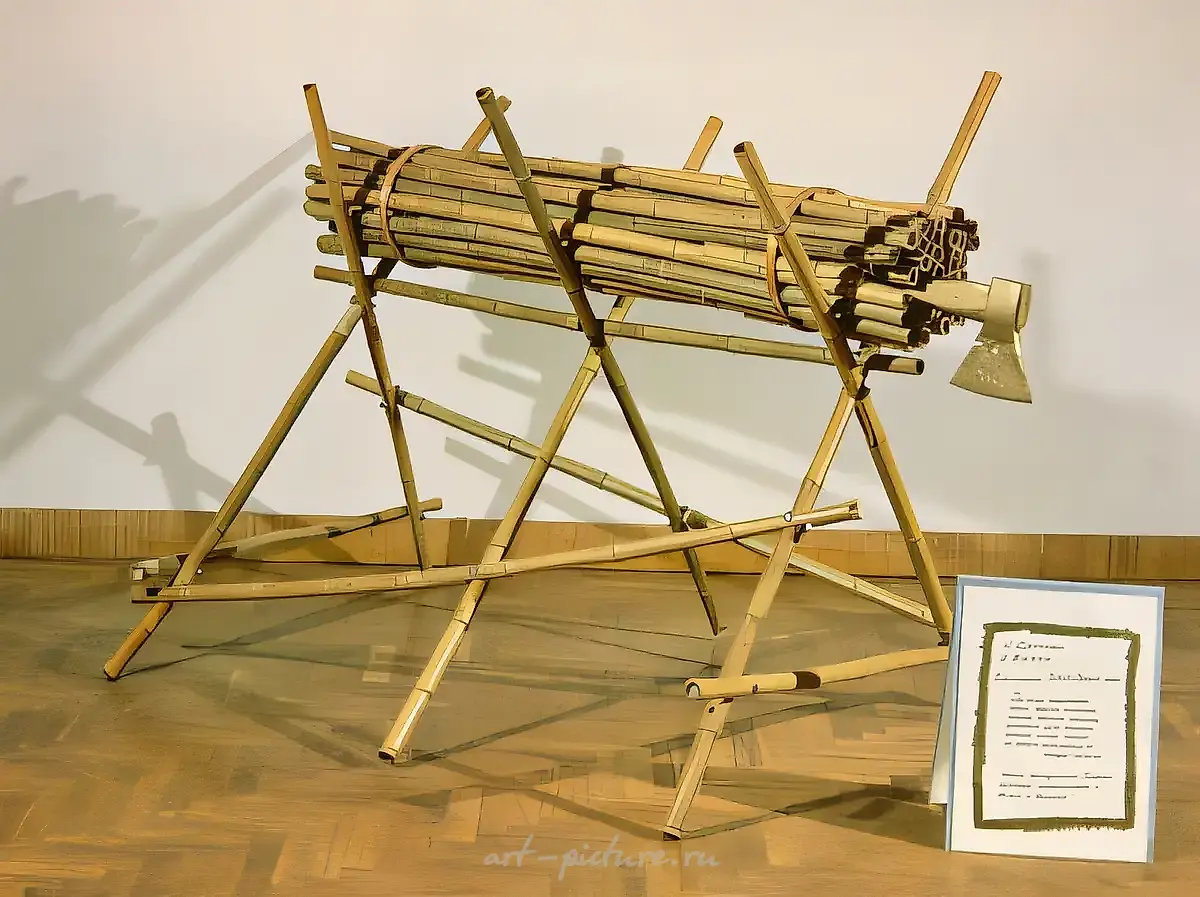
1990 "Contemplation of the Golden Axe". "Kashirka", Moscow
1991 "Reason for Acquaintance". "3rd meetings of Vision and Image Theatre". Katowice, Poland
"Phantom of Freedom." "Totalitarna Zona". Art Festival. Prague, Czechoslovakia
1994 "Through the String." (action) "Moscow Pool", Moscow
"Performance Festival". "Kashirka", Moscow
"Canal+". Video art mail art. Paris, France
1995 "Spirit and Soil-2". "Kashirka", Moscow
"Classics." "Artist and New Technologies" (seminar). Pereslavl-Zalessky
Author about himself
TOTART is truly national and international art.
TOTART means "total presence" in a "total situation". In the context of this "total presence", from which it is impossible to withdraw, the viewer meets an "object" or "action", during or before which they are drawn into a situation of choice.
The TOTART artist does not play with the revealed constructs of the ideological language and realities of social life, maintaining a distance between themselves and them, but rather enters into them and immerses themselves in the nourishing deep waters of the collective unconscious that feed them, finding there the primordial roots and connections, and giving them their true name.
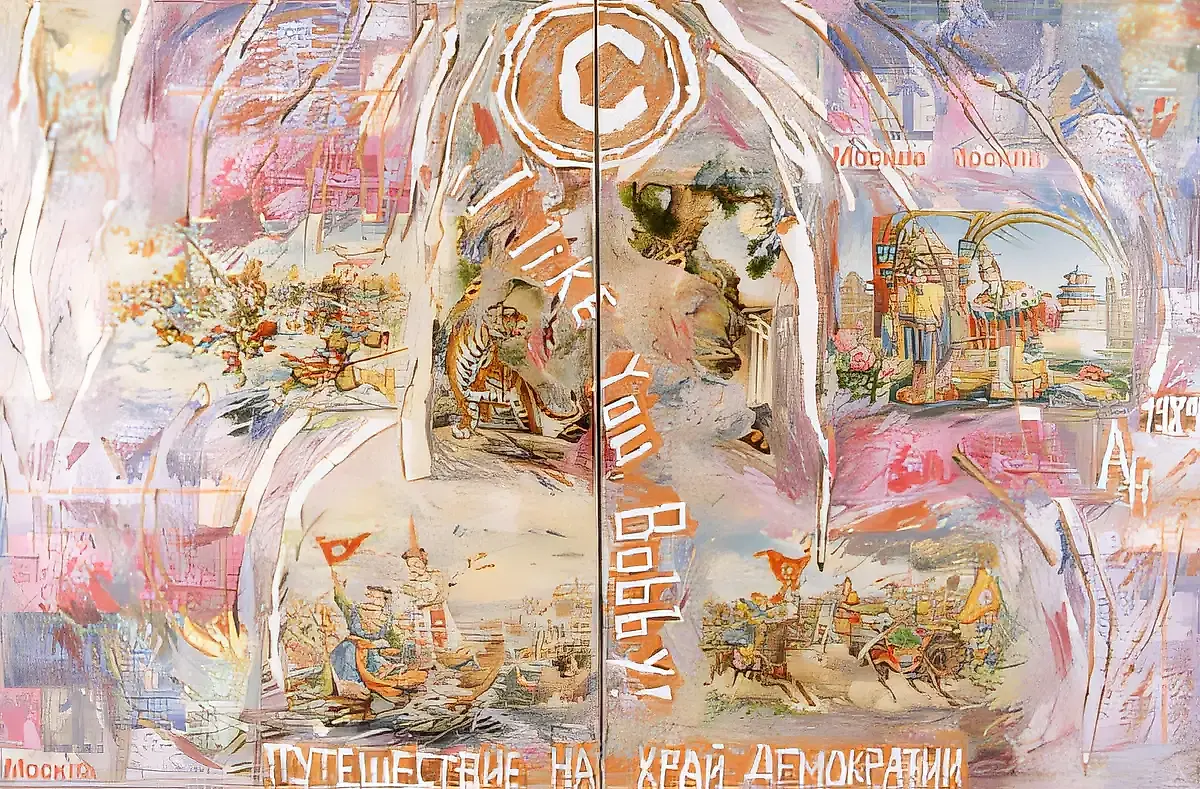
The Project "Researching the Essence of Art in Relation to Life and Art" (TOTART) pays significant attention to the further development of constructive elements in painting, real space, word, etc., as a principle of form-making and socio-cultural (sign). The project is connected with Russian constructivism and its utopia; however, the negative historical experience leads to an anti-utopia, to the debunking of the technological pathos of constructivism.
"Signs of the Avant-Garde" are introduced into the expressive space of the painting and are combined with figurative elements deliberately "externally", emphasizing ambivalence and an ambivalent attitude toward them, which seems to indicate not "succession" but a "rupture"—but a rupture in the "homogeneous" integral socio-cultural fabric. Expression carries the function of "attitude" and real time, while the geometric ("appropriated") sign represents a cultural coordinate, relativized by this attitude.
Critic
...the wheel is also a kind of archetype, often encountered in paintings...
The wheel is the limit of polysemy. It is socially colored as the "red wheel"; it strings together "cultural archaeology"—traces of sacred themes: Buddha's wheel; the wheel of celestial chariots; ... the wheel is akin to solar symbols, along with arrows, referring to proto-Aryan archetypes; also the wheel of avant-garde legend—the bicycle wheel of Duchamp, spinning the rise of the "ready-made genre", so that, after venturing far beyond the painting, it returns as a wheel, rolling back into its own circles by the will of the "TOTARTists", whose nomadic chariot, by historical whim, ended up inhabiting the surface of a revived painting—like a newly discovered land. The circle of return closes, imprinting at the epicenter of the script a mark-ideogram-seal of the wheel, a stamp of the "TOT-archive".
The centrifugal forces of cultural intertexts are drawn into the hermeneutic circle of dialogue-understanding-interpretation. The divergent converges, being drawn into the cyclic rhythm of rotation, the game of differences is strung onto the rim of wheels, through the windows of which gusts of Western and Eastern winds blow simultaneously. Is this also Eastern mysticism?—rolling mentality with psychedelic "wheels" to "drive into" the empty center. Dizzying rotation, where the source and the outcome coincide. But this Eastern loop is complemented by a linear flight, the ability to "shoot the bow" and conquer living spaces. This is the dynamic of European will, in relentless pursuit of changing places and "re-evaluation of values", sending the chariots in search of novelty and the unknown.
S. Kuskov. From the article "TOTART Today, or A Journey to the Edge of Painting." - "Creativity", 1990, №11
*
...It is remarkable, however, that the "domestic" performance did not acquire adequate relaxation and homely intonation: on the contrary, apartment actions created spaces that were tense, often aggressive and uncomfortable...
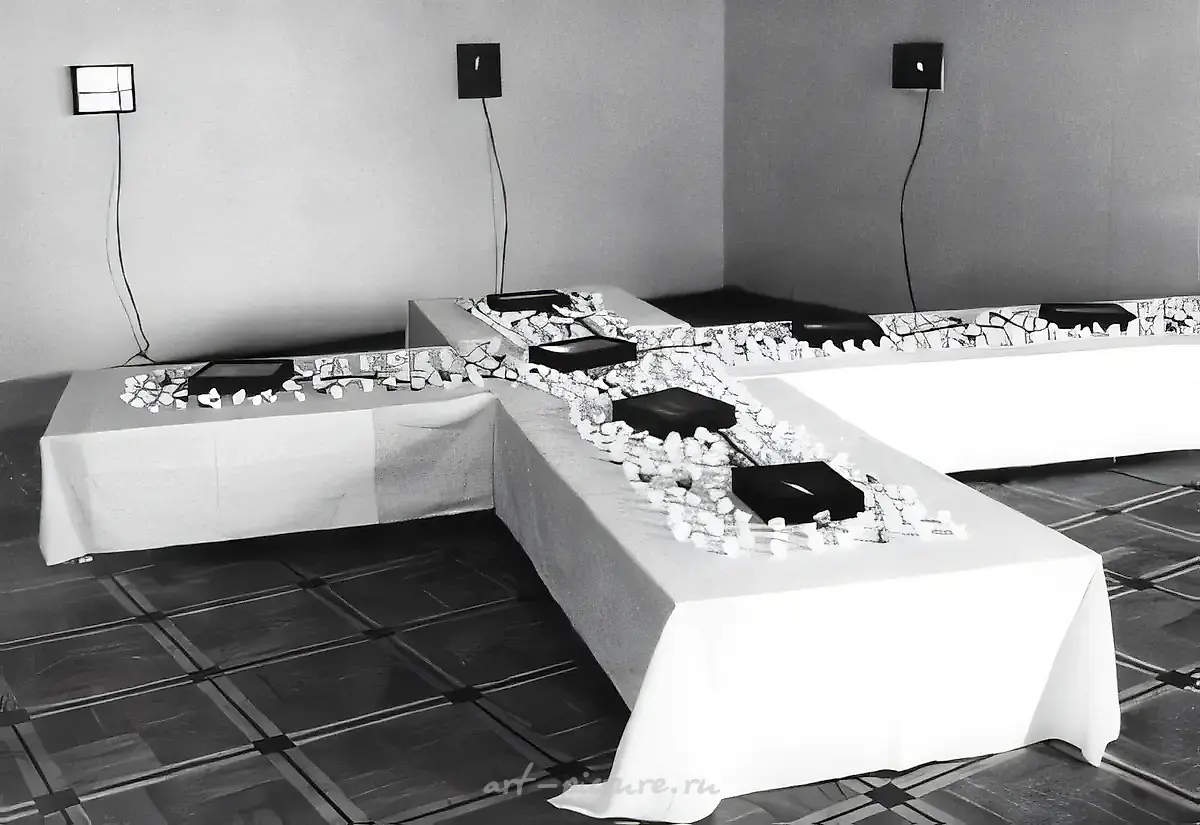
... On the floor a white paper ball, above—a powerful light source, in the corner a seated person with a newspaper—this is the external setting seen by the spectators of the performance "Black Cube" (TOTART, 1980), entering one by one into the inner space of the black cube made of light-impermeable paper. The objects with openly non-individual character, not requiring careful observation or empathy, could only be perceived as obviously alien in the private apartment space. The person in the black cube wrapped the ball with the newspaper, set it on fire, and exited, sealing the cube. The paper burned in the empty, invisible to viewers space. In total darkness the cube was opened and smoke broke out. The light-tight shell was broken and burned in the field. In relation to the external, domestic space of the performance, these destructive actions acquired restorative meanings. The apartment performance action, as a rule, was constructed without regard for the private context of its existence. It referred to scales exceeding the measure accessible to an individual person, directing reference to social or cultural mythology, to the collective, the universal, etc. Thus it seemed to indicate the absence in culture of spaces where, as cultural facts, events and actions proportionate to the individual or, as it is also said, the private person, could have meaning. Spaces constructed by unique measures...
E. Bobrinskaya. From the article "Restored Interval". - "Art", 1989, №10
Works 10