Aristarkh Aleksandrovich Chernyshev
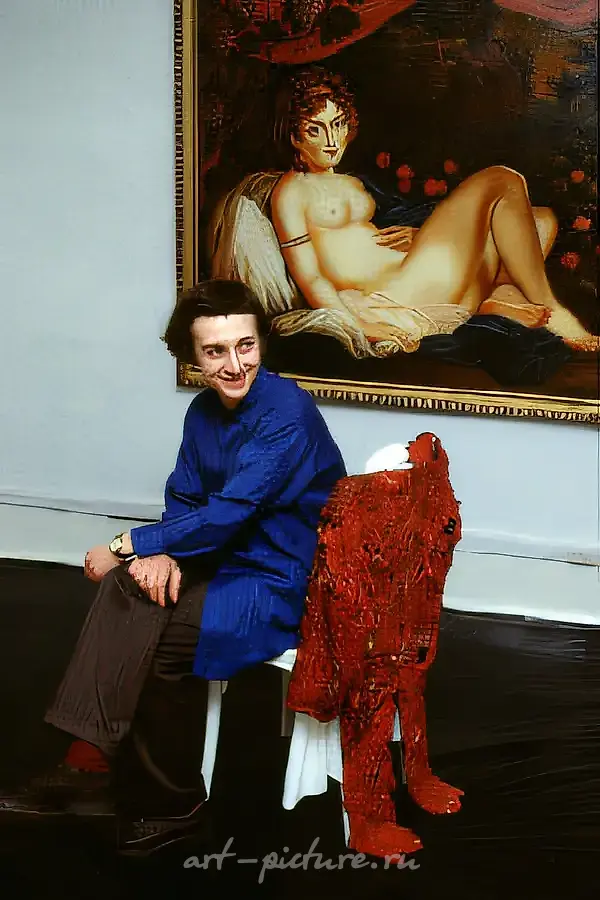
Aristarkh Aleksandrovich Chernyshev (born 1968, Lugansk) is a Russian artist.
Biography
Graduated from Bauman Moscow State Technical University, Faculty of Mechanical Engineering (1991).
From 1992 to 1994, participant in the 'Belka International'.
In 1995, recipient of the Berlin Academy of Arts scholarship.
From 1996 to 2005, worked in a duo with Vladislav Efimov in the field of video and media art.
Since 2004 has collaborated with Alexei Shulgin, with whom he launched the 'Electroboutique' project, including the 'Electroboutique' gallery at Art-Strelka. Currently works as an independent artist.
Awards
Winner of the Kandinsky Prize, in the 'Media Art. Project of the Year' category (together with Alexei Shulgin as part of the Electroboutique group), 2009.
Main solo exhibitions and projects
(See below in the exhibitions field for full exhibition list.)
Works in collections
State Center for Contemporary Art, Moscow. Tretyakov Gallery, Moscow.
A. Irbit, G. Osetcimskaya, Moscow
M. Hoff, USA
Private collections: Germany
M. Olshebay
Exhibitions and auctions
Selected solo exhibitions and projects:
2009 in the framework of the exhibition 'Unconditional Love', 53rd Venice Biennale, Venice, Italy
2008 'Criti-Pop'. Electroboutique, Vladislav Efimov, Aristarkh Chernyshev, Alexei Shulgin, Moscow Museum of Modern Art, Moscow
2007 Digital History of Contemporary Art. The Return of Painting (with Alexei Shulgin). Electroboutique ViewStation, Art-Strelka, Moscow
...
Selected group exhibitions:
2006 Art Basel Miami Beach. XL Gallery. Collins Park at the Beach, Miami Beach, Florida, USA
Third Moscow International Salon of Fine Arts. XL Gallery, Manege, Moscow
ART Moscow 2006. XL Gallery. Central House of Artists, Moscow
Let There Be Video! Russian Video Art 1996-2006. As part of the ART Moscow 2006 fair. Central House of Artists, Moscow
...
Author about himself
PROLOGUE (FROM THE DEPTHS OF THE AGES)
Before setting out the main postulates of Attractionalism, I want to quote Vladimir Levashov, who discovered the great power of qiuny-shengdong: 'The radical artist draws energy from social practice. The psychedelic adherent uses corresponding substances; the traditionalist leans into historical treasures. The multimedia follower relies on the possibilities of virtual technologies; the modern artist is bound hand and foot by the structures of contemporary art and career mechanics, and the commercial artist by the art market. The pop star draws strength from fan adulation and withers without the aura of popularity.
In any case, art always clusters around large sources or rampant expenditure of energy: fame, money, technology, politics, erotica, pleasure, disasters, and so on.'
And he is absolutely right!
Although I am engaged in what is called contemporary art, I am also a viewer at times, and as one, I seek from art some (vague, irrational, unexpected—generally, unknown) impressions, but instead, very often I feel that rather than being energized by the artist, my mind and vitality are drained.
THE THEORY OF SURPLUS MEANING
Capitalism produced surplus value; Marx devised the theory of surplus value. Attractionalism foresaw the theory of surplus meaning.
So what is surplus meaning and where does it arise from?
The existence of information is impossible without three conditions:
- The presence of an information source.
- The existence of a transmission channel.
- The presence of a receiver.
In our case: 1—the surrounding world or the internal world of the artist, 2—the artist and his work, 3—the viewer.
The world is full of signals and messages, but the artist, guided by his artistic vision, selects just some signals and transmits them through his work; the viewer receives and processes this information, producing meanings that may differ greatly from those originally intended by the artist, who in turn interpreted either the outer or his internal world.
Thus, surplus meanings arise both during the creation of a work and during its consumption.
For the attractionalist artist (hereafter AA), one of the primary tasks is to involve the viewer in the process of interacting with his work.
To achieve this, the AA should use all available means, which are not that many: first—creating a play situation; second—active, conscious exploitation of pop-culture methods for the sake of art; third—using mass media mechanisms to promote the artwork.
ATTRACTION AS A GENERATOR OF SURPLUS MEANINGS
Our colleagues in the entertainment, cinema, and theater industries long ago realized that spectacle sells, so the AA should adopt their audience methods. As art is excessive by nature, it is consumed with difficulty and by a limited public, so the AA offers his work not as a commodity but as an 'atmosphere,' a special environmental state—a situation. The most successful form of delivering such an 'atmosphere' is the interactive installation, interactive object, video, or performance. In other words, an attraction, a lure. If the viewer takes the bait, the reward is surplus meaning, or, if you like, a game of mind and imagination!
In fact, the entire work of the AA is the viewer's play with the piece; it cannot exist without them. Surplus meanings arise from the flexibility of the work—its capacity for self-mutation under the viewer's influence, and the viewer may discover new meanings as the work changes due to their involvement.
A MENTAL LOOP OR A COLLAPSE OF THOUGHT
Discussing ways to involve the viewer with the work, it is important to note that the AA is not an annoying entertainer—instead, he does his work somewhat distantly, not addressing the public directly; his output begins to function as an attractor, drawing in the audience.
The AA's work should be shot through with messages that generate elusive surplus meanings, reminiscent of the birth and disappearance of virtual particles. For this, pop-culture devices and images must be employed—they are that ragged surface that the viewer’s mind clings to, diving deeper into communication with the work, advancing along a pre-set scenario until they come across a familiar image set in a transformed environment that alters its original meaning. That is when a collapse of thought occurs, causing repeated mental replay of preceding events.
'AA, or a Brief Manifesto of Attractionalism'
Aristarkh Chernyshev, 2005
'To stay sane in modern society, one must urgently go crazy. Only then will you keep up with the times. Use all inventions humanity has devised, even if you do not need them. They invented radio—use it! TV—use it! Internet—use it immediately! Human genome decoded—change yourself! Those who can’t go crazy must be sent for treatment to an asylum. Copy this letter a hundred times, and you will be happy.'
Vladislav Efimov and Aristarkh Chernyshev
Critic
"Vladislav Efimov and Aristarkh Chernyshev are pioneers of Russian multimedia art. And today, this is the most interesting, the freshest in our art. The artists met in 1995 in Germany and have worked together since. They are interested in para-scientific folklore, that is, what we all consider science. They laugh at scientific and technological pop and at us." (from the book 'The Natural Taste of Chewing Gum', Vladimir Salnikov)
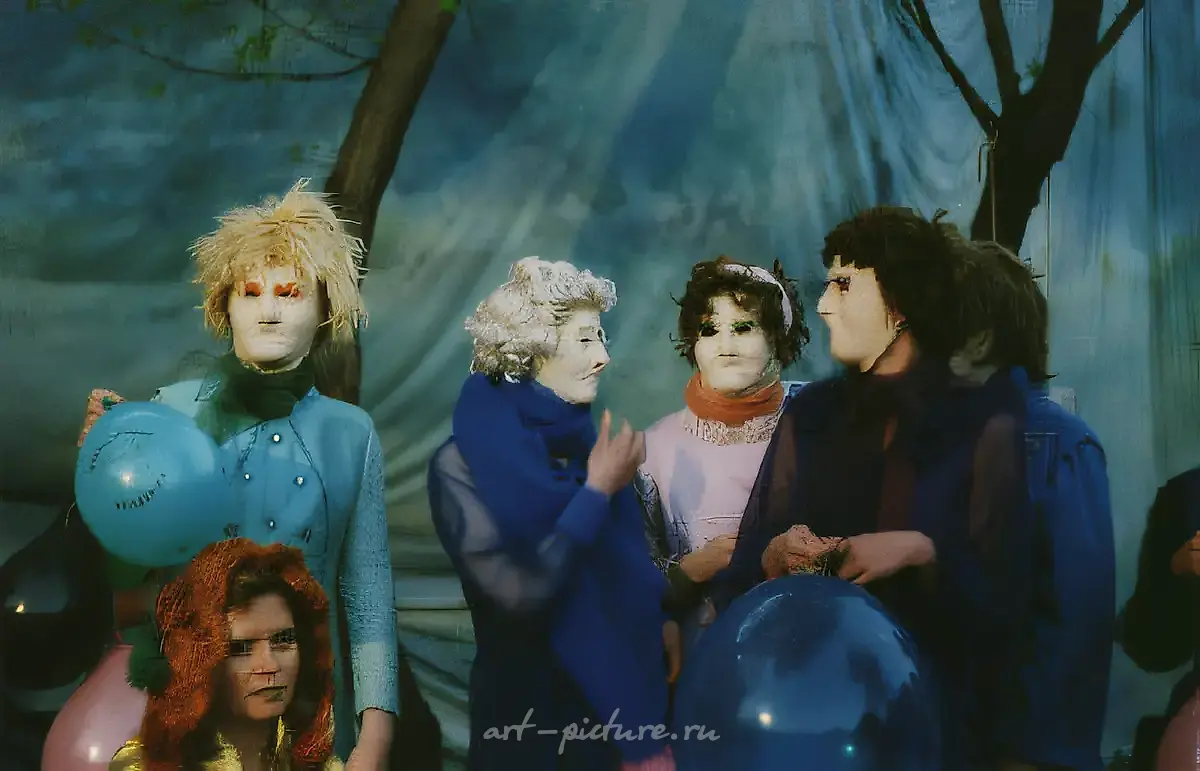
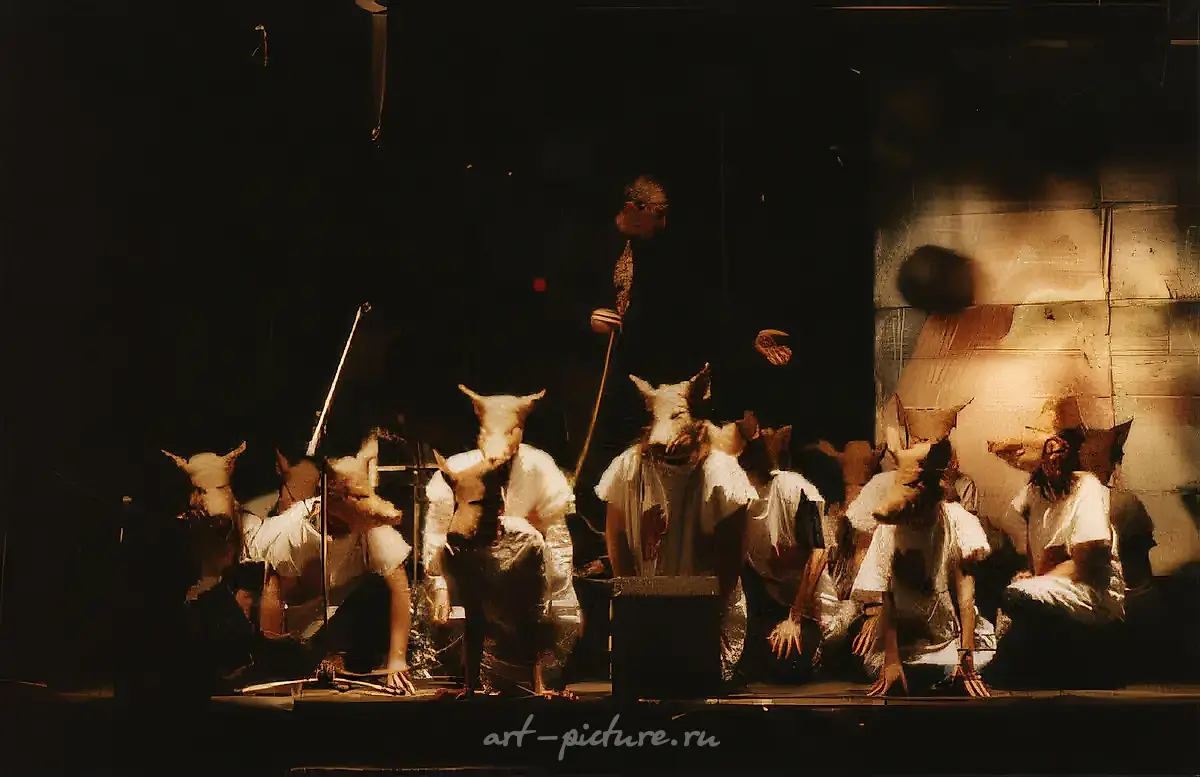
"Separately normal, together Chernyshev and Efimov resemble a pair of mad scientists: in the nineteenth century such were depicted in fantastic novels, and in the twentieth in B-movies. In identical white shirts and black pants, sitting in a laboratory, they challenge the Creator by fashioning something inconceivable, outrageous, even offensive to nature. If following the plot, these Frankensteins in white shirts should be punished at the end. Yet, with Efimov and Chernyshev, nothing of the sort happens. There is no God, and everything is permitted.
Of course, this is a joke. The real Efimov makes surreal objects and melancholic photographs, and the real Chernyshev works with 'new media' and objects, too. Some creative partnerships add 'and', meaning both—Komar and Melamid, for example, are Komar and Melamid. But Efimov and Chernyshev are neither Efimov nor Chernyshev—they combine media, photo, objects, and, as noted, plenty of surrealism. Yet they are not paranoiac madmen running around with saws or implanting electrodes in severed hands or morphing into four-legged headless monsters. Although they perform for their own video installations as models, that is where the similarities end. It's called irony—irony about a situation where science knows how to fuse a person and a washing machine but not why this is needed. It's handy: when Chernyshev and Efimov gather, the characters discuss wireless pederasty or a women's spacesuit (with specifically female life-support systems), but the clever social critics' laurels go to the artists."
(Konstantin Agunovich, AFISHA#86)
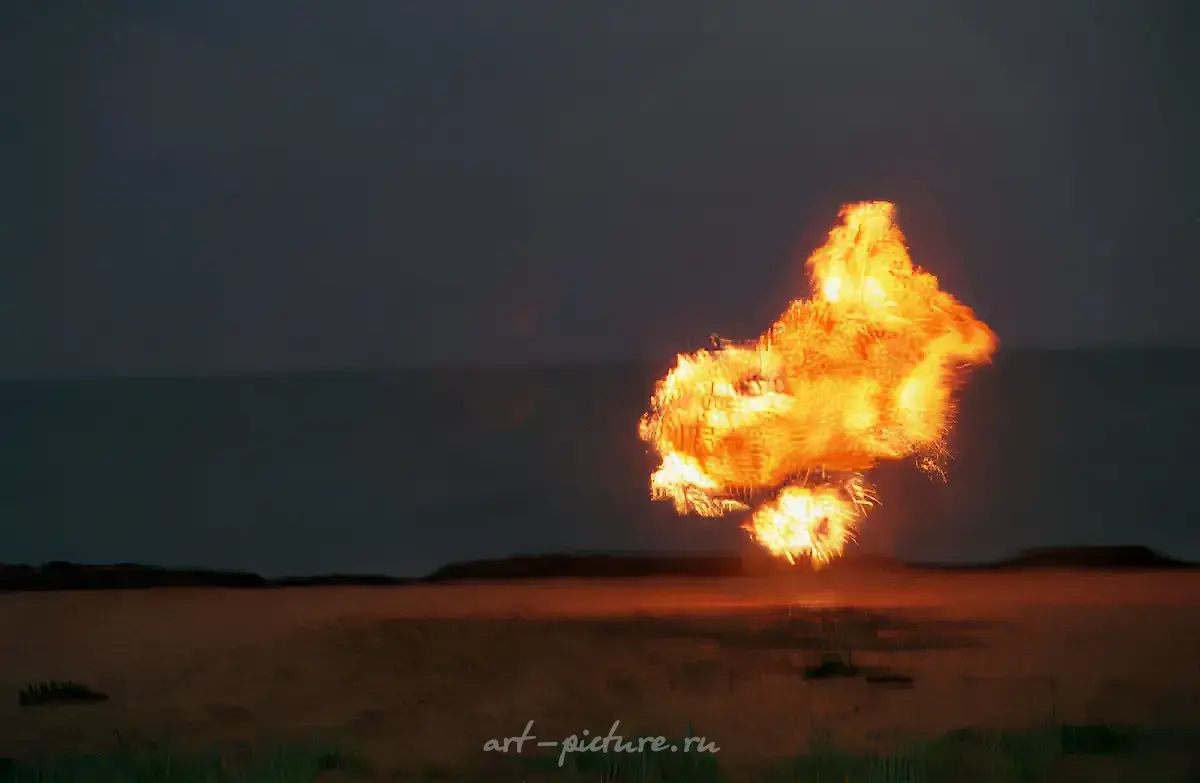
"Aristarkh Chernyshev appeared simultaneously in two guises—as the 'spirit of destruction' and the 'spirit of creativity', producing several explosions with pyrotechnic enthusiasm, reminding with this action of the fate of the 'Bikini atoll', and then in Beuys-like fashion tenderly 'canned dead fish in laboratory flasks, arranged against the backdrop of a distant industrial landscape'."
(M. Bode, 'Labors and Days at the Edge of Ecumene', Kommersant Daily, October 7, 1993)
Bibliography
Exhibition catalog, 1992, Moscow.
Works 19