Chuykova Maria Mikhailovna
1960 Born in Moscow
1979-85 Studied at the Moscow Architectural Institute (Faculty of Urban Planning)
Since 1987 Participates in activities of the "Medical Hermeneutics Inspection"
Since 1989 Member of the International Federation of Artists
Since 1993 One of the founders of the cultural art laboratory (together with O. Ziangirova and N. Kamenetskaya) at the Russian State University for the Humanities
Works in collections
Mani Country Museum (Moscow Archive of New Art), Moscow region
Museum of Contemporary Art, Odessa
Galerie Krings-Ernst, Cologne, Germany
Galerie Grita Insam, Vienna, Austria
C.Jolles, Zurich, Switzerland
Exhibitions and auctions
SOLO EXHIBITIONS (with O. Ziangirova and S. Anufriev)
1993 "Aqua Vita". Museum of Contemporary Art, Odessa
1994 "Mentale Landschaften Russlands". Galerie Parzival, Berlin, Germany
"Auf der Such nach neuen 'Nervi rerum'". Sprinkenhof, Hamburg, Germany
1995 "Passenger Node" (within the framework of the "Aqua Vita" project). Museum of Contemporary Art, Odessa
1996 "10 Years of Avant-Garde Club". Peresvetov per., Moscow (catalogue)
GROUP EXHIBITIONS
1987 First Exhibition of the Avant-Garde Club (KLAVA). Peresvetov per., Moscow
1989 "Expensive Art". Youth Palace, Moscow
1990 "There and Back". Peresvetov per., Moscow
"For Cultural Leisure". "Kashirka", Moscow
"Schizochina". KLAVA. Exhibition pavilion on Frunzenskaya embankment, Moscow
1991 "MANI Museum - 40 Moscow Artists at the Frankfurt Carmelite Monastery". MANI. Frankfurt-am-Main, Germany
"Visit". Peresvetov per., Moscow
1992 "Zero Arcana". Central House of Artists, Moscow
"Hearts of Four". ISI. Officers' House, Moscow
"Malevich Center at the Paleontological Museum". Paleontological Museum, Moscow
1993 "Creation of Happy Dreams". Russian Academy of Arts, Moscow
"ART MYTH 3". Manezh, Moscow
"After Perestroika: Kitchenmaids or Stateswomen". ICA, Montreal, Canada
1994 "Architektur der Ideen". Kunsthaus, Hamburg, Germany
1995 "Apocalypse". Russian State University for the Humanities, Moscow
"Worker-2". L Gallery, Moscow
With the group "Medical Hermeneutics Inspection"
1989 "Three Children" (Catalog "Dead Children Do Not Lie on the Road"). Gallery Mladykh, Prague, Czechoslovakia
1990 "Orthodoxe Ablutschungen-Umschlаge und Abschlusse. Two Installations of the MH Group". Kunsthalle, Düsseldorf, Germany
1991 "Military Life of Small Paintings". Krings-Ernst Gallery, Cologne, Germany
1992 "Blickwinkel: Das Sakrale in der UdSSR". Grita Insam Gallery, Vienna, Austria; "Switzerland+ Medicine". Shedhalle, Zurich, Switzerland
"19-91". Walcheturm Gallery, Zurich, Switzerland
1993 "Switzerland + Medicine". Swiss Institute, New York, USA
"Golden Icons and the Black Line". Kunstverein Hamburg, Hamburg, Germany
1994 "We are your Grandfather!". Inspection Raum Medizinische Hermeneutik festival "Europa 94", Munich, Germany
"Illumination in the Tower". Galerie Inge Baecker, Cologne, Germany
"PARAMEN". Galerie Grita Insam, Vienna, Austria
"Processions". Human Space Art Center, Milan, Italy
1996 "At the Fairytale's Place" (curator O. Sarkisyan). CSI, Moscow (catalogue)
"White Window" (with the Medical Hermeneutics group). Felolafig, Germany
"10 Years of the Avant-Garde Club". Peresvetov per., Moscow (catalogue)
1997 "Ecology of Emptiness". ISI, Moscow
"Second Point". Cultural Center "Phoenix", Moscow
"Koln Messe". Gallery Hohnthal und Bergen, Cologne, Germany
"Reconstruction of the Last Project of Artist A. Blagov" (author M. Perchikhina, curator N. Palazhchenko). Gallery "Spider & Mouse", Moscow
CURATORIAL PROJECTS
1993 International conference "Postmodernism and National Cultures". State Tretyakov Gallery, Moscow
Seminar "Farewell Times". RSUH, Moscow
Round table "Women and Business in Culture". RSUH, Moscow
1995 International Conference "Gender. Change of Cultural Paradigms". RSUH, Moscow
"Apocalypse" (exhibition-conference). RSUH, Moscow
"Passenger Node" by Christoph Rauch (Hamburg). CSI, Moscow
1996 "Borders of Interpretation". RSUH, Moscow
Conference "Borders of Interpretation in Humanitarian and Natural Science Knowledge" (organizer). RSUH, Moscow
1997 "Second Point". Catalog compiler (with V. Pogodina). Cultural Center "Phoenix", Moscow
1998 "Euroremont". Exhibition Hall at the Cultural-Historical Center "Slaviansky", Moscow
VIDEO PERFORMANCES (with O. Ziangirova)
1990 "Return of the Original Order". Donskoy Monastery, Moscow
1993 "Foundation". Odessa
1995 "Levels". "Chain". Odessa
Author about himself
Our group's interests are focused on the intersections of art and science, across the humanities, natural, and exact sciences. Operating at the junction of scientific research and artistic practice, we tend to view our creative work as experimental-laboratory, helping us to formulate our discursive constructions.
Processes occurring in contemporary art are largely a manifestation of the postmodernist discourse, which declared art itself a part of the market. As such, they increasingly tend towards spectacle, close to carnival, relegating other functions to the background. This lightweight and superficial trend of recent art has prompted us to turn our gaze to an opposite realm—one characterized by seriousness, concreteness, and fundamentality: the fields of natural and human sciences.
The most relevant process, in our view, is the convergence and merging of different disciplines, creating new fields with a broader, integrated perspective—such as synergetics or applied linguistics. However, obvious huge changes in the scientific worldview are needed for this unification, including between natural and human sciences, to become dominant.
Each discipline is a closed world with its own special terminology, rarely reflecting on itself from broader cultural positions.
Having conducted a series of artistic and exhibition experiments, we found the method of immersing scientific concepts into the space of contemporary art and using its language to uncover new and sometimes unexpected conceptual solutions to be highly productive.
Combining two ways of representing the world—rational-logical and artistic-imagery—seems to us both natural and promising. On one hand, it can catalyze integration in science; on the other, it can reveal creative tendencies in contemporary art.
In our practice, we've already engaged with various scientific disciplines, both natural and human sciences—mathematics, theoretical physics, computer science, structural linguistics, paleontology, archaeology, and geology.
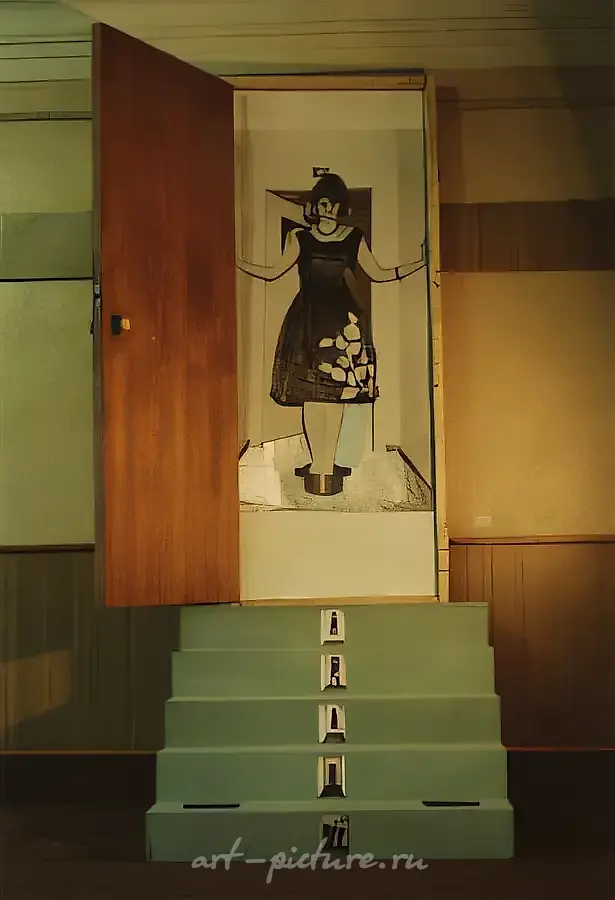
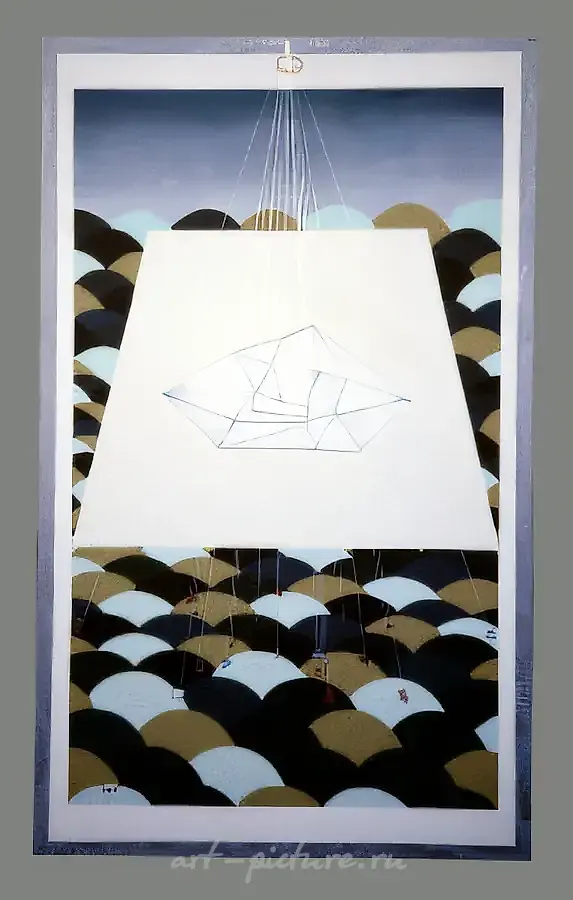
Among our realized works is the object "Letter of Happiness", which uses the principle of geometric progression to introduce new parameters into the text.
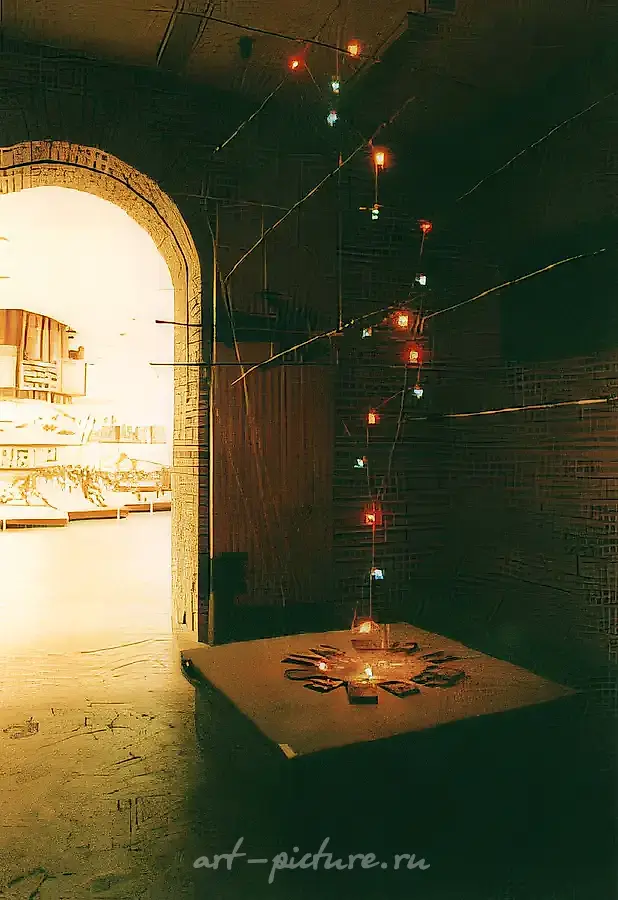
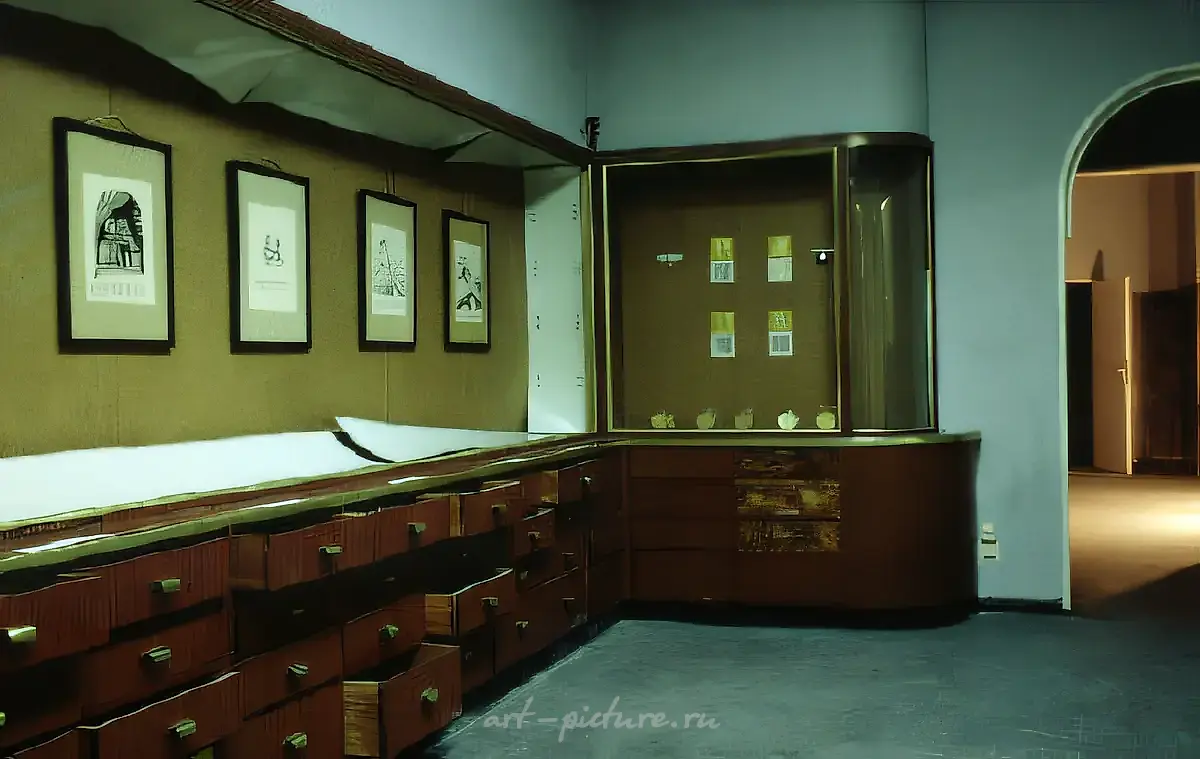
The installation "Magnetic Monopole" (Belyaevo Gallery) is based on the hypothesis in theoretical physics concerning magnetic poles.
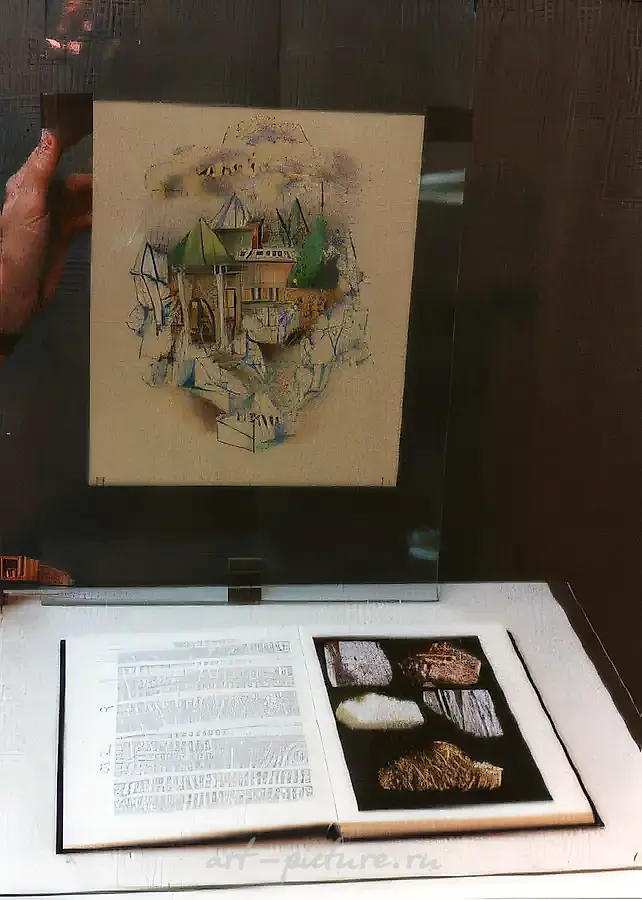
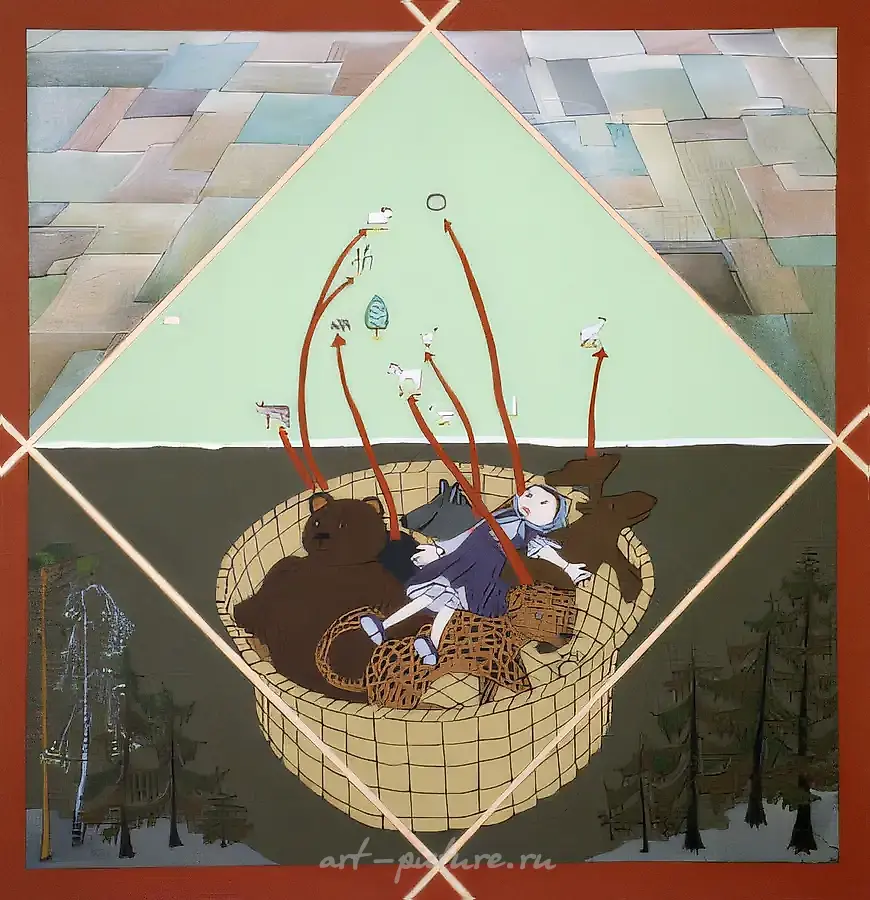
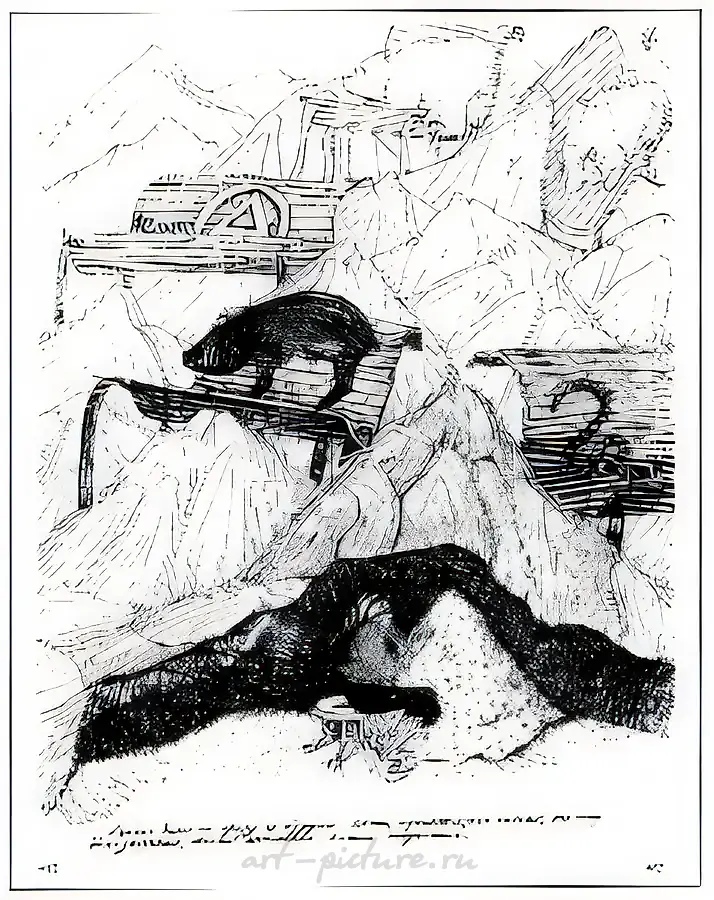
Currently, we are working on the international project "Geological Mythology", entailing a series of exhibitions in different countries. These installations will draw parallels—on both semantic and visual levels—between the 'mental' and geological landscapes of each country, comparing the specific mentality of local populations with their physical, geological conditions through the language of contemporary art.
We are pleased to note that our work interests both communities: scientists as well as artists and art critics are intrigued by the possibility of exploring each other's previously inaccessible operational zones.
As a sign of this, the Russian State University for the Humanities has proposed hosting our experimental cultural laboratory. The laboratory's plans currently include organizing international seminars and conferences and exhibition activities. We hope that at the intersection of different fields—art and science—unexpected aspects of familiar topics and new solutions to problems will be discovered.
Critic
I am interested in what you do because, in a sense, we are on different sides regarding art, but there is clearly some kind of border where we interact and communicate, as your projects suggest a certain transparent film at this boundary. These projects are not only spaces but also planes, and this plane is part of another space, and they somehow connect with each other, and you belong to both. Outwardly you are neutral, but in fact you are interested in the other: by maintaining all the neutral features of conceptualism, you also imply the presence of some other spaces.
While following the conceptual tradition, your work involves the 'inclusion' of other concepts—both scientific and artistic. Conceptualism is limited by linguistic boundaries, by the idea that everything is in language. The concept of language's self-development, that everything happens through language. But beyond language, there is also energy, and besides language signs, there are also intervals, which are very important. It seems to me that you work with this intermediate zone, with this energy. But you work with it as with linguistic objects, oscillating and shifting to one side or the other, though you still give preference to linguistic forms for working with energetic ones.
Being on the other side of the door, I may not understand everything, but I always try to maintain a dialogue. It seems to me you are on the surface of your own experience, from where you can feel not only the inward space but also the space into the unknown, into what is still developing.
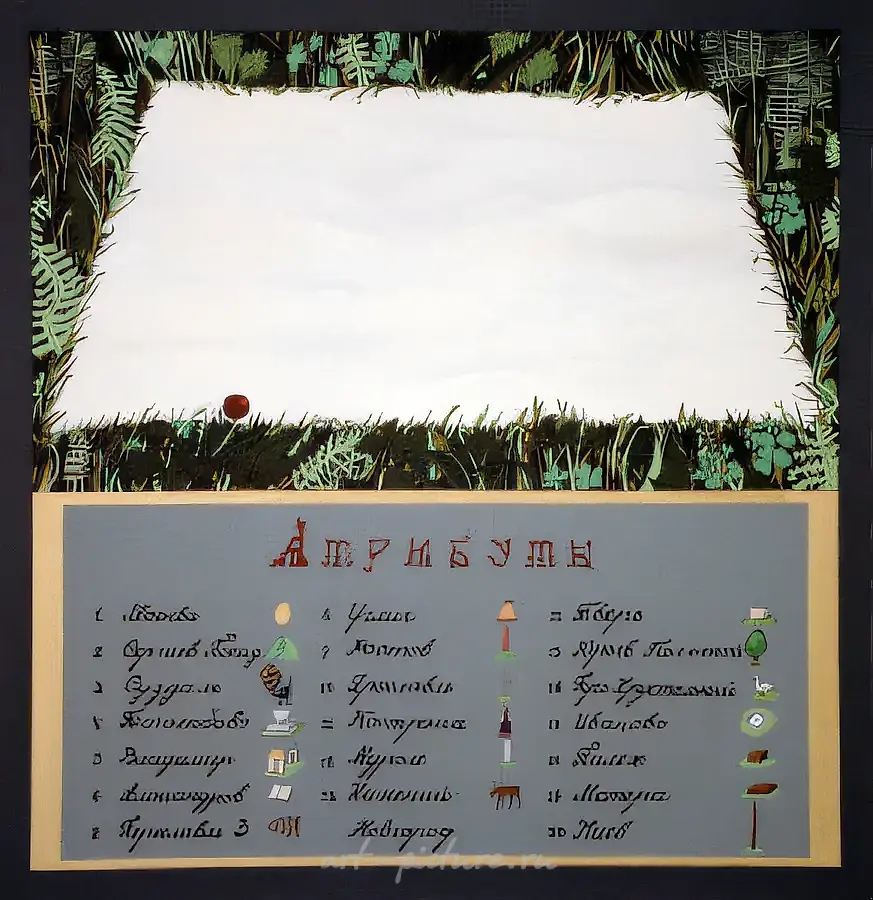
Moreover, your projects are important in that they are open to others, and one can try to inscribe something of one's own. It's even assumed—blank lines and fields are left there, which perhaps others will fill in, thereby building new possibilities.
V. Aristov
Works 9