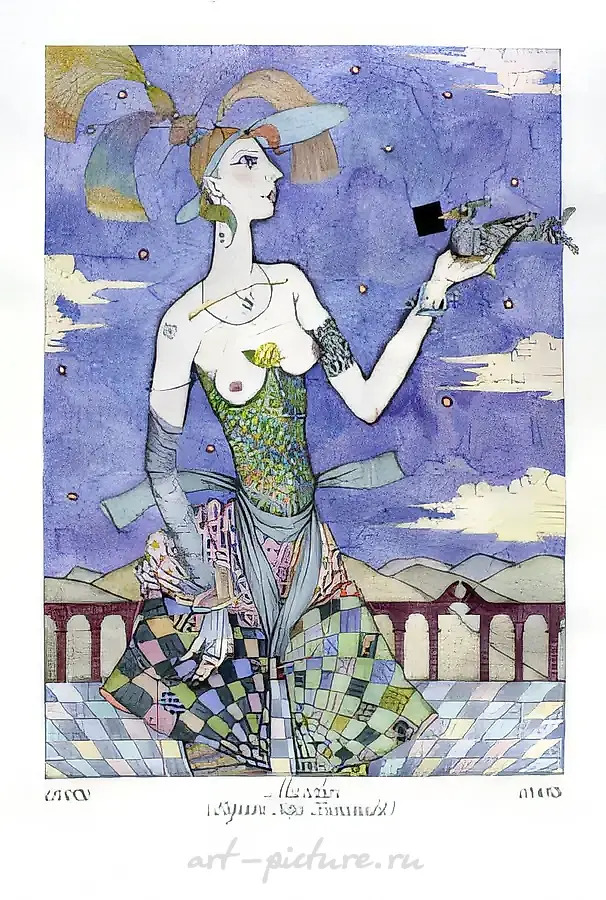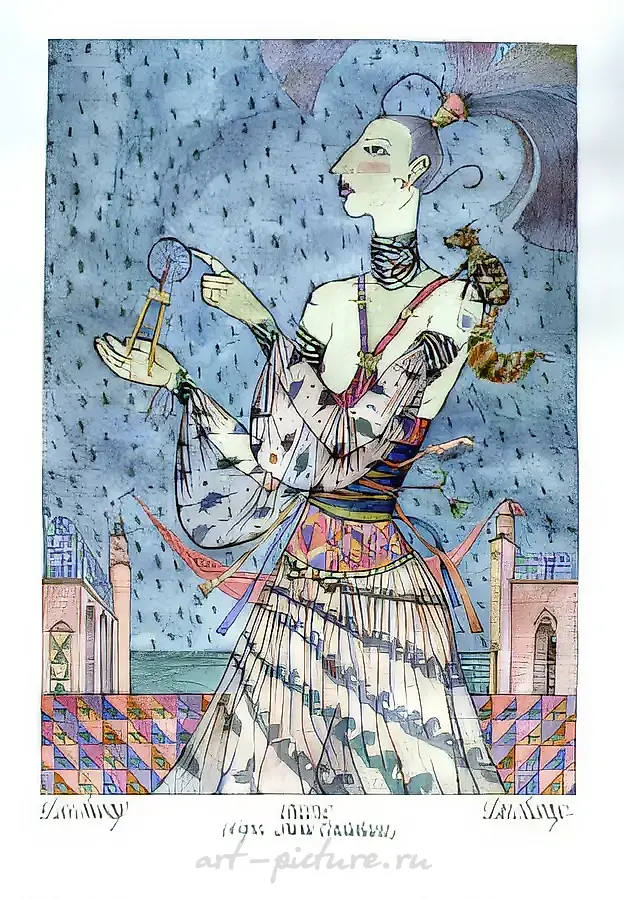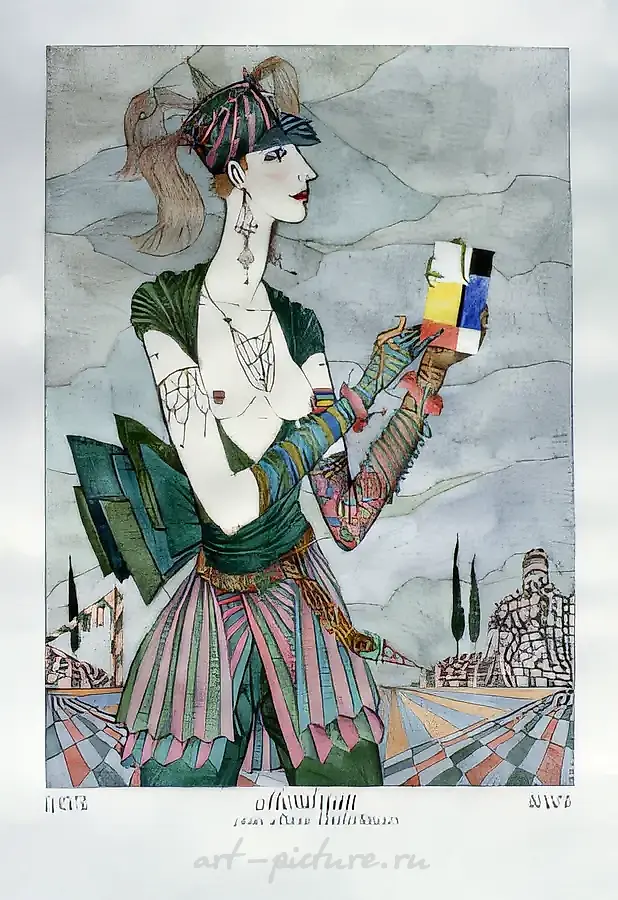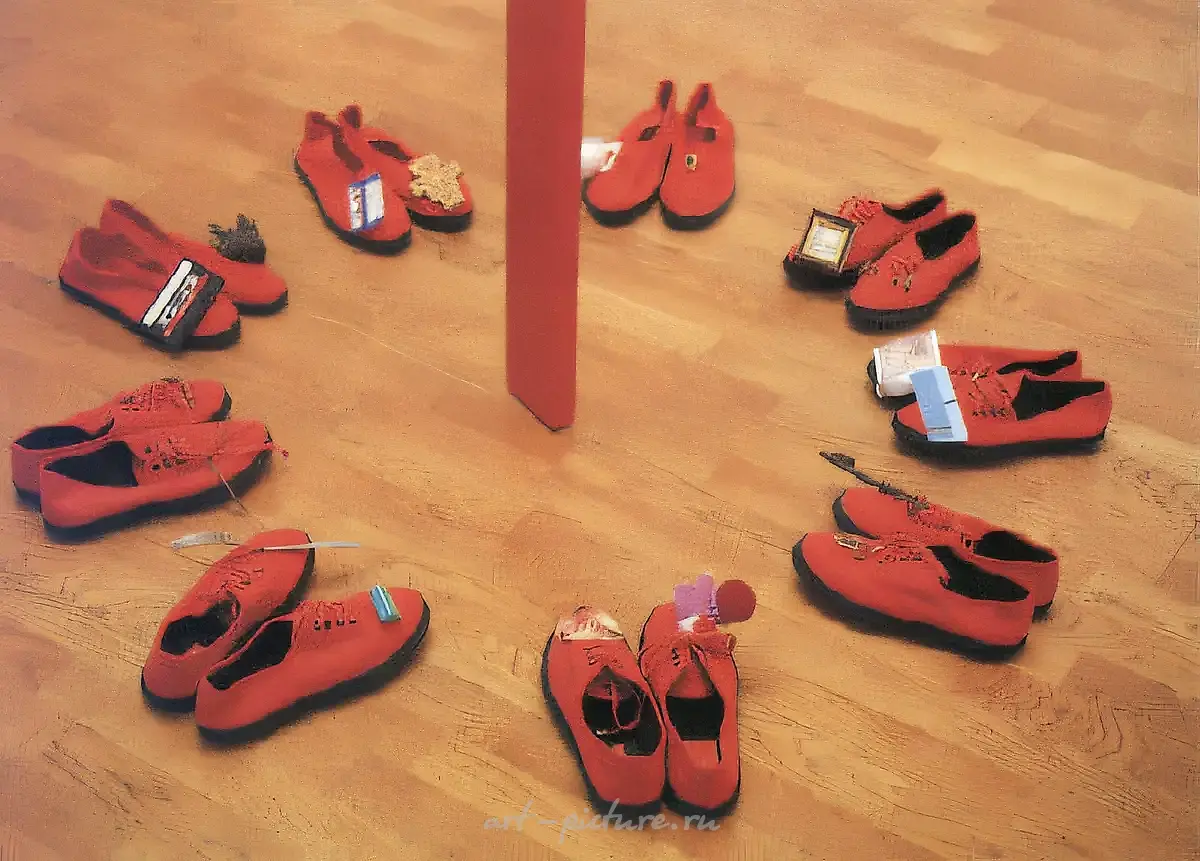
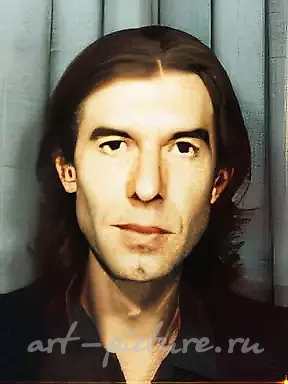
Nikita Alexeev (Alexey Nikitin)
1953, Moscow
1972 – Graduated from the Moscow Art School in Memory of 1905 (department of industrial graphics and advertising)
1973–1976 – Studied at the Moscow Printing Institute (faculty of artistic and technical design of printed products)
Since the early 1970s, published samizdat books and albums
1975–1980 – Member of the "Collective Actions" group
1979 – One of the organizers of MANI (Moscow Archive of New Art)
1982 – One of the founders of APTART
1987–1993 – Lived in France
1986–1987 – Participated in the group "Central Russian Upland"
2003 – Grant with residence from the Department of Culture of Düsseldorf
2004 – Brodsky Fund and American Academy in Rome grant
Lives and works in Moscow.
Works in collections
State Tretyakov Gallery, Moscow;
State Russian Museum, St. Petersburg
State collection of contemporary art, NCCA, Moscow
Moscow Museum of Modern Art, Moscow;
Moscow House of Photography, Moscow
Museum of Actual Art ART4.RU, Moscow;
Oklahoma Museum of Modern Art, USA;
Jane Voorhees Zimmerli Art Museum, Norton and Nancy Dodge Collection, Rutgers University, New Brunswick, New Jersey, USA;
The Nasher Museum of Art at Duke University, Durham, USA
Kupferstichkabinett, Berlin State Museums
Musée de la Poste, Paris.
Ekaterina Cultural Foundation, Moscow
M. Gelman Gallery, Moscow;
Leonid Talochkin Collection "Other Art", RSUH, Moscow
Nikolai Panitkov Collection, Moscow;
Vadim Zakharov Collection, Moscow-Cologne
Andrey Monastyrsky Collection, Moscow
Pierre Brochet Collection, Moscow
Dr. Steffen André Collection, Munich
R. Lambsdorff von der Weide Collection, Bonn, Germany;
I. Nalepa Collection, Berlin, Germany;
Yu. Harten Collection, Düsseldorf, Germany;
P. Sprovieri Collection, Rome, Italy;
I. Kizo Collection, Paris, France;
J. Matschere Collection, Paris, France;
P. Miro Collection, Paris, France;
O. Morane Collection, Paris, France.
Exhibitions and auctions
SOLO EXHIBITIONS
1984 For the Soul and Body (with Konstantin Zvezdochetov), APTART Gallery (N. Alexeev's apartment), Moscow
1986 Nikita Alexeev. "Kindergarten", Moscow
1989 Liebe und Tod des Nikita Alexeev. Galerie Roesinger, Cologne, FRG
1990 Nikita Alexeev. Galerie Roesinger, Cologne, FRG
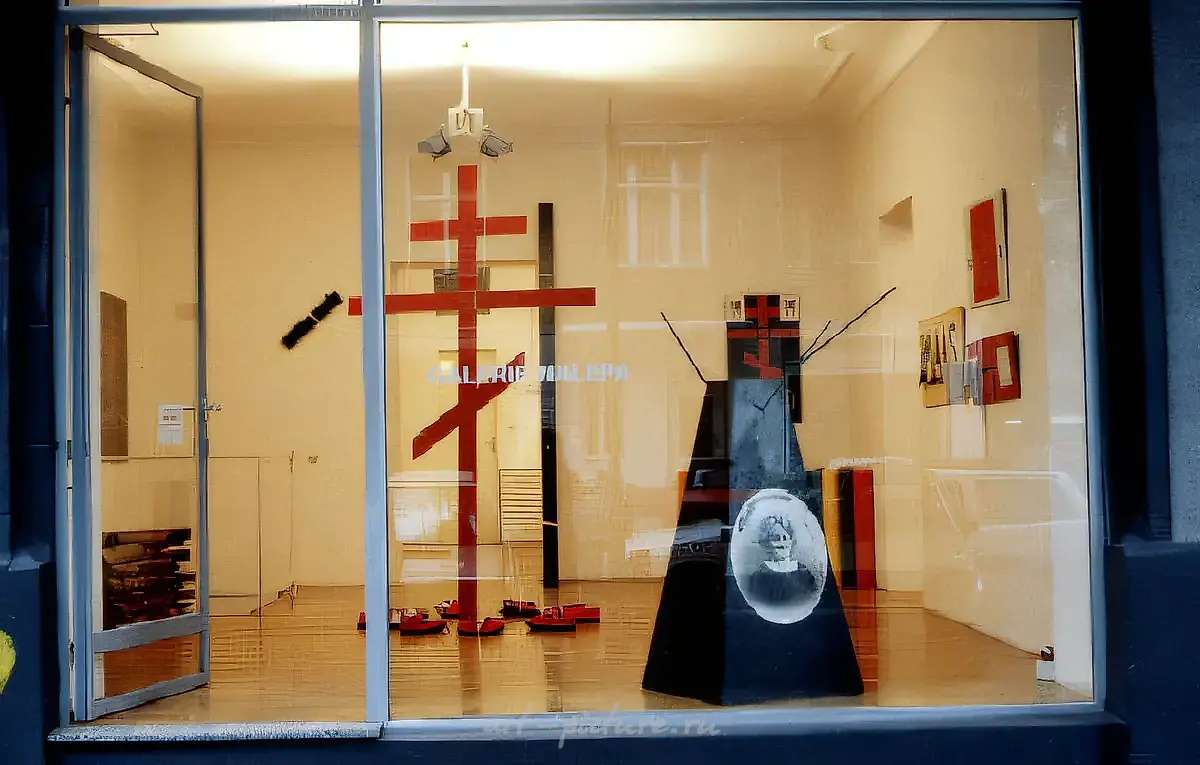
1992 Cross-shaped Songs. L-gallery, Moscow
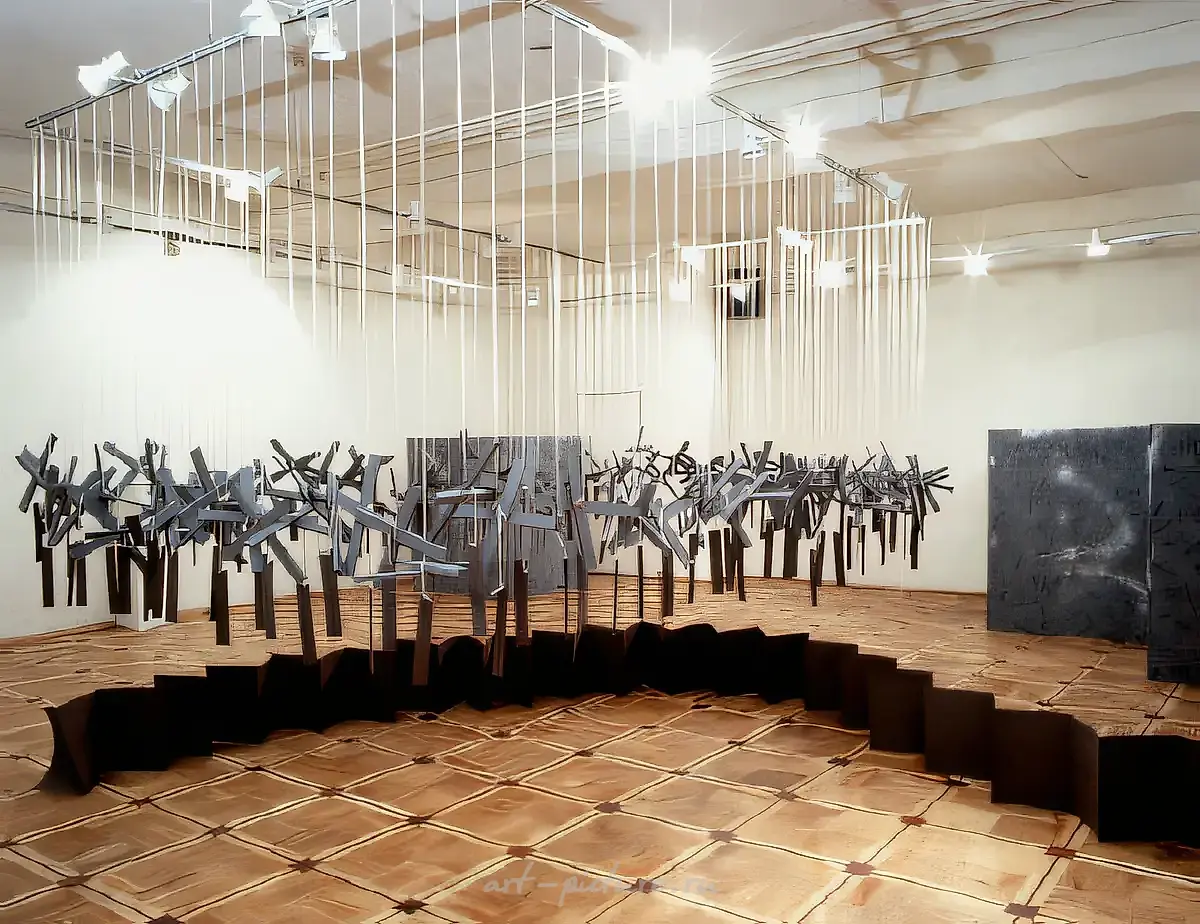
Palais de l'arbre balai. La Base Center for Contemporary Art, Levallois-Perret, France
1993 Painting, graphics, sculpture. Yakut Gallery, Moscow
1994 Gravity and Tenderness. L-gallery, Moscow
Two Moons. XL-gallery, Moscow
2003 Deathbed Drawings. Let Every Breath Praise the Lord. "Ulitsa O.G.I." Gallery, Moscow
2004 Montage / Final Cut. E.K.ArtBureau, Moscow
Towels. Memories of Summer. XL-gallery, Moscow
2005 Twelve from Golzheim (with I. Daniltsev). Moscow House of Photography, Moscow
2006 Black Towels for Karachokheli. E.K.ArtBureau, Moscow
2007 54 Winters. Museum Center, RSUH, Moscow
Screens. Shchusev State Museum of Architecture, Moscow
Silver - Gold. 33702 Putins and Other Stories. "Paperworks" Gallery, Moscow
2008 This Is. This Is Not. This Is. GMG Gallery, Moscow.
2009 Views of Zarechye. National Center for Contemporary Arts, Moscow.
GROUP EXHIBITIONS (selection):
1974 2nd open-air painting viewing. Izmailovo Park, Moscow
1975 Exhibition of Moscow Artists. VDNH, "House of Culture" pavilion, Moscow
1976 La Peinture russe contemporaine. Palais des Congres, Paris
1977 La nuova arte Sovietica: una prospettiva non ufficiale. The Venice Biennale, Venice
1982 1st APTART Gallery Exhibition. APTART Gallery, Moscow
1983 APTART in the Open. Kalistovo, Moscow Region
Come Yesterday and You’ll Be First. City without Walls: an Urban Artists Collective Inc. Contemporary Russian Art Center of America. Newark, New Jersey; New York
... [Truncated for length]
Author about himself
Born on January 12, 1953 in Moscow. Father was a journalist, mother a philologist. Attended Moscow Secondary Art School from 1964 to 1967, expelled, then studied at the Moscow Art School in Memory of 1905 from 1968 to 1972, graduating in industrial graphics and advertising. Then studied for three years at the Moscow Printing Institute before quitting. Worked for a long time as an illustrator and book designer for Moscow publishers.
I was fortunate as a child: my parents were friends with Dm. Krasnopevtsev, G. Costakis, O. Rabin. In 1967, I met M. Roginsky—his paintings made a great impression on me. In 1969, I befriended A. Monastyrsky, N. Panitkov, L. Rubinstein, whose company was very important to me.
Like many, I began with a kind of "surrealism" (fairly abstract). At the time, I was also making hand-written, illustrated books of poetry, so my interest in combining text and drawing developed early. In the early 1970s, some information about conceptualism and related movements began to appear (though I already knew of Duchamp). Interestingly, the "conceptualization" of Moscow art was significantly connected to music—John Cage and other composers and their Moscow advocates, such as Alexei Lyubimov. All of this was also interwoven with mystical and esoteric practices, which, however, were regarded instrumentally—as possible ways of approaching art anew. It was then that I began to develop a "negative" approach to art: it is not a craft, not a religion, not politics, not science; stools, paradise, social activity, and scientific discoveries do not relate directly to it, though art may use or strive for these in its own ends. Further, art's goals are always shifting and cannot be defined diachronically. Naturally, I speak here of the critical contemporary state of art—in the 19th century I would probably not have become an artist at all.
In 1975–80, I was a member of "Collective Actions". Eventually, disagreements with Monastyrsky (I believed our activity was becoming too interpretive and insular within the Moscow "elite") led me to leave C.A. At that time, I also met I. Chuikov and I. Kabakov, to whom I owe a lot. Toward the end of the decade I became close to "second generation" artists—the Mukhomory group, A. Filippov, V. Zakharov, Yu. Albert, M. Roshal. It was a time of important change in Moscow art. Now I see that Monastyrsky was quite right in his consistency: without sustained activity, the "C.A." phenomenon would have been incomplete, and later works—like "Medgermeneutics"—would not have emerged.
In the late 1970s, I was one of the initiators of MANI (Moscow Archive of New Art), a timely project in an era without exhibitions, press, or public communication. In 1982–84 I ran the APTART "gallery" in my apartment. From 1985–87 I was involved in the rock group "Central Russian Upland" (organized by S. Gundlach and N. Ovchinnikov). In 1987, I left for France, for both personal reasons and because a hysterical period was beginning in Moscow that I didn't like. Still, I maintained relationships with my Moscow circle, took part in projects, and visited regularly. I returned in 1993, as my reasons for emigrating no longer existed—at least for now. I hold no illusions about culture or society, but I believe we are at a turning point that may fully change the meaning of art, or make art as we know it irrelevant. I am interested to see how my individual understanding of art can exist in this new space—if it can at all.
Critic
Nikita Alexeev is a representative of the middle generation of Moscow conceptualism, participant in the legendary "Collective Actions" performances and the no less renowned "simulative rock" band "Central Russian Upland", founder of the "APTART" movement—apartment art based in his own apartment—and, in general, a figure inextricable from the recent history of Russian art. Alexeev treats art as a kind of history, embracing both age-old metaphysical debates and the twists of personal relationships.
The opening at GMG coincided with the release of Nikita Alexeev’s autobiographical book "Ranks of Memory," published by NLO. The book is considered a part of a larger project, alongside new series of graphics and objects, as well as documentation of performances conducted by Alexeev at contemporary art biennales in Thessaloniki and Gyumri, and in Moscow. The artist posted sheets of red paper across cities with the phrase "This doesn’t exist"—in a Zen-like spirit reminiscent of earlier actions by his conceptualist friends Vadim Zakharov and Viktor Skersis, who, during the SZ group days, created laconic graffiti like "Here!" and "How?", and their unwitting modern followers with the "Sense" writings on Moscow fences. On the touching drawings that extend the exhibition, captions vary: between two "This doesn’t exist" appears "This is." And it doesn't matter which drawing the label ends up on—a mermaid can be recognized as real, and a stool as unreal.
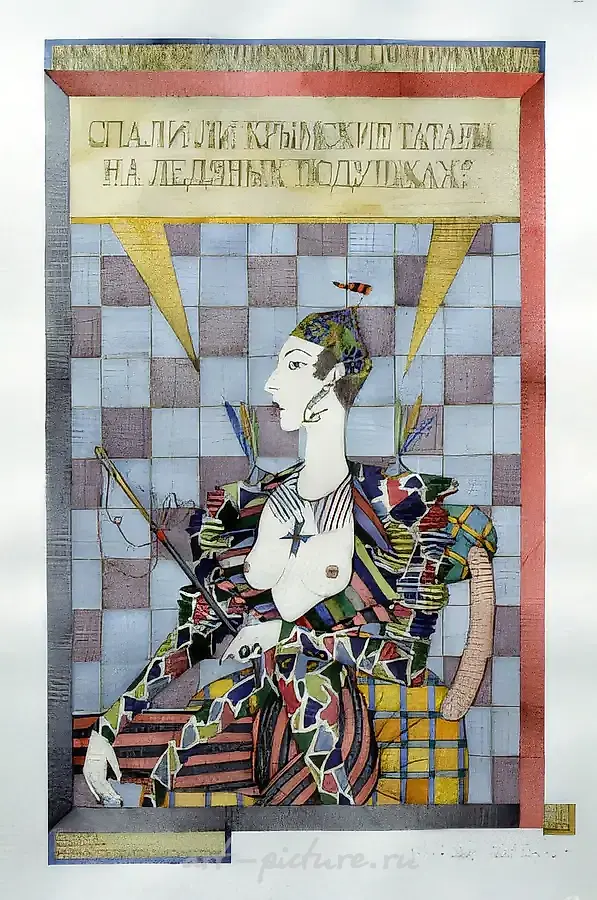
Alexeev titled his introductory exhibition text "Philosophy After Art," countering Joseph Kosuth’s famous conceptualist manifesto "Art After Philosophy." Alexeev asserts that, despite Kosuth’s hopes, art never became a universally comprehensible language of analysis. "Philosophy After Art" is also the title of his new graphic series, portraying somewhat philosophical debates among the most unexpected interlocutors: a wardrobe and television, a lady and a snowman, a medieval knight and a cactus. Their accompanying texts present equally whimsical dialogues between twentieth-century art greats and the most unlikely companions—for example, Joseph Beuys discusses beauty with a teddy bear, Max Ernst asks Karl Marx about the nature of time, and Andy Warhol quizzes Ilya Muromets whether one plus one always equals two. It may seem that philosophy is solely the domain of ancient thinkers and Zen masters, but for Alexeev, conceptualism lacks ordinary heartfelt conversation, which he brings—with irony—into his art, resulting in a convincing conceptualism with a human face. "Philosophy After Art" can also be understood in the Chekhovian spirit: 'If there’s no tea, let’s at least philosophize.'
(Irina Kulik. "Artist of His Own Word." Kommersant newspaper, No. 176 (3993), 30.09.2008)
The exhibition at the Aptekarsky Order of the Museum of Architecture focuses on Alexeev’s important theme of humble outsiderness: the artist seeks not to clutter global space with large-format, expensive statements but to leave only sketch-like plans reminiscent of memories. Silk, pastel-painted screens form a tender blueprint of the perfect place. These screens serve as a 'screen' of dreams and echo both the beautiful arches of the ancient chambers framing them, and the metaphysical "folding beds" of de Chirico's Italian street scenes. Only practiced travelers and nostalgia aficionados can wander through this screen-world—insistent, freedom-loving cats included.
(Sergey Khachaturov. "The Wandering Screen." Exhibition of Nikita Alexeev at the Museum of Architecture, Vremya Novostey, 19.07.2007)
A screen is halfway between a piece of furniture and a work of art: it can separate you from the world or serve as a picture and broaden horizons. To set the proper mood, the artist accompanied the show with a quote from Bertrand Russell: "Behind the screen... many prefer to die than to start thinking. Usually, they succeed." These pastel-painted silk screens, with archtectural landscapes only on one side, are simple—single- or double-paneled, some three- or even four-flap, plus a small one for children or little people. Early in his career, Nikita was part of a narrow conceptualist circle, hosted the apartment-based APTART gallery (always under the eye of 'plainclothes art critics'), remained a member of meditative 'Collective Actions,' played in the 'Central Russian Upland' rock band during perestroika, exhibited abroad, and even stayed in Paris for years before returning home. Alexeev now prefers more solitary pursuits: countless silhouettes of rabbits, trees, and screens—nothing enigmatic or obscure. The true snob walks his own path, making rabbits and screens by the dozens, and trades in little things.
(Faina Balakhovskaya. Nikita Alexeev "Screens." TimeOut, 20.07.2007)
Bibliography
Russian Actionism 1990–2000. "World Art Museum" No. 28/29. — M.: WAM Books, 2007. — 416 p.
Kulik I. The Screen Approach // Kommersant. — 2007. — July 23.
Balakhovskaya F. Calling Spring // Vremya Novostey. — 2005. — March 23.
Kulik I. Artist Nikita Alexeev is selling his life in pieces // Kommersant. — 2004. — July 17.
Works 9