Dmitri Prigov
1940 Born in Moscow
1965 Graduated from the Stroganov Moscow Higher College of Art and Technology
From 1975 member of the USSR Artists" Union
From 1989 participant of the Club of Avant-Garde Artists (KLAVA)
From 1990 member of the USSR Writers" Union
From 1992 member of Pen Club
2007 Died in Moscow
Works in collections
Kunstmuseum, Kiel, Germany
Kupferstichkabinett, Berlin
Ludwig Kunst Forum, Aachen, Germany
Ludwig Museum, Cologne, Germany
Madison Contemporary Art Museum, Madison, USA
Moderna galerija Ljubljana, Ljubljana
Musee d`Art Moderne, Saint-Etienne, France
Stella Art Foundation, Moscow
State Tretyakov Gallery, Moscow
State Russian Museum, St. Petersburg
National Center for Contemporary Arts, Moscow
Moscow Museum of Modern Art, Moscow
ART4.RU Museum, Moscow
Düren Papier Museum, Düren, Germany
Exhibitions and auctions
SOLO EXIBITIONS:
1988 Boris Orlov, Dmitry Prigov. Struve Gallery, Chicago, USA
1989 Dmitry Prigov. St. Louis Gallery of Contemporary Art, St. Louis, USA
1990 Russian. Sadovniki Gallery (Exhibition Room of the Krasnogvardeisky District), Moscow
1994 Drei. Kunstverein Ludwigsburg, Ludwigsburg, Germany
Stalinist. M. Guelman Gallery, Moscow
Leningrad Buddhism. State Russian Museum, St. Petersburg
Computer in a Russian Family. M. Guelman Gallery, Moscow
Fate of the Text 2 (together with Lev Rubinshtein and Vladimir Sorokin). L-Gallery, Moscow
Will and Conception as Peace and Will. M. Guelman Gallery, Moscow
1995-1996 Dmitrij Prigow : 1975 - 1995. Städtisches Museum, Mülheim an der Ruhr, Germany; Ludwig Museum, Budapest; Musée dArt Moderne, Saint-Etienne, France 1996 Monstropologie. Krings-Ernst Galerie, Cologne, Germany Russisches Tibet. Wewerka Pavillon, Münster, Germany Ways of Resolving Infinitely Small Quantities (together with Vladimir Kupriyanov). XL-Gallery, Moscow Life Line. M. Guelman Gallery, Moscow 1999 Pulsierendes Schwarz. ifa-galerie, Berlin The Number of Russian Literature. Obscuri Viri Gallery, Moscow Die Menschen mit einem dritten Auge. Krings-Ernst Galerie, Cologne, Germany 2000 General German Number. Na Kashirke Exhibition Room, Moscow Notification. Dom Cultural Center, Moscow 2001 Malevichs Vagina. State Russian Museum, St. Petersburg
Determining Bloks Number in the Limits of the General Number of Russian Literature as a Part of the General World Number. A.A. Blok Apartment and Museum, St. Petersburg 2004 Monster und... Galerie Sandmann, Berlin Caspar David Friedrichs Vision of Russian Tibet. State Tretyakov Gallery, Moscow
2005 Quotes from Different Contexts. Ulitsa O.G.I. Gallery, Moscow
Diversity of Everything (together with Vikenty Nilin). Reflex Gallery, Moscow
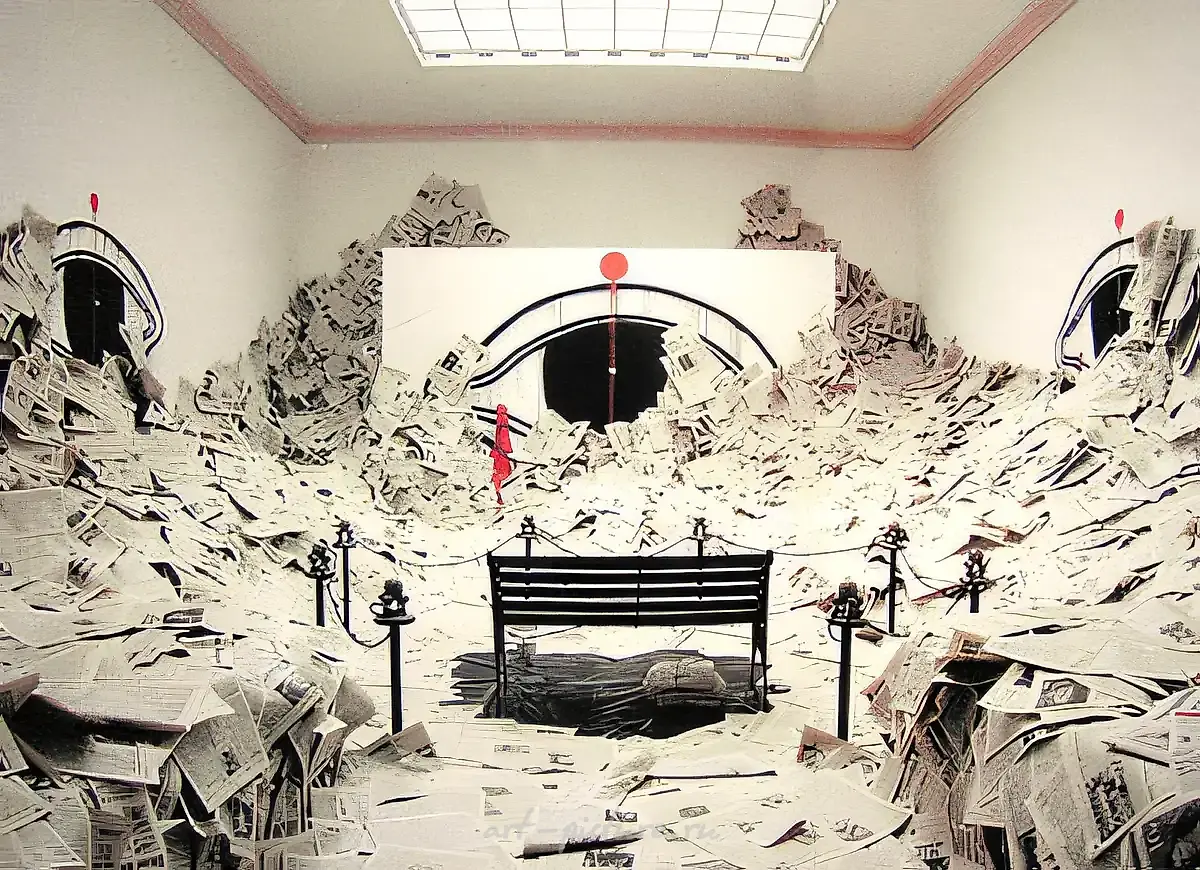
Phantom Installations. White Space Gallery, London
2006 On the Boundary of the Black. Museo Laboratorio dArte Contemporaneo, Rome Hand Drawing (together with Dmitry Tsvetkov). Krokin Gallery, Moscow Phantoms of Installations. Grifon Gallery, Izhevsk Book. Central House of the Artist, Moscow 2008 Citizens! Be Alert, Please! Moscow Museum of Modern Art, Moscow Arbeiter der Kunst. Galerie Sandmann, Berlin GROUP EXIBITIONS: 1976 Spring Apartment Exhibitions. M. Odnoralovs Studio on 10 Dmitriyevskaya St., Apt. 13, Moscow
1983
Victory over the Sun. APTART Gallery (N. Alexeyevs apartment), Moscow 1987 Documenta VIII. Kassel, Germany Retrospective of the Work of Moscow Artists. 1957-1987. Hermitage Amateur Society, Exhibition Room on 100 Profsoyuznaya St., Moscow The Artist and Modernity. Exhibition Room of the Krasnogvardeisky District ("On Kashirka"), Moscow Object-1. Exhibition Room on 28 Malaya Gruzinskaya St., Moscow Creative Atmosphere and Artistic Process. First Exhibition of the Club of Avantgardists. Exhibition Room of the Proletarsky District on Vostochnaya Street, Moscow Exhibition in Hell or Exhibition for the Upper and Lower Worlds (exhibition of the Club of Avantgardists). Wasteland in Orekhovo-Borisovo, Moscow 1990 Catalog. Moscow Palace of Youth, Moscow ИсKONSTво. Kulturhuset, Stockholm UdSSR Heute: Sowietische Kunst aus der Sammlung Ludwig. Neue Galerie, Sammlung Ludwig, Aachen, Germany Schizochina: Hallucination in Power (exhibition of the Club of Avantgardists). VDNKh Construction Pavilion on Frunzenskaya Embankment, Moscow Towards the Object. Sadovniki Gallery (Exhibition Room of the Krasnogvardeisky District), Moscow Von der Revolution zur Perestrojka. Sammlung Ludwig, Kunstmuseum, Luzern, Switzerland 1990 - 1991 Between Spring and Summer: Soviet Conceptual Art in the Era of Late Communism. Tacoma Art Museum, Tacoma; Institute of Contemporary Art, Boston; Des Moines Art Center, Des Moines, USA In de USSR en Erbuiten. Stedelijk Museum, Amsterdam 1991 BiNationale (Israelische - Sowjetische Kunst um 1900). Kunsthalle Düsseldorf, Düsseldorf, Germany; The Israel Museum, Jerusalem, Israel; Central House of the Artist, Moscow Mani Museum - 40 Moskauer Künstler. Karmeliterkloster, Frankfurt, Germany Art Europe 1991. Kunstverein, Hannover, Germany Metropolis. Martin-Gropius-Bau, Berlin Bibel. Dominikaner kloster, Frankfurt, Germany 1994 5 Bienalle der Papierkunst. Leopold-Heusch-Museum, Düren, Germany Fluchtpunkt Moskau. Ludwig Forum, Aachen, Germany Imaginäres Hotel. Buntgarnwerke, Leipzig, Germany V International Symposium on Electronic Art. Helsinki Art Belongs to the People. Billboards, Moscow II Cetinjski Bijenale. Cetinje, Montenegro 1995 Kunst im verborgenen. Nonkonformisten Russland 1957 - 1995. Wilhelm-Hack-Museum, Ludwigshafen am Rhein; documenta-Halle, Kassel; Staatliches Lindenau-Museum, Altenburg, Germany; Manege Central Exhibition Hall, Moscow Gwangju Biennale 1995. Gwangju, South Korea New Sincerity. Goethe German Cultural Center, Moscow in Moskau... in Moskau... Badischer Kunstverein, Karlsruhe, Germany 1998 - 2001 Praprintium. Staatsbibliothek, Berlin; Neues Museum Weserburg, Bremen; Museum fuer Literatur am Oberrhein, Karlsruhe, Germany; Oesterreichischen Nationalbibliothek, Vienna; Minoritenkloster, Graz, Austria 2001 Media Greetings. State Russian Museum, St. Petersburg I Bienal de Valencia. Valencia, Spain 2003 Berlin-Moskau/Moskau-Berlin 1950-2000. Martin-Gropius-Bau, Berlin We - They. Central House of the Artist, Moscow Ortstermin Moskau - 1970 und die Zeit danach. Galerie Sandmann, Berlin Vom Foto zum Bild. Galerie Sandmann, Berlin New Countdown. Digital Russia with Sony. Central House of the Artist, Moscow 2004 Berlin-Moscow/Moscow-Berlin 1950-2000. State Historic Museum, Moscow Seven Sins. Moderna galerija Ljubljana, Ljubljana ARTKlyazma III International Contemporary Art Festival in the Open Air. Klyazminskoye Reservoir, Moscow Region Author Book of Poet and Artist. National Center for Contemporary Arts, Moscow Poeta pingens / Painting Writer. State Literary Museum, Moscow My Kabakov. Stella Art Gallery, Moscow face/off. Mediale Körperphantasien. Kunstverein Pforzheim e.V., Pforzheim, Germany 2006 ARTEAST 2000+23. Moderna galerija Ljubljana, Ljubljana Jörg Immendorff. Ludwig Forum für internationale Kunst, Aachen, Germany In the Collectives Shadow. Galerie Sandmann, Berlin
New Acquisitions. National Center for Contemporary Arts, Moscow
Yellow Pages. Kovcheg Gallery, Moscow
Off Book. Ex Libris. National Center for Contemporary Arts, Moscow
Artists against the State: Perestroika Revisited. Ronald Feldman Gallery, New York, USA
2007
I Believe! Contemporary Art Center Winzavod, Moscow
Sots Art. State Tretyakov Gallery, Moscow; La Maison Rouge, Paris
Depository of Dreams. White Space Gallery, London
Thinking Realism. State Tretyakov Gallery, Moscow
What We Hear and What Looks at Us. Visual Acoustics. National Center for Contemporary Arts, Moscow
Woe from Wit. State Literary Museum, Moscow
Gate Keepers. Knoll Galerie, Vienna
Adventures of the Black Square. State Russian Museum, St. Petersburg
Word and Image. National Center for Contemporary Arts, Moscow
New Angelarium. Moscow Museum of Modern Art, Moscow
Double/Remake. National Center for Contemporary Arts, Moscow
2008
Die totale Aufklärung - Moskauer Konzeptkunst. Schirn Kunsthalle, Frankfurt, Germany
Critic
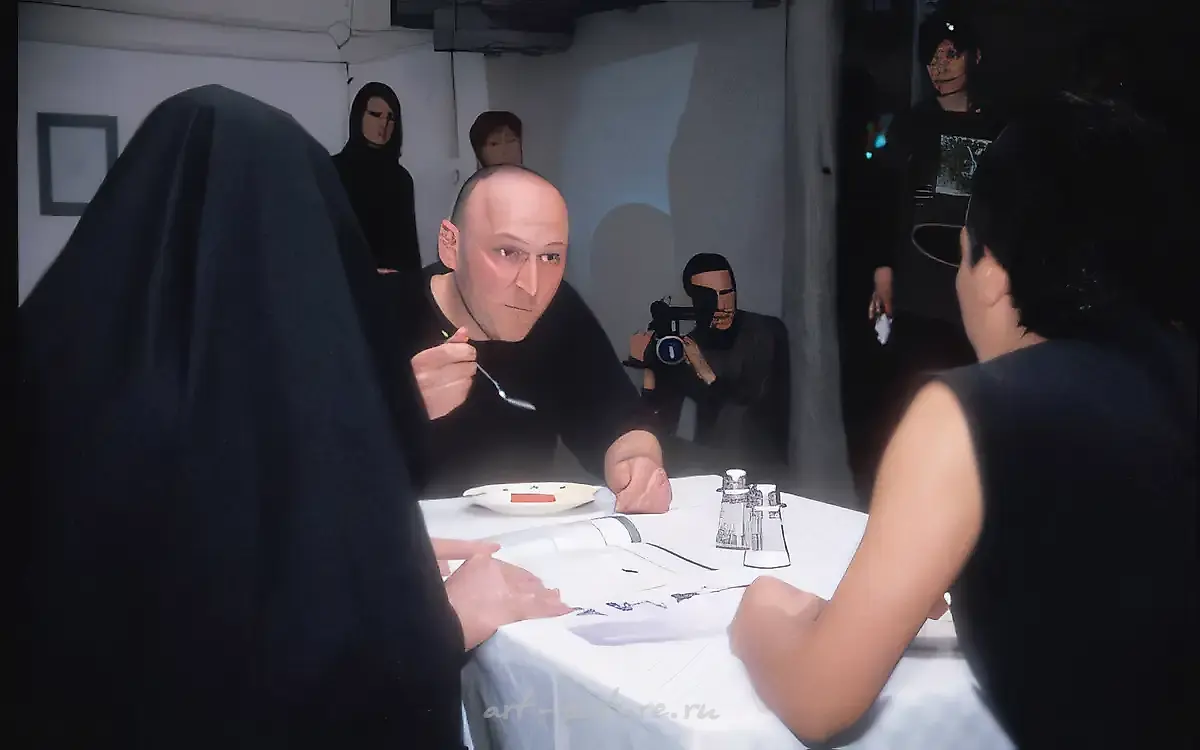
Prigov’s creative expression took many forms. He said in 2005 that he had written nearly 36,000 poems. He also wrote plays and essays, created drawings, installations and video art, acted in films, staged performance art and performed music.
For years his verse circulated in the Soviet Union as samizdat, officially banned literature that was passed furtively hand to hand. Only in 1990, during the last stages of the Communist era, was a collection of his verse officially published in his country. His work had been published extensively abroad in ImigrI publications and Slavic studies journals.
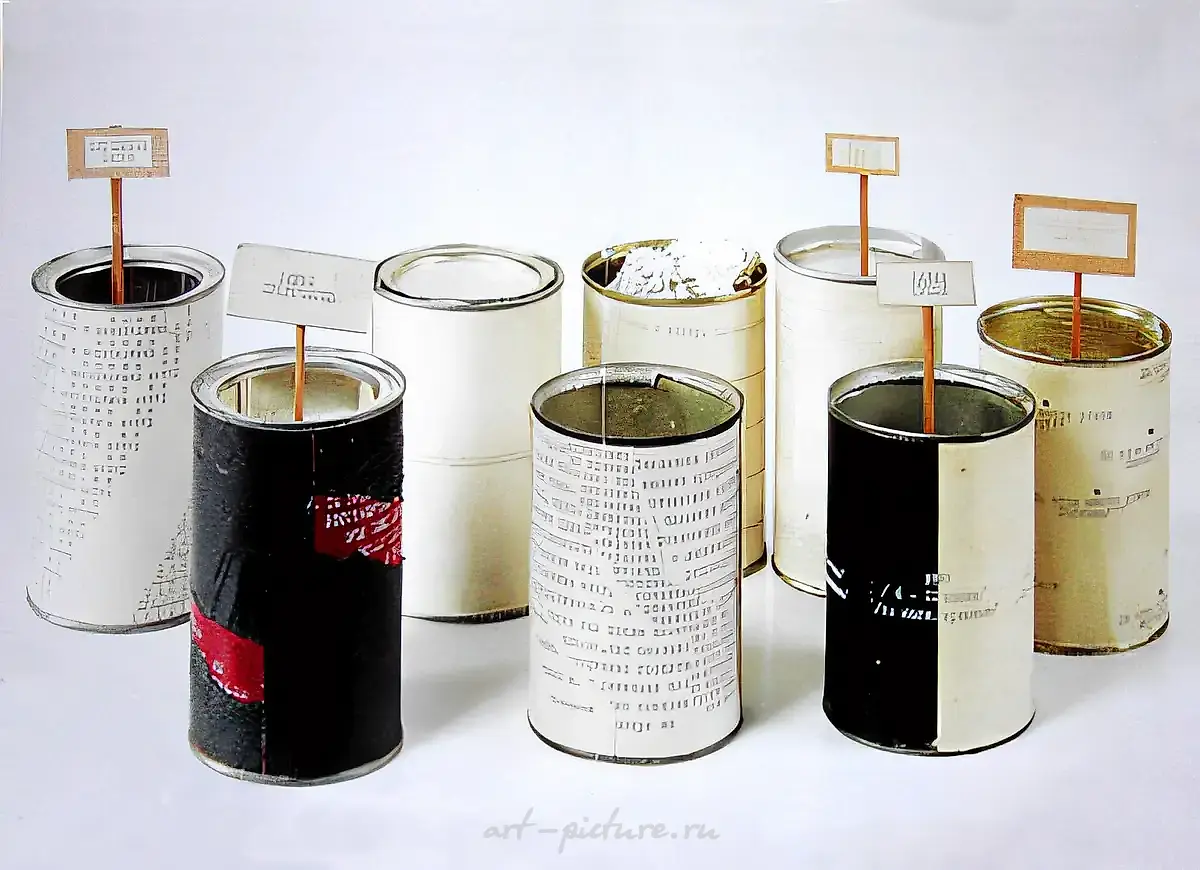
Trained as a sculptor at the Stroganov Art Institute in Moscow, he began writing poetry in the 1950s, then worked as a municipal architect and created sculptures for parks. In the 1970s he grew close to artists in the Soviet underground and became a leader in Moscow’s conceptual art movement, combining his poetry with performance. He was also known for writing verse on cans.
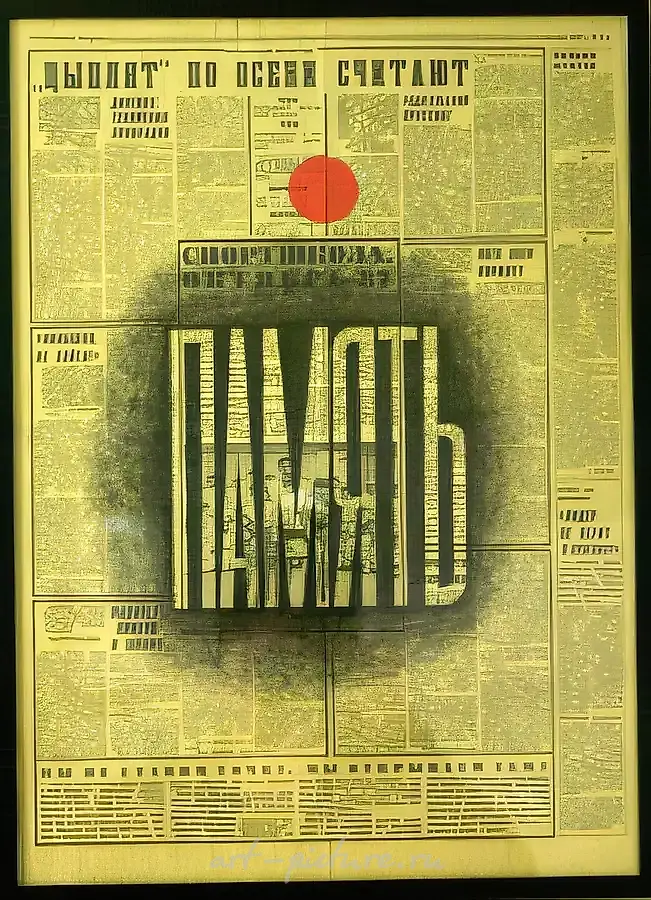
“In America there was Pop Art,” said Vitaly Patsyukov, a Russian art historian and friend of Prigov’s. “Here it was ideology as a manifestation of mass consciousness.” Patsyukov added, “He turned words into objects.”
At the time he was producing work considered subversive by the authorities, Prigov was stopped while walking down a street in 1986, he recalled, and was whisked away by the KGB and then to a Soviet psychiatric hospital. His stay was brief, however, after prominent poets like Bella Akhmadulina lodged protests.
In the West he was probably best known for his performance art. Rita Lipson, a senior lecturer in Russian literature and culture at Yale University, recalled Prigov’s performance there. His work, she said, was “a form of social protest.” One of his most widely known cycles of verse is about a Soviet policeman.
Prigov, who was born in Moscow, is survived by his wife, Nadezhda, a son, Andrei, and a grandson, Georgy.
Patsyukov said Prigov had been looking forward to participating in a conference on religion and art. Contemporary artists and the Russian Orthodox Church have been increasingly at odds in Russia, and Prigov had hoped to reconcile them, Patsyukov said.
Viktor Yerofeyev, a novelist and essayist with whom Prigov worked closely, said Prigov had been “a brilliant poet and created his own distinct poetic world.”
“In the 20th century,” he said, “the poetic word was torn away from life, but Dmitry Alexandrovich brought poetry closer to life, as another great poet, Pushkin, did in his day.”
Sophia Kishkovsky. Dmitry Prigov 1940-2007//The New York Times
Works 15