Krylov Vladimir
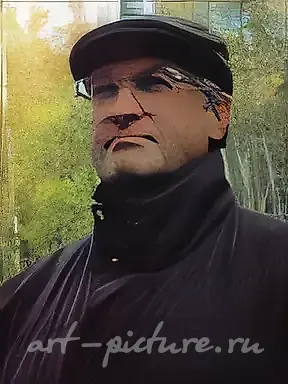
Born in 1943.
1974 - Graduated from the Art Faculty of the All-Union State Institute of Cinematography (VGIK).
1982 - Member of the Union of Artists of the USSR.
1984 - Member of the Union of Cinematographers of the USSR. As a production designer, he has worked on 46 films, including:
1979 - Film "The Adventures of NUKI" - Grand Prize at the International Children's Film Festival in Bombay "Golden Elephant".
1980 - Film "Remembering D.I. Mendeleev" - Award for Best Popular Science Film at the All-Union Film Festival in Vilnius.
1980 - Film "And Happiness in Personal Life" - Special Prize of the Academy of Pedagogical Sciences at the All-Union Film Festival in Vilnius.
Works in collections
Works are held in the Diplomatic Corps of Russia, "Euroart" and "Vert" galleries, in private collections of V.T. Spivakov, G.L. Lerner, Countess A. Sheremetyeva, in Russia, Germany, Greece, France, Italy, Austria, Spain, Great Britain, USA, South Korea, Japan, Bulgaria and others.
Exhibitions and auctions
Participant in numerous exhibitions in the USSR, Russia, and abroad since 1974, including:
1991 - Tokyo International Art Fair TIAS. Tokyo;
1991 - Exhibition of Paintings by Soviet Artists. Seoul;
1991 - Exhibition of Soviet Film Artists' Works. London;
1995 - First Exhibition of the International Art Foundation. Moscow;
1998 - First Moscow International Art Salon "CDH – 98". Moscow;
1998 - Solo exhibition. "Russian House". Berlin.
Author about himself
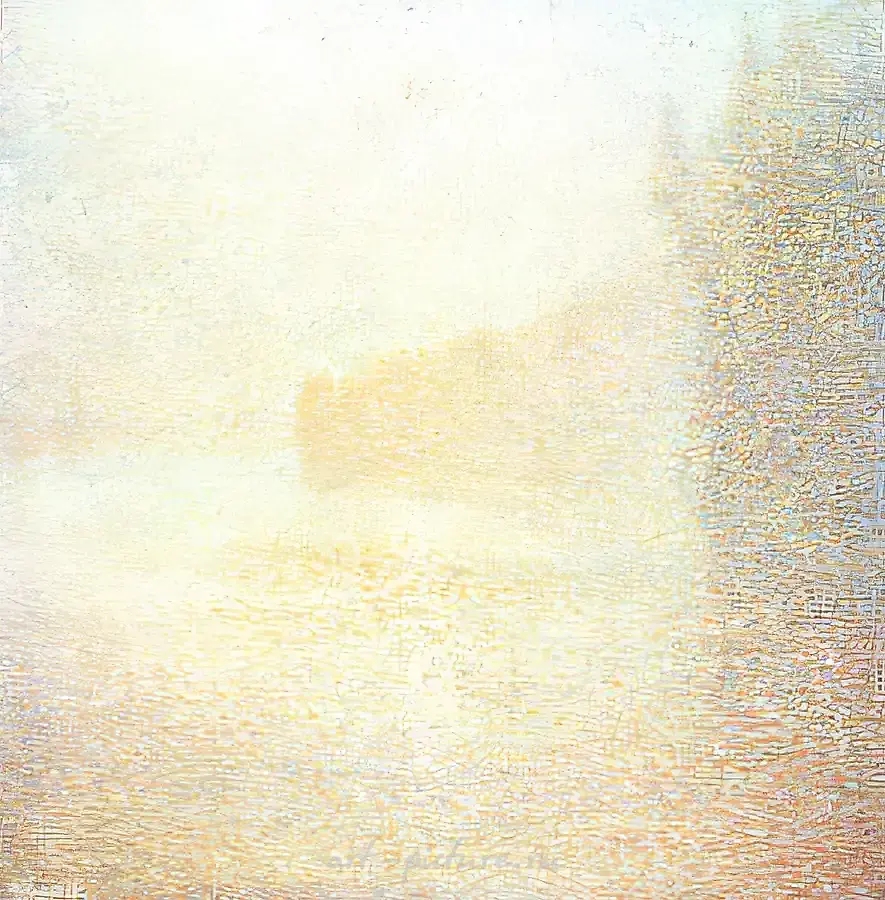
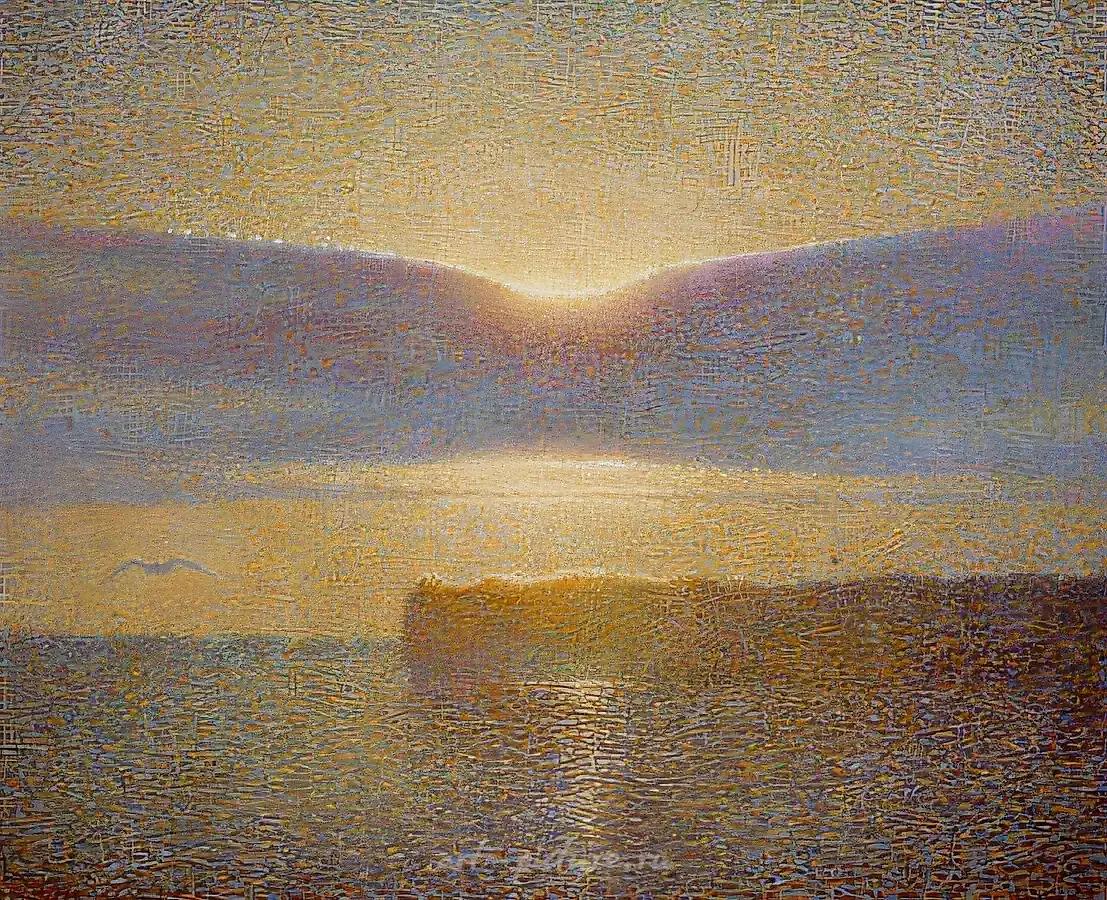
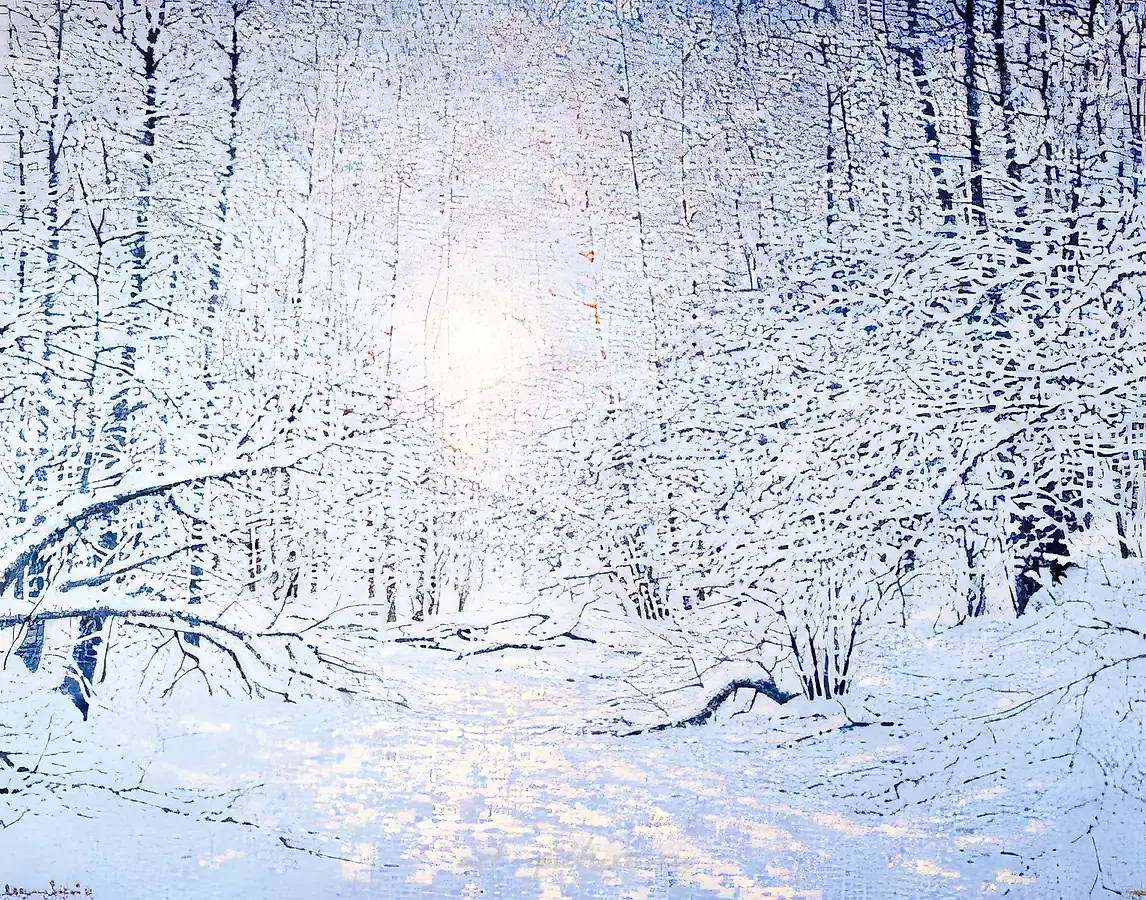
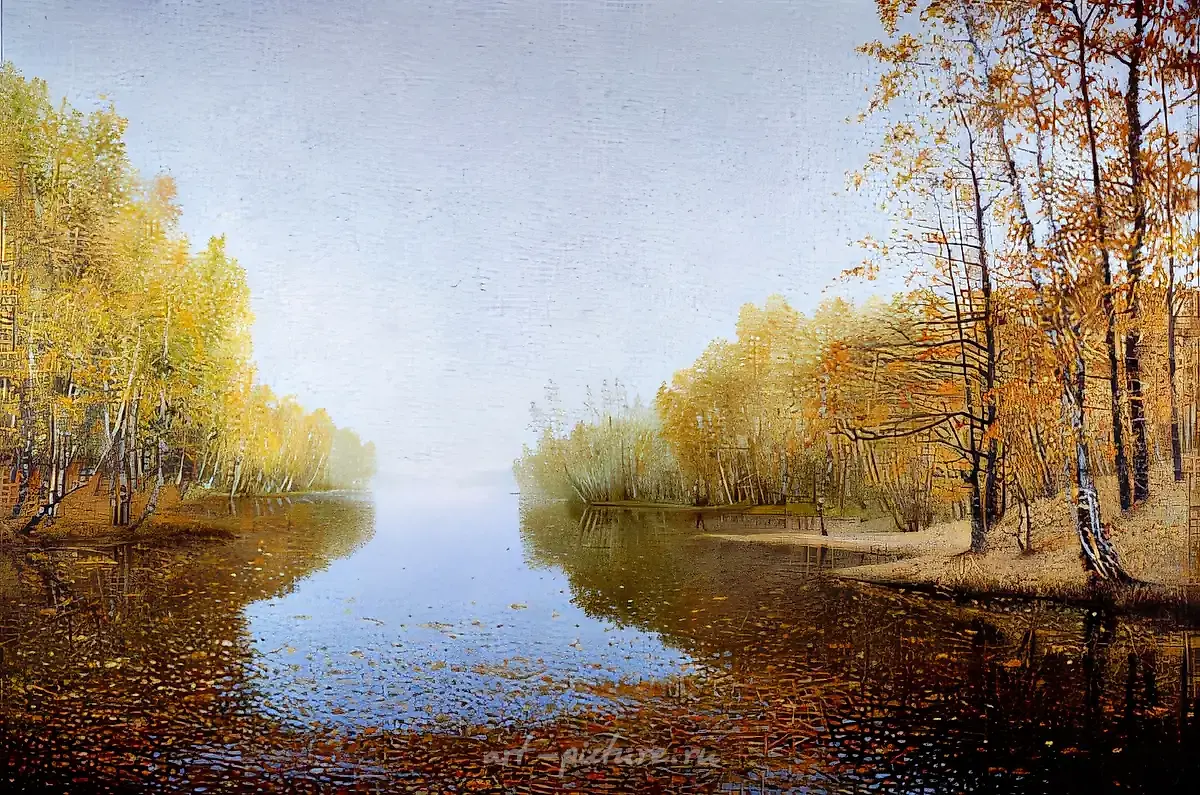
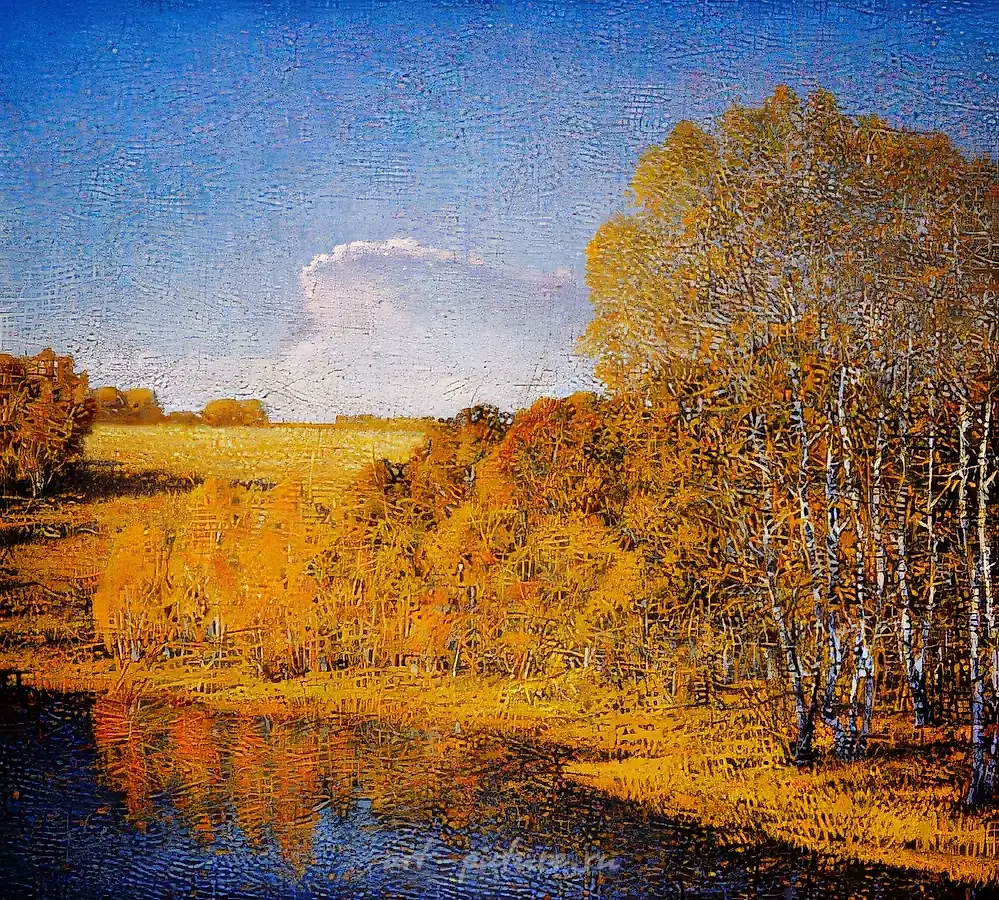
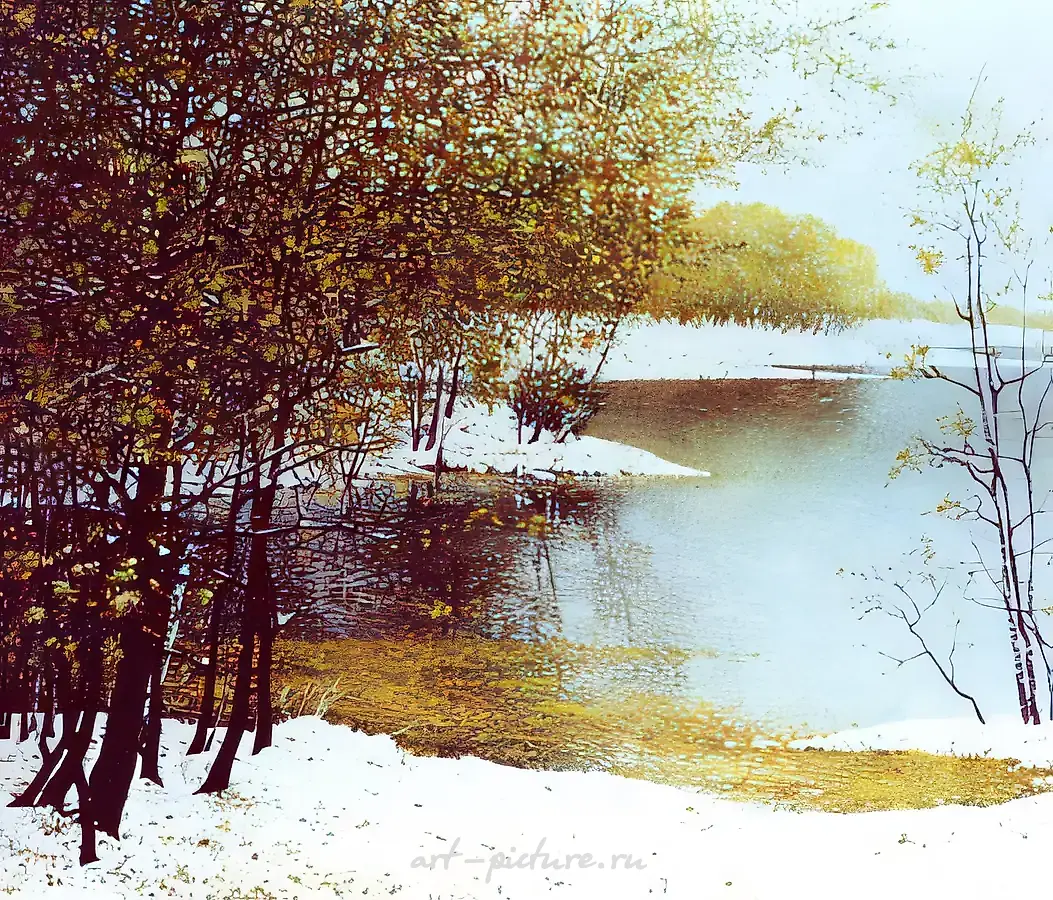
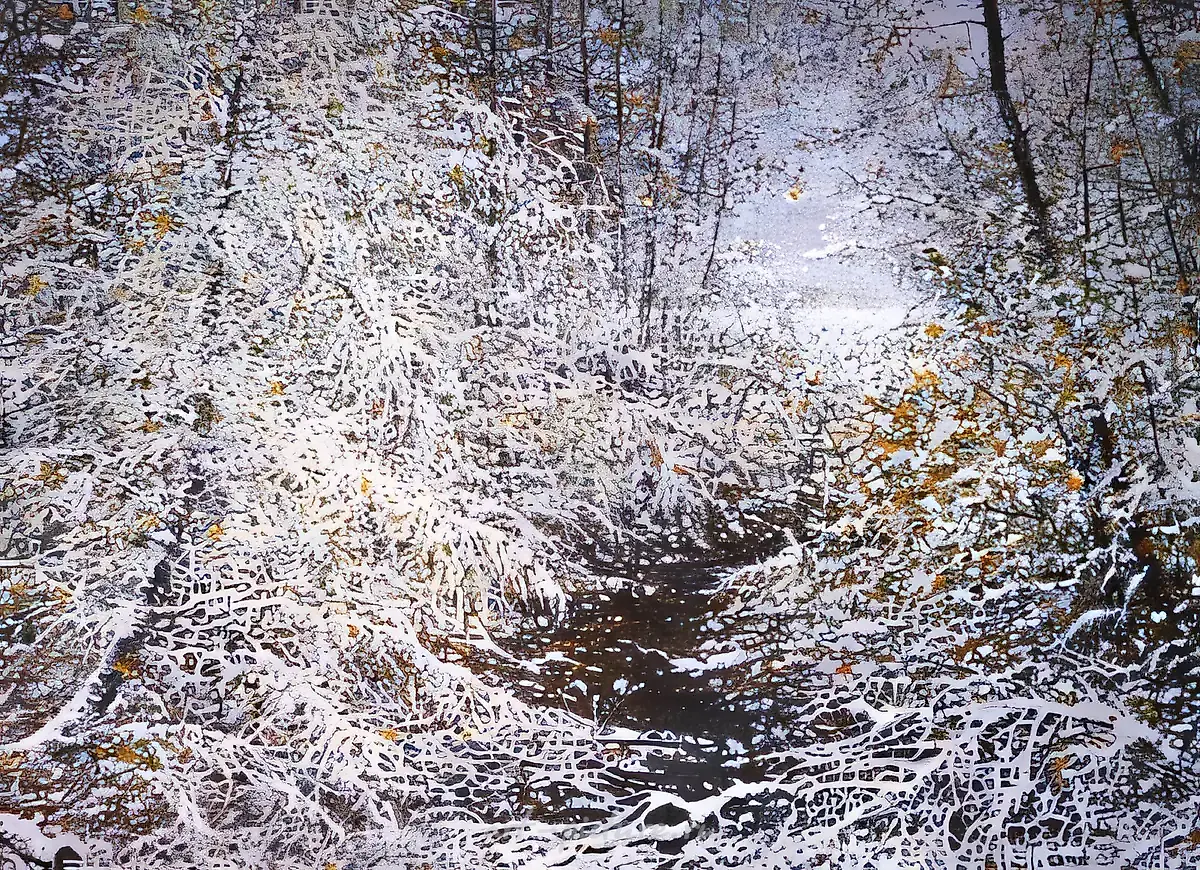
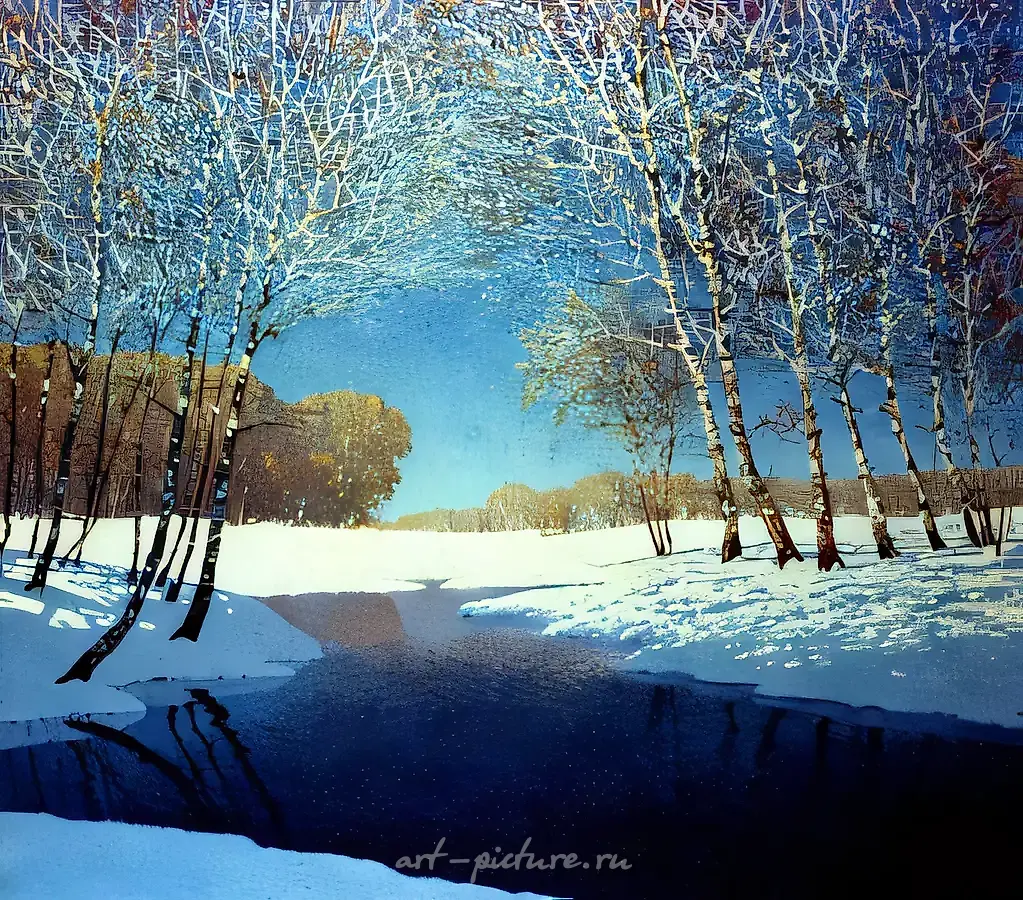
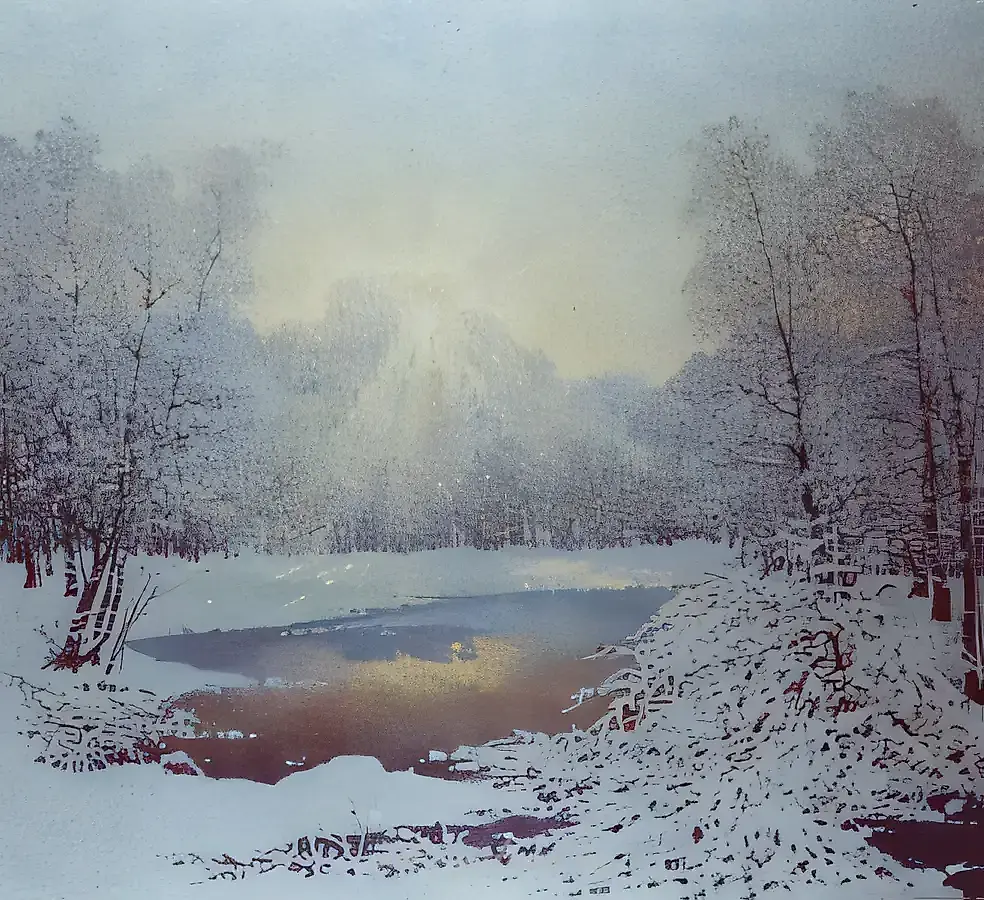
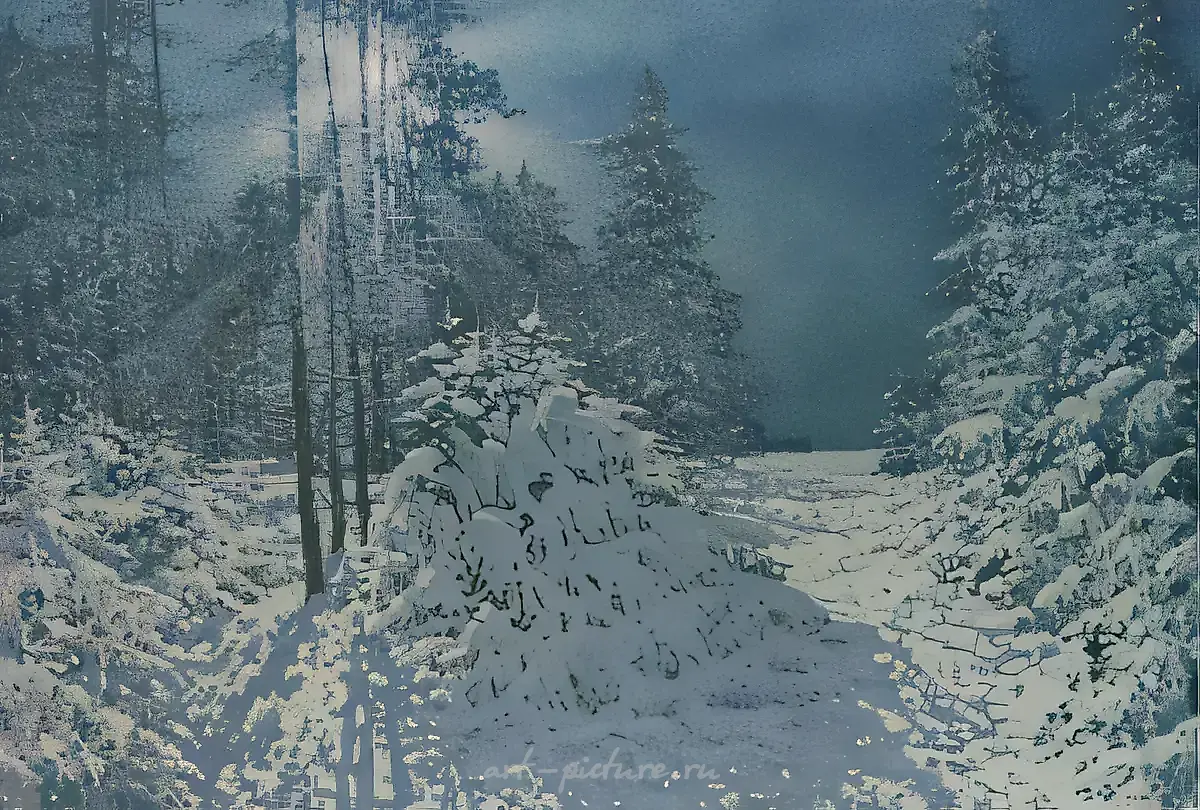
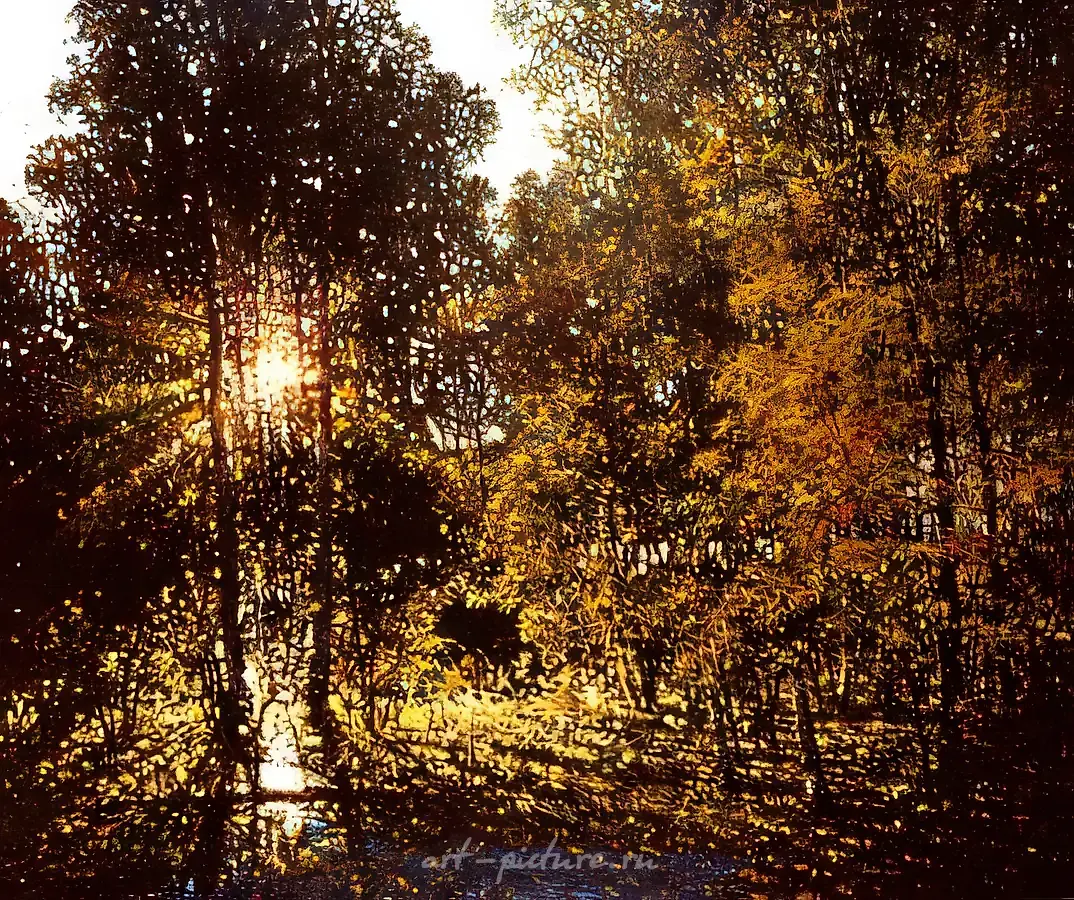
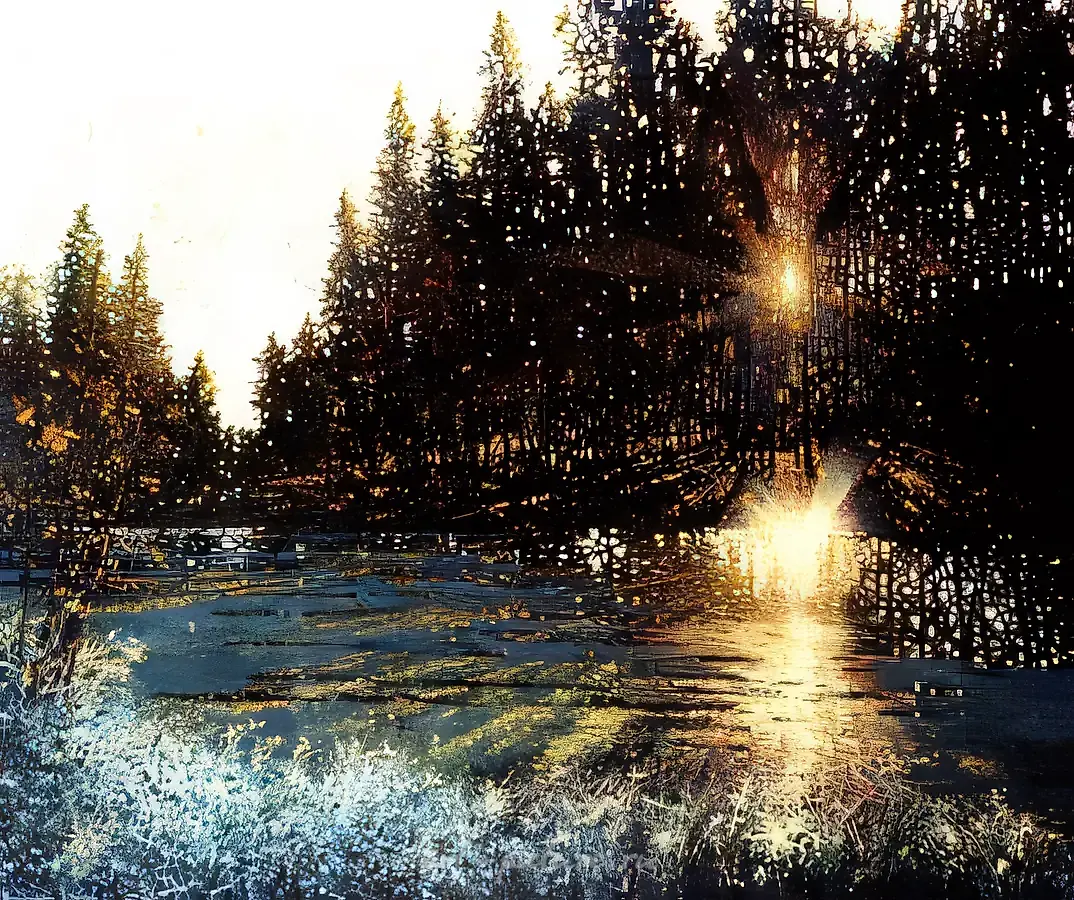
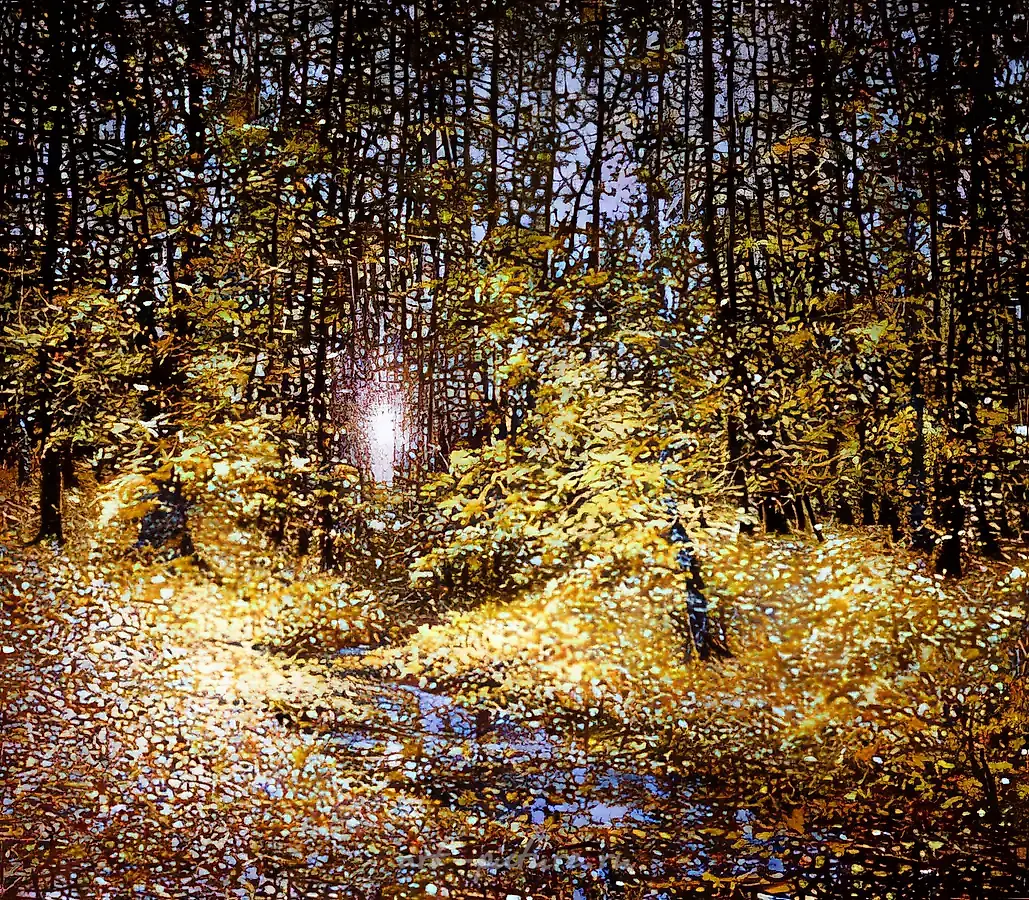
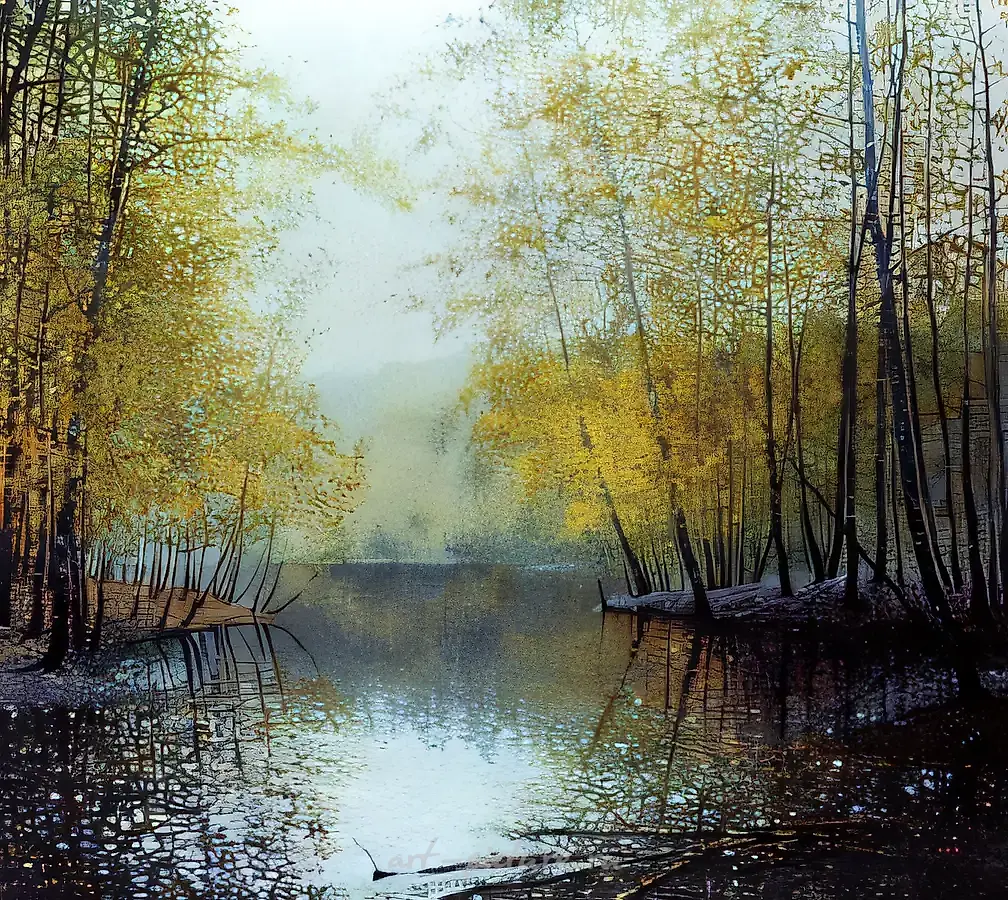
Four remarkable composers — Tchaikovsky, Haydn, Vivaldi, and Glazunov — have gifted humanity with symphonic works titled "The Seasons." In the history of world fine art, there has never been a composition depicting the full transformation of nature throughout an entire yearly cycle. Many painters have experienced awe before the beauty of Creation and have created numerous landscapes in different countries, seasons, and states of nature, but none has ever crafted a singular work detailing the complete, intricate transformation of nature — its awakening, maturation, celebration, and descent into winter slumber. Not a collection or a series of works, but a unified composition with a clear internal structure.
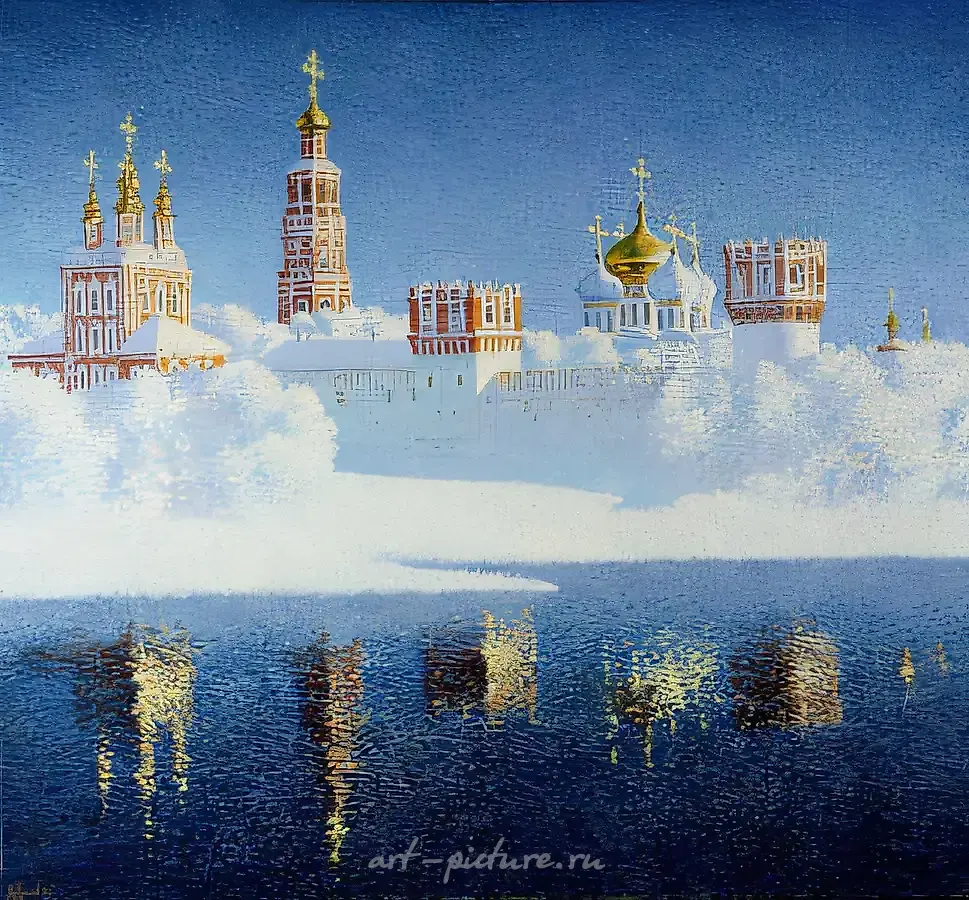
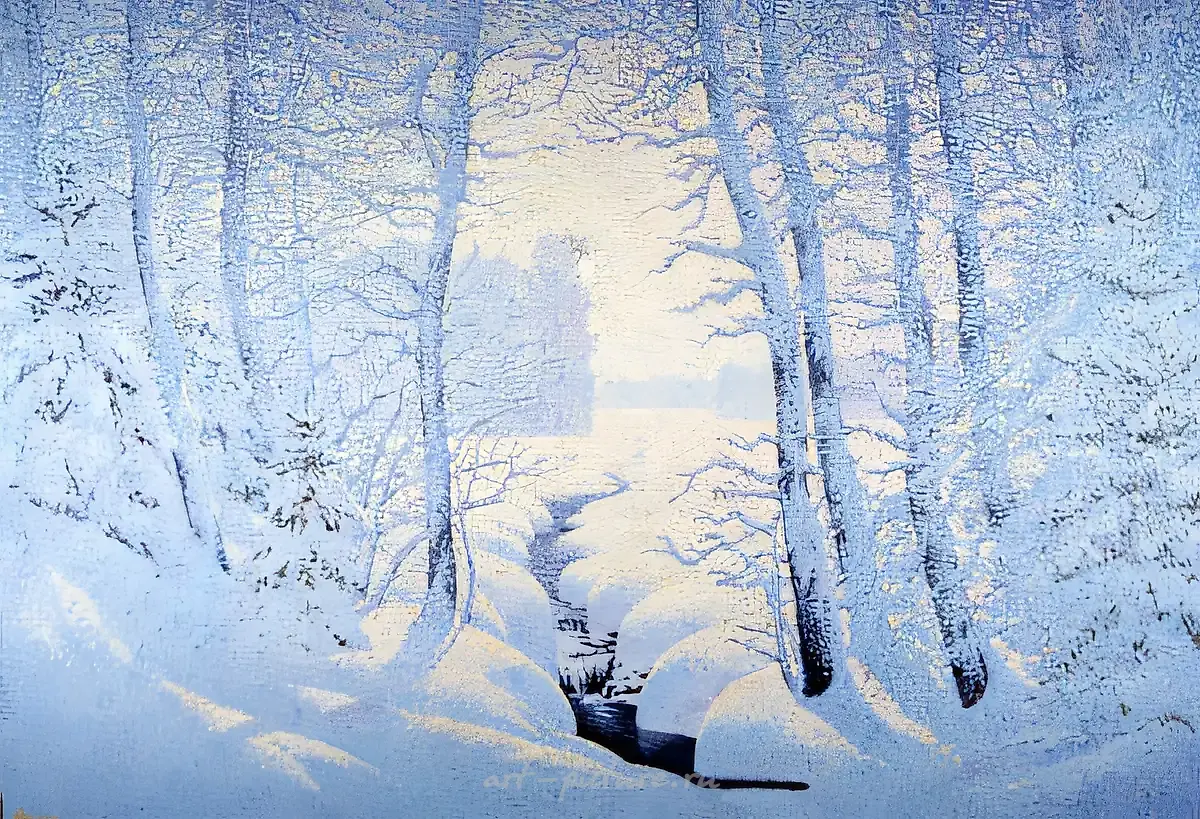
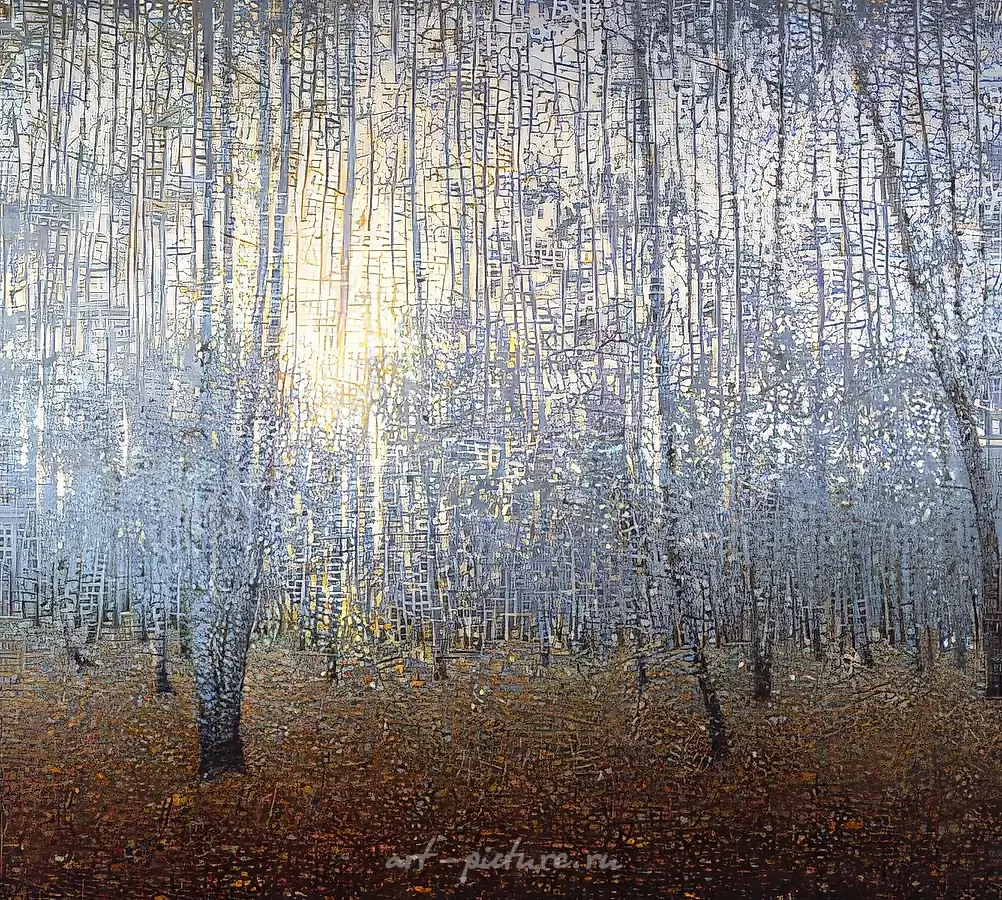
The "NATIVE LAND" composition addresses this task. It consists of 81 large paintings, forming a single composition that includes 12 segments, each reflecting the changes in Russian nature during every month.
Each month's segment comprises 3, 5, or 7 paintings, arranged in a triptych style. Each is separated from the next month's by an architectural landscape dedicated to a significant monument of Russian national architecture, such as the Novodevichy Convent, Rostov Kremlin, St. Basil's Cathedral, etc.
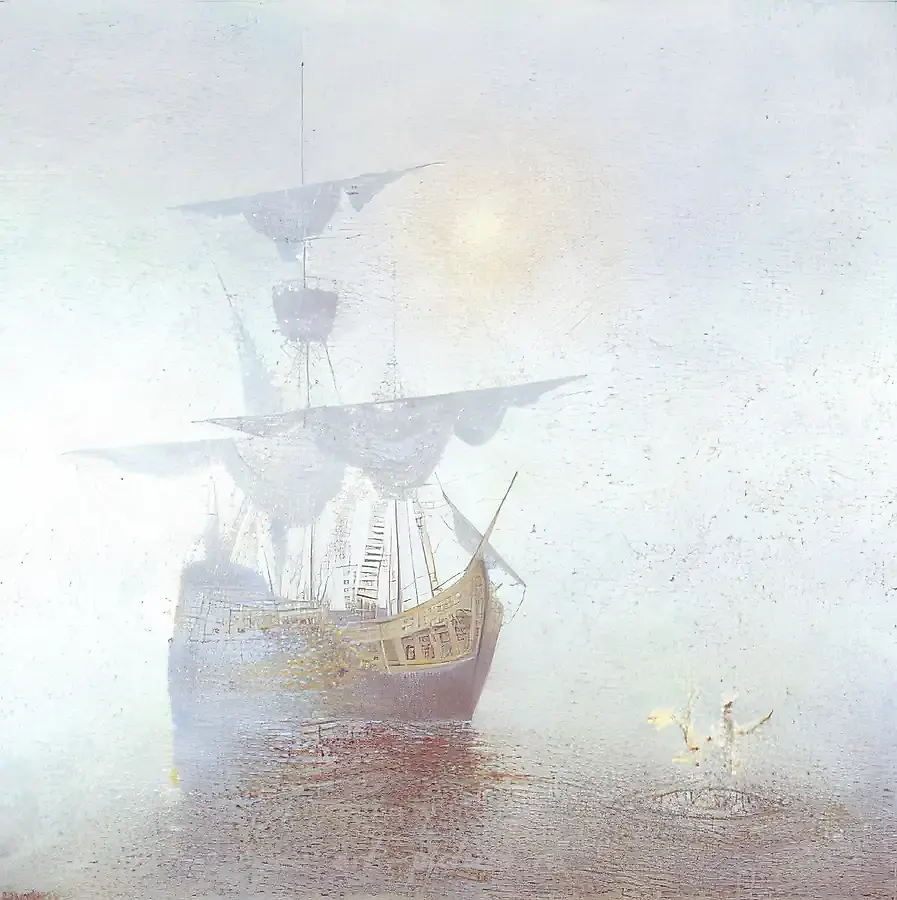
Each season is separated from the next by a dividing triptych: its center features a monument of Russian national architecture, and on the sides there are two seascapes, symbolizing that Russia is surrounded by seas and oceans.
The "NATIVE LAND" composition creates a generalized pictorial image of our Motherland, monumental in character and major in mood. This is a pictorial hymn to our homeland, unprecedented in the history of visual art and with a clearly patriotic resonance.
Through its architectural landscapes depicting Orthodox monuments, this painting echoes the 2000th anniversary of Christianity, and through its grand pictorial image of Russia, it corresponds to the theme of the turn of two millennia.
Work on the composition required 9 years of uninterrupted labor, now nearing completion. The entire composition will be finished in autumn 2001, representing a continuous frieze 110 cm in height and 150 linear meters in length. Such a work can only be exhibited in the Central Exhibition Hall "Manezh," the Central House of Artists, or the new building of the Tretyakov Gallery (Krymsky Val, 8).
Bibliography
Since 1975, materials about the artist have been published in print media and visual arts catalogs, including:
Catalogue of the exhibition of Moscow artists at the Central Exhibition Hall "Manezh", Moscow, 1975;
Newspaper "Moskovsky Komsomolets", Moscow, 1979;
Magazine "Soviet Screen", Moscow, 1979;
Magazine "Socium", Moscow, 1995;
Catalogue of the first Moscow International Art Salon "CDH – 98", Moscow, 1998;
Magazine "Russian WHO is WHO", Moscow, 2000;
In 1998, the book by V. Krylov "Art - what is it?" was published.
Works 18