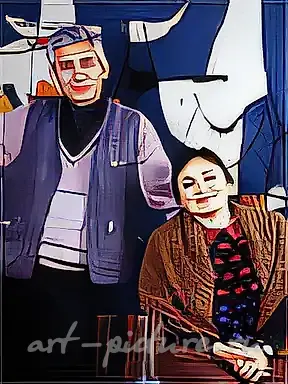
Saule and Alibay Bapanov
Alibay Kaltaevich Bapanov was born in 1953 in the Kyzylorda region. In 1973, he graduated from the Almaty Art School named after N.V. Gogol, and in 1979 from the Moscow State Art Institute named after V.I. Surikov.
Saule Syzdykovna Bapanova was born in 1956 in the Kyzylorda region. In 1976, she graduated from the Almaty Art School named after N.V. Gogol, and in 1981 from the Moscow Higher School of Art and Industry named after S.G. Stroganov.
Since 1981, they have been members of the Union of Artists of Kazakhstan. Participants in republican, all-Union, and international exhibitions.
E-mail: bapan@nursat.kz
Works in collections
Their works are held in museums of Kazakhstan, Russia, Ukraine, China, Turkey, Poland, as well as in private collections in Almaty, Moscow, France, America, Liechtenstein, Germany, Sweden.
Exhibitions and auctions
1999 "Wandering." Personal exhibition. Tengri-Umay Gallery. Almaty, Kazakhstan; 1999 Exhibition at Eurasian University, Astana, Kazakhstan; 1998 International Symposium "Felting-98," Vilnius, Lithuania; 1998 II International Symposium, Bornholm Island, Denmark; 1997 Exhibition of a group of RK artists in Germany: Frankfurt-am-Main, Bonn; 1997 - Personal exhibition, Central Historical Museum of RK, Almaty, Kazakhstan; 1996 I International Symposium, Gokceada Island, Aegean Sea, Turkey; 1996 Personal exhibition, State Museum of Oriental Art, Moscow, Russia; 1996 Personal exhibition, State Museum of Fine Arts named after A. Kasteev, Almaty, Kazakhstan; 1995 International Carpet Art Competition, Bodrum, Turkey; 1995 Creation of a series of tapestries for the Residence of the President of RK, Almaty, Kazakhstan; 1995 International Festival of Islamic Countries, Tehran, Iran; 1994 Exhibition at the Museum of Ethnography, Olsztynek, Poland; 1993 Personal exhibition, Museum of Asia and the Pacific, Warsaw, Poland; 1992 Creation of a series of tapestries for the banquet hall of the Ak-Bulak recreation house, Almaty, Kazakhstan; 1992 Personal exhibition, Ministry of Culture of RK, Almaty, Kazakhstan; 1991 International Symposium "Oven-91" (Sumbile-Tamiz-91), Almaty, Kazakhstan; 1989 International exhibition, Cannes, France; 1989 International contest "Artistic Textile-89," Riga, Latvia; 1988 International contest of decorative and applied arts, Ashgabat, Turkmenistan; 1986 All-Union creative group "Senezh," Moscow, Russia; 1985 Creative Youth Festival "Zhiger," Almaty, Kazakhstan; 1983 Creative Youth Festival "Zhiger," Almaty, Kazakhstan; 1981 Exhibition of young artists of RK.
Critic
Contemporary tapestry—what is it like? First of all, very diverse. It appears as an impressive woven decoration on the wall (once in a castle, museum, or public building—now elsewhere); in the form of a small panel, it becomes a gem among a sea of lush draperies. As an analogue to easel painting, it fits well in exhibition halls or ordinary homes; finally, it's a souvenir—a memory of a place visited. Even a small fragment in this virtuoso technique can generate an irresistible desire to own it, to touch, to admire.
Such are the first (somewhat chaotic) impressions upon the first visit to the studio of Alibay and Saule Bapanov. Family creative mini-groups are not uncommon in Kazakhstan, but how different they are! And the unity of such a union is sometimes bound not by similarity but by a degree of contrast in natures. Alibay Bapanov might fit the words the Romans of Nero’s time used for the writer Petronius: "arbiter of elegance." He sometimes seems like a character out of an oriental miniature (a scholar, a mage, a poet?). A portraitist would surely be intrigued by his characteristic features—a slight forward tilt of the torso and head toward an interlocutor, real or imaginary; a focused, dreamy gaze; a charming half-smile. Thus, one can look and see the unseen—heroes of legends, the secret of transforming inert matter into the plasticity of the living and spiritualized.
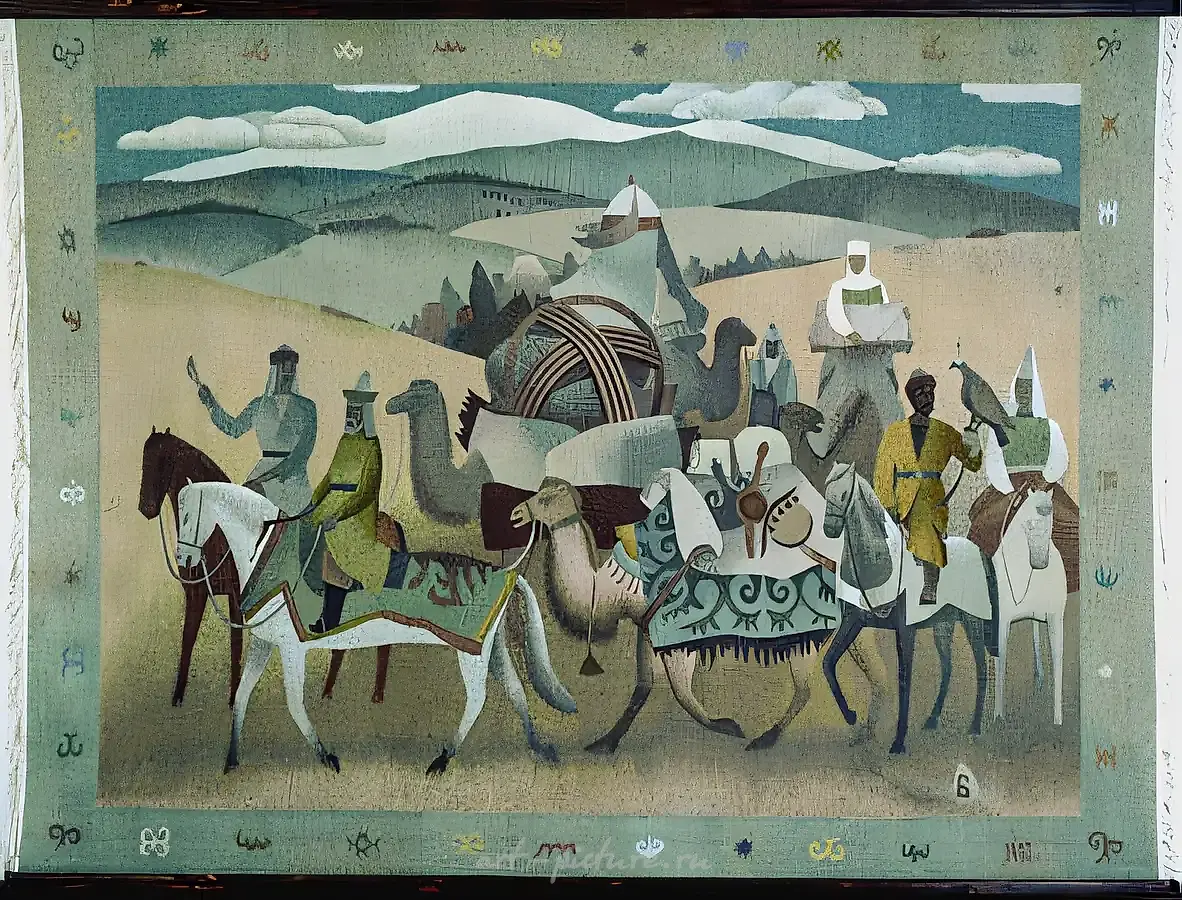
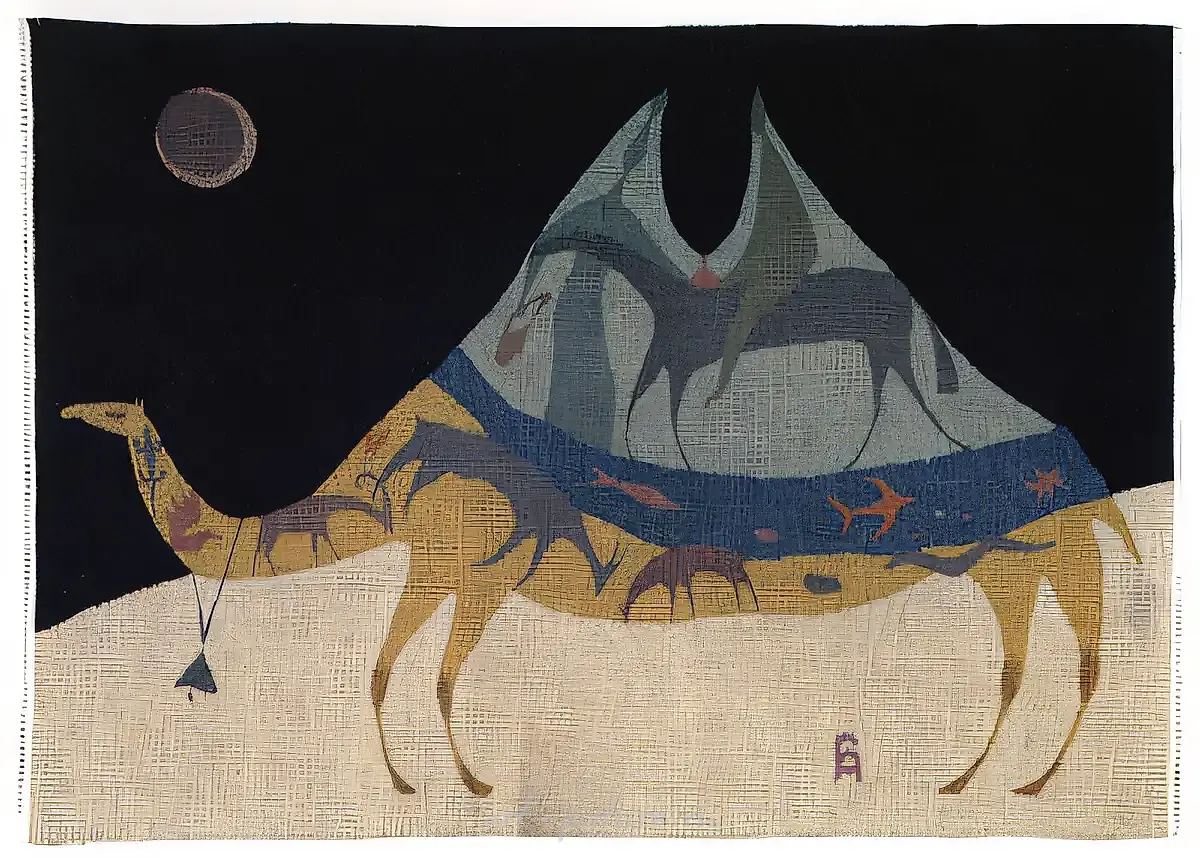
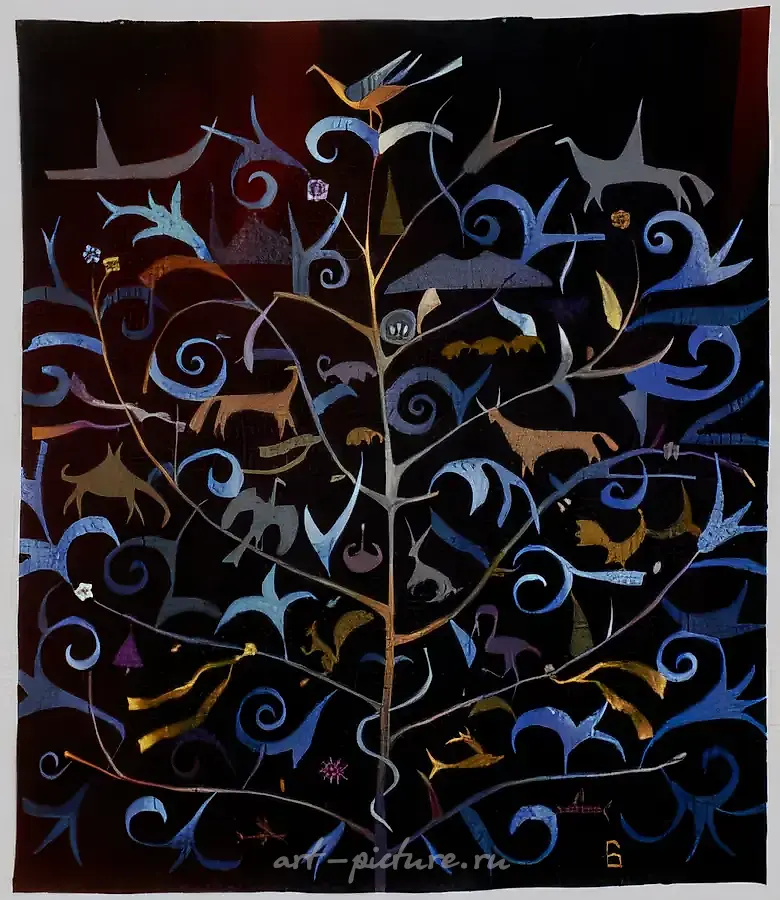
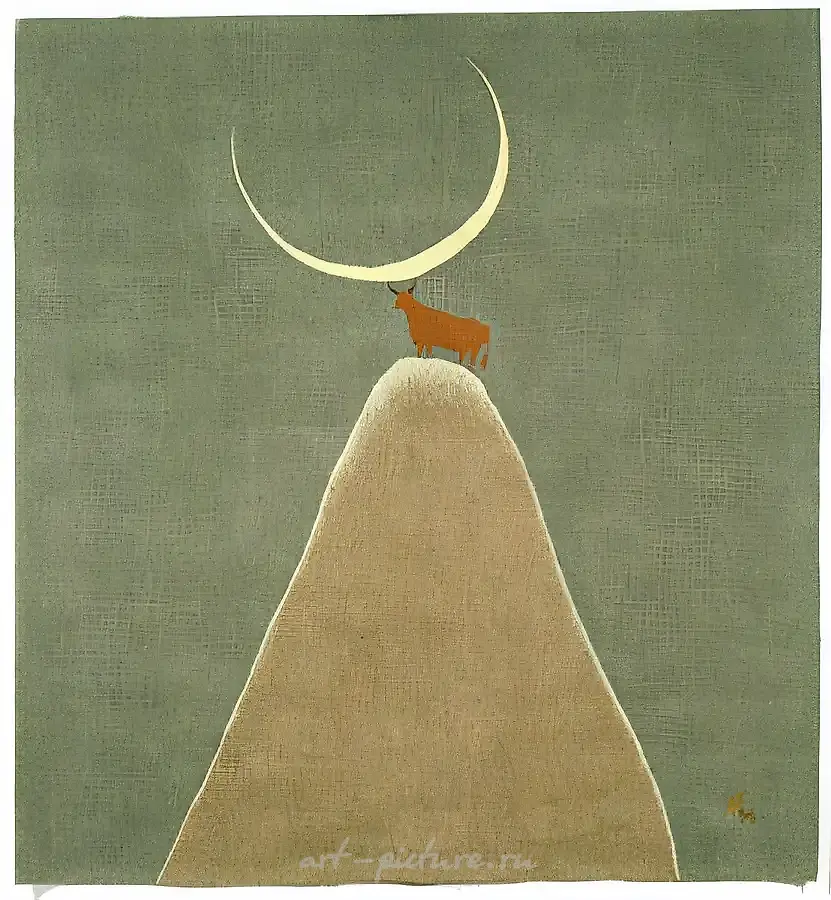
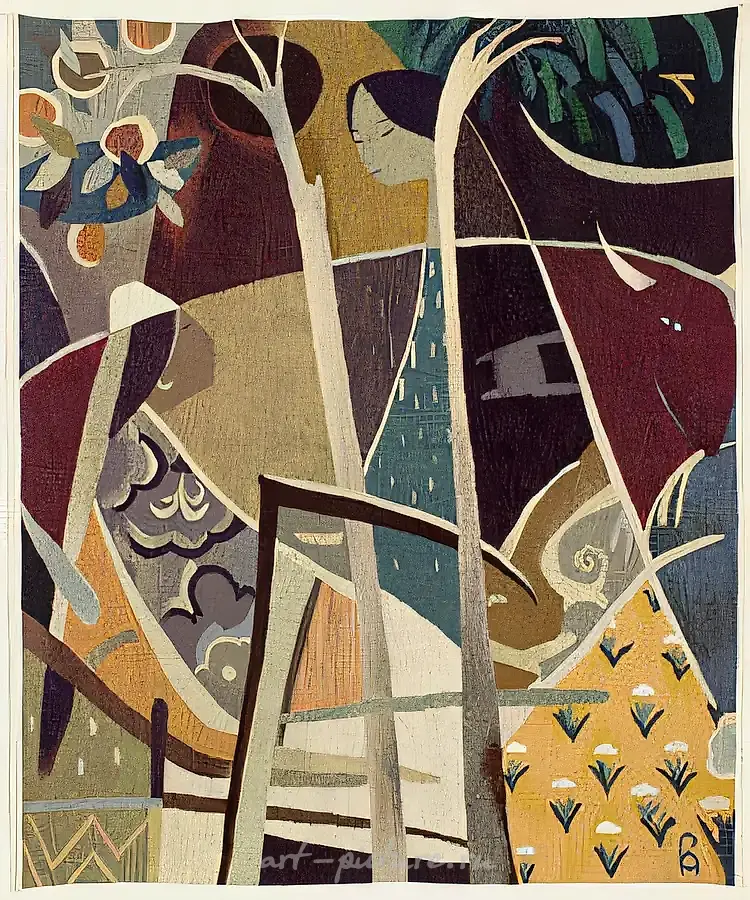
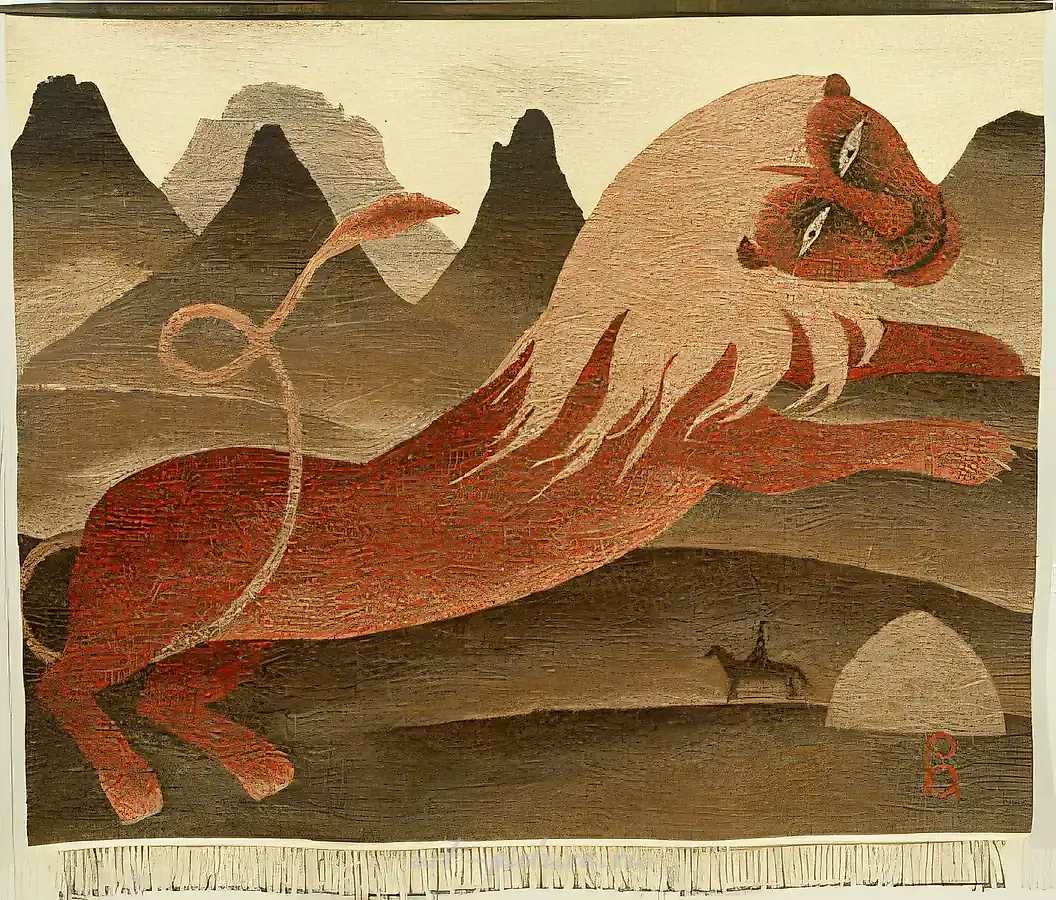
Man and nature are perceived by the artist sometimes in harmony and mutual attraction, sometimes in the drama of violent conflict. Hence the polyphony of his works, "unchanging in their changeability"—to use a term from Far Eastern philosophy. Classical and avant-garde in style, his compositions display a peculiar universality of thought, taste, and erudition (Sacred Tree, 1994; With Love to Miro, 1993; Eternity, 1992; Creation, 1990, etc.).
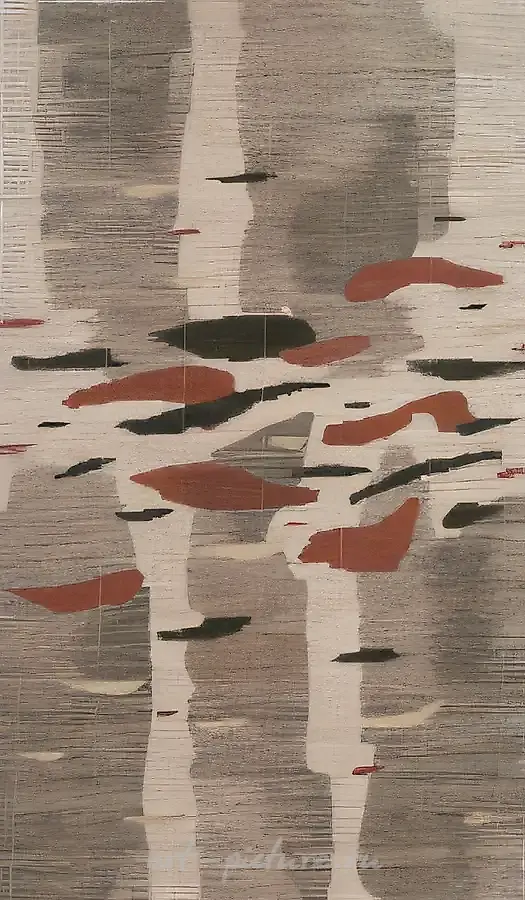
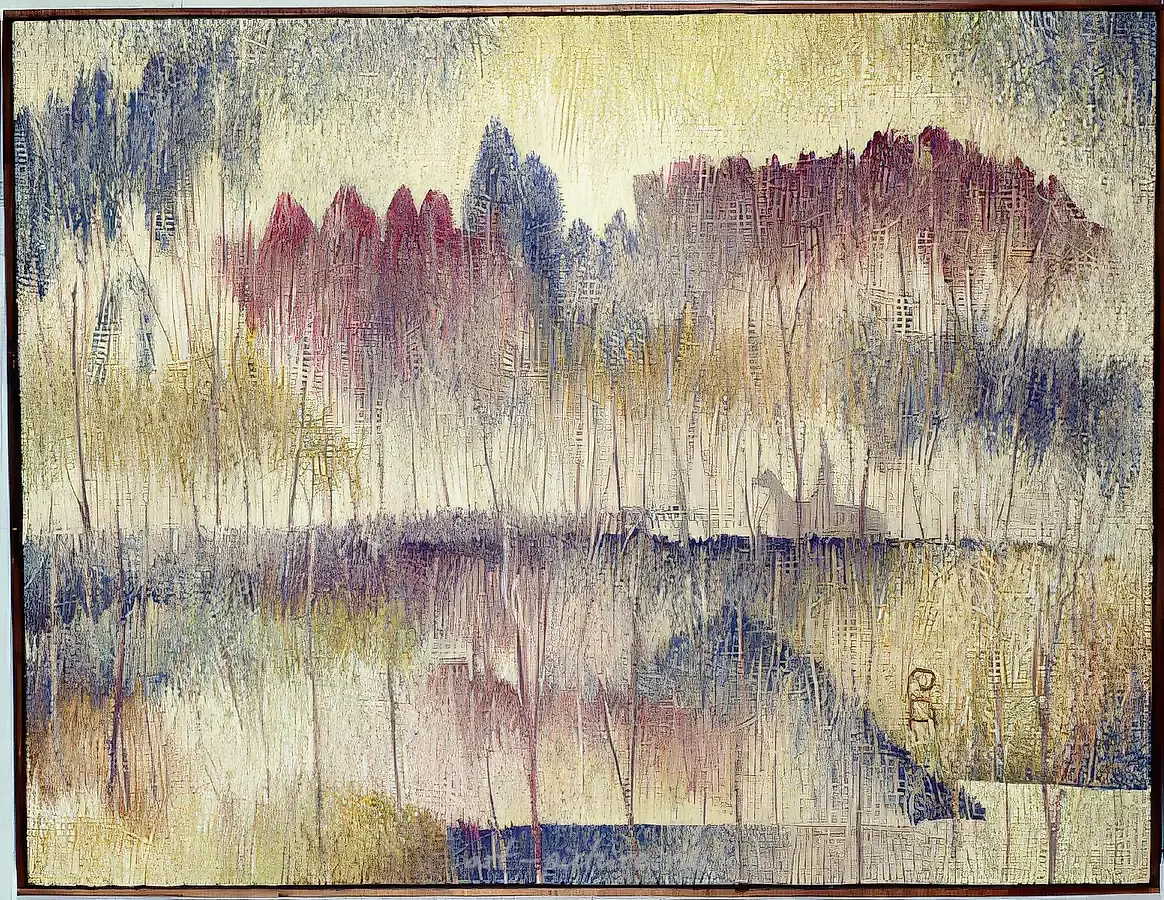
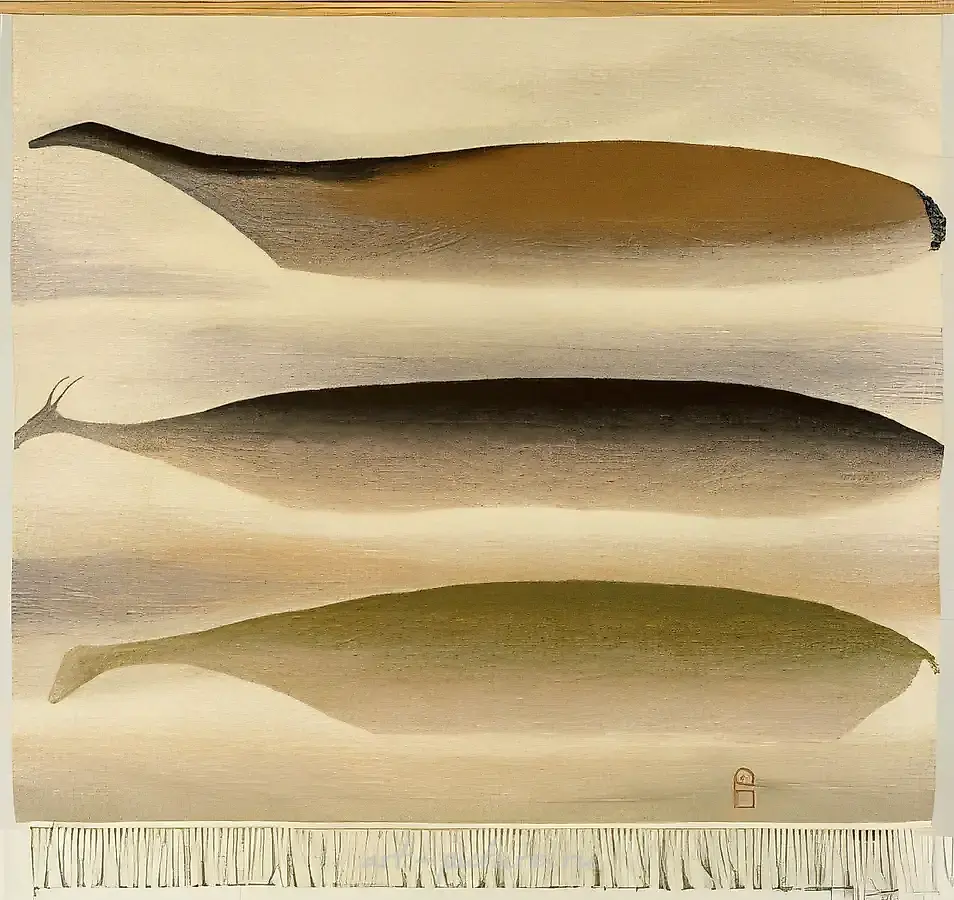
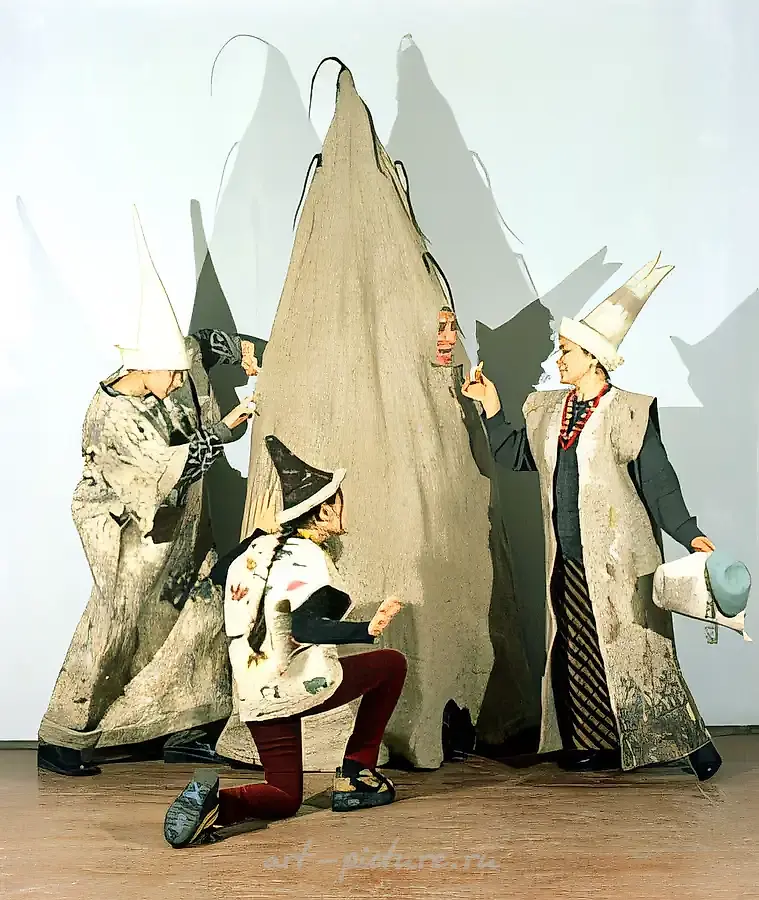
The effect of the tapestries is truly unique. It is inseparable from the complex texture, the magic shimmering of undertones and shades. There is a bewitching force also in the interplay of pure color planes, as in stained glass. Throughout, there is the thrilling authenticity of the handmade: from dyeing the wool by hand to the very process of weaving. Here, Alibay Bapanov's wife, Saule, aids as both artist and executor. She feels the elusive unpredictability of material and technique, sensitively adjusting the cardboard sketch. Leaning over the loom, she gracefully leads the weft, weaving it with the stretched threads of the warp. A quick, precise motion, and the woven section is compacted with a simple fork-like tool. And suddenly, something strange happens: the sense of space and time disappears. This could have been seen even in past centuries (or in some distant epoch) by a folk craftswoman. After all, embroidery and weaving to decorate the yurt were ancient household duties. And it doesn’t matter that tapestry as a professional technique appeared much later. To complete the illusion of a "retrospective immersion," patterned felts—tekemets—lie on the studio floor. These are original works using the traditional method: the design (ornamental or figurative) is laid out on a special base of fluffy wool, colored or natural. The piece is wet, steamed, and rolled under pressure. The design and background seem to merge, becoming softened, painterly. Usually, tekemets are single-sided; the Bapanovs have their own secret that allows their items to be double-sided by pattern. The artists relate to their work quite freely. The same can't be said about visitors: they carefully skirt the area with almost museum-grade exhibits.
There is another use for felt: on a low table are hats, flat or cone-shaped, with delicate flecks of bright or dark marks on a light background. “Alibay experiments with these,” says Saule, her eyes shining. At this moment, she resembles a heroine from Kazakh epics: the same femininity and dignity with an ability to fade into the background, as Korkta did in "Koblandy-batyr." Her emotionality, impulsiveness found an outlet in her own tapestries and souvenir items of other techniques. The artist is attracted to forms that emerge, change, vanish: birds in flight, clouds, and fantastical petals suggesting the iris so beloved in the East ("Bright Sky," "Bouquet on the Table," "Irises," 1993–1994).
The masterful reimagining of traditional, sometimes almost forgotten folk art techniques, giving them sharpness and new expressiveness, is one reason the Bapanovs weave patterned mats from steppe grass stems (chiy or shi). Each straw, wrapped in colored woolen threads, is attached to a section. The sections are joined on a special frame with strong threads or thin cords. The artists achieved the nearly impossible—ten years ago, they created in this technique a monumental composition, "Aitys," for the interior of the “Kazakhstan” brand store in Volgograd (Russia). At the 1992 solo exhibition, they showed horizontal shimshi, close to the rhythms of modern architecture.
Constant creative work and realizing ideas in material requires great effort. Yet Alibay and Saule Bapanov find time for friendly relations with colleagues near and far. They organized the private felt symposium "Oven-91" (Sumbile-Tamiz-91), are teachers at the Art Academy. And it seems their family has a worthy successor: their twelve-year-old son Agin, at whose request and with whose sketch a tapestry "Wandering" was born two years ago. May the road to the land of art be fortunate for him as well...
Natalia Vull. 1995
Works 10