
Repoussé
Metalworking technique in decorative art
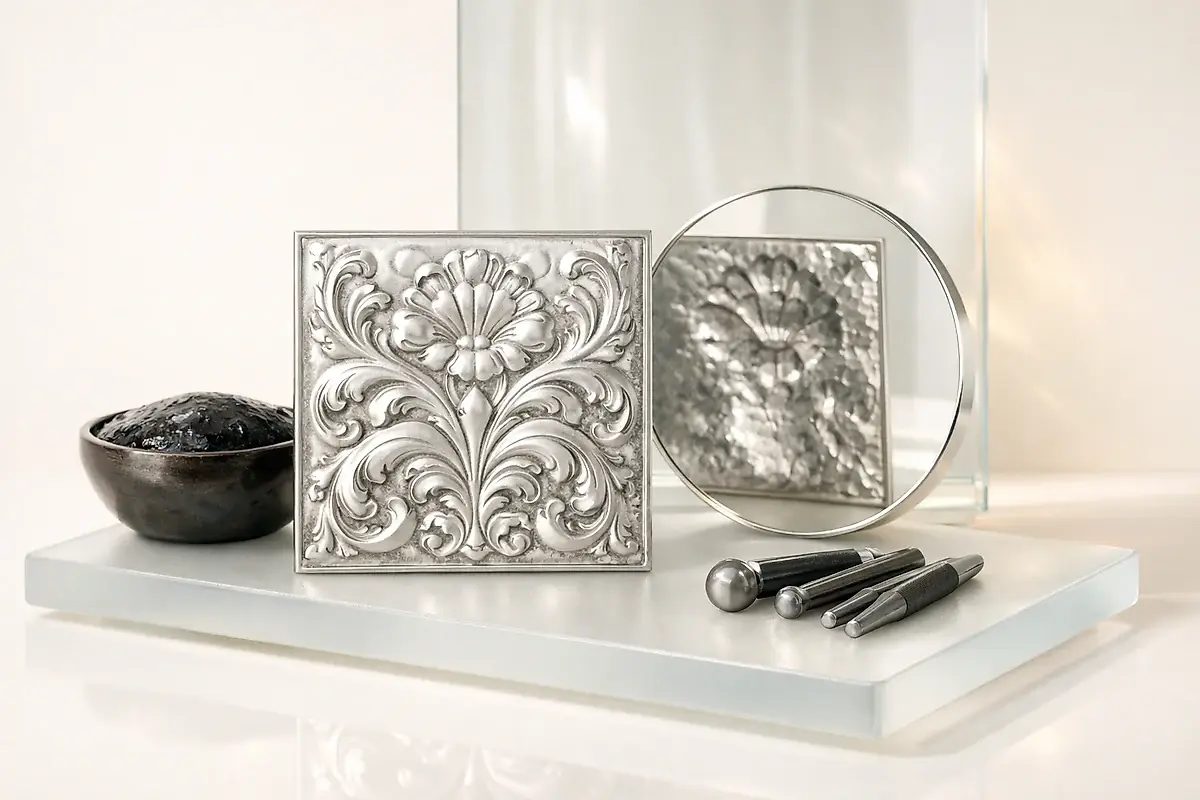
Repoussé is an ancient metalworking technique in which a design is pushed out from the reverse side of the surface, creating a three-dimensional relief. The name comes from the French repousser – “to push out.” A thin sheet of silver, copper, or gold is placed on a soft backing (resin, leather, lead), and the craftsman carefully hammers out the contour from the back using special punches, creating an elegant image on the front side.
This technique was especially prized in the Middle Ages and the Renaissance: chased icons, chalices, and armor were adorned with luxurious relief. Repoussé required a filigree sense of the metal – a mechanical mistake could ruin the entire piece. Sometimes craftsmen even “talked” to the metal, believing that it “breathed” under the hammer.
Today, repoussé is used not only by jewelers but also by decorative artists, who create panels, bas-reliefs, and modern sculptures.