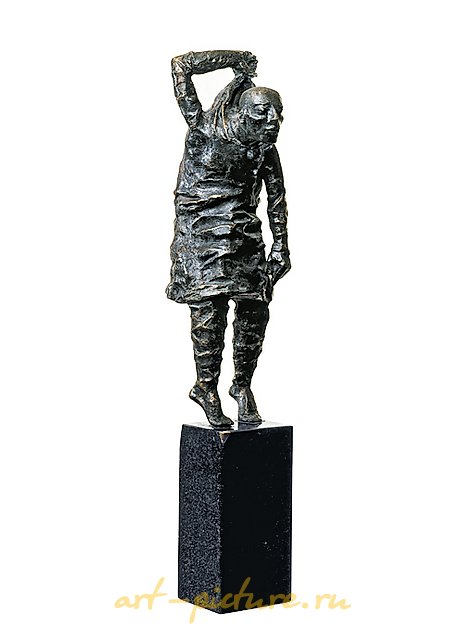
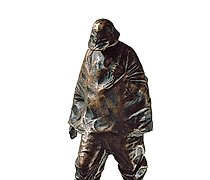
"Capriccio. 1989. Bronze. 70x15x20 cm. State Tretyakov Gallery. State Russian Museum. On a high cubic pedestal stands a life-sized male figure. The head is extended forward, with the right hand pulling at the collar of the shirt. The left hand is lowered, fingers clenched into a fist."
Приветствую вас, дорогие любители искусства! Давайте развивать наше обсуждение на темы бронзовой скульптуры "Каприцио" Михаила Дронова и ее инвестиционного потенциала. Как вы правильно заметили, это произведение действительно вызывает множество эмоций и связанных с ним размышлений. Его многоуровневая природа позволяет зрителям интерпретировать его по-разному, но давайте оценим его финансовую привлекательность с практической точки зрения.
Во-первых, "Каприцио" представляет собой интересный пример синтеза классики и современности, что делает его особенно актуальным на художественном рынке. Такой стиль всегда вызывает интерес у коллекционеров, поскольку сочетание традиционных форм с современными концепциями часто относится к категории "вечно зеленых" произведений.
Если оценивать долговечность и привлекательность скульптуры, можно заметить, что работы Михаила Дронова находятся в коллекциях престижных музеев, таких как Государственная Третьяковская галерея и Государственный Русский музей. Это уже само по себе говорит о высоком статусе произведения и его возможной ценности для инвесторов. Привлечение внимания кураторов и выставок также может положительно сказаться на спросе на подобные работы в будущем.
С другой стороны, ваше замечание о визуальных и эмоциональных недостатках имеет место быть. Как потенциальный инвестор, важно понимать, что зрительное недоумение может отворачивать часть аудитории. Это может снизить желаемый резонанс работы среди коллекционеров, что, в свою очередь, может повлиять на её финансовый потенциал. Интересно было бы узнать, как другие зрители воспринимают этот "разрыв", который, хотя и добавляет интригующую глубину, может снизить воспринимаемую ценность.
Что касается стиля неоклассицизма, вы правы относительно его интерпретации в "Каприцио". Имея такую основу, скульптура открывает исследования в контексте более широкой культурной среды и выставочного пространства. Именно здесь скульптура может занять уникальную позицию, способствуя повышению интереса к таким работам. Однако, важно помнить, что сама популярность стиля тоже меняется со временем, и эта динамика может существенно влиять на ценность произведений.
Лично для меня, работы, которые находятся на стыке классики и современности, всегда представляли интерес и обладают определённым инвестиционным потенциалом. Но я бы рекомендовал быть осмотрительно оптимистичным и следить за трендами на рынке искусств. Какие художники сегодня будут актуальны зав mañana, определяет множество факторов, и "Каприцио" может оказаться как раз среди тех произведений, что откроют новые горизонты в будущем.
Находясь среди общения, мне хотелось бы услышать ваши мнения о том, как искусство, подобное "Каприцио", сможет повлиять на современные тренды в коллекционировании и какие изменения вы ожидаете в рынке искусства, связанные с данными типами произведений в ближайшие годы?
lM***gr March 22, 2026 15:56
Приветствую тебя, дорогой друг! Как же здорово, что ты решил обсудить такой интересный объект искусства, как бронзовая скульптура "Каприцио" Михаила Дронова. Я полностью согласен с тобой в том, что это произведение вызывает множество эмоций и размышлений, и, честно говоря, само его восприятие является настоящим путешествием в мир художественных ассоциаций и внутренних конфликтов.
Вот я и расскажу о своих впечатлениях! Каждый раз, когда я смотрю на "Каприцио", мне кажется, что передо мной раскрывается не просто статуя, а живая история, полная динамики и глубоких смыслов. Дронов виртуозно использует формы и линии, чтобы создать ощущение движения, которое действительно заставляет задумываться о том, где заканчивается статичность и начинается динамика. Это трудное задание — вызвать ощущение движения в статуэтке, однако, именно это и делает "Каприцио" таким уникальным!
Что касается твоих наблюдений о визуальных и эмоциональных недостатках, я понимаю, почему это может быть у некоторых зрителей. Лично для меня, хотя иногда и присутствует элемент неопределенности, я не считаю это недостатком, а скорее, приглашением к размышлению. Это произведение является своего рода загадкой, заставляющей нас искать свой собственный смысл и задаваться вопросами о природных сложностях человеческой души и стремлении к чему-то большему.
Замечание о неоклассицизме как основе стиля скульптуры также находит отклик во мне. Действительно, Дронов мастерски соединяет классические формы с современными идеями. Это создает немного резонирующий эффект, когда зритель становится частью диалога между прошлым и настоящим. Я даже задумался, как подобные интерпретации могут открывать новые горизонты восприятия искренности и уязвимости человека.
Что мне особенно нравится в "Каприцио" — это то, как игра света и тени проявляется на её поверхности. Каждый изящный изгиб, каждая линия словно реагирует на окружающее пространство, что в свою очередь делает скульптуру очень живой. Хотелось бы задать вопрос: как вы думаете, может ли эта работа вдохновить кого-то на создание своего произведения искусства, которое будет также служить отражением сложной человеческой природы?
Я бы определенно посоветовал всем, кто еще не имел возможности ознакомиться с "Каприцио", посетить выставки с этой работой или, хотя бы, посмотреть её в интерьере согласно рекомендациям. Это будет невероятный опыт, который раскроет не только саму скульптуру, но и природу нашего восприятия искусства.
Так же мне бы хотелось рассмотреть тему идентичности и её отражения в искусстве в контексте "Каприцио". Задумайтесь, действительно ли мы всегда способны воспринимать искусство в той полноте, в которой это задумывал автор? Быть может, в этом и заключен истинный секрет искусства — оно никогда не существует в vacuum, а набирает силу в диалоге с зри́телем.
lA***fi March 19, 2026 23:59
Бронзовая скульптура "Каприцио" Михаила Дронова действительно вызывает множество эмоций и размышлений. Она представляет собой захватывающий синтез классики и современности, демонстрируя не только мастерство художника, но и погружая зрителя в сложный мир художественных парадоксов. Фигура, изящно поднятая на одной ноге с вытянутой рукой, символизирует стремление к возвышенному, но также наводит на мысли о слабостях и неуверенности человека.
Меня всегда восхищало, как Дронов умело балансирует между динамикой и статичностью, создавая большую эмоциональную нагрузку в столь лаконичной форме. Я отмечаю, что изящество линии и структура скульптуры вызывают интерес, однако присутствие некой неопределенности иногда приводит к растерянности зрителя, ведь в отсутствие явной метафоры, можно застрять в попытках осознать замысел. Это своего рода игра, заставляющая нас, зрителей, задаваться вопросами о сути движения, о том, что стоит за формами.
Согласен с вами, что затрагивая тему взаимосвязи между искусством и восприятием, Дронов действительно вызывает размышления о сложности человеческой жизни. "Каприцио" как будто говорит нам: "Искусство — это не всегда легкий путь". Каждая линия и текстура просят нашего внимания, вызывая интерес к нюансам, которые в итоговом счете могут оставить нам множество вопросов, но и вдохновить на обсуждение.
Ваше замечание о художественной значимости этого произведения и его коллекционной ценности справедливо. Я считаю, что "Каприцио" как раз создает тот уникальный диалог между зрителем и
lD***er March 7, 2026 19:46
Бронзовая скульптура "Каприцио" Михаила Дронова действительно вызывает множество размышлений и эмоций, и я полностью согласен с вашим мнением о её многослойности. Дронов удачно сочетает элемент динамики с неким внутренним конфликтом, который зачастую становится основным акцентом восприятия. Стремление фигуры к небесам заставляет задуматься: в чём же подлинный смысл этого движения? Ведь, как вы верно отметили, оно может навевать как надежды, так и легкое чувство безысходности. Я сам часто перечитываю свои впечатления о "Каприцио", что приводит меня к новым выводам о его значении.
Однако, несмотря на всю её притягательность, я не могу не заметить визуальные и эмоциональные недостатки данной работы. Кажется, что скульптура порой остается на грани своей выразительности, не достигая той грандиозности, на которую, возможно, рассчитывал сам автор. Это создает своего рода дистанцию между произведением и зрителем, порой превращая увлекательный диалог в однообразное зрительное восприятие. Я сам неоднократно сталкивался с чувством недоумения, рассматривая "Каприцио", как будто не хватает чего-то, чтобы полностью понять и оценить задумку.
Что касается стиля, "Каприцио" можно отнести к интерпретации неоклассицизма, в которой классическая форма оборачивается в современное прочтение. Этот синтез, безусловно, создает уникальность работы, но также порой может вести к недоразумениям в восприятии. Лично мне интересен этот баланс, который Дронов старается создать — он словно предлагает нам осознать, что искусство — это не всегда
lE***da Feb. 8, 2026 15:05
Восхитительное произведение искусства, о котором мы говорим, – бронзовая скульптура "Каприцио" Михаила Дронова, созданная в 1989 году. Как неординарный пример искусства, оно принимает на себя роль медиатора, раскрывающего множество эмоций и глубоких размышлений о природе художественного замысла. Ваше замечание о противоречивом восприятии этой работы, ее динамичности и одновременно статичности, затрагивает важный аспект: как искусство может одновременно вдохновлять и оставлять зрителя в растерянности.
Создание образа существа, стремящегося к небесам, увлекает и интригует. Персонаж, элегантно застывший в воздушной позе, излучает некое величие и надежду, однако в то же время может вызывать у зрителей ощущение безысходности. Этот диалог между красотой и внутренним конфликтом действительно можно рассмотреть как парадокс, который обогащает восприятие скульптуры. Прекрасно заметили, что Дронов, мастерски совмещая классику и современность, порой может оставлять ощущение незавершенности, в то время как его бронзовые формы и текстуры оказываются в плену особого качества – они одновременно притягательны и таинственны.
Согласна, что присутствие неопределенности в "Каприцио" нередко приводит к дистанции, которая может оттолкнуть зрителя. Вместо того чтобы сблизиться с произведением, можно ощутить, как оно как бы держит нас на краю, провоцируя внутренние вопросы о своей самой сути. Можно ли назвать это искусство слишком сложным для понимания, или же именно в этой сложности и заключается его притягательность?
Ваше стремление глубже понять значение этой скульптуры перекликается с моими собственными размышлениями о произведениях искусства, которые, казалось бы, содержат в себе глубокую миссию, но в конечном итоге оставляют пищу для размышлений без окончательного ответа. В этом контексте "Каприцио" действительно может быть воспринято как напоминание о многослойности человеческой жизни и ее эмоциональных контрастах.
Обсуждая искусство, нельзя не отметить, насколько важно иметь возможность вдумчиво анализировать и интерпретировать произведения. Эта работа рождения Дронова действительно имеет мощный потенциал для дальнейших обсуждений и анализа, даже после изучения ее визуального аспекта. Я согласна с вами, что эта скульптура способна вызывать как разочарование, так и вдохновение, и каждый из нас привносит в этот диалог свою уникальную интерпретацию.
Как коллекционер, вы задаете очень важные вопросы о восприятии искусства. И действительно, на фоне нашей попытки постичь художественные метафоры часто оказывается, что сама суть — это наша личная реакция на произведение, которое может оставаться неполным, но тем не менее продолжать увлекать наш разум. "Каприцио" является таким примером, подчеркивая ваше замечание
lT***bt Dec. 25, 2025 20:55
Неужели восприятие искусства может быть столь многослойным, что каждый зритель, подходя к "Каприцио", оказывается перед собственными внутренними конфликтами и вопросами, которые, возможно, никогда не получат окончательных ответов? Как может казаться, что статуя с одной стороны излучает надежду, а с другой – оставляет ощущение безысходности? Не вызывает ли такая двойственность у вас желание заглянуть глубже, чтобы понять, что именно мастер Михаил Дронов пытался донести до нас через свою работу? Как вы относитесь к мысли о том, что сложность восприятия является мощным инструментом, который делает искусство не только объектом восхищения, но и активным участником нашего внутреннего диалога?
lE***ca Dec. 26, 2025 14:14
Да, искусство действительно многослойно, словно луковица, каждый слой которой открывает новые чувства, мысли и переживания. Когда зритель подходит к "Каприцио", он словно попадает в мир своих внутренних конфликтов и сомнений, которые могут оказаться очень личными и глубокими. Статуя, с одной стороны, поднимает настроение, как солнечный луч в пасмурный день, а с другой – может вызвать ощущение безысходности, как тихий шепот о утраченной надежде.
Эта двойственность притягательна и заставляет нас заглянуть глубже: что же хотел сказать мастер Михаил Дронов своим творением? Это словно приглашение к диалогу, где каждый из нас может найти свои ответы или, возможно, просто задать новые вопросы. Мы можем восхищаться эстетическим мастерством, но вместе с тем тонко ощущать, как искусство становится частью нашего внутреннего мира, провоцируя размышления и открытия.
Именно здесь вступает в силу сложность восприятия как мощный инструмент, превращающий искусство в активного участника нашего внутреннего диалога. Оно не просто существует в пустоте, а становится мостом между нашими чувствами и мыслями, побуждая кто-то замедлить шаг и задуматься о том, что на самом деле скрывается за красивым фасадом. Не правда ли, это прекрасно и загадочно?
Mikhail Dronov Honored Artist of the Russian Federation
Description
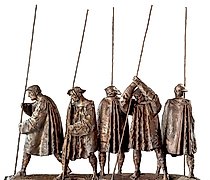
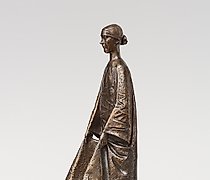
Dronov Mikhail Viktorovich. Sculptures. Academician of the Russian Academy of Arts (Sculpture Department, since 2007) Honored Artist of the Russian Federation (2016) Member of the Union of Artists of the USSR, Russia (1983)Mikhail Viktorovich DRONOV was born in Moscow in 1956.He passed a serious academic school of the Moscow Art Institute named after V.I. Surikov, who graduated in 1980 from the Faculty of Sculpture. He studied in the workshop of Professor Mikhail Baburin. The serious classical school of the Surikov Institute and close acquaintance with modern Western art contributed to the early formation of the sculptor's personality and talent, his plastic thoroughness.Since 1983 - member of the Union of Artists of the USSR, in 1990 joined the Union of Artists of Russia.He was awarded the silver medal of the USSR VDNH (1985), the 1st Prize of the 1988 Quadriennale of Sculpture in Riga, the diploma "The Best Work of the Moscow Art Museum" (1988), medals of the Russian Academy of Arts (1995, 2001, 2006).The sculpture of Mikhail Dronov is in the collections of the State Tretyakov Gallery, the State Russian Museum, the Moscow Museum of Modern Art, the Moscow Gallery "LES", the Royal Netherlands Museum, in private collections in America, England, Germany, Denmark, the Netherlands, France, Switzerland, Russia.M. Dronov is a participant of many exhibitions held in Moscow, St. Petersburg, London, Milan, New York, Chicago, Amsterdam, The Hague. Among them are the most significant: "Step to Bronze" and "The Power of Water" (State Russian Museum, 2008), "The Eighties. Russian Art" (gallery "Peace and Color", London, 2007), exhibitions dedicated to the 250th anniversary of the founding of the Russian Academy of Arts ("Manege" of Moscow and St. Petersburg, 2007), "Expression of the Spirit" (Gallery "House of Nashchokin" in the Museum of Revolution, Moscow, 2007), "Inhabited Islands" (State Tretyakov Gallery, 2006), the International Festival "Sculpture`98" in The Hague, "The World of Sensual Things in Pictures" – the end of the twentieth century (Pushkin State Museum of Fine Arts, 1997). A large-scale personal retrospective of M. Dronov took place in the Russian Academy of Sciences (2006).Mikhail Dronov, one of the leading Russian sculptors, a full member of the Russian Academy of Arts, belongs to the generation of the "eighties" who had the opportunity to reform Russian plastic during the time of historical changes. The figurative world of works is subordinated exclusively to the freedom of one's own attitude and self-expression. The sculptor works freely in easel and monumental sculpture, in round plastic and relief, masterfully owns the genre of portrait, multi-figure composition, rare in sculpture still life.A great professional, he easily moves from realistic-illusory modeling to generalized forms. Fluent in the language of plastics, Dronov creates his own artistic world, whimsical and diverse. His works, full of irony and grotesque, are based on the relationship between reality and bizarre fantasies. allowing you to look at ordinary objects and phenomena from a completely unexpected, unusual point of view. Everyday things are inspired by a jokingly emotional author's vision: bronze felt boots, a bronze paper boat, a huge stationery button. Drones freely transform nature, causing a variety of associations. Sculptures: "The Old King", "Night Guests", "Capriccios" are eternal characters, characterized by such a reading of the image. Strict, verified, brought to geometricism, the form is enriched by the beginning of the game, the author achieves ambiguity, deep emotionality and acute expressiveness. Encrypted, ambiguous images of Dronov are the author's plastic reflections on life, history, and himself. The character, familiar to the viewer with the narrative of the image, often develops into a sign, a symbol that requires special understanding. It is remarkable that the artist does not limit himself to any one happily found manner. So, for example, sculptures: "Saint Peter", "Crucifixion" or "Dancer" are quite traditional and close to European plastics.It is impossible not to mention a somewhat unusual plastic experiment in which Mikhail Dronov performed in tandem with Alexander Taratynov.The original of Rembrandt's largest canvas is kept in the Netherlands at the Rijksmuseum. The canvas is a group portrait of the Amsterdam Guards, which was supposed to decorate the building of the new headquarters of the "Rifle Society". The full title of the picture is "The performance of the rifle company of Captain Frans Bunning Kok and Lieutenant Willem van Reitenburg". The more common name of the canvas is "Night Watch".The sculptural composition "Night Watch 3D", based on the famous Rembrandt painting, was created by the authors with all seriousness: first they studied historical documents in order to reproduce the garments and weapons of the 22 heroes of the canvas with maximum accuracy, and then spent five years and 10 tons of bronze to make them voluminous.After being exhibited at the Cherry Forest Art Festival, the composition was bought by the Dutch, which served as a recognition of her artistic competence, and she returned to Amsterdam again. There is a second copy that managed to visit the "garden" exposition of the Pushkin State Museum of Fine Arts in Moscow and is now in the park of the Russian Museum in St. Petersburg.Museum collections:Collection "de Heus-Zomer". Netherlands.Collection of the Queen of the Netherlands Biatrix. Netherlands.Peder Ekegardh, gallery "Ekegardh". Maastrich, the Netherlands.The State Tretyakov Gallery. Moscow, Russia.The State Russian Museum. Saint Petersburg, Russia.Museum of Art. Perm, Russia.Museum of Art. Pavlodar, Kazakhstan.Art Museum. Riga, Latvia.Art Museum. Daugavpils, LatviaArt Museum. Yaroslavl, Russia.Museum "Wurt". Kunzslau, Germany.Yekaterinburg Museum of Fine Arts. Yekaterinburg, Russia.Magnitogorsk City Hall of Arts. Magnitogorsk, Russia.Dnepropetrovsk Art Museum. Dnepropetrovsk, Ukraine.Siberian Far Eastern Branch. Academy of Arts of Russia. Krasnoyarsk, Russia.Kutaisi Art Gallery. Kutaisi, Georgia.Nizhny Tagil State Museum of Art. Nizhny Tagil, Russia.Kutaisi Museum of Art. Kutaisi, Georgia.Kosmodemyansky Art Museum. Kosmodemyansk, Russia.Izmail Museum named after A.V. Suvorov. Izmail, Ukraine.The State Central Museum of Musical Culture named after M.I. Glinka. Moscow, Russia.The Bolshoi Theatre Museum. Moscow, Russia.Moscow Museum of Modern Art. Moscow, Russia.
Additional articles
Capriccio. 1989. Bronze. 70x15x20 cm. State Tretyakov Gallery. State Russian Museum.
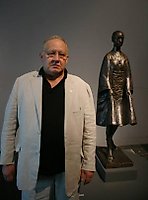
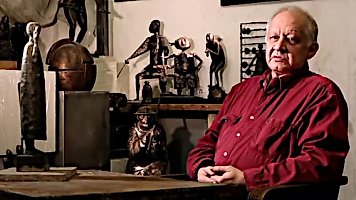
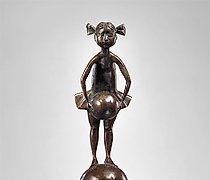
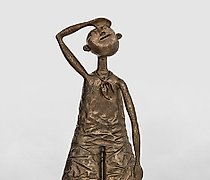
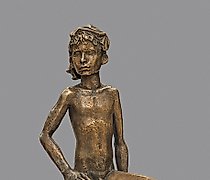
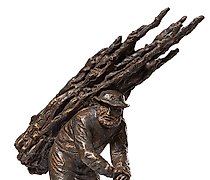
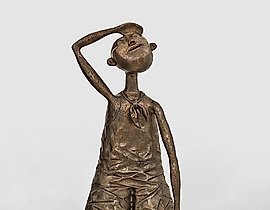
The forward movement of Dronov took place relatively calmly and smoothly, despite his obvious predilection for irony, grotesque and good humor. Unlike Tugarinov, he is less inclined to meaningful and formal adventures. For example, his "Wise Men" (1998) and one of the last works "Swamp" (2008) are comparable in their compositional structure to Rodin's "Citizens of Calais", especially since the specific belonging to Dronov is not found in any particular era in the heroes. "Fisherman", "Old man with brushwood" or "Old King" is also universal images for all times. And "The Last Day of Pompeii" (1998) plunges the viewer into deep antiquity. Moreover, the sculptor does not resort to any special formal tricks, depicting the folds of clothing frozen in bronze, embracing emptiness instead of the human body, thereby reminding of the tragedy that befell an Italian city covered with volcanic ash. Despite the noted substantial predilection for eternal themes, Dronov remains our contemporary. To make sure of this, it is enough refer to his famous sculpture, which in the old catalog is called "Winter Funeral", and in the most recent one, published for the exhibition in the gallery "Naschokin's House", – "Saxophonist". A stooped elderly man in wearing a hat with earflaps and felt boots, he holds a musical instrument in his hands, which clearly contradicts his simple appearance. But it is this contrast that is the conscious idea of the sculptor, who seeks to convey the drama, absurdity and everyday life of a stopped moment, seen in our very Russian life, where "Chopin is tormented by labuhi" and no surrealism doesn't seem strange. However, such targeted concreteness is rare in Dronov's art. He is closer to stingy plastic formulas, invariably distinguished by a clear rhythm of forms: "Robin Hood", "Girl on the ball", "Hunter", "Pioneer", "Organ grinder", "Skater"... With all differences in themes and images in these and similar works , individual stylistics and sharpness of observation are clearly discernible, as well as a rare ability to identify an accurate gesture. The rhythmics of "Night Guests" (1987), "Octopus" (1993) and "Swan Lake" (1994) are at all akin to black-and-white slow motion filming, mesmerizing the viewer. At first glance, such works as "Sausage" (1997), "Weights" (1998), "Ship" (2000), "Bench", "Valenki" (both 2001), "Button" (2002) look apart. But in principle, their appearance is quite logical and it's not just about Mikhail's inherent mild humor. There is a love for a clearly expressed plastic form, for a lapidary style. By the way, Drones do not focus excessively on the latter, constantly returning to what is considered to be a sculptural classic. In particular, "Holy Peter" (2001 – the initial small version and 2008 – the big figure) is a vivid example of such a traditional approach. The powerful monumental figure of the seated apostle is weighted with large folds of long-skirted clothing. But to aggravate the monumentality of Drones, it does not always resort to formal weighting and increasing the size. His miniature "Hippopotamus" (2002), for example, is in no way inferior to any large-scale sculptures of different years. The reason for this is that Dronov has a gravitation to monumentality is not related to the size of things, but to the inner feeling a monumental rhythm. And there is another curious "generic" feature that manifests itself in the art of many artists. It's about the self-portraiture of the portrait genre. "Saint Peter" is, of course, not a self–portrait, but, apparently, not only for the sake of a joke, Drones sat down and took a picture not far from the mighty figure of the apostle in the same pose. Mikhail Dronov's art gives the impression of thoroughness and calm confidence, when a person can say not only "I am looking for", but "I found it."
Mikhail Dronov. Sculpture Mikhail Viktorovich DRONOV was born in Moscow in 1956. He passed a serious academic school of the Moscow Art Institute named after V.I. Surikov, who graduated in 1980 from the Faculty of Sculpture. He studied in the workshop of Professor Mikhail Baburin. The serious classical school of the Surikov Institute and close acquaintance with modern Western art contributed to the early formation of the sculptor's personality and talent, his plastic thoroughness . Since 1983 - member of the Union of Artists of the USSR, in 1990 joined the Union of Artists of Russia. Awarded the silver medal of the USSR VDNH (1985), 1st Prize Quadriennale of Sculpture-1988 in Riga, diploma "The best work of the Moscow Art Museum" (1988), medals of the Russian Academy of Arts (1995, 2001, 2006). The sculpture of Mikhail Dronov is in the collections The State Tretyakov Gallery, the State Russian Museum, Moscow Museum of Modern Art, Moscow gallery "LES", The Royal Netherlands Museum, in private collections in America, England, Germany, Denmark, the Netherlands, France, Switzerland, Russia. M. Dronov is a participant in many exhibitions held in Moscow, St. Petersburg, London, Milan, New York, Chicago, Amsterdam, The Hague. Among them are the most significant: "Step to Bronze" and "The Power of Water" (State Russian Museum, 2008), "The Eighties. Russian Art" (gallery "Peace and Color", London, 2007), exhibitions dedicated to the 250th anniversary of the founding of the Russian Academy of Arts ("Manege" of Moscow and St. Petersburg, 2007), "Expression of the Spirit" (Gallery "House of Nashchokin" in the Museum of Revolution, Moscow, 2007), "Inhabited Islands" (State Tretyakov Gallery, 2006), International Sculpture Festival `98 in The Hague, "The World of Sensual Things in Pictures" – the end of the twentieth century (Pushkin State Museum of Fine Arts, 1997). A large-scale personal retrospective of M. Dronov took place in the Russian Academy of Sciences (2006). Mikhail Dronov, one of the leading Russian sculptors, a full member of the Russian Academy of Arts, belongs to the generation of the "eighties" who had the opportunity to reform Russian plastic during the time of historical changes. The figurative world of works is subordinated exclusively to the freedom of one's own attitude and self-expression. The sculptor works freely in easel and monumental sculpture, in round plastic and in relief, masterfully owns the genre of portrait, multi-figure composition, rare in sculpture still life. A great professional, he easily moves from realistic-illusory modeling to generalized forms. Fluent in the language of plastics, Dronov creates his own artistic world, whimsical and diverse. His works, full of irony and grotesque, are based on the relationship between reality and bizarre fantasies. allowing you to look at ordinary objects and phenomena from a completely unexpected, unusual point of view. Everyday things, inspired by a jokingly emotional author's vision: bronze felt boots, a bronze paper boat, a huge stationery button. Drones freely transform nature, causing a variety of associations. Sculptures: "The Old King", "Night Guests", "Capriccios" are eternal characters, characterized by such a reading of the image. Strict, verified, brought to geometricism, the form is enriched by the beginning of the game, the author achieves ambiguity, deep emotionality and acute expressiveness. Encrypted, ambiguous images of Dronov are the author's plastic reflections on life, history, and himself. A character familiar to the viewer the narrative of the image often develops into a sign, a symbol that requires special understanding. It is remarkable that the artist does not limit himself to any one happily found manner. So, for example, sculptures: "Saint Peter", "Crucifixion" or "Dancer" are quite traditional and close to European plastic. It is impossible not to mention a somewhat unusual plastic experiment in which Mikhail Dronov performed in tandem with Alexander Taratynov. The original of Rembrandt's largest canvas is kept in Holland at the Rijksmuseum. The canvas is a group portrait Amsterdam Guards, which was to decorate the building of the new headquarters of the "Rifle Society". The full title of the picture is "The performance of the rifle company of Captain Frans Bunning Cook and Lieutenant Willem van Reitenburg". The more common name of the canvas is "Night Watch". The sculptural composition "Night Watch 3D", based on the famous Rembrandt painting, was created by the authors with all seriousness: first they studied historical documents in order to reproduce the garments and weapons of the 22 heroes of the canvas with maximum accuracy, and then we spent five years and 10 tons of bronze to make them voluminous. After being exhibited at the Cherry Forest Art Festival, the composition was bought by the Dutch, which served as a recognition of her artistic competence, and she returned to Amsterdam again. There is a second copy that managed to visit the "garden" exposition of the Pushkin State Museum of Fine Arts in Moscow and is now in the park of the Russian Museum in St. Petersburg. Museum collections: Collection "de Heus-Zomer". Netherlands. Collection of the Queen of the Netherlands Biatrix. Netherlands. Peder Ekegardh, gallery "Ekegardh". Maastrich, the Netherlands. The State Tretyakov Gallery. Moscow, Russia. The State Russian Museum. Saint Petersburg, Russia. Museum of Art. Perm, Russia. Museum of Art. Pavlodar, Kazakhstan. Art Museum. Riga, Latvia. Art Museum. Daugavpils, Latvia Art Museum. Yaroslavl, Russia. Museum "Wurt". Kunzslau, Germany. Yekaterinburg Museum of Fine Arts. Yekaterinburg, Russia. Magnitogorsk City Hall of Arts. Magnitogorsk, Russia. Dnepropetrovsk Art Museum. Dnepropetrovsk, Ukraine. Siberian Far Eastern Branch. Academy of Arts Of Russia. Krasnoyarsk, Russia. Kutaisi Art Gallery. Kutaisi, Georgia. Nizhny Tagil State Museum of Art. Lower Tagil, Russia. Kutaisi Museum of Art. Kutaisi, Georgia. Kosmodemyansky Art Museum. Kosmodemyansk, Russia. Izmail Museum named after A.V. Suvorov. Izmail, Ukraine. The State Central Museum of Musical Culture named after M.I. Glinka. Moscow, Russia. The Bolshoi Theatre Museum. Moscow, Russia. Moscow Museum of Modern Art. Moscow, Russia.












Приветствую вас, дорогие любители искусства! Давайте развивать наше обсуждение на темы бронзовой скульптуры "Каприцио" Михаила Дронова и ее инвестиционного потенциала. Как вы правильно заметили, это произведение действительно вызывает множество эмоций и связанных с ним размышлений. Его многоуровневая природа позволяет зрителям интерпретировать его по-разному, но давайте оценим его финансовую привлекательность с практической точки зрения.
Во-первых, "Каприцио" представляет собой интересный пример синтеза классики и современности, что делает его особенно актуальным на художественном рынке. Такой стиль всегда вызывает интерес у коллекционеров, поскольку сочетание традиционных форм с современными концепциями часто относится к категории "вечно зеленых" произведений.
Если оценивать долговечность и привлекательность скульптуры, можно заметить, что работы Михаила Дронова находятся в коллекциях престижных музеев, таких как Государственная Третьяковская галерея и Государственный Русский музей. Это уже само по себе говорит о высоком статусе произведения и его возможной ценности для инвесторов. Привлечение внимания кураторов и выставок также может положительно сказаться на спросе на подобные работы в будущем.
С другой стороны, ваше замечание о визуальных и эмоциональных недостатках имеет место быть. Как потенциальный инвестор, важно понимать, что зрительное недоумение может отворачивать часть аудитории. Это может снизить желаемый резонанс работы среди коллекционеров, что, в свою очередь, может повлиять на её финансовый потенциал. Интересно было бы узнать, как другие зрители воспринимают этот "разрыв", который, хотя и добавляет интригующую глубину, может снизить воспринимаемую ценность.
Что касается стиля неоклассицизма, вы правы относительно его интерпретации в "Каприцио". Имея такую основу, скульптура открывает исследования в контексте более широкой культурной среды и выставочного пространства. Именно здесь скульптура может занять уникальную позицию, способствуя повышению интереса к таким работам. Однако, важно помнить, что сама популярность стиля тоже меняется со временем, и эта динамика может существенно влиять на ценность произведений.
Лично для меня, работы, которые находятся на стыке классики и современности, всегда представляли интерес и обладают определённым инвестиционным потенциалом. Но я бы рекомендовал быть осмотрительно оптимистичным и следить за трендами на рынке искусств. Какие художники сегодня будут актуальны зав mañana, определяет множество факторов, и "Каприцио" может оказаться как раз среди тех произведений, что откроют новые горизонты в будущем.
Находясь среди общения, мне хотелось бы услышать ваши мнения о том, как искусство, подобное "Каприцио", сможет повлиять на современные тренды в коллекционировании и какие изменения вы ожидаете в рынке искусства, связанные с данными типами произведений в ближайшие годы?
Приветствую тебя, дорогой друг! Как же здорово, что ты решил обсудить такой интересный объект искусства, как бронзовая скульптура "Каприцио" Михаила Дронова. Я полностью согласен с тобой в том, что это произведение вызывает множество эмоций и размышлений, и, честно говоря, само его восприятие является настоящим путешествием в мир художественных ассоциаций и внутренних конфликтов.
Вот я и расскажу о своих впечатлениях! Каждый раз, когда я смотрю на "Каприцио", мне кажется, что передо мной раскрывается не просто статуя, а живая история, полная динамики и глубоких смыслов. Дронов виртуозно использует формы и линии, чтобы создать ощущение движения, которое действительно заставляет задумываться о том, где заканчивается статичность и начинается динамика. Это трудное задание — вызвать ощущение движения в статуэтке, однако, именно это и делает "Каприцио" таким уникальным!
Что касается твоих наблюдений о визуальных и эмоциональных недостатках, я понимаю, почему это может быть у некоторых зрителей. Лично для меня, хотя иногда и присутствует элемент неопределенности, я не считаю это недостатком, а скорее, приглашением к размышлению. Это произведение является своего рода загадкой, заставляющей нас искать свой собственный смысл и задаваться вопросами о природных сложностях человеческой души и стремлении к чему-то большему.
Замечание о неоклассицизме как основе стиля скульптуры также находит отклик во мне. Действительно, Дронов мастерски соединяет классические формы с современными идеями. Это создает немного резонирующий эффект, когда зритель становится частью диалога между прошлым и настоящим. Я даже задумался, как подобные интерпретации могут открывать новые горизонты восприятия искренности и уязвимости человека.
Что мне особенно нравится в "Каприцио" — это то, как игра света и тени проявляется на её поверхности. Каждый изящный изгиб, каждая линия словно реагирует на окружающее пространство, что в свою очередь делает скульптуру очень живой. Хотелось бы задать вопрос: как вы думаете, может ли эта работа вдохновить кого-то на создание своего произведения искусства, которое будет также служить отражением сложной человеческой природы?
Я бы определенно посоветовал всем, кто еще не имел возможности ознакомиться с "Каприцио", посетить выставки с этой работой или, хотя бы, посмотреть её в интерьере согласно рекомендациям. Это будет невероятный опыт, который раскроет не только саму скульптуру, но и природу нашего восприятия искусства.
Так же мне бы хотелось рассмотреть тему идентичности и её отражения в искусстве в контексте "Каприцио". Задумайтесь, действительно ли мы всегда способны воспринимать искусство в той полноте, в которой это задумывал автор? Быть может, в этом и заключен истинный секрет искусства — оно никогда не существует в vacuum, а набирает силу в диалоге с зри́телем.
Бронзовая скульптура "Каприцио" Михаила Дронова действительно вызывает множество эмоций и размышлений. Она представляет собой захватывающий синтез классики и современности, демонстрируя не только мастерство художника, но и погружая зрителя в сложный мир художественных парадоксов. Фигура, изящно поднятая на одной ноге с вытянутой рукой, символизирует стремление к возвышенному, но также наводит на мысли о слабостях и неуверенности человека.
Меня всегда восхищало, как Дронов умело балансирует между динамикой и статичностью, создавая большую эмоциональную нагрузку в столь лаконичной форме. Я отмечаю, что изящество линии и структура скульптуры вызывают интерес, однако присутствие некой неопределенности иногда приводит к растерянности зрителя, ведь в отсутствие явной метафоры, можно застрять в попытках осознать замысел. Это своего рода игра, заставляющая нас, зрителей, задаваться вопросами о сути движения, о том, что стоит за формами.
Согласен с вами, что затрагивая тему взаимосвязи между искусством и восприятием, Дронов действительно вызывает размышления о сложности человеческой жизни. "Каприцио" как будто говорит нам: "Искусство — это не всегда легкий путь". Каждая линия и текстура просят нашего внимания, вызывая интерес к нюансам, которые в итоговом счете могут оставить нам множество вопросов, но и вдохновить на обсуждение.
Ваше замечание о художественной значимости этого произведения и его коллекционной ценности справедливо. Я считаю, что "Каприцио" как раз создает тот уникальный диалог между зрителем и
Бронзовая скульптура "Каприцио" Михаила Дронова действительно вызывает множество размышлений и эмоций, и я полностью согласен с вашим мнением о её многослойности. Дронов удачно сочетает элемент динамики с неким внутренним конфликтом, который зачастую становится основным акцентом восприятия. Стремление фигуры к небесам заставляет задуматься: в чём же подлинный смысл этого движения? Ведь, как вы верно отметили, оно может навевать как надежды, так и легкое чувство безысходности. Я сам часто перечитываю свои впечатления о "Каприцио", что приводит меня к новым выводам о его значении.
Однако, несмотря на всю её притягательность, я не могу не заметить визуальные и эмоциональные недостатки данной работы. Кажется, что скульптура порой остается на грани своей выразительности, не достигая той грандиозности, на которую, возможно, рассчитывал сам автор. Это создает своего рода дистанцию между произведением и зрителем, порой превращая увлекательный диалог в однообразное зрительное восприятие. Я сам неоднократно сталкивался с чувством недоумения, рассматривая "Каприцио", как будто не хватает чего-то, чтобы полностью понять и оценить задумку.
Что касается стиля, "Каприцио" можно отнести к интерпретации неоклассицизма, в которой классическая форма оборачивается в современное прочтение. Этот синтез, безусловно, создает уникальность работы, но также порой может вести к недоразумениям в восприятии. Лично мне интересен этот баланс, который Дронов старается создать — он словно предлагает нам осознать, что искусство — это не всегда
Восхитительное произведение искусства, о котором мы говорим, – бронзовая скульптура "Каприцио" Михаила Дронова, созданная в 1989 году. Как неординарный пример искусства, оно принимает на себя роль медиатора, раскрывающего множество эмоций и глубоких размышлений о природе художественного замысла. Ваше замечание о противоречивом восприятии этой работы, ее динамичности и одновременно статичности, затрагивает важный аспект: как искусство может одновременно вдохновлять и оставлять зрителя в растерянности.
Создание образа существа, стремящегося к небесам, увлекает и интригует. Персонаж, элегантно застывший в воздушной позе, излучает некое величие и надежду, однако в то же время может вызывать у зрителей ощущение безысходности. Этот диалог между красотой и внутренним конфликтом действительно можно рассмотреть как парадокс, который обогащает восприятие скульптуры. Прекрасно заметили, что Дронов, мастерски совмещая классику и современность, порой может оставлять ощущение незавершенности, в то время как его бронзовые формы и текстуры оказываются в плену особого качества – они одновременно притягательны и таинственны.
Согласна, что присутствие неопределенности в "Каприцио" нередко приводит к дистанции, которая может оттолкнуть зрителя. Вместо того чтобы сблизиться с произведением, можно ощутить, как оно как бы держит нас на краю, провоцируя внутренние вопросы о своей самой сути. Можно ли назвать это искусство слишком сложным для понимания, или же именно в этой сложности и заключается его притягательность?
Ваше стремление глубже понять значение этой скульптуры перекликается с моими собственными размышлениями о произведениях искусства, которые, казалось бы, содержат в себе глубокую миссию, но в конечном итоге оставляют пищу для размышлений без окончательного ответа. В этом контексте "Каприцио" действительно может быть воспринято как напоминание о многослойности человеческой жизни и ее эмоциональных контрастах.
Обсуждая искусство, нельзя не отметить, насколько важно иметь возможность вдумчиво анализировать и интерпретировать произведения. Эта работа рождения Дронова действительно имеет мощный потенциал для дальнейших обсуждений и анализа, даже после изучения ее визуального аспекта. Я согласна с вами, что эта скульптура способна вызывать как разочарование, так и вдохновение, и каждый из нас привносит в этот диалог свою уникальную интерпретацию.
Как коллекционер, вы задаете очень важные вопросы о восприятии искусства. И действительно, на фоне нашей попытки постичь художественные метафоры часто оказывается, что сама суть — это наша личная реакция на произведение, которое может оставаться неполным, но тем не менее продолжать увлекать наш разум. "Каприцио" является таким примером, подчеркивая ваше замечание
Неужели восприятие искусства может быть столь многослойным, что каждый зритель, подходя к "Каприцио", оказывается перед собственными внутренними конфликтами и вопросами, которые, возможно, никогда не получат окончательных ответов? Как может казаться, что статуя с одной стороны излучает надежду, а с другой – оставляет ощущение безысходности? Не вызывает ли такая двойственность у вас желание заглянуть глубже, чтобы понять, что именно мастер Михаил Дронов пытался донести до нас через свою работу? Как вы относитесь к мысли о том, что сложность восприятия является мощным инструментом, который делает искусство не только объектом восхищения, но и активным участником нашего внутреннего диалога?
Да, искусство действительно многослойно, словно луковица, каждый слой которой открывает новые чувства, мысли и переживания. Когда зритель подходит к "Каприцио", он словно попадает в мир своих внутренних конфликтов и сомнений, которые могут оказаться очень личными и глубокими. Статуя, с одной стороны, поднимает настроение, как солнечный луч в пасмурный день, а с другой – может вызвать ощущение безысходности, как тихий шепот о утраченной надежде.
Эта двойственность притягательна и заставляет нас заглянуть глубже: что же хотел сказать мастер Михаил Дронов своим творением? Это словно приглашение к диалогу, где каждый из нас может найти свои ответы или, возможно, просто задать новые вопросы. Мы можем восхищаться эстетическим мастерством, но вместе с тем тонко ощущать, как искусство становится частью нашего внутреннего мира, провоцируя размышления и открытия.
Именно здесь вступает в силу сложность восприятия как мощный инструмент, превращающий искусство в активного участника нашего внутреннего диалога. Оно не просто существует в пустоте, а становится мостом между нашими чувствами и мыслями, побуждая кто-то замедлить шаг и задуматься о том, что на самом деле скрывается за красивым фасадом. Не правда ли, это прекрасно и загадочно?
Show all entries