
A Porcelain Fate: When Banality Becomes Art
For a long time, this sculptor worked as the chief model-maker at the Imperial Porcelain Factory. Over nearly half a century at the Saint Petersburg enterprise, he created numerous original plastic forms.
The works of August Karl Spiess (1817—1904) span the second half of the 19th century, a period rich in cultural transformation. He received his education at the Berlin Academy of Arts, founded in 1696 by Elector Frederick III. In 1836, leaving his native Stralsund in the northeast of Prussia, the young Spiess arrived in Berlin at the age of nineteen, full of hope. According to the academy's rules, most first-year students were admitted before the age of 17. Speaking of young talents, the respected Professor G. A. Deling noted that by seventeen, young men should have chosen their paths. Spiess, however, passed the competition for the sculpture department on his first try, which was a good start to his academic career. Nevertheless, the grades he earned during his studies and in the first years at the Drawing School indicate that he did not stand out among his peers for any exceptional talent. Eager to improve his skills, from 1845 to 1847 he attended classes in various sculpture sections—the Modellierklasse and the Gipszeichnenklasse. Throughout the entire year from April 1846 to April 1847, he also took Sunday lessons (Bossir-Classe) from sculptor Ludwig Wichmann.
Having completed all the necessary courses at the Academy of Arts, August Spiess ultimately finished his education with average results. The final exam report noted: "He possesses rather ordinary abilities, his skills are not always evident. He has a slight inclination towards applied art. Not much can be expected of him." With this disappointing characterization, he left the Academy.
The circumstances that forced him to look for his place in another country remain unknown. Perhaps he realized that with a reference of "not without ability, but not promising anything outstanding as a sculptor," it would be difficult to find worthy work at home. It is possible his departure was also prompted by the mass emigration mood prevalent in Germany at the time. Indeed, the 1840s saw a migration peak. From 1815 to 1848, over 600,000 people sought a better life and left for America, Canada, New Zealand, and other countries.
Thanks to the strong ties between Russia and Prussia forged during the Napoleonic wars, the Russian empire became an attractive destination for German citizens. From the 18th century, dynastic relationships between the two countries strengthened, and each new German princess who became a Russian empress or grand duchess provided significant help to her compatriots. Germans, following in the footsteps of these royal women, arrived at the Russian court in search of advantageous offers, hoping to make a career and build a new life in a new country.
By the early 19th century, Germans accounted for 12 percent of the officer corps in the Guard regiments, with an even greater presence in higher command. Under Nicholas I, key ministries—foreign affairs, navy, finance, and transportation—were often headed by Russian Germans. A similar staffing situation was seen in state structures as well as in a range of social and cultural spheres. The fate of German migrants was most successful during the Nicolai era. It was during this period, in late winter and early spring of 1847, that A. Spiess set foot in Saint Petersburg.
From his first steps in the Northern capital, the young master's career soared rapidly. It is mistakenly claimed in some sources, such as "The Imperial Porcelain Factory 1744—1904" and T. Becker’s "Artist Lexicon," that Spiess began his Russian journey in 1846. However, considering that the sculptor could not have arrived in St. Petersburg before graduating from the Academy, these sources are contradicted by archival documents, especially the "Attendance Records" of the Academy’s Drawing and Preparatory classes, which confirm that Spiess spent all of 1846 in Berlin.
For two years (1847—1849), while working at the Winter Palace, the young sculptor had the opportunity to immerse himself in Russian culture and appreciate the splendor of world art masterpieces. On May 1, 1849, Spiess was officially appointed a sculptor at the Imperial Porcelain Factory, and just four years later, he was promoted to model-maker, further advancing his professional growth.
The plastic artworks created by August Spiess in the latter half of the 19th century were repeatedly reproduced at the Imperial Porcelain Factory. These works were often included in gift sets, and many of them continued in production even after his departure. Although critics pointed out the "banality" and bright coloration of his porcelains, their continued popularity suggests otherwise. Notably, his career progressed rapidly, earning a significant position at the factory for a sustained period—an achievement beyond even many outstanding masters. Spiess’s success likely stemmed from his talent for "administrative" skills—what we would now call management.
Undoubtedly, he was skillful both as an artist and as a perceptive administrator able to read the tastes and demands of the era. His main concern was fulfilling the needs of clients, particularly the imperial family. Understanding the preferences of Emperor Alexander II and Empress Maria Alexandrovna allowed him to create works that matched their aesthetic desires and way of life. Here, Spiess showed inventiveness and talent, realizing that efficient client interaction, accurate anticipation of contemporary needs, and artistic ideals are key to any artist’s success. It was crucial not simply to follow trends but to interpret them, grasping what resonated with the public.
The artistic styles and narratives that Spiess favored referenced the legacy of the 18th century. His creativity was largely conservative, reflecting traditions of the past rather than seeking new directions. He skilfully drew on motifs popular in earlier ages, suiting both his personal taste and societal demand. His works depicting tender child figures are filled with warmth and care in every detail. Had he worked a century earlier, his talent might have been esteemed even higher. Each figure is not just porcelain, but an echo of feelings and nostalgia for a bygone era.
August Spiess's artistic techniques developed under the influence of outstanding examples of German porcelain, with particular attention to Meissen—at the zenith of European porcelain art in the 18th century. The subjects he chose for his figures are strikingly diverse: from elegantly dressed court ladies and cavaliers to street vendors and shepherd boys, from mythological figures to heroes from Italian comedy. He covered all themes that became popular at the Meissen manufactory. In some cases, his works are near-exact copies of Meissen masterpieces, often matching the originals in size, attesting to his skill.
Works by August Spiess
August Spiess's works held a special place among European porcelain, with child and amorino figurines being especially beloved. Their popularity stemmed from their perfect match to Empress Maria Alexandrovna’s tastes—she was a devoted mother of eight. These playful putti and amors were captivating in their grace and charm. His pieces often featured young musicians and allegorical images embodying the seasons, planets, states of nature, and various professions. Each figurine was given symbolic attributes—flowers for spring, sheaves for summer, etc. By the late 18th century, such allegorical porcelain statuettes had become a true fashion, and guessing their meanings became a favorite game among connoisseurs.
A highlight is the putto as Mercury, part of the popular European "Seven Planets" series. The semi-nude child, head tilted to the right, draped in his cloak, holds a caduceus—the golden staff with snakes and wings, a symbol of the gods for centuries. The figure reflects the proportions and detail akin to models made at the Meissen and Berlin porcelain manufactories.
The putto as Hercules conquering the Nemean lion was probably inspired by a Meissen piece created in 1760–1765, today preserved at the Kunstgewerbe Museum in Berlin. The portrayal of mythological characters as children was a favorite device at Meissen in the 1750s–60s. Johann Joachim Kändler in this period produced a whole series of figurines depicting ancient deities, likely serving as inspiration sources for Spiess.
The similarity between Spiess's works and their Meissen predecessors is evident not only in overall composition but also in modeling detail. The putto's face displays gentle contours recalling the Meissen prototype. Although the lion’s pelt over the shoulder appears shorter in Spiess’s version, the texture and proportions remain unmistakably from a German manufactory.
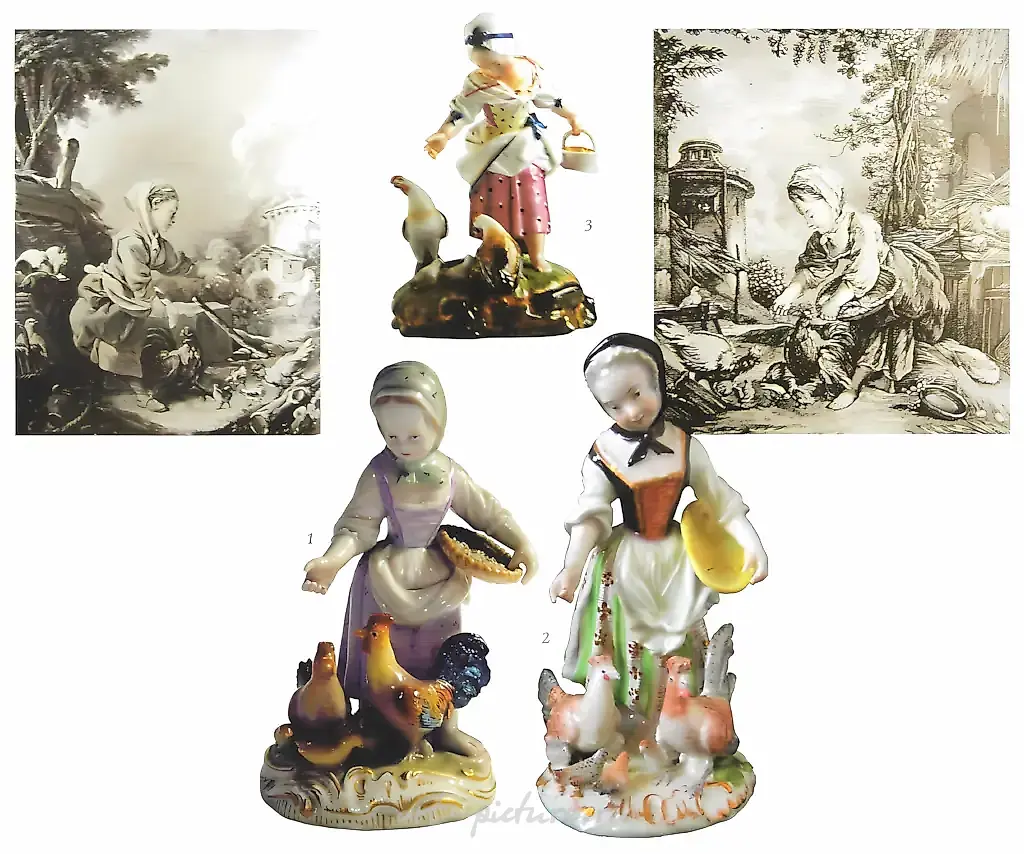
One of the most attractive statuettes of the 18th–19th centuries was that of the girl feeding chicks. This subject first appeared at the Meissen Porcelain Manufactory, later adapted in Ansbach, then Höchst with minimal changes. The original version, 15.8 cm high and made in the 1770s, is now in the Landesmuseum Mainz; the second version from the 1850s–1860s, 18 cm tall, is in the Castle Museum Aschaffenburg and the Museum of Applied Arts in Frankfurt.
Copying Meissen models became common practice for many German porcelain manufactories, not considered plagiarism but a tradition, letting artists find inspiration in famous prototypes. A. Spiess did not shun borrowing popular elements. His girl feeding chicks from the Hermitage closely follows the Ansbach statuette from the Cologne Museum of Applied Arts, though it might also have been inspired by a painting. Like his European colleagues, Spiess often drew from graphic and painted works. His inspiration for some compositions came from artists such as François Boucher, whose "Girl with Chickens" (1752) and Claude-Augustin Duflos are notable precedents.
The Hermitage holds three genre compositions—"Singer," "Gardener," and "Shepherdess"—which are brief but precise copies of Meissen originals, with minimal authorial changes. On close inspection, it becomes difficult not to doubt the authorship of some pieces produced under the Imperial Porcelain Factory’s name, as their forms and proportions so exactly match German prototypes. Only the marks, specific signs, and small decorative elements added to each group or unique figure by Spiess emphasize their authorship.
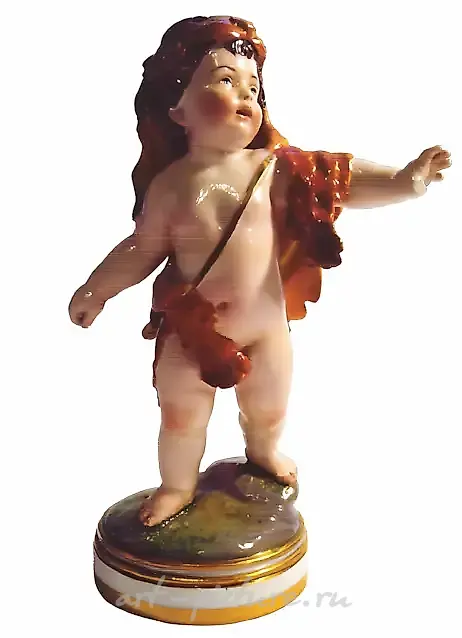
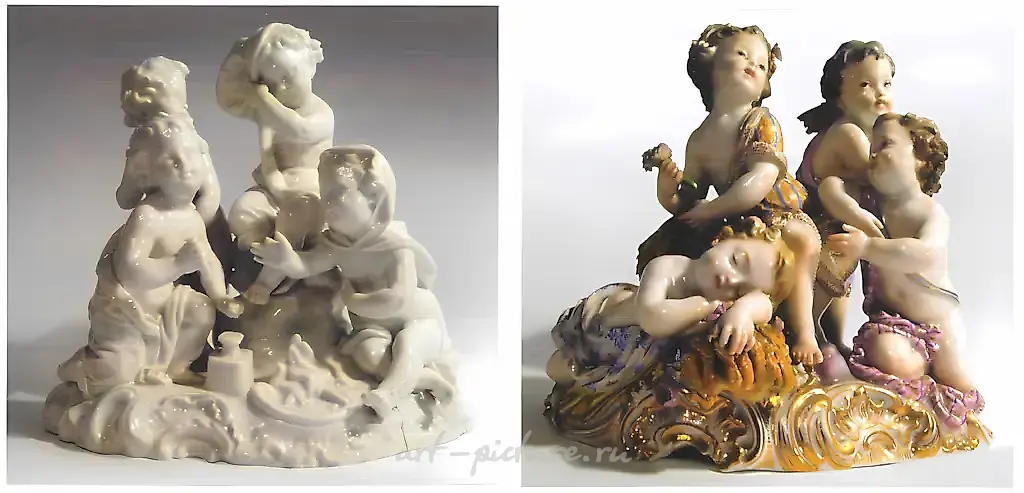
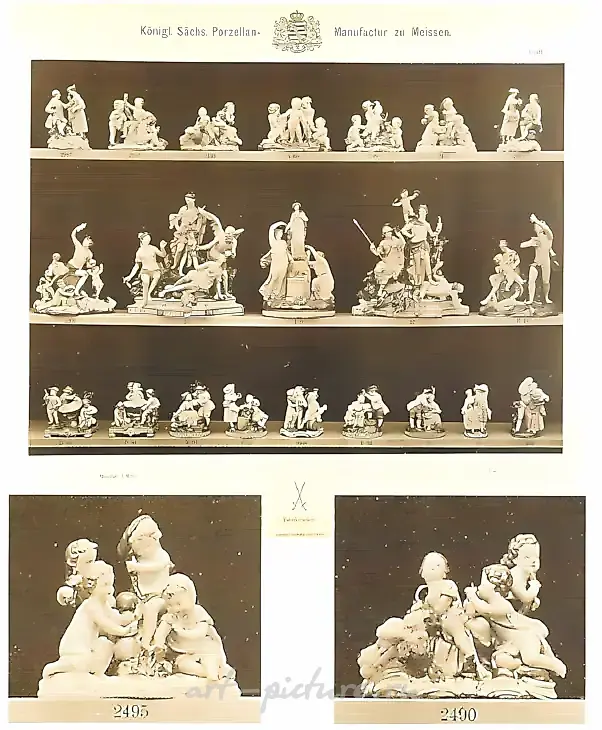
The original prototypes mentioned above were created at Meissen in the 18th century and were reproduced throughout the 19th and 20th centuries. Images of the figurines regularly appear in the factory’s catalogues, from 1764 sold freely. Spiess often used these catalogues to commission figures and as inspiration sources for new creations. Thus, the publication "Koniglich—Sachsische Porzellan—Manufaktur zu Meissen. Verkaufskatalog" lists numbers 2, 2490, and 2495 as the groups "Allegory of Winter," "Allegory of Summer," and "Grape Harvest." The first two were created at Meissen around the 1760s and noted in the 1765 price list. Meissen porcelain researcher K. Butler attributes these works to J. J. Kändler. In 1855 Spiess created his own "Allegory of Summer," where his favorite type of child face—golden curls, plump cheeks, and small lips—is particularly evident. The painting of this group, playing an important visual role, emphasizes porcelain’s brilliance, whiteness, and glossy glaze, balancing sculptor and painter mastery.
The original "Grape Harvest" was made around the mid-1760s and listed in Meissen’s 1765 price list. In 1784 sculptor Schönheit reworked the group: the new model was larger, with modified children figures and base. K. Beling suggests Schönau's painting as the source for the revised version.
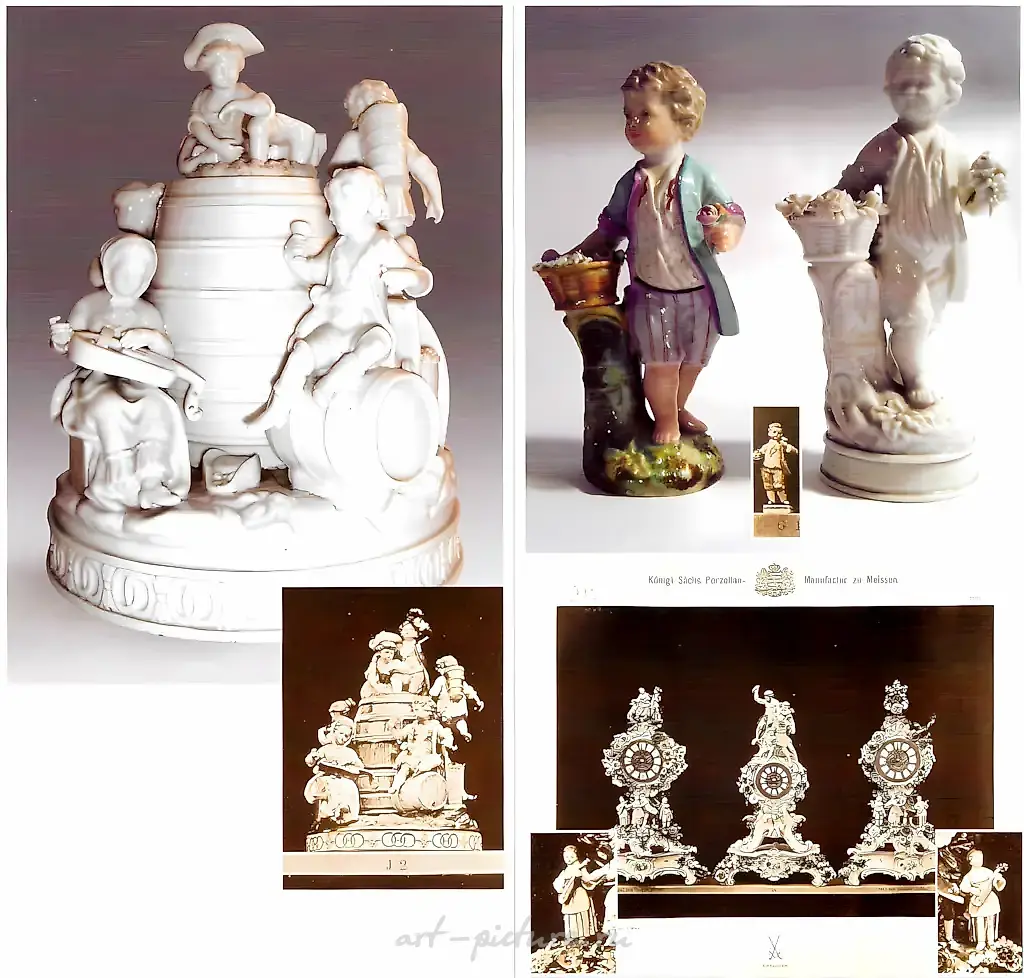
The boy-gardener figure from the "Gardener Children" series appears in the Meissen 1765 price list. It’s unclear exactly which figurines made up this series; Schnorr von Carolsfeld put the number at twenty-three pairs. Spiess copied the gardener figure also shown in Meissen’s catalogue under No. G1. In 1904 it was first described in "Imperial Porcelain Factory" as the "Gardener" figurine. The Hermitage Museum holds two such statuettes, one colored the same as the Meissen original.
The decorative figure "Singer" by Spiess, once owned by N. A. Lukutin, also draws on Meissen prototypes. The sculptor did not copy the whole model but used a portion of the group that originally decorated a Meissen clock base. A similar statuette shows a girl with a mandolin in varied presentation.
Spiess not only embraced existing traditions but breathed new life into them, creating works harmonious with his artistic vision and the aesthetics of the age. He showed vividly how the legacy of the past could merge with individual style. His sculptures accent themes close to his heart and introduce elements that made his work coveted in the viewers’ eyes.
In one version, the "Singer" figurine harmoniously ends the left side of a base, while in another, the master mirrored the design with the same figure on the right.
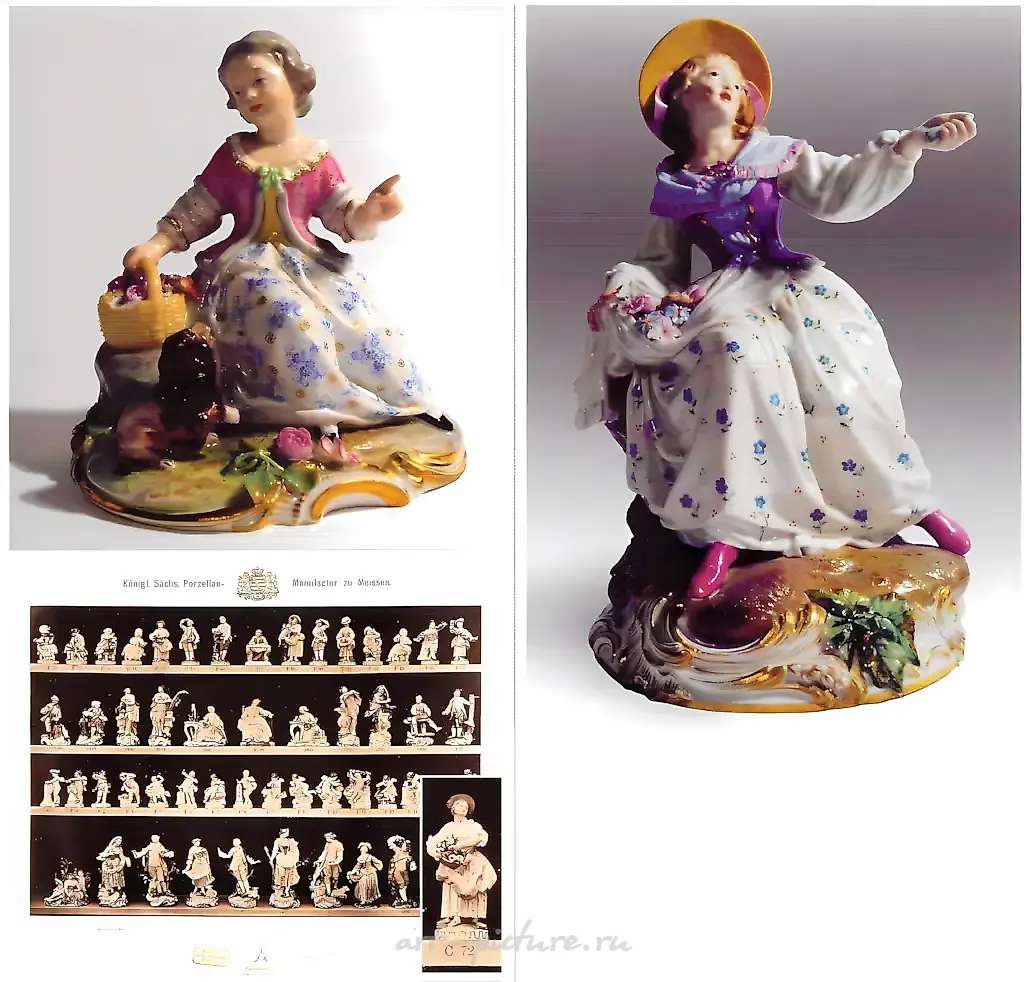
Among Spiess’s notable works is the shepherdess sculpture. Distinguished by its decorative and plastic qualities, it closely aligns with Meissen models 1295 and C75. Despite this, it is not a strict copy; Spiess may also have drawn on widely distributed depictions of flower sellers and shepherdesses from French graphics, frequently used by both German and Russian master artisans.
Prints were extremely popular among sculptors and painters at porcelain manufactories. They were purchased in France, England, and Germany, forming extensive factory collections of books and engravings that served as inspiration. Usually, model-makers followed prototypes, making small changes or choosing a single figure from a large composition, but each time creating a reworked, new piece adapted to the material and translating flat images into dimensional ones.
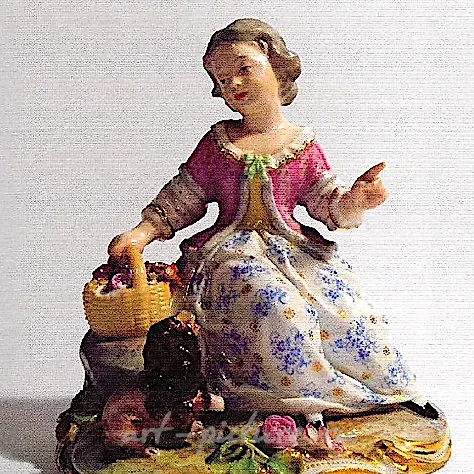
One particularly interesting piece is the statuette of a girl with a flower basket—a fresh take on the popular theme of the "shepherdess" or "girl with flowers." The closest analog can be found in the design of Meissen candelabras. Despite similar composition, Spiess reinterprets the motif: the child heroine, dressed as an adult in a voluminous dress and short cape, gently holds a flower basket, symbolizing love and care. The type of adolescent embodying an adult is frequently seen in 18th-century art.
In the latter half of the 18th century and through the next century, interest in French art remained strong in Russia and Germany. Craftsmen continued revisiting the legacy of Louis XV—the Berlin factory was particularly active in rococo production in this era. Frederick the Great's enthusiasm for French art inspired new porcelain pieces echoing the "gallant century." Spiess had already studied these during his academic years and later during visits to Berlin, which influenced his creative outlook.
"Francophilia" was also important in Russian aristocratic society. Works by French masters were a matter of pride in both imperial and noble collections. Porcelain art, being a "mirror of each era’s fashion," inevitably reflected French trends. Artists and sculptors at the Imperial Porcelain Factory adapted popular subjects in varied ways, using decorative devices and ornamental motifs. Spiess, as a neorococo adherent, created refined statuettes of girls and cavaliers holding flower baskets and jugs. His works draw inspiration from gallant paintings by famous masters like Watteau, Boucher, and Fragonard.
By the late 1860s, he had introduced figurines such as "Lady with Jug," "Girl with Flower Vase," "Shepherdess," and others. These charming young ladies, with delicate facial features and fluid hand movements, were likely based on French motifs. In their perfection and artistic treatment, some surpassed even similar German manufactory creations.
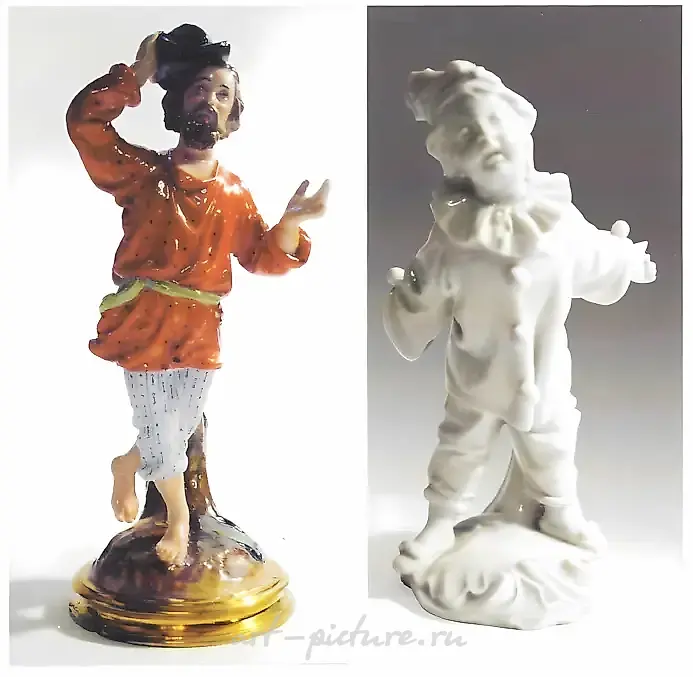
Spiess's genre-based works radiate freshness and immediacy, with a touch of naïve charm. Figures of townsfolk and villagers dazzle with cheerfulness and a festive air. Their costumes, like those of the peasant and boy in a Russian shirt found in the Hermitage, are especially striking. These characters, far from reality, were given idealized features by the artist—displayed almost as showpieces for viewers.
Continuing the Imperial Porcelain Factory’s tradition from Catherine II’s era, Spiess produced porcelain figurines depicting various peoples of Russia and other Slavic countries. His works, such as "Bulgarian Man," "Bulgarian Woman," and "Serbians," are documented in "The Imperial Porcelain Factory 1744–1904" and anticipated the extensive "Peoples of Russia" series, mostly modeled by P.P. Kamensky during Nicholas II’s reign.
Several pieces by Spiess reference the popular 18th-century theater and comedy theme. Depictions of jugglers, acrobats, dancers, and actors like Pierrot and Harlequin, thanks to sculptors’ imagination, became charming porcelain figurines. Scaramouche, Pantalone, Colombina, and many other Commedia dell’Arte characters were beloved subjects for artists and sculptors at European porcelain manufactories, as seen at Meissen and other European workshops.
According to renowned Italian theater historian Vito Pandolfi, the Commedia dell’Arte began influencing Italian social life from the mid-16th century. Carnivals, masquerades, and festive processions became integral in many European nations. By the 17th century, this theatrical genre had firmly established itself in Southern Germany, Austria, France, and beyond. By the 18th century, a unique French Commedia style emerged, distinct in character and repertoire. The vibrant, playful figures in paintings by Watteau, Boucher, J. Callot, and G. Gillot became leading comic heroes. Owners proudly displayed porcelain theater figurines on dressers, mantelpieces, and in grand salons, filling daily life with theatrical fantasy.
Despite the popularity of Commedia dell’Arte characters in Europe, they are nearly absent at the Imperial Porcelain Factory in Saint Petersburg—likely for geographic and cultural reasons. Traveling actors rarely left Central Europe, and venturing to Russia was an exotic rarity. At this time, Russia was developing its own theatrical tradition. Nevertheless, August Spiess, deeply familiar with the European porcelain legacy, could not ignore this important theme. Though few in number, his Commedia statuettes stand out for their quality.
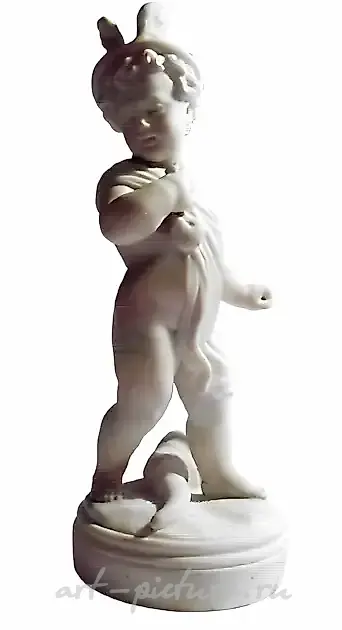
One of his earliest works in this line is the touching statuette of a boy dressed as Pierrot. Emotionally charged and masterfully crafted, it showed Spiess's skill with this new material and his acumen in using its artistic potential.
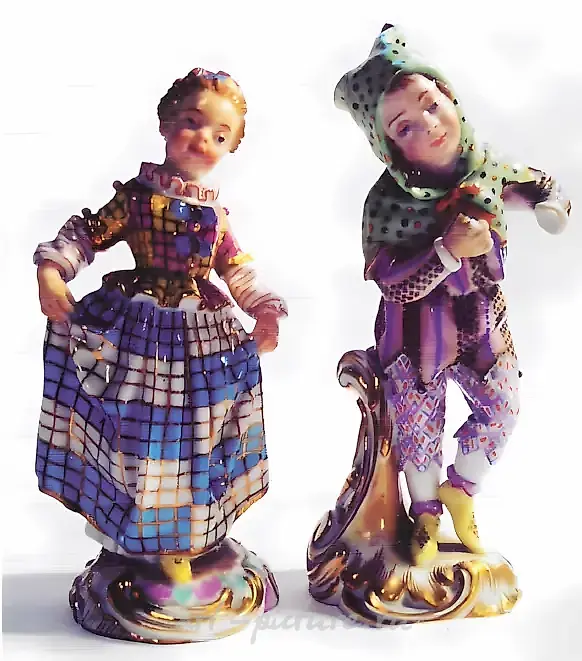
Among his oeuvre are also two small figurines of dancing children, likely portraying Columbina and Harlequin—though with costumes suggesting later, French-influenced styles. The swirl of colors, checked details, and refined accessories create a distinctive mood. Columbina’s costume is rendered in the French style with unique color combinations and a festive hat, while Harlequin appears in playful, bright garb with abundant ornamentation.
Such artistic reinterpretations were not new for European porcelain—similar reimaginings of comic characters occurred in other countries too. Porcelain theater scenes with various Commedia dell’Arte arrangements were much admired, sought after by collectors, and remain an important part of the cultural legacy of the time.
The "Columbina" and "Harlequin" statuettes can be seen as standalones or paired. Following the European sculptural tradition, Spiess often made figurines in pairs—a practice that originated in Germany, where paired objects were marketed to increase buyer interest, while also remaining complete on their own.
The Columbina and Harlequin figures stand out in Spiess’s work for their color palette. His pieces often feature bright, sometimes excessive tones. In some, he used boldly contrasting hues, reflecting German folk aesthetics. He also employed delicate pastels characteristic of rococo refinement. Much of his tableware is rendered in pale pinks, sky blues, delicate yellows, and shades of lilac and muted salmon; footwear and headgear are traditionally dark. Notably, all his characters have brown eyes—a trait of 18th-century German art, as the tradition of "blue-eyed" figurines only emerged in the 19th century.
Nearly all Spiess figures stand on round or oval bases, lavishly decorated with gilding and rocaille patterns. This flat, relief floral and leafy foundation first appeared at Meissen in the 1740s; by the mid-1750s, higher, more intricate plinths with relief and openwork—usually gold-painted—came into fashion. Spiess employed both early and later types in his works, including lawns edged with golden borders.
A. Spiess’s creations might seem simple or even banal, but they cannot be dismissed as the "saccharine-false figurines" of the 19th century, which often reproduced primitive models. His child motifs reveal attentive care for portraying the idea of Beauty in delicate porcelain. Although his art may not equal the finest works of the best European porcelain manufactories, Spiess nonetheless took the Imperial Porcelain Factory’s art to a new stage in its evolution.
Related lots
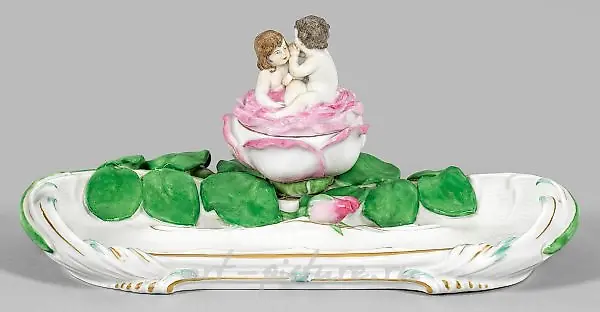 Meissen Art Nouveau Writing Utensil with Rose Decoration and Amorettes
 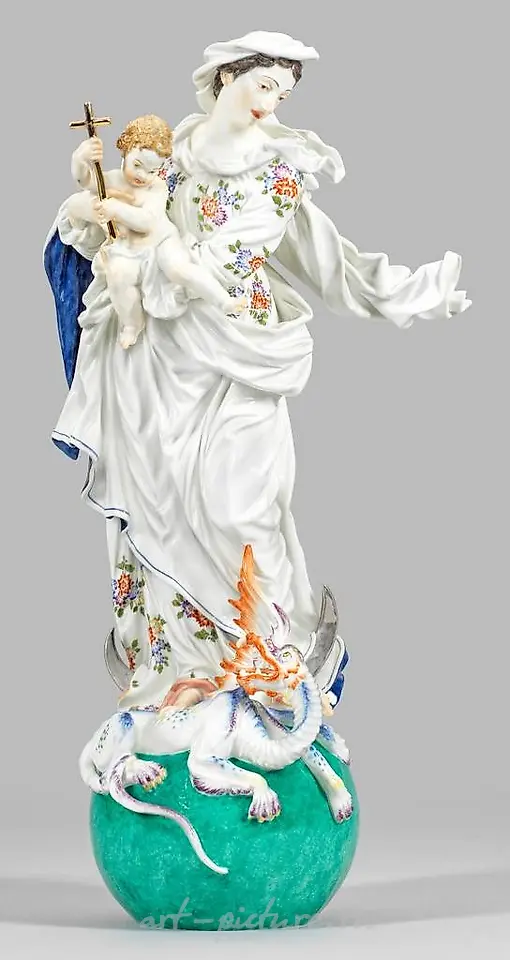 Great Meissen figure of "Maria de Victoria"
 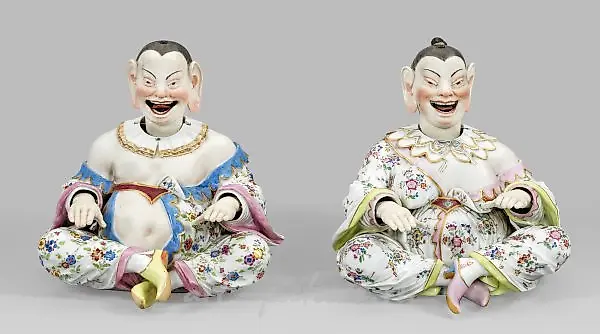 A few large Meissen wobble pagodas.
 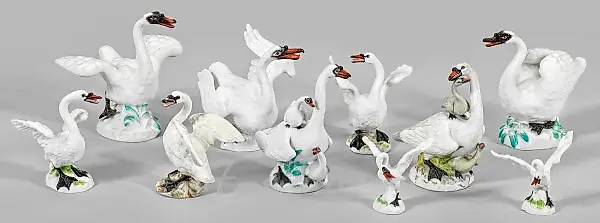 Collection of ten Meissen swan figures
 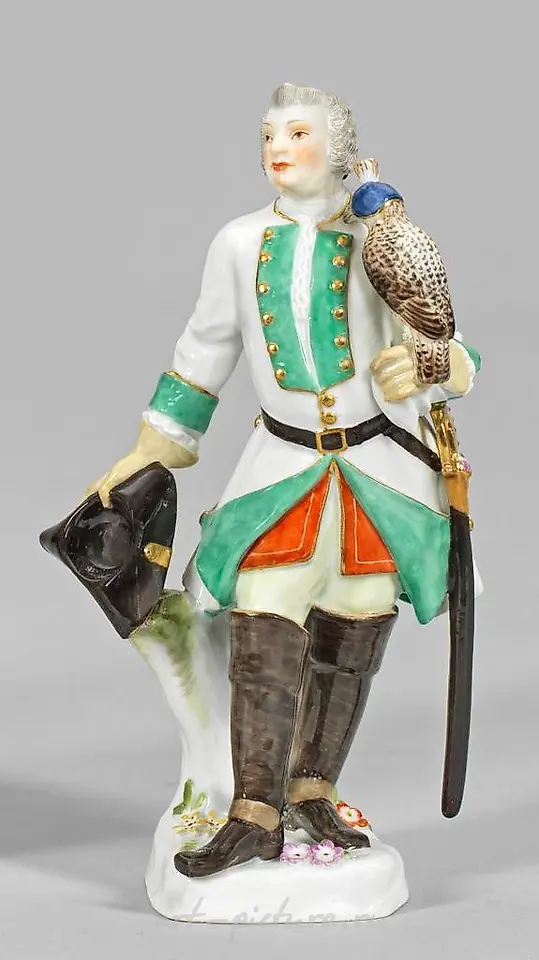 Falkner
 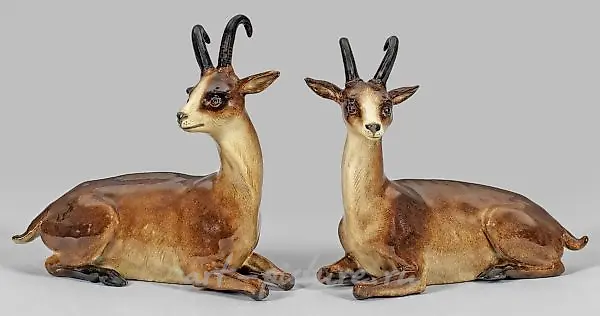 A pair of chamois as counterparts.
 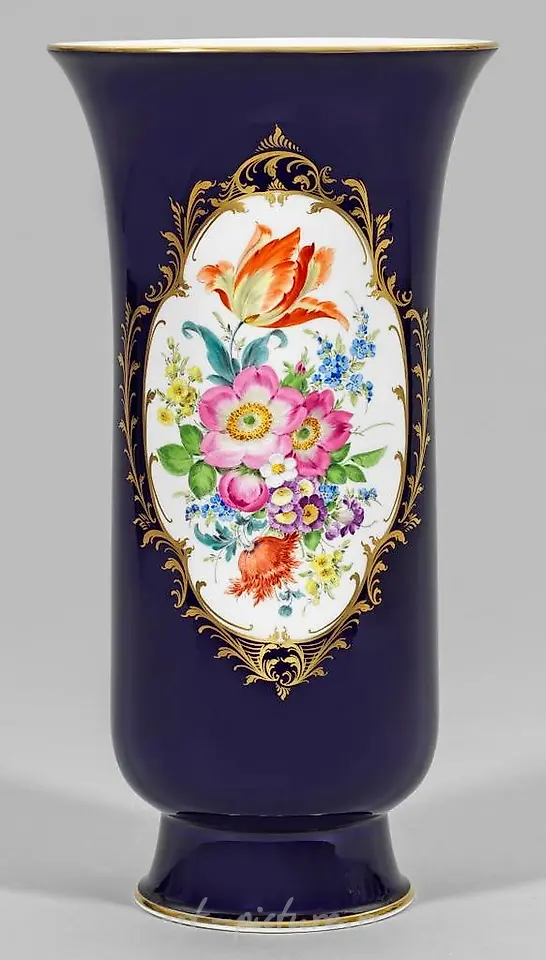 Decorative Vase with Floral Decoration
 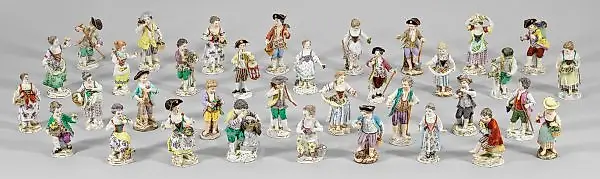 Extensive collection of 71 Meissen gardener figures.
 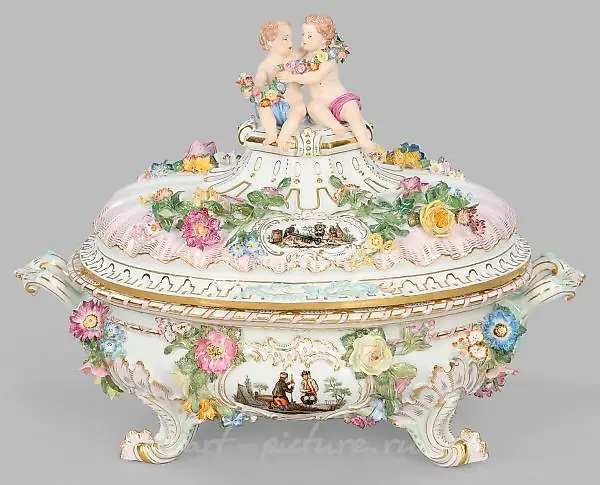 Splendid Meissen covered tureen with Bergmann's decoration.
 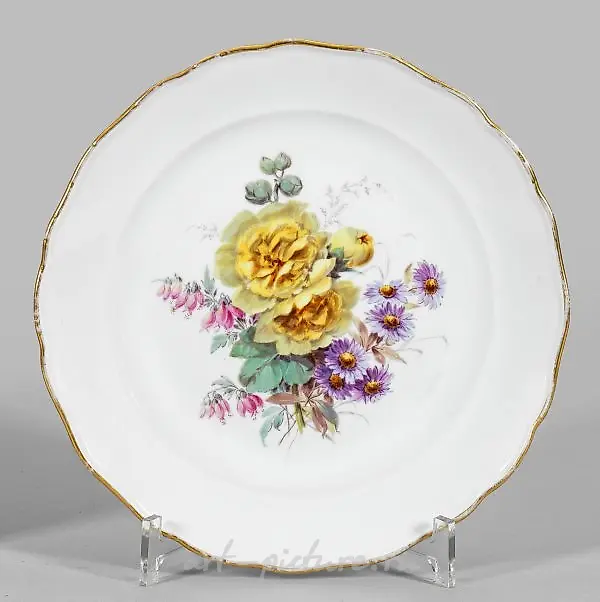 Decorative plate with floral decoration
 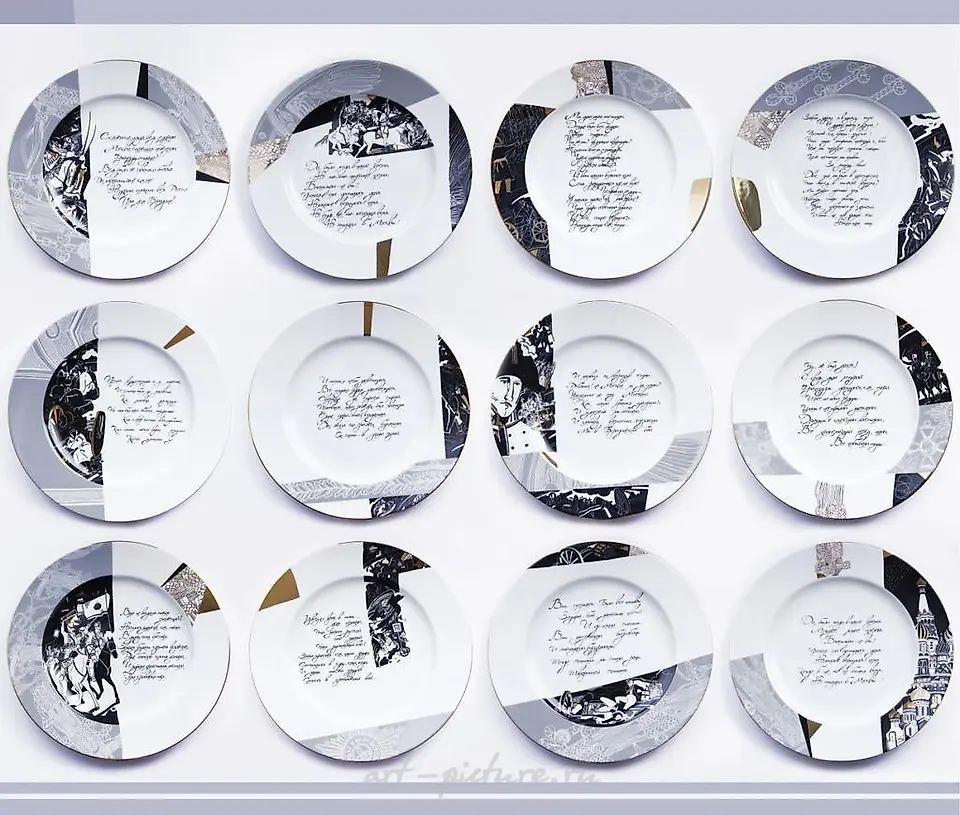 The decorative panel "Borodino" was made at the Imperial Porcelain Factory. Decorative plates. 180 000₽
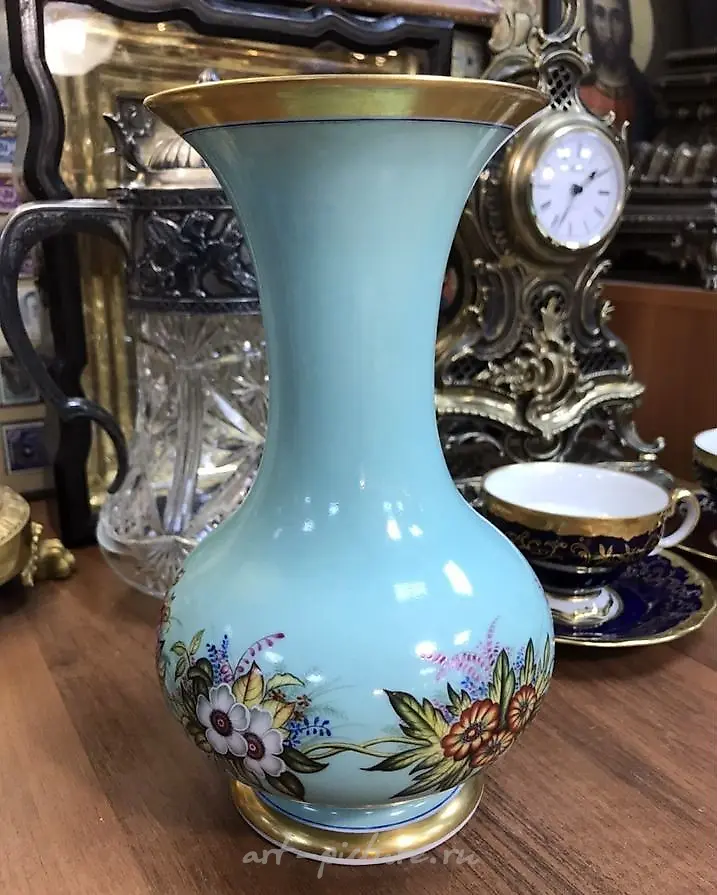 A vase produced by the Imperial Porcelain Factory in St. Petersburg, during the reign of Alexander II (1860-1870). 540 000₽
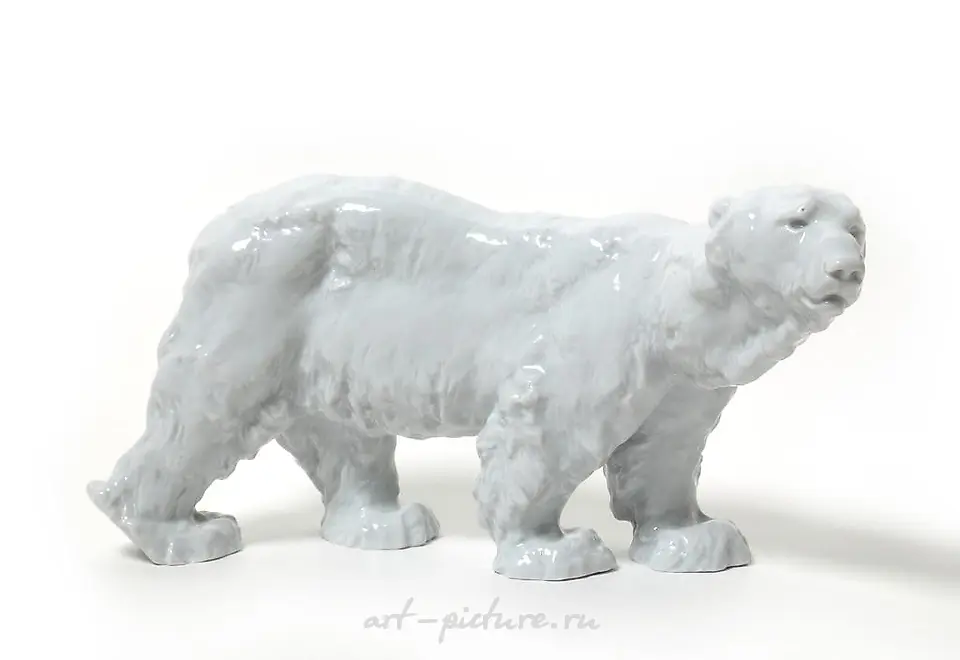 The porcelain figurine "Bear." Meissen 125 000₽
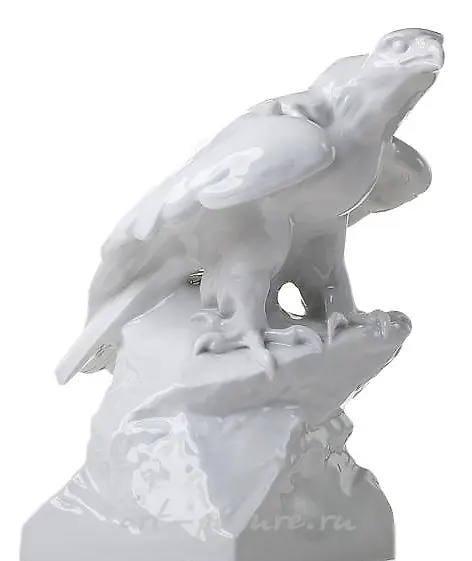 The sculpture "Eagle." Meissen, Germany, 1957. 120 000₽
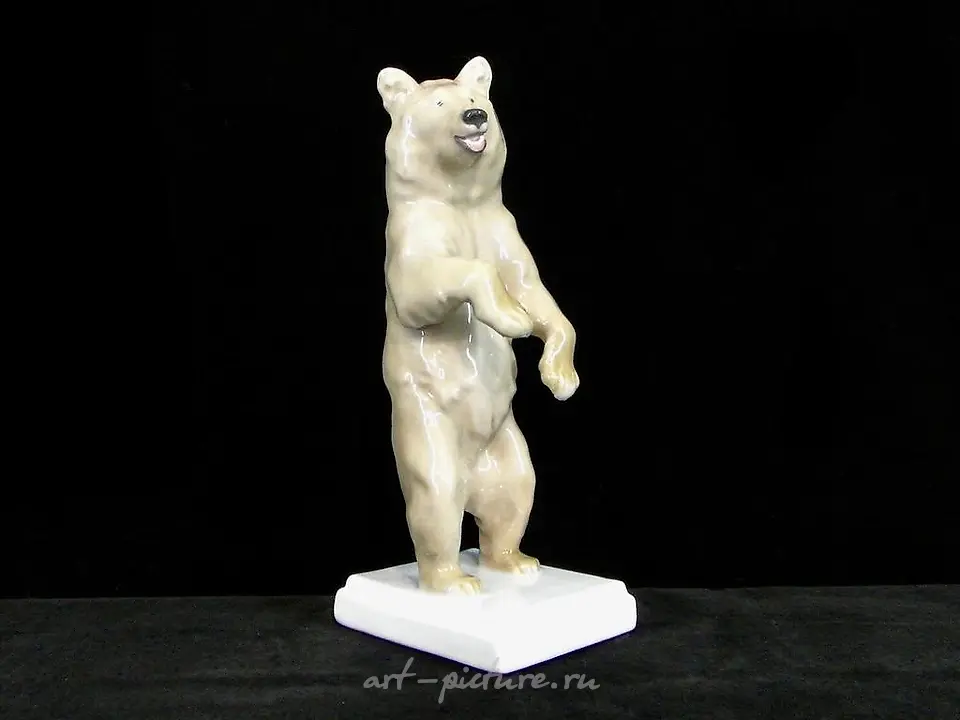 The translation of the text is: "Figurine 'Bear' Germany Meissen." 85 000₽
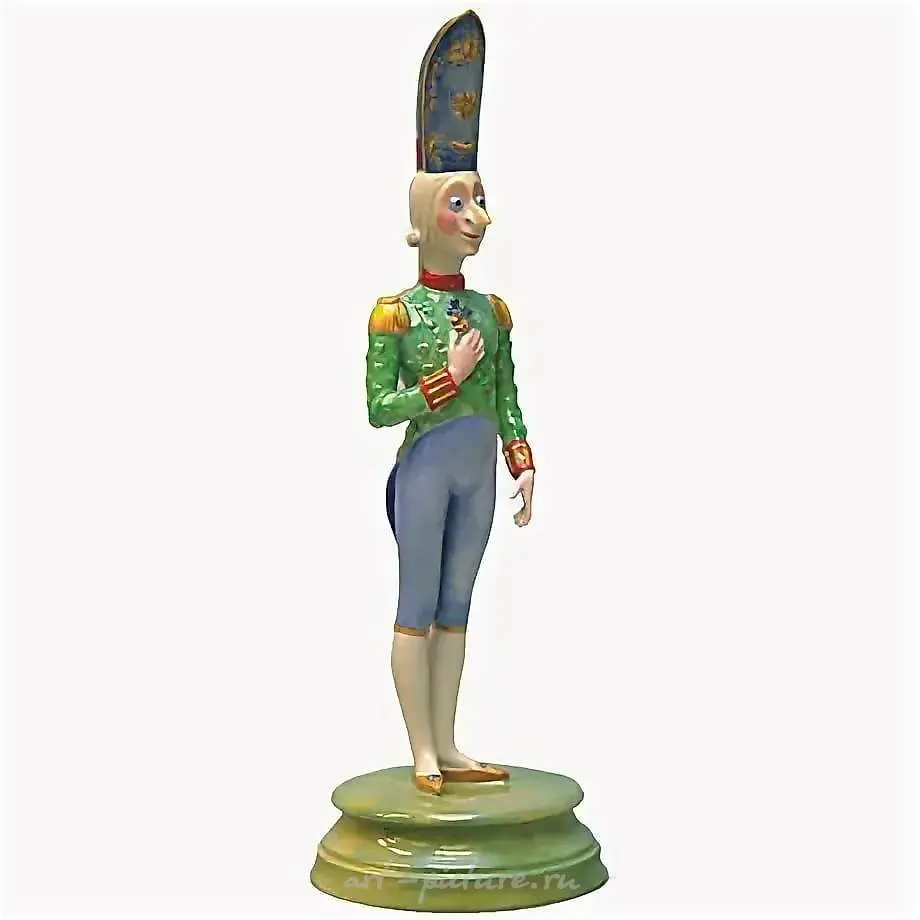 The sculpture "Nutcracker" by Mikhail Shemyakin IFZ
 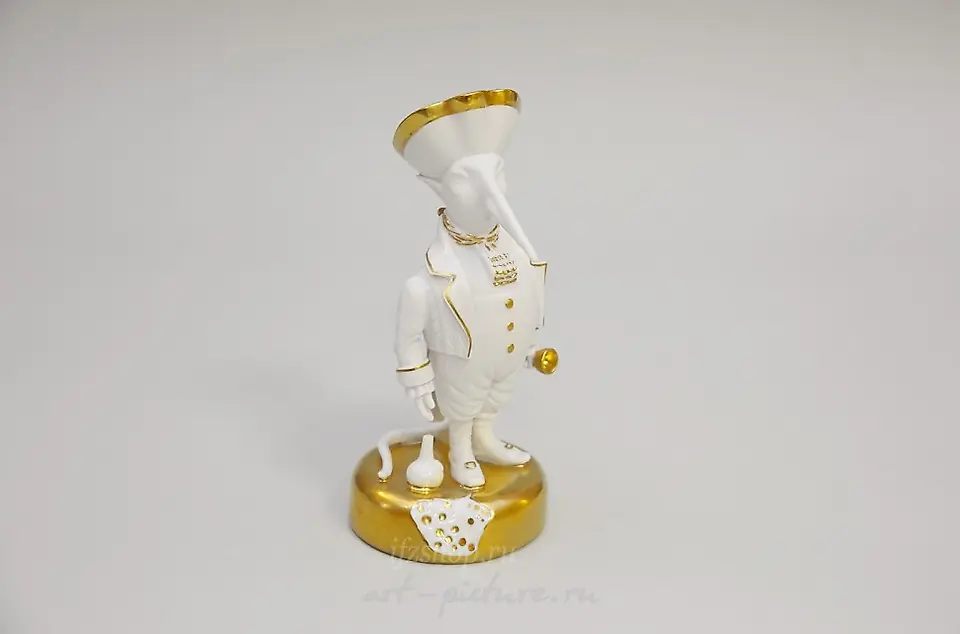 Drunken Golden Little Mouse (height 14.5 cm) by Mikhail Shemyakin, IFSZ
 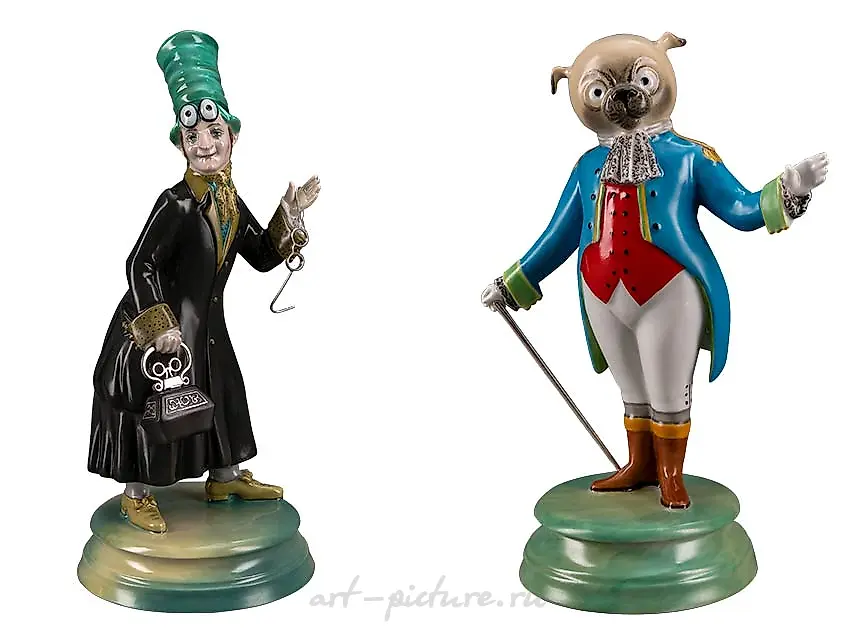 Mops Bu-bu-bu (18.5 cm), Koppelius, Author form Shemyakin M.M.Ifz