Have you ever wondered why antique Russian tableware sometimes shows futuristic scenes, English restraint, or the colors of a Dutch rainbow?
What stood behind the familiar plate with a bluish sheen — simple kitchenware or the imprint of a cultural revolution?
Ceramics may seem quiet and modest at first glance. But that is only a curtain. Behind it are braided destinies, games of status, dazzling technological innovations, echoes of European fashion and, above all, the pulse of 19th‑century Russia. Few know that the earthenware of the suburban Arkhangelskoye estate is a secret crystal in the body of a large country, where French temperament, Russian talent and a ghostly English chic intersect.
Let's open this intricate artifact
Get ready to be surprised: today you will see earthenware as a map of human passions and cultural codes. After this journey, even the simplest cup will look different to you.
A French spark on Russian soil: Auguste‑Philippe Lambert and ceramics as passion
Imagine the early 19th century. The smell of molten metal, clay dust, bright French patterns — all woven into a strange dream amid Russian snows. In Arkhangelskoye, the wealthy Moscow‑region estate of Prince Yusupov, where music plays and whispers spread about the fate of Europe, a small earthenware factory suddenly begins to operate. Its inspirer was the Frenchman Auguste‑Philippe Lambert, an artist and painter by trade from the legendary Sèvres manufactory.
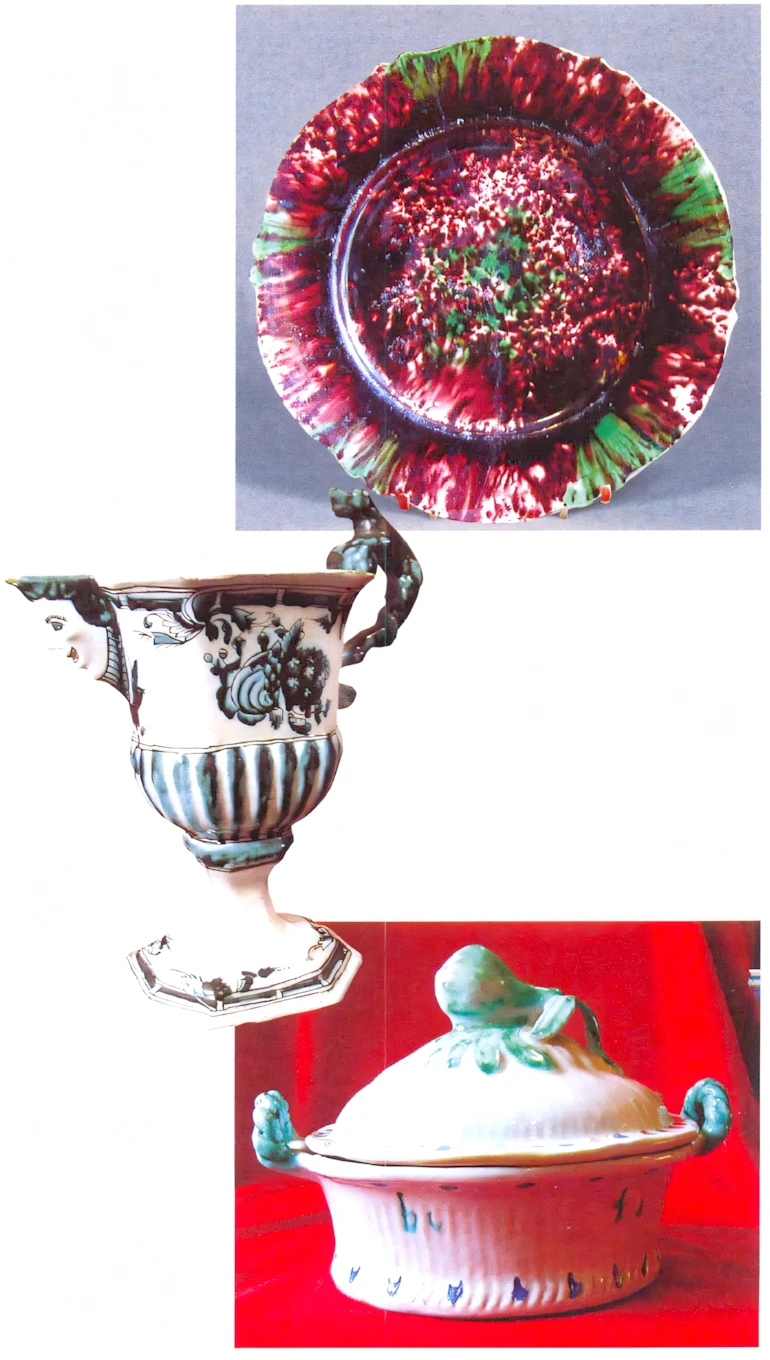
Milk jug. Earthenware factory in Arkhangelskoye, 1820s
Bowl with lid. Earthenware factory in Arkhangelskoye, 1820s
At first they tried to make porcelain, but debts, failures and the eternal Russian question — where to find the best clays? — quickly shifted the focus to the less demanding but equally alluring earthenware.
Lambert was not only a master but a visionary. He had what the French call "l'esprit aventureux": he knew how to ignite interest around ceramics, to see them as a bridge to the world. He took on the project wholeheartedly: he organized purchases of Gzhel clay, built kilns, assembled teams of craftsmen, brought in best techniques from Europe, and experimented with decoration — until he became so entangled in debts that he turned into the protagonist of his own business novel. His eyes were fixed on England: he wanted Russian tableware to rival the famous Staffordshire wares.
At the time earthenware was considered a more democratic and 'pliant' material than porcelain. Unlike porcelain for formal ladies' gatherings, earthenware was a true companion of a lively, bustling life: it was bought by both nobility and serfs. Clients came from both directions, the product range depended on the whims of capital and successive fashions. In the shadows near the kiln, under the clatter of intricate machinery, serf and free craftsmen gave birth to earthenware shapes, trying to blur the line between Russian and European.
Lambert's story is a story of struggle for style, quality and a distinct Russian ceramic identity. His path was thorny — first an attempt to create a porcelain manufactory, then an earthenware rebirth, debts, partnerships, a solitaire of German and French models, death and the transfer of the business to his widow and new partners. In every cup and tureen there is a trace of that human drama: resolve, failure and a re‑arrangement of accents.
A turn to secret knowledge. Why does this matter?
Looking into the fate of Arkhangelskoye earthenware, one can see the crossing point not only of people but of eras: Russia striving to break free from English ceramic influence, Europe — on tiptoe around fashion, and a unique Russian potential. Here earthenware is not just tableware. It is a social experiment, an attempt to overcome provincialism through aesthetics.
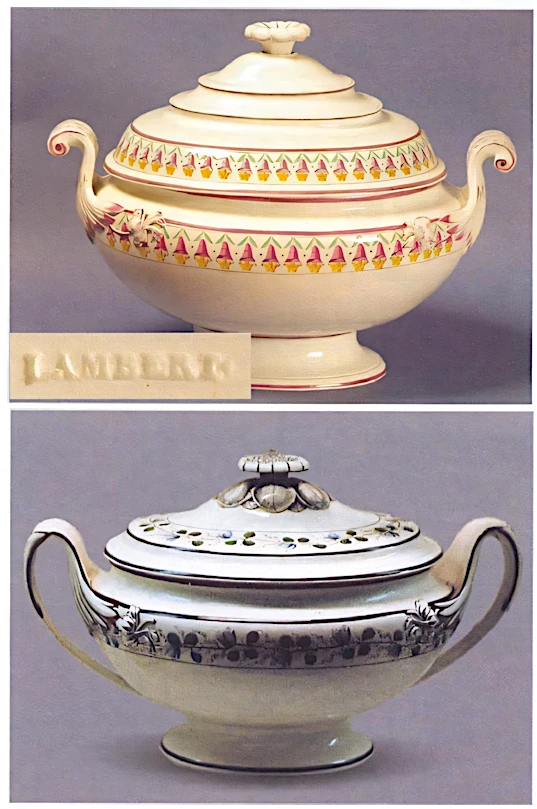
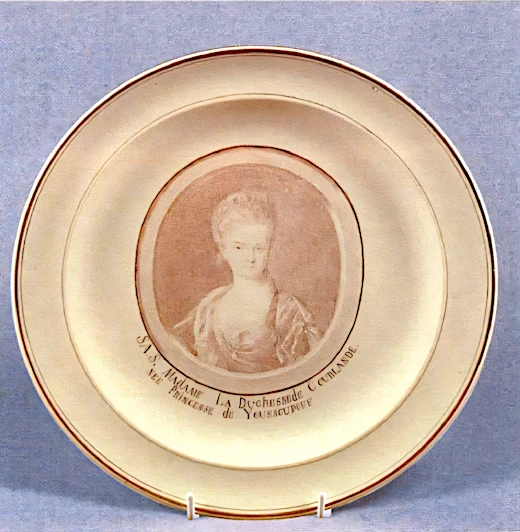
Mark impressed in the paste "LAMBERT", used on items of the table "Service with Bellflowers" and plates with the portrait of the Duchess of Courland. 1827–1835
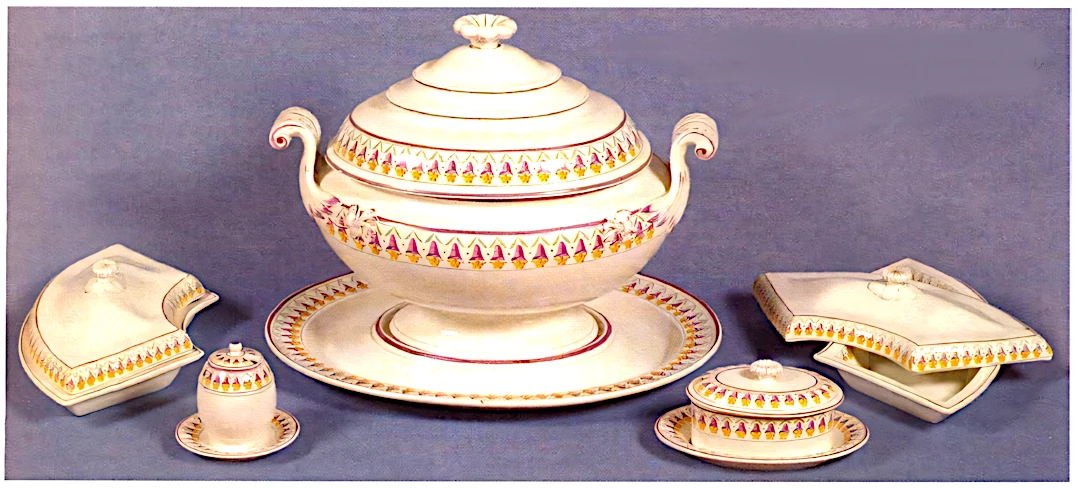
Tureen. Earthenware. England. Wedgwood factory.
Echoes of that struggle are visible today. Contemporary interior design loves to reinvent the past: cafés in the style of "19th‑century France", luxurious services claiming authentic shine. The fashion for "handmade", for mixtures of traditions, for cross‑cultural recipes — almost all of this is hidden in a distant Arkhangelskoye workshop.
"ARKHANGELSKAYA FERMA" and the sacred geography of earthenware
Let's go deep into the factory walls — to where the past is tangible. Have particles of what the craftsmen molded and painted under Lambert's direction survived?
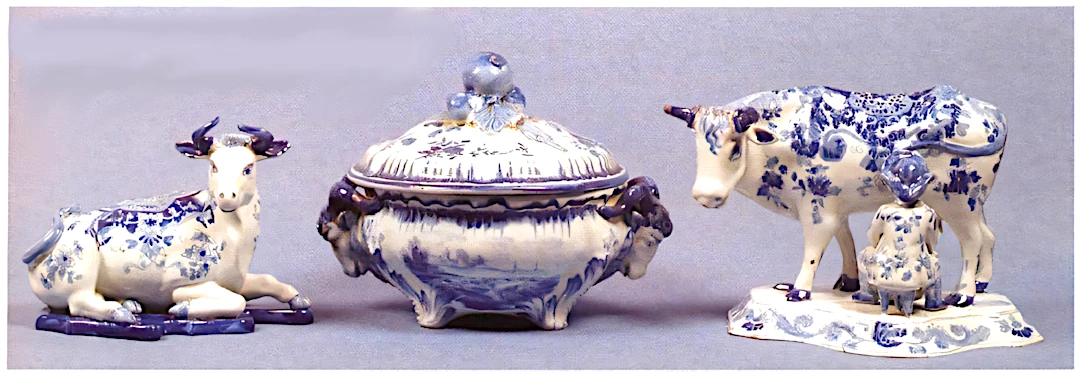
Yes: not only fragments remain, but entire services, whole visual narratives.
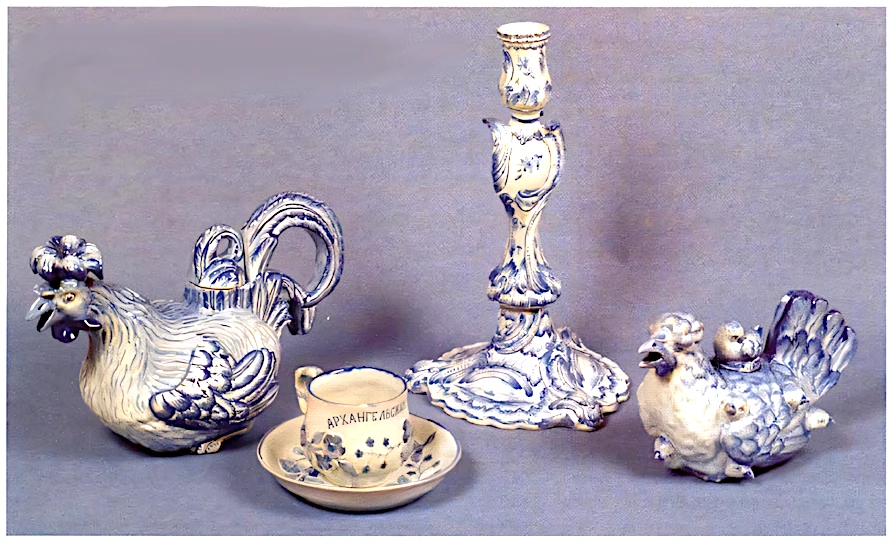
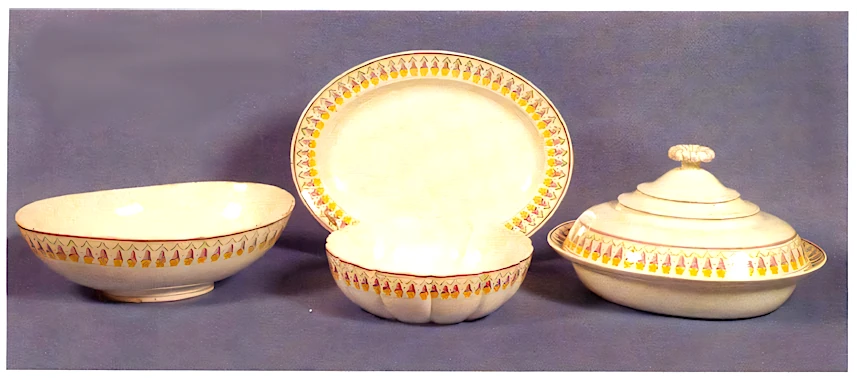
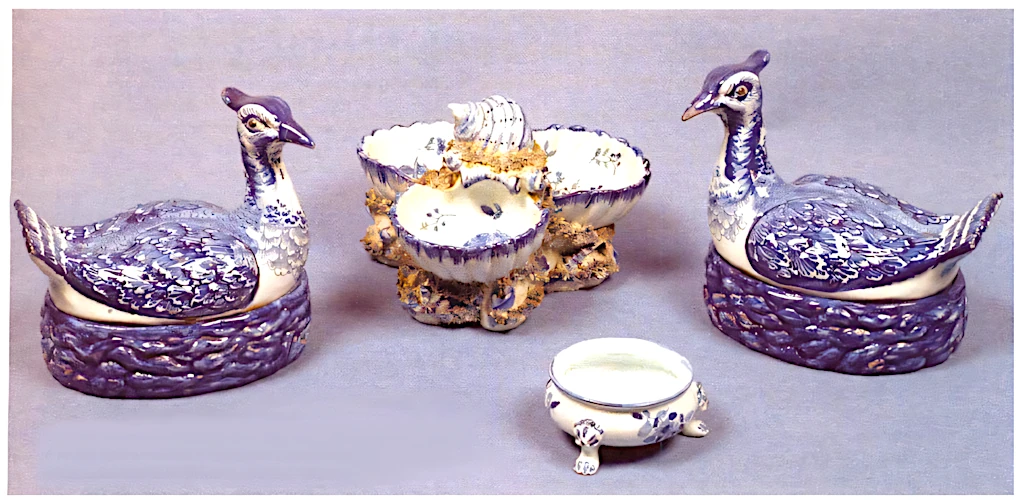
The factory's main pride is the famous "Service with Bellflowers" (more strictly — with lotus fruits, but who counts!), fine‑worked earthenware of a quality once only proudly claimed in England. Here are ceremonial tureens with volute handles, lidded bowls decorated with sculpted pear fruits, milk jugs of thick, porous body imitating German and French majolica... All this stylistic diversity may seem chaotic, yet it is aesthetically calibrated and coherent.
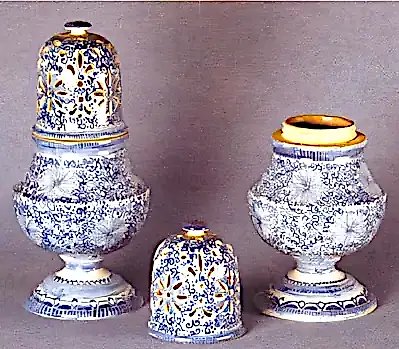
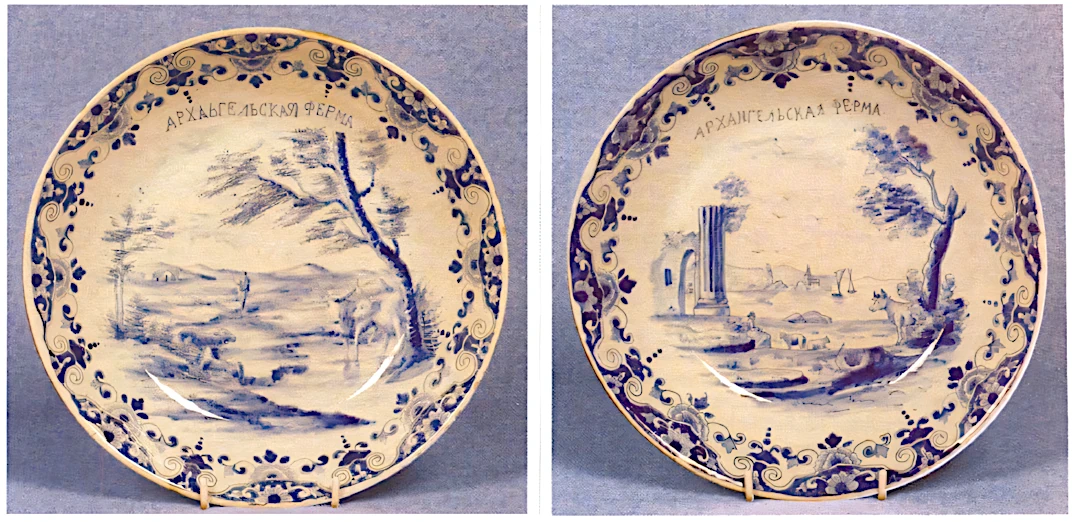
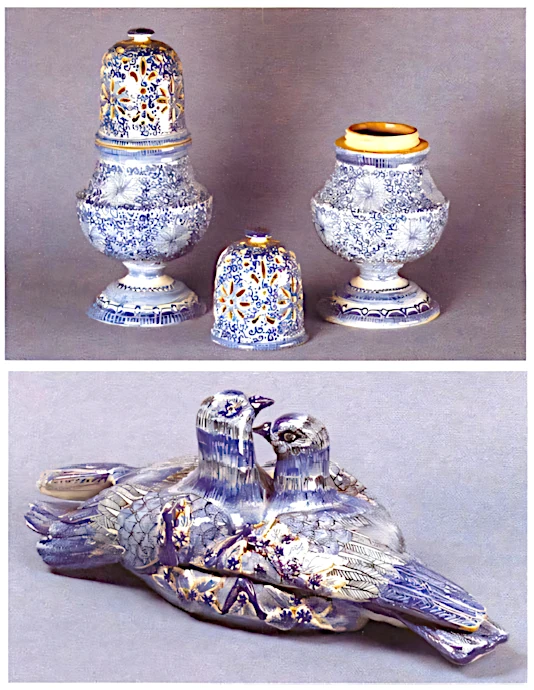
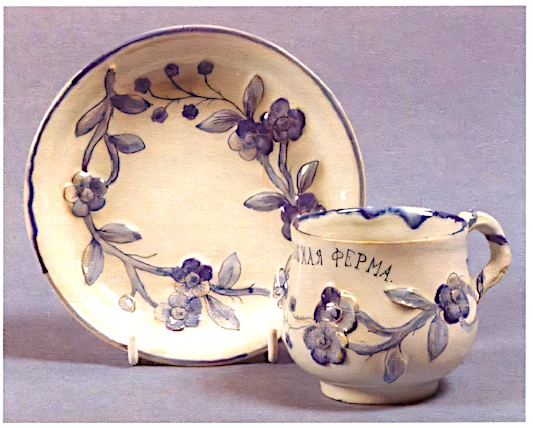
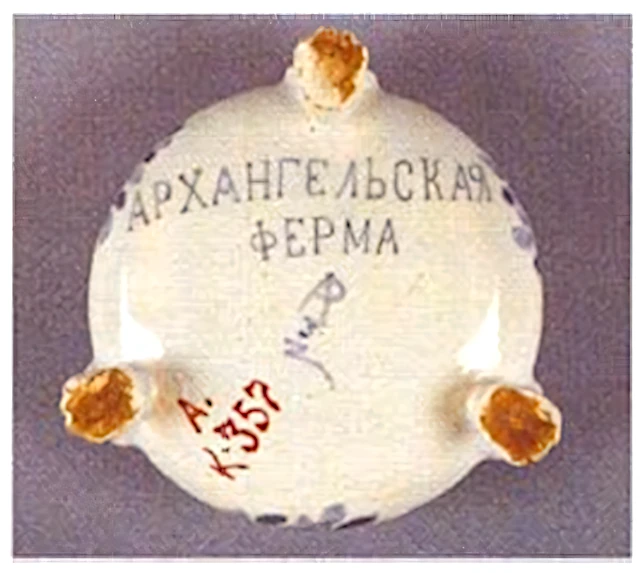
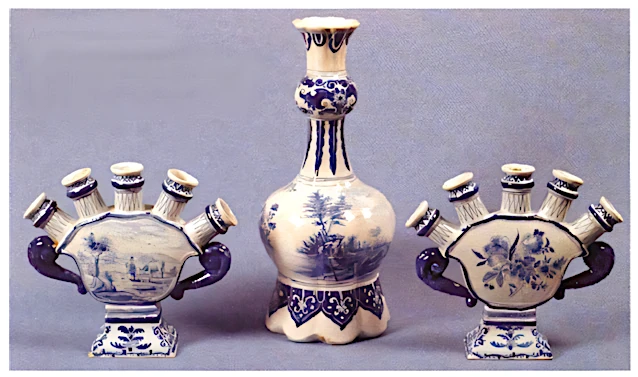
Decorations of English, Dutch, French, even Chinese factories are not merely copied here but interpreted. Every motif acquires a Russian meaning. Plates with green‑brown glazes recalled the British fashion for imitating "tortoiseshell", cups stamped with "ARKHANGELSKAYA FERMA" signified the idea of local branding, pots and saltcellars testified to handcrafted skill on the thin edge of naivety.
Here is the paradox: behind a seemingly "cosmopolitan" art, a Russian spirit hid in the earthenware cup. Even if a shape was stolen from an English catalogue and the decoration borrowed from Delft masters, the very existence of earthenware on a Russian estate was already a revolution against dependence. Each new piece was a small triumph over foreign fashion.
A thin wall, an elegantly twisted handle, a polychrome border, a now‑recognizable inscription — all say: "Yes, Russia can do it too!"
The story of the service stamped "ARKHANGELSKAYA FERMA" is a weave of marking, localization and cultural self‑respect. In every detail there is an inoculation of style, an attempt to declare that Russian craftsmen would have their own state table, their own pride — no worse than the European one.
From a modern perspective we call this an authorial style, a local product, a small batch. But when we see an old Arkhangelskoye cup we are surprised: the vogue for branded items, micro‑studios, limited editions and collaborations apparently began here more than a hundred years ago.
Behind the mirror: symbols, inscriptions and the real psychology of art
Let's talk about the psychology of perception. Why do we love earthenware so much? Why can an old plate, decorated with an unnecessarily complicated border and an impractical inscription, evoke such delight?
Everything matters here: the right shade of the body, the slightly translucent glaze, and the Latin letters that stand out — "LAMBERT", "ROMARINO", "ARKHANGELSKAYA FERMA".
What's special about this?
An individual from the 19th century, like us today, looks for authenticity in details. It is in the strokes that one recognizes the true author, the genuine work; it is by the mark that one determines not only the technique but the honesty of the potter. The dream of serious craft always goes hand in hand with a thirst to experiment.
Hidden in the marks and symbols of the Arkhangelskoye factory are imitations (traits of the Delft school, mystical letters and numbers, direct quotations of European workshops) and protest — the literal inscription in Russian as a sign of true independence, certification of achievements. Here is the split between copy and self‑sufficiency.
Symbolism in the details: each tureen handle echoes the debate between labor‑intensive beauty and new composure; each relief flower is a sign of the desire to live beautifully but in a Russian way. Earthenware ceases to be purely utilitarian and becomes a carrier of status, a symbol of the heroic struggle for independent art. The play of cultural codes only makes it more fascinating.
Intricate underglaze ornaments and emphasized baroque are not only homage to Western fashion but, seen from the 21st century, the first version of a "cultural identity": to be fashionable but not to lose oneself. Lambert's craftsmen knew how to create an object people would want to keep as a memory, like a photograph of an era.
The mystery of disappearance and the revival of interest
Lambert's production was small and, it would seem, inconspicuous in vast Russia. Few pieces survived — many were lost with time, destroyed, dispersed into collections, or lost their marks... After Lambert's death others ran the factory, new names appeared, some items were signed in Russian, others in Latin letters, and most can now easily be mistaken for Western European earthenware. The tale often ends where inscriptions fade.
But, as is always the case with true art, revival is a matter of time. The value of Arkhangelskoye earthenware today is measured not only by rarity. It has become a symbol of cultural synthesis, of a craft history in which there are no losers: only an evolution of taste. Parisian cafés order handmade tableware from Russia, street artists use color schemes of old services, designers seek new identities inspired by ornaments of past eras.
What should we do with this knowledge?
Next time, at the table or in an antique shop, try holding something made by a human hand, even if rough. Listen to its story: perhaps it is not just a piece of crockery but an encrypted message from an era of boldness, deprivation and great encounters.
Behind the slight shine of earthenware lies a whole continent of passions, changes and cultural discoveries. Someone searched for authentic England in a Russian cup, someone tried to outshine European chic, someone simply struggled to survive — and in doing so created something unique. The story of the Yusupov‑Lambert earthenware is a story of entwining, searching and a bold hope to make one’s life a little more beautiful and the country a little more independent.
What story hides in your favorite cup?
Could you continue the chain of inspiration that began two hundred years ago in the dusty workshop of Arkhangelskoye?