
Parsuna
Early form of portrait in Russian painting of the 17th century
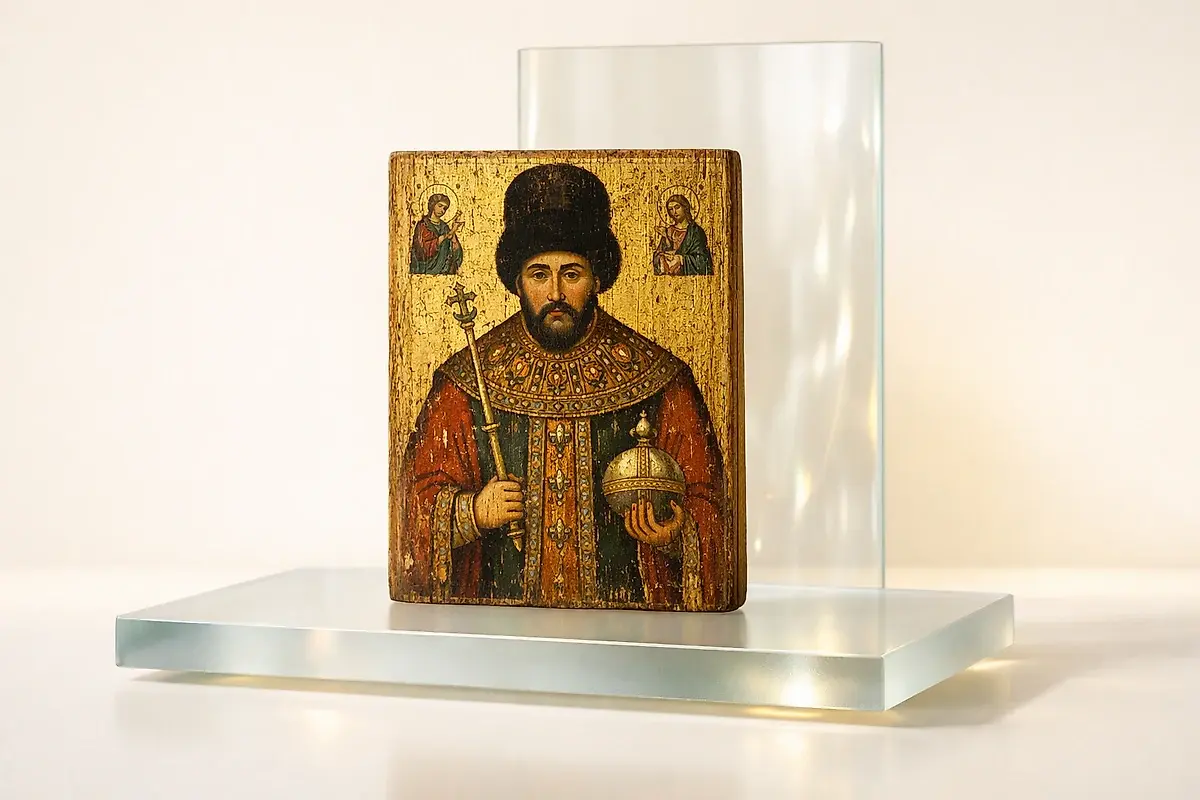
Parsuna is a genre of Russian painting of the 17th century, a peculiar combination of traditional icon painting and secular portrait. The term originated from the Latin word persona, emphasizing the individualism of the depicted person. In parsunas, attention was paid to resemblance, details of clothing, accessories, but at the same time icon-painting features were preserved: flat backgrounds, rigid contour, emphasized expressiveness of the face.
Parsunas were painted on boards or on canvas with egg tempera. This style appeared at the courts of noble people and gradually led Russian art to a more free portrait tradition. Some parsunas were considered mystical: it was believed that a portrait could 'bind' the soul of the depicted person. Particularly valued were images of voivodes and tsars — for example, paradoxically 'strict' images of Boris Godunov or Mikhail Romanov.
Interestingly, many were afraid to order a parsuna — superstitions surrounded the depiction of one's own face even more than photography today.