
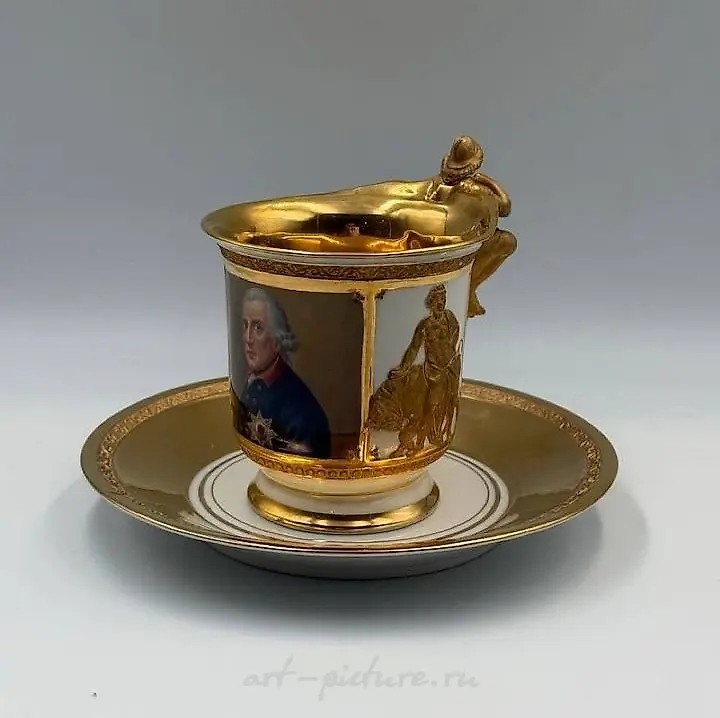
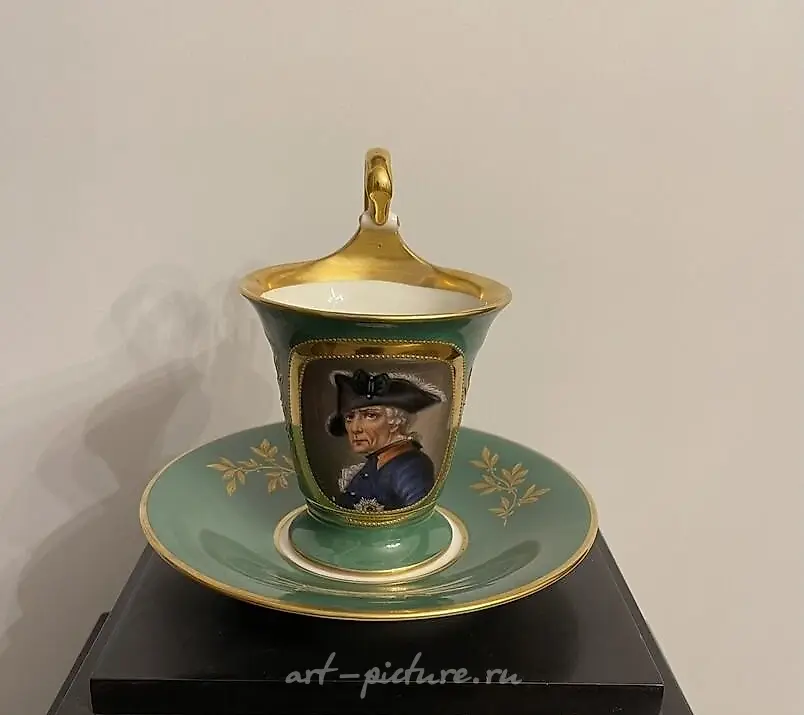
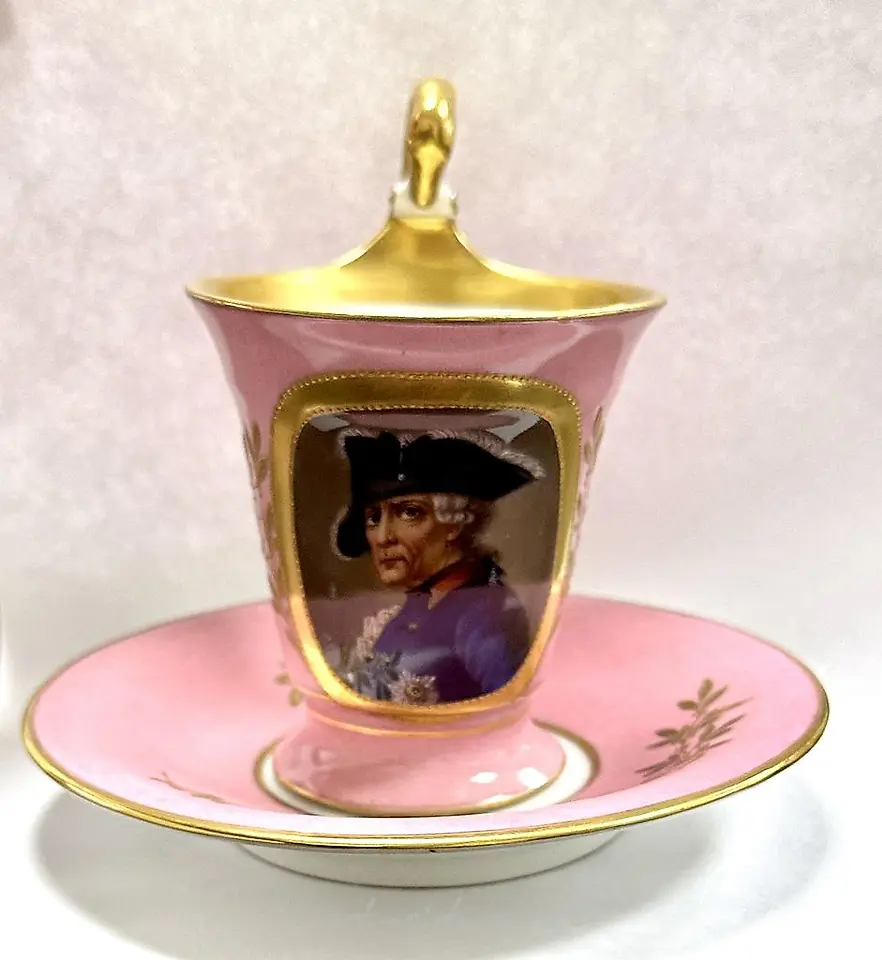
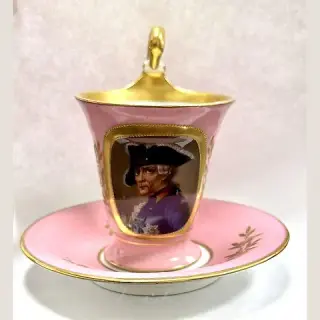
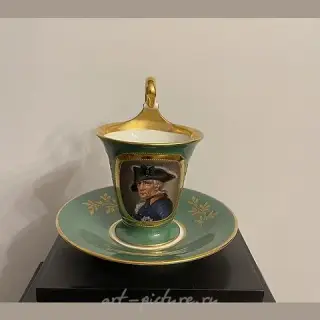

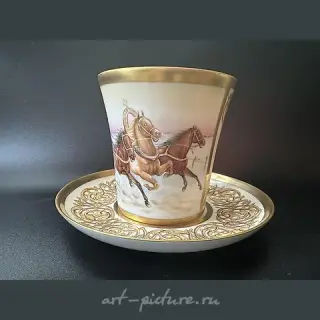
Cup and Saucer with Portrait of Frederick the Great, KPM, 1870

Royal Porcelain Manufacture of KRM

Description

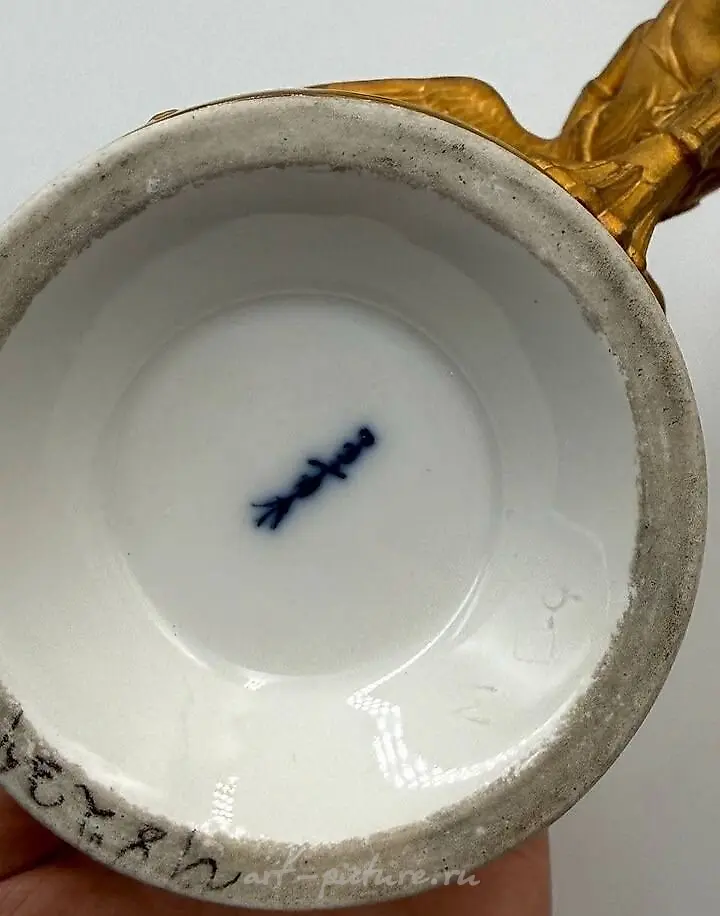
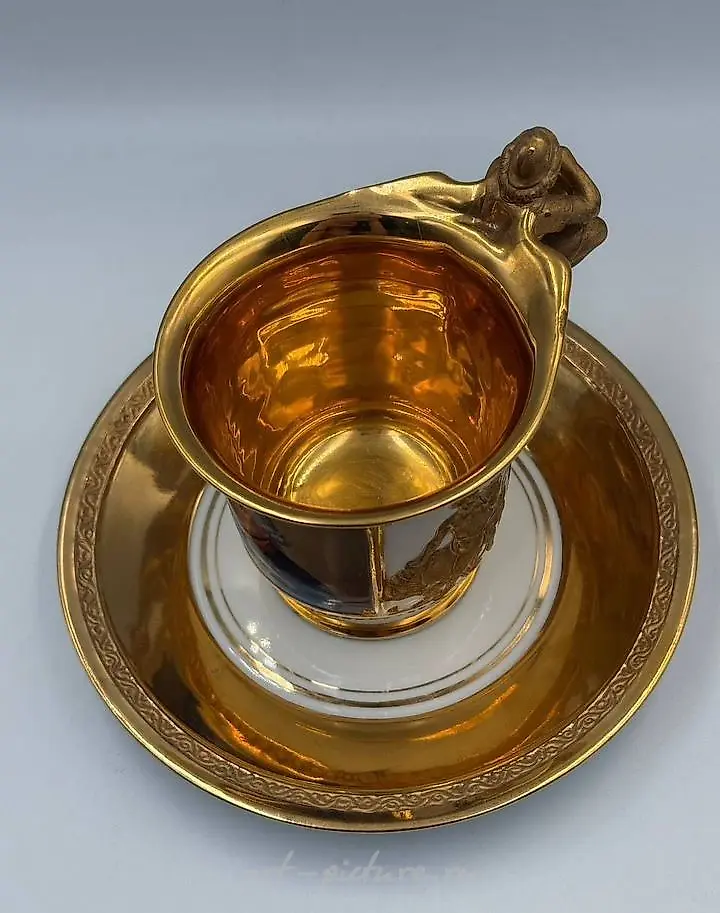
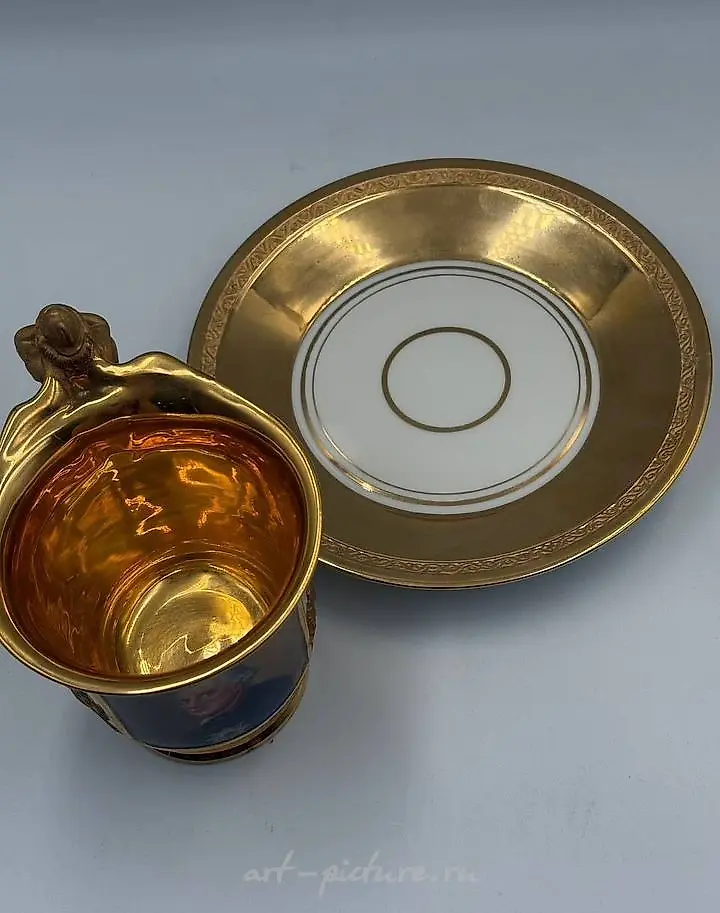
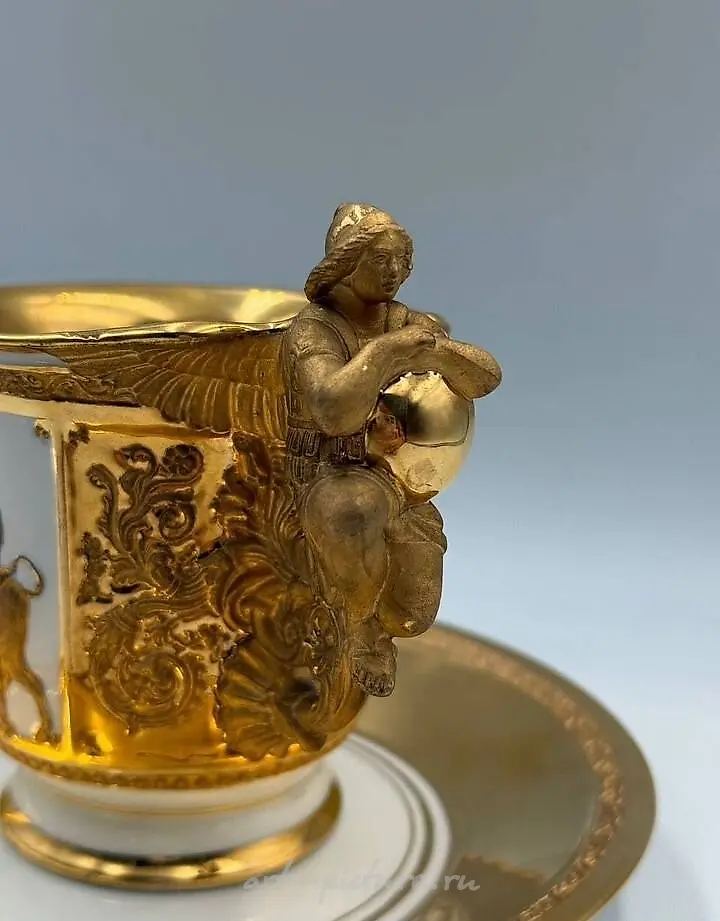
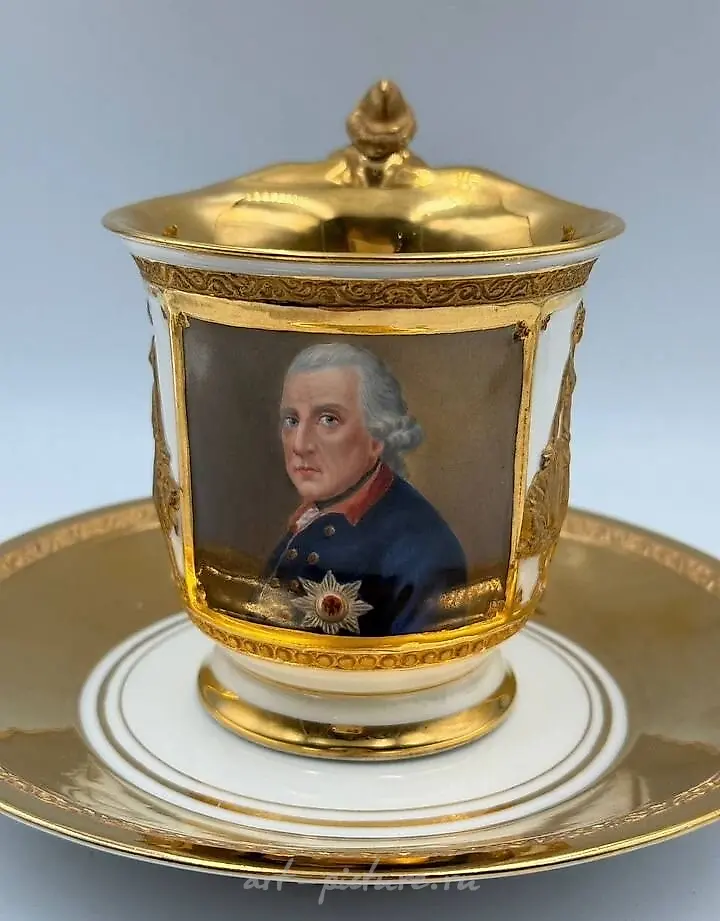
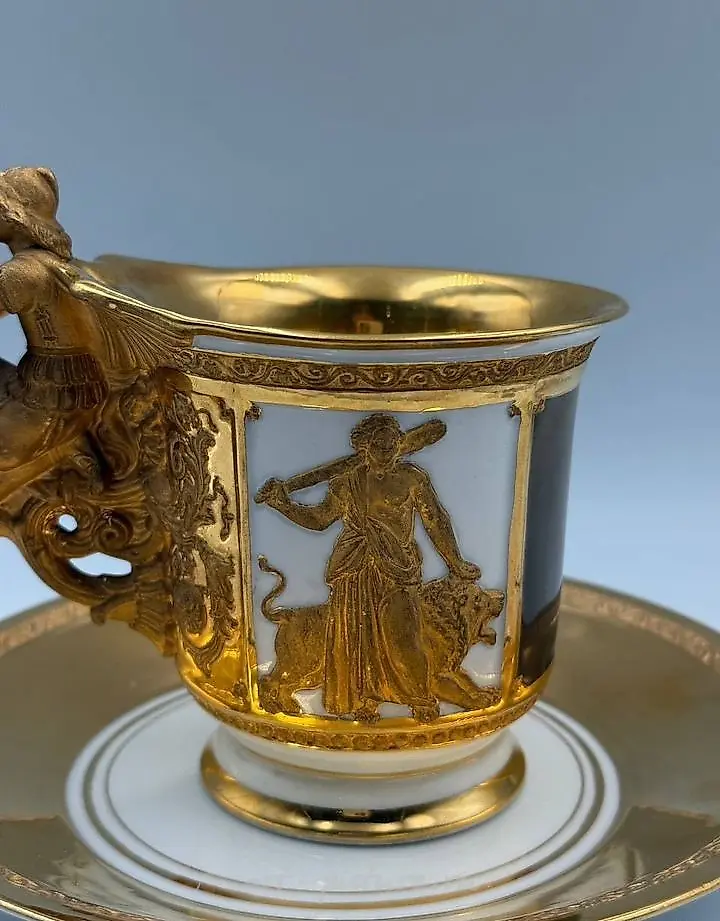
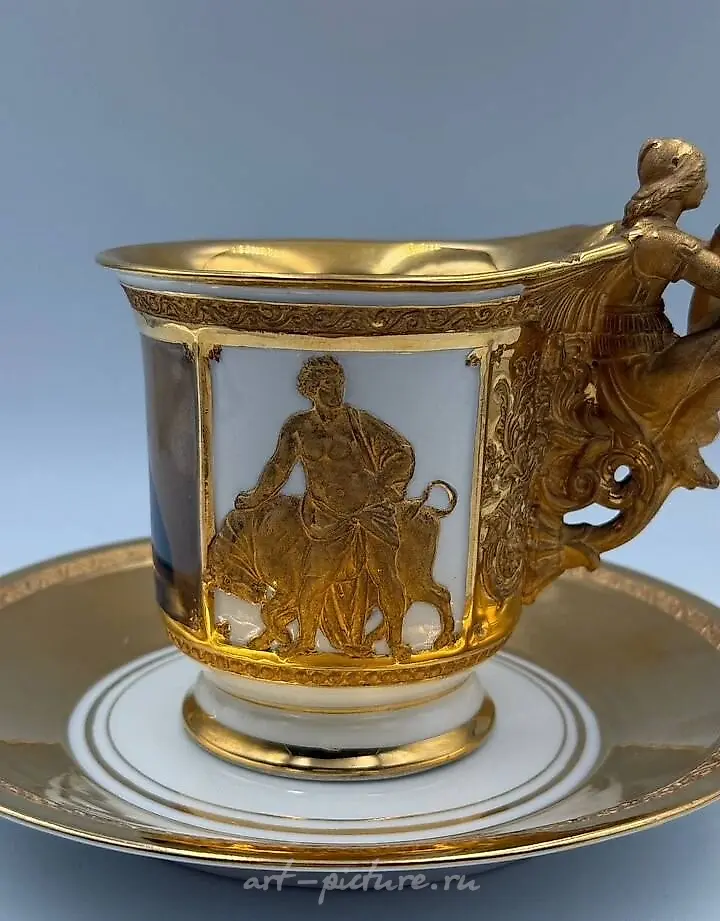
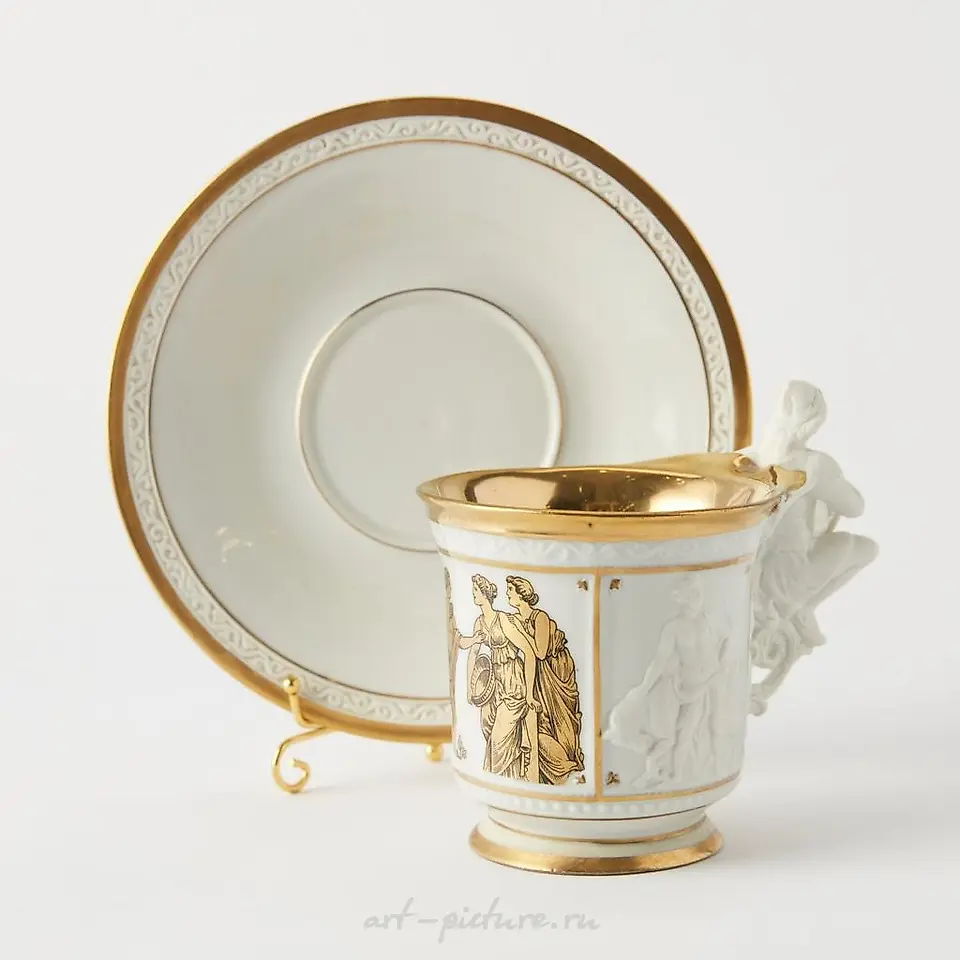
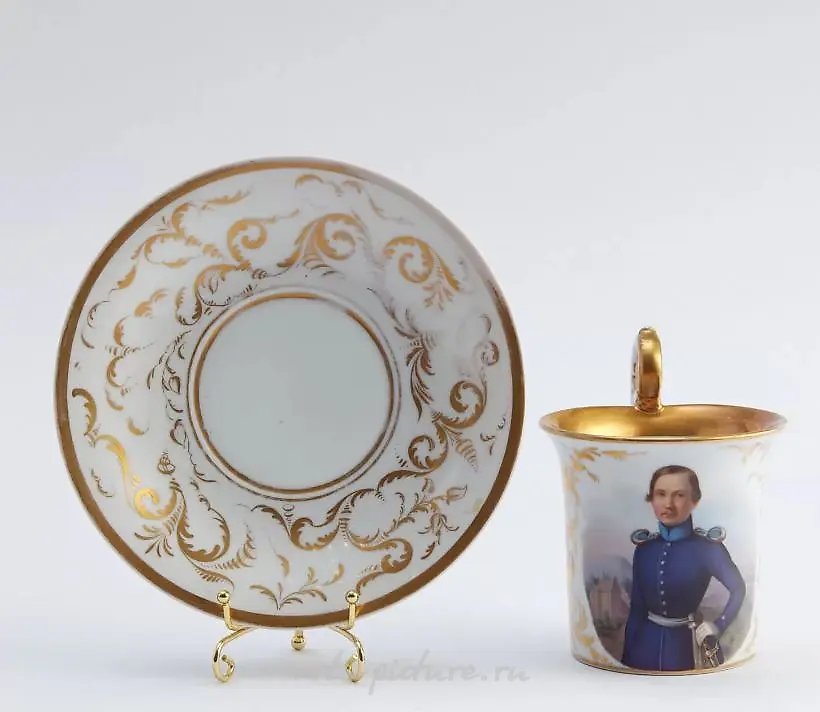
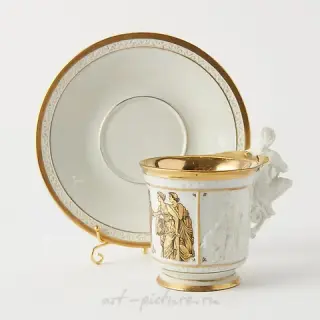
A cup with saucer featuring a portrait of Frederick the Great in a parade uniform with orders and a figural handle in the form of Archangel Michael. The cup was painted at the KPM manufactory in 1870. It appears the pair was produced as a gift for noble aristocrats. The cup is adorned with relief-molded mythological Greek scenes depicting two labors of Hercules: "Hercules and the Nemean Lion" and "Hercules and the Cretan Bull." The figural handle of the cup depicts Archangel Michael holding a shield. There is abundant gilding, punch-dot gilding, and a gold beaded trim on the lower part of the base.

Frederick II, or Frederick the Great, also known by the nickname "Old Fritz" (Ger. Friedrich II., Friedrich der Große, Alter Fritz; 24 January 1712, Berlin — 17 August 1786, Sanssouci, Potsdam) — King of Prussia from 1740. The magnificent cup and saucer are unique in that they bear a portrait of the King of Prussia Frederick II the Great, also nicknamed "Old Fritz." The portrait is enhanced with rich gold paste. A worthy acquisition for your collection!

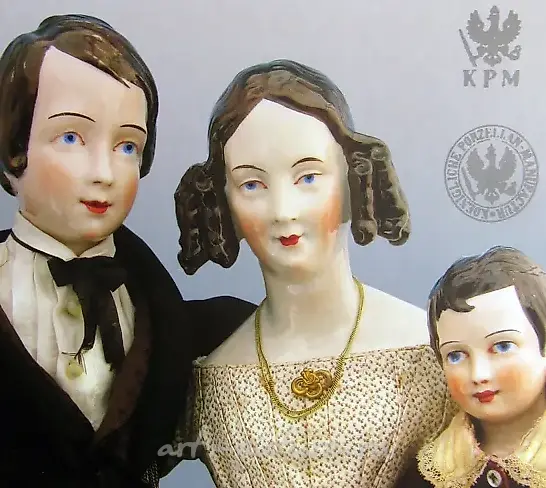
Frederick II the Great (Ger. Friedrich II der Große). Born 24 January 1712 in Berlin — died 17 August 1786 in Sanssouci, Potsdam. King of Prussia (1740–1786). Nickname — "Old Fritz." One of his notable reforms was the abolition of censorship. He made it clear to his ministers that "Berlin newspaper writers should be allowed unlimited freedom to write about all the capital's news without prior censorship." Frederick insisted that "no obstacles should be placed in the way of interesting newspapers." Deceased censors were generally not replaced — these positions remained vacant during his reign. Under him it became possible for the first time to establish a legal basis for freedom of the press on German soil. Frederick proved himself a patron of the sciences and the arts. In 1742 he established the Royal Opera, for which the architect Knobelsdorff built the building. After the Gotschowski factory passed to Frederick II it became known as the Royal Porcelain Manufactory, and its mark from the very beginning was the royal scepter. After the Gotschowski factory passed to Frederick II it became known as the Royal Porcelain Manufactory, and its mark from the very beginning was the royal scepter. Portrait medallions that adorned Berlin Empire (Empire-style) tableware and cups are for the most part works by the sculptor Leonard Posh. The Biedermeier style, a reaction to cold classicism, reflected the bourgeois love of comfort and coziness. Products of the Berlin manufactory in this style enjoyed wide sales. These were mass-produced items, but with a certain specific charm of that era.

Lot No. 5576
395 000.00
Login

for making a purchase

WalletSale
Characteristics
# tags

Lot location LocationMoscow ( 77 )

Send a message Login

A comment

Opportunities for everyone Login

Payment by agreement

Please check the payment methods with the seller when making a purchase

Delivery by agreement

Check the delivery methods with the seller when making a purchase

Approximate prices in Russia

от 180 ₽
от 180 ₽
от 180 ₽
Chevron Up