
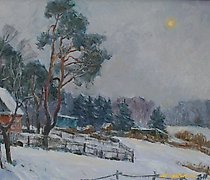
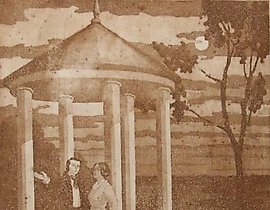
"In the park. T.G. Shevchenko in Sedniv (from the series)"
Lot No. 1995
Characteristics
# tagsLot location Moscow ( 77 )
Send a message Login
Opportunities for everyone Login
Payment by agreement
Please check the payment methods with the seller when making a purchase
Delivery by agreement
Check the delivery methods with the seller when making a purchase
Approximate prices in Russia

от 180 ₽

от 180 ₽

от 180 ₽
Zhukov Vladimir Korneevich
Additional lots
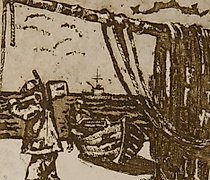
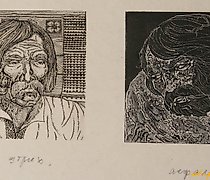
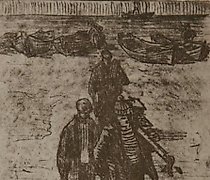
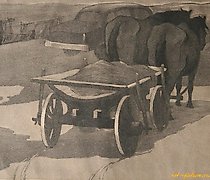
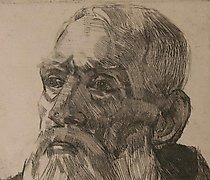
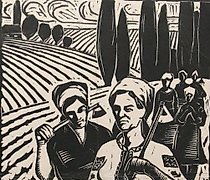
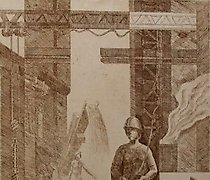
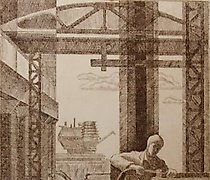
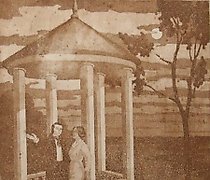
Zhukov Vladimir Korneevich
Description
painter, graphic artist 1938 Was born in Smolensk. 1957-1960 Student of the Vitebsk Art and Graphic Pedagogical College. 1968 Graduated from the Kiev State Art Institute. 1968-1972 Teacher of drawing, painting, Berdyansk Pedagogical Institute. 1997-1998 Teacher of painting, drawing College at the Smolensk State Institute of Arts. 1997 in creative work. 2004 Elected to the audit Commission of the Smolensk Organization of the Union of Artists of Russia. PARTICIPATION IN EXHIBITIONS Since 1972, participant of regional art exhibitions in Zaporozhye, then in Berdyansk, since 1997, participant of regional art exhibitions in Smolensk. 1984 Solo exhibition in Berdyansk. VII Republican exhibition of drawing, Kiev. Republican exhibition "Earth and people", Kiev. All-Union exhibition "Earth and People", Moscow. 1985 Republican exhibition "40 years of liberation of Ukraine from Nazi invaders", Kiev. Republican exhibition "50 years of the Stakhanov movement". city of Kiev. 1996 Group exhibition "People and the Sea". city of Kiev. 1987 Republican exhibition "Artistic Ukraine", Kiev. 1988 Solo exhibition in Berdyansk. 1990 Republican exhibition "Picturesque Ukraine". city of Kiev. 1998 Personal exhibition, Smolensk. Exhibition of Smolensk artists in Safonovo. Exhibition of Smolensk artists in Roslavl. 2001 Foreign exhibition in Vitebsk (Republic of Belarus). 2002 International Exhibition "Watercolor Sabrina", Vitebsk (Republic of Belarus). Interregional exhibition "Young Russia", Bryansk. 2003 Foreign exhibition of Smolensk artists in Orsha (Republic of Belarus). 2004 Foreign exhibition of Smolensk artists in Orsha (Republic of Belarus). 2007 Solo exhibition, Roslavl. 2008 Solo exhibition, Smolensk (DH). International exhibition "From Marc Chagall to the present day", Smolensk. 2009 Personal exhibition in the Administration of the Smolensk region, Smolensk. Exhibition of works by Smolensk artists in Moscow (State Hall – Museum "Heritage"). 2010 Exhibition of works by Smolensk artists in Moscow (Exhibition Hall of the Union of Artists of Russia). 2011 International Exhibition "Gagarin Spring", Gagarin. All-Russian exhibition "Science and Space in the service of peace", Ryazan. Exhibition "Artists of Smolensk", Ivanovo. The artist's works are kept in the Directorate of Exhibitions in Kiev, the 1st private gallery in Kiev, in the Berdyansk Art Museum named after I. Brodsky, the Rostov Historical Museum, the Historical Museum of Primorsk, Zaporozhye region, in the historical museum of Berdyansk, are in private collections in Russia, Canada, Israel, USA, Germany, Bulgaria, Poland, Ukraine. A personal exhibition of Smolensk artist Vladimir Korneevich Zhukov has opened in our exhibition hall. He belongs to the generation whose childhood was scorched by the war. He was born in the village of Koshino near Smolensk in 1938. He was only 3 years old when the war began. But the memory has preserved memories of how, trying to evacuate, the family reached Yelnya, how they then returned home, how they hid from bombing and shelling in the potholes from explosions, hoping that "a shell does not fall twice in one place." Maybe that's why the theme of war is one of the most important in his work. And the works presented at the exhibition "Funeral", "Forty-first year", "Victory Day" are proof of that. After the war, the Zhukovs repeatedly changed their place of residence. Father, as a good agronomist, was often transferred from one region of the Smolensk region to another. So in 1954, the family ended up in the Roslavl district. They lived in Perenka, and Vladimir began to study at Roslavl school No. 6. After her successful graduation, Zhukov went to enter the Vitebsk Art and Graphic College. Zhukov did not have to graduate from it - he was called up to serve in the army. After being demobilized, Vladimir decided to get a higher art education. To this end, he became a student of the Kiev State Art Institute. His teachers were such famous masters of painting and graphics as L.Vitkovsky, V. Kostetsky, T.Yablonskaya. In 1968, after graduating from the Institute, V. Zhukov went on assignment to Berdyansk, where he lived for almost 30 years. He taught drawing and painting at the Berdyansk Pedagogical Institute, and also worked a lot in the field of monumental and decorative art. His paintings and wood carvings adorn many buildings of Berdyansk; the interiors of the Aeroflot agency, the technical school of viticulture and winemaking, culinary and medical schools. Since 1987, V. Zhukov has been a member of the Union of Artists of the USSR, since 1991 – a member of the Union of Artists of Russia. In 1996, the artist returned to Smolensk, where he taught painting and drawing at the college at the Smolensk State Institute of Arts. Vladimir Zhukov's creative interests are very diverse. In addition to monumental and easel painting and graphics, he is engaged in book illustration, carving, medal art. Our exhibition presents paintings and graphic works of the artist. At first glance at Zhukov's work, one feels that he has a good school behind him. He is fluent in drawing and composition, feels the color well. Admires the variety of genres presented on this relatively small (about 50 works) the exhibition and the number of techniques and techniques that the artist used when writing them. It's hard to believe that these diverse, dissimilar works are made by the same author. Usually artists have their favorite genres, and Zhukov paints portraits, landscapes, and still lifes, is engaged in thematic and historical painting. As for technology, he is subject to both painting and graphics. The mere enumeration of the techniques in which the master works is impressive: oil painting and watercolor, sanguine and sepia, pastel and tempera, monotype and etching. Moreover, this rich arsenal is not an end in itself for the artist, but each time the most successful way to solve the artistic tasks that the author sets for himself. And, although Vladimir Korneevich owns all the techniques equally well, it is felt from his works that he loves watercolors most of all. His watercolor works are distinguished by beauty and freshness and are not at all similar to one another. If in some works watercolor is light, light, airy (series "Trakai", "Village bathhouse"), then in others it can be dense almost like oil painting, well conveying the materiality of objects, their texture ("Village forge", "Still life with dry flowers", "Still life with an old box"). Masterly mastery of watercolor technique allows the artist to make even very stingy in color, almost monochrome works elegant and beautiful. This is, first of all, a brilliant still life "Old Samovars", written easily and freely, in one touch, but at the same time well conveying the cold sheen of metal and the weight of the objects depicted. Sometimes Zhukov combines different writing styles in his works. So in a very exquisite portrait of Romanovskaya, the face, elegant dress, metal jewelry are painted in multi-layered watercolor, and for the background the author uses the technique "a la prima". The artist also works a lot with pastels, which are not particularly popular with modern artists. The technique is complicated, and it is difficult to keep the work. Zhukov's pastel is one of his favorite materials. He uses her expressive means very skillfully. In the series "By the South Sea", some whitishness, characteristic of pastels, was wittily used by Zhukov to convey the bright southern sun, as if whitewashing everything around. And in the series "Evenings of my Childhood", the disturbing reddish color scheme and velvety fluctuation of pastels create a very complex mood; through the haze of memories, the difficult post-war childhood is colored by poetry and light sadness. And, of course, speaking about Zhukov's exhibition, it is impossible not to dwell in more detail on his most interesting series "Scythians. Based on the materials of excavations". Zhukov's interest in the Scythians is not accidental. Not far from Berdyansk, where the artist lived, excavations of Scythian mounds took place. And one day, after seeing the objects excavated by archaeologists, Vladimir Korneevich became interested in Scythian history. He himself went down to the excavations at a depth of 9 meters, talked with historians and archaeologists, read all the literature available about the Scythians. The result of this hobby was the series presented at the exhibition. It consists of 7 works united by a common format. In addition, each work has an image of an object from the Scythian mounds. And the action taking place in the picture, as it were, beats these objects. The works depict various scenes from the life of this nomadic people. We see Scythian warriors, hunters and artisans, the funeral of a Scythian leader, as well as scenes reflecting the customs and beliefs of the Scythians ("Initiation into the mysteries of life and death", "The graves of ancestors are sacred"). The series is complemented by the painting "The Scythian Queen". The series is of interest not only for lovers of fine art, but also for those who are interested in history, since the artist relied on a serious scientific base when creating it. On October 24, Vladimir Korneevich Zhukov was a guest of our exhibition hall. Teachers and students of the children's art school, local artists, representatives of the public and the media came to meet with him. A surprise for the artist was a meeting with his beloved literature teacher Nina Leontievna Dubovitskaya. Vladimir Korneevich talked a lot about himself and his teachers, then answered questions from the audience. He turned out to be not only a wonderful artist, but also an interesting person.
Similar lots
specially selected lots
Ты поднимаешь очень интересные аспекты картины, и я согласен, что за её уникальным стилем и атмосферой скрыто много глубины. Действительно, фигура мужчины в костюме 19 века не просто обозначает время, в котором он живет. Она символизирует целую эпоху, наполненную определенными идеями о жизни, любви и отношении к миру. Это время, когда люди имели больше времени для созерцания и размышлений, что прекрасно отображается в его задумчивом выражении.
Ты совершенно прав, что выбор деревянной лавки и элементы мебели создают дополнительно тепло и уют. К тому же, эти детали действительно добавляют особенности интерьеру и культуре того времени. Лавка, возможно, напоминает нам о простых радостях жизни, о том, как важно уметь наслаждаться моментом.
По поводу деревьев я не могу не согласиться с твоей точкой зрения: они в этом произведении играют действительно ключевую роль. Их величие и мощь подчеркивают масштаб человеческой жизни, кроме того, они олицетворяют постоянство и стойкость природы. Как ты сказал, они - стражи этого уединенного уголка, и это символичное выражение делает эту часть композиции особенно глубокой. В деревьях мы видим не только красоту, но и мудрость, накопленную годами.
Что касается женщины, её образ действительно воспринимается как метафора. Она уходит по тропинке, и это движение может означать не только физическое удаление, но и внутренние размышления. Интересно, что смягчённые линии её фигуры создают ассоциации с неуловимыми мыслями и чувствами, которые часто имеют место в повседневной жизни. Могут ли эти персонажи быть связанными, остается предметом размышлений для зрителя. Они оба, действуя независимо, создают общую атмосферу гармонии и спокойствия, как ты верно отметил.
Эта картина действительно заставляет нас задуматься о времени, о ценностях и о том, как важно уметь находить баланс между внутренним миром и окружающей средой. Являясь искусствоведом, я бы добавил, что такие произведения часто служат не просто искусством, но и "окном" в психологию общества того времени. Они отражают не только личные переживания авторов, но и культурные контексты, в которых они существовали.
Ты поднимаешь очень важный вопрос о сознательности и внимательности к моментам жизни, и я тоже убежден, что искусство побуждает нас к внутренним размышлениям и помогает сохранять гармонию. Лично мне всегда интересен вопрос, как художники находят вдохновение в повседневных моментах. Что если бы мы попытались увидеть каждый день как произведение искусства? Это сделало бы наше восприятие мира гораздо более полным и насыщенным. Как ты считаешь, возможно ли это?
Ах, как прекрасно, что ты поделился своими впечатлениями о картине! Твои слова, наполненные теплотой и глубокими размышлениями, действительно переносят меня в тот космический мир, который вскрывается при взгляде на это произведение искусства. Я, безусловно, разделяю твою любовь к эстетике 19 века. В этом времени есть что-то удивительное: от утонченных костюмов мужчин до нежных тканей женских платьев, каждое из которых словно шепчет историю, жаждущую быть услышанной.
Мужчина на лавке, задумчиво погруженный в свои мысли, вызывает в воображении образы безмятежных полей и звуков прошедших дней. Он, подобно стражу времени, рассказывает о глубоком смысле жизни и радеет о том, что мы все, возможно, прячем в своих сердцах. Какое обаяние передать эту задумчивость! И действительно, удивительно, как каждая деталь, каждая складка и тень на его костюме погружают нас в атмосферу романтики и ностальгии.
Деревья – величественные стражи этого уединенного уголка. Я всегда был очарован тем, как природа может стать не просто фоном, но истинным соучастником в создании произведений искусства. Твоя мысль о том, что они хранители тайн, очень трогает. Эти могучие деревья однозначно несут в себе историю – каждый год их существования на этой земле наполнен чудесами больших и малых свершений.
Что касается женщины в длинном платье, её мягкая размытость на фоне природы может быть понята как метафора; возможно, она отражает нас – всех тех, кто, погруж
Согласен, в каждой детали этого произведения скрыты целые миры. Природа действительно становится живым воплощением истории, а задумчивость мужчины на лавке прекрасно передаёт ту глубокую ностальгию, которую мы все иногда чувствуем. И образ женщины в длинном платье, словно символизирующей нашу хрупкость перед величием жизни, делает эту картину ещё более многослойной.
Мне очень нравится эта картина, и я с удовольствием поделюсь своими впечатлениями! Когда я впервые увидел её, она мгновенно привлекла моё внимание своим уникальным стилем и атмосферой. В центре композиции сидит мужчина в костюме 19 века. Удивительно, как такие детали, как его одежда, создают ощущение времени, в котором он живет. Этот стиль, я бы сказал, really retro, так как прекрасно передает дух той эпохи.
Мужчина сидит на деревянной лавке, чем-то напоминающий мне старинный мебельный стиль, который был популярен в те времена. Да, я знаю, что это может показаться очевидным, но именно в этом и заключается красота картины – она заставляет нас задуматься о жизни человека того времени. Он кажется таким задумчивым, как будто ловит мысли о чем-то важном… Возможно, он ждёт кого-то или просто наслаждается моментом покоя.
А за его спиной – два огромных дерева. Они выглядят такими величественными и мощными! Я всегда считал, что деревья имеют особое значение в искусстве, ведь они символизируют жизнь, рост и перемены. Вполне возможно, что они стоят здесь на протяжении многих лет, как стражи этого уединённого уголка природы, и создают притягательную атмосферу вокруг него. Это великолепное ощущение спокойствия просто невозможно не заметить!
Что касается женщины в длинном платье, она тоже добавляет интересный элемент в композицию. Она шаг за шагом уходит по извилистой тропинке. Я вижу, что её фигура немного размыта на фоне природы, и это достаточно символично, если задуматься: она как бы уходит в свои мысли, а природа продолжает сохранять свои тайны. Это так романтично и трогательно!
Листва деревьев так детализирована, что я даже представляю, как ветер треплет её на солнце. В этом есть что-то особенное – атмосфера, создающая гармонию как между людьми, так и с природой. Я уверен, что художник хотел передать идею умиротворения и гармонии в этом изображении. Как будто он приглашает нас присоединиться к этому уединённому моменту и насладиться красотой вокруг.
В целом, эта картина несёт в себе много эмоций и устремлений, и она, безусловно, стала бы отличным украшением для любого интерьера. Я, конечно, не эксперт по искусству, но мне кажется, что такие картины способны тронуть сердце каждого, кто их увидит. Они заставляют нас остановиться, задуматься и просто насладиться мгновением.
Я обсуждаю эту работу, потому что она вызывает во мне много размышлений о времени, о жизни, о том, как важно ценить спокойствие и гармонию. Это как будто окно в другое время и пространство, и всегда здорово возвращаться к этим мыслям, не правда ли? Давайте поговорим о том, что вы думаете об этой картине, и о том, как она вас вдохновляет!
Что, по вашему мнению, говорит о жизни человека 19 века образ мужчины на скамейке, погружённого в раздумья, и какую роль в этой сцене играют массивные деревья за его спиной? Не кажется ли вам, что в этом изображении скрыта глубокая идея уединения и гармонии с природой, которая может вдохновить нас на переосмысление современных реалий?
Ну, смотри, образ мужчины на скамейке, который задумался, явно показывает, что в 19 веке люди были более погружены в свои мысли и переживания. Когда смотришь на него, чувствуешь, что он не просто сидит, а как будто ищет смысл жизни.
А эти огромные деревья за спиной – это, конечно, символы стабильности и природы. Они создают атмосферу, в которой человек может уединиться и подумать. Кажется, что природа и одиночество могут помочь ему разобраться в себе. Это все об идее гармонии с природой, что сейчас, возможно, звучит немного утопично, но стоит задуматься.
Нам бы тоже не мешало иногда отдохнуть от суеты и, может, посидеть на скамейке в парке. Кто знает, какие мысли придут?