
High Relief
A high relief that protrudes from the plane by more than half of its volume.
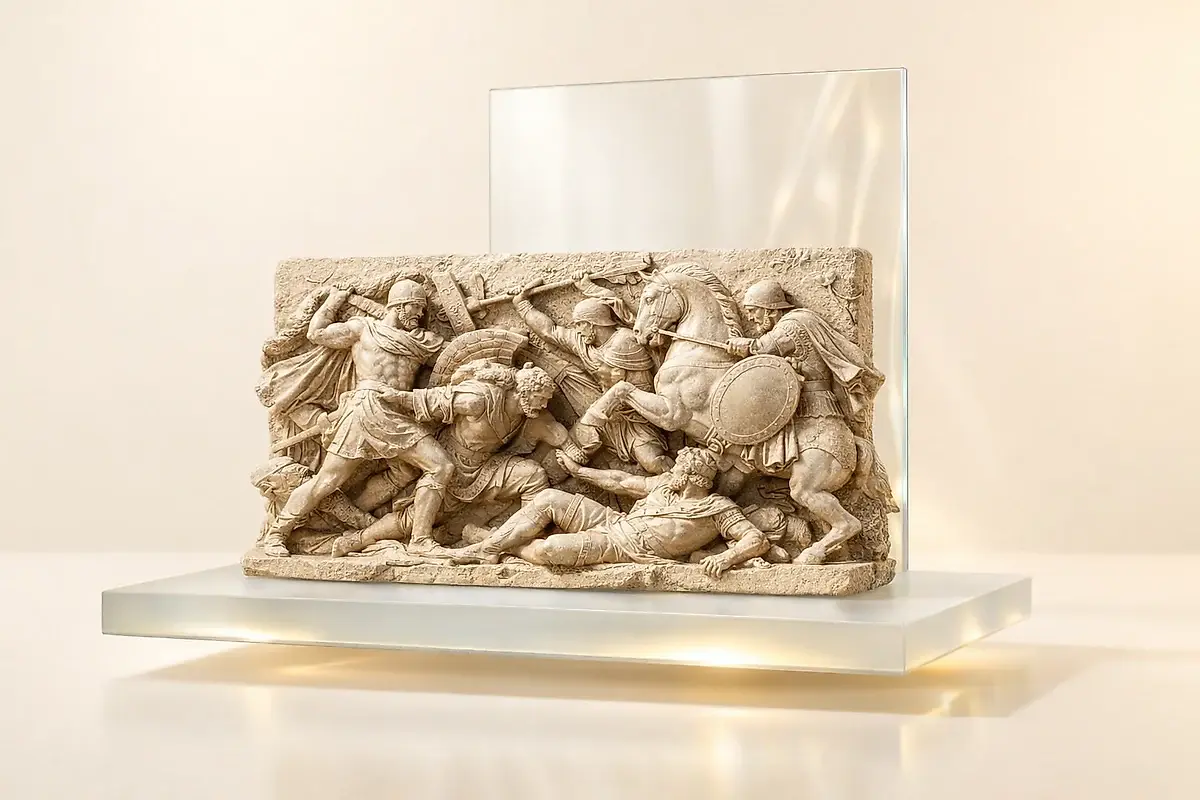
High relief is a type of sculptural relief in which the image projects from the background plane by more than half of its volume. Unlike bas-relief, where figures are only slightly raised, high relief approaches freestanding sculpture, often having parts that are completely detached from the background.
High reliefs were used in antiquity, for example, on the famous Pergamon Altar. During the Renaissance and Baroque periods, masters used it to create dynamic compositions with deep shadows, which enhanced the dramatic effect.
Incidentally, high relief is often used on monuments and triumphal arches, where it allows the rendering of complex multi-figure scenes with a strong plastic accent.