
Artistic cast iron
Decorative technique for making artistic cast iron products
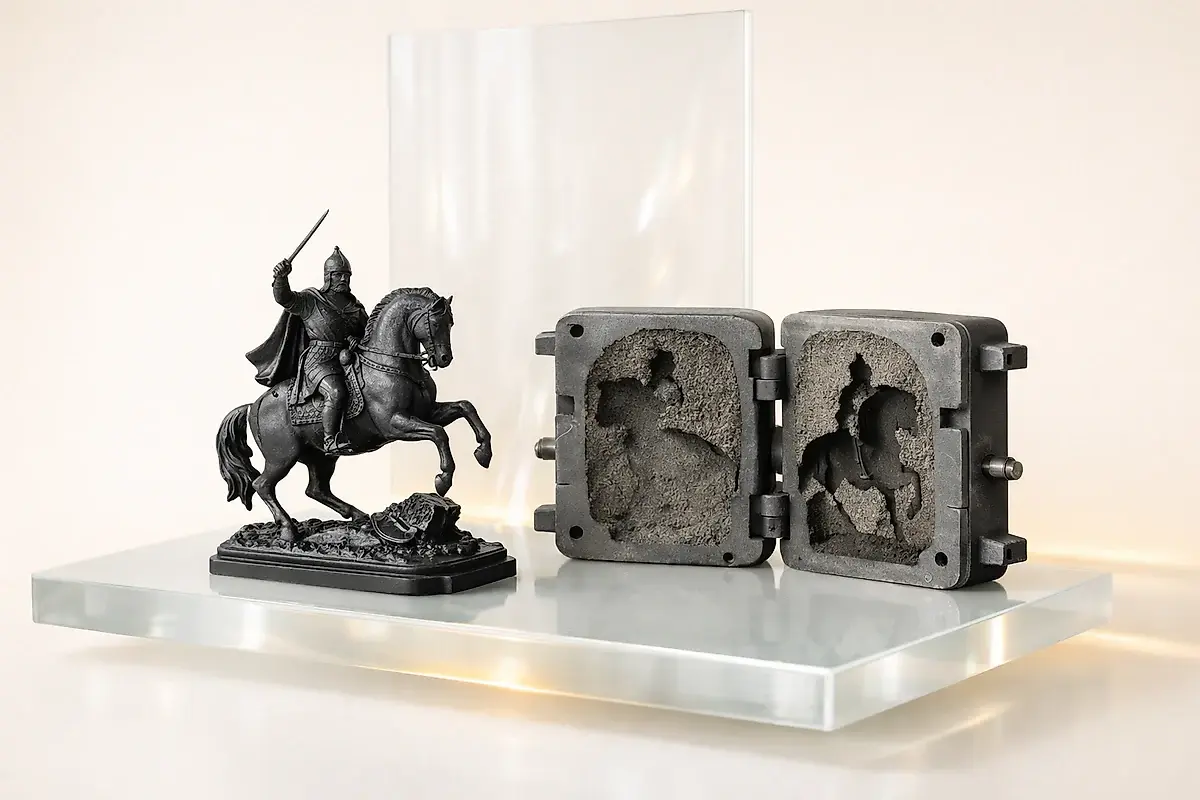
Cast iron casting appeared in the 18th century and quickly became a fashionable trend among the decorative and applied arts of Europe and Russia. Cast iron figurines, openwork gratings, vases, and snuff boxes from Kasli and Zlatoust gained particular popularity. The castings were made in collapsible sand molds, finished by hand with files, and even partially painted.
The main value lies in high-precision detailing and artistic expressiveness: thanks to the unique properties of cast iron, craftsmen achieved fine plasticity. Museum exhibits are not afraid of cast iron — it is durable, although it is susceptible to corrosion.
Fun fact: at the 1900 Paris World's Fair, Kasli cast iron tiles were even mistaken for bronze and awarded the Grand Prix!