
Japonisme
A fashionable European movement inspired by Japanese art.
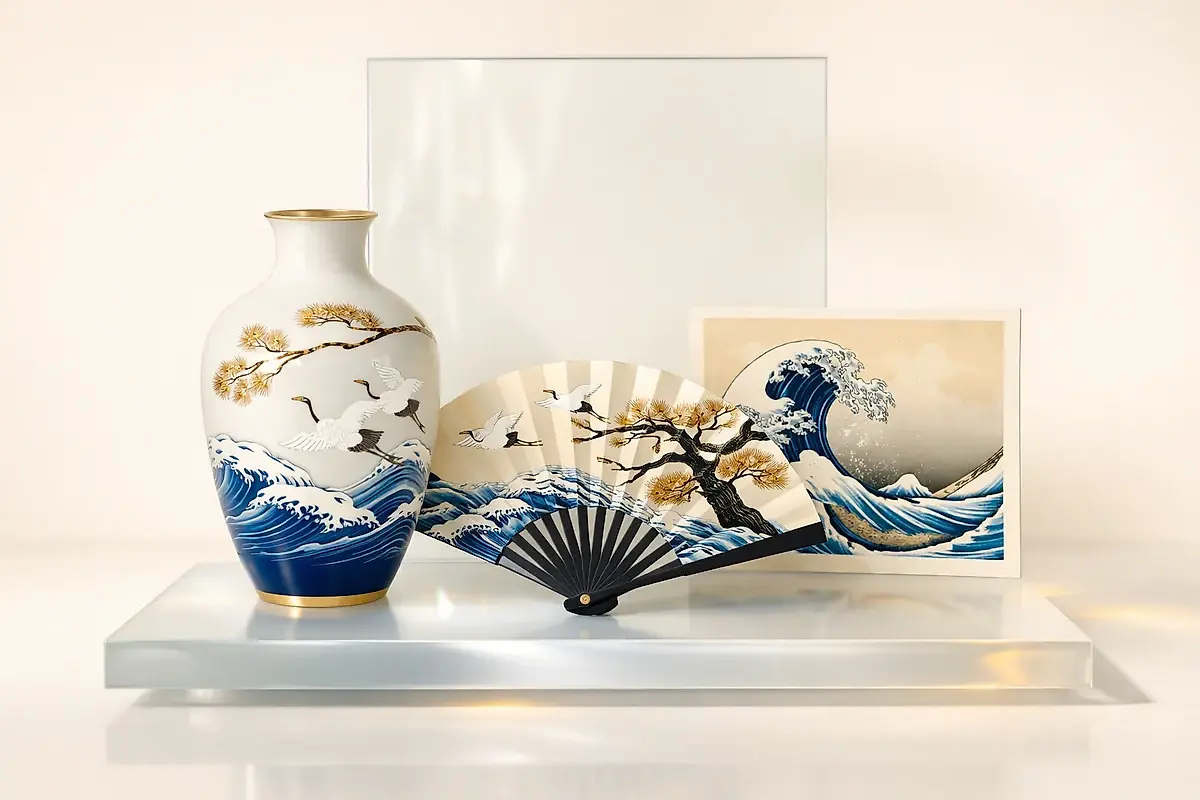
Japonisme is a phenomenon in art and decorative arts that appeared in the second half of the 19th century in Europe. Craftsmen were captivated by Japanese prints, textiles, porcelain, lacquerware, and motifs of nature. Illustrations by Hokusai and Utamaro were sold on par with works by renowned European artists. The sudden popularity also manifested in painting: Van Gogh copied Japanese sheets, Monet decorated the interior of his home in the style of Japanese prints, and Degas used asymmetry and flat color patches. In porcelain and silver, they also imitated combinations of textures and motifs: fans, branches of flowering plum, cranes, waves.
The irony is that in France, admirers of Japanese fashion collected kimonos and fans, unaware that many items were reinterpreted Western copies. Japonisme changed the European perception of space, ornament, color, and form, becoming a bridge between East and West.