
Engobe
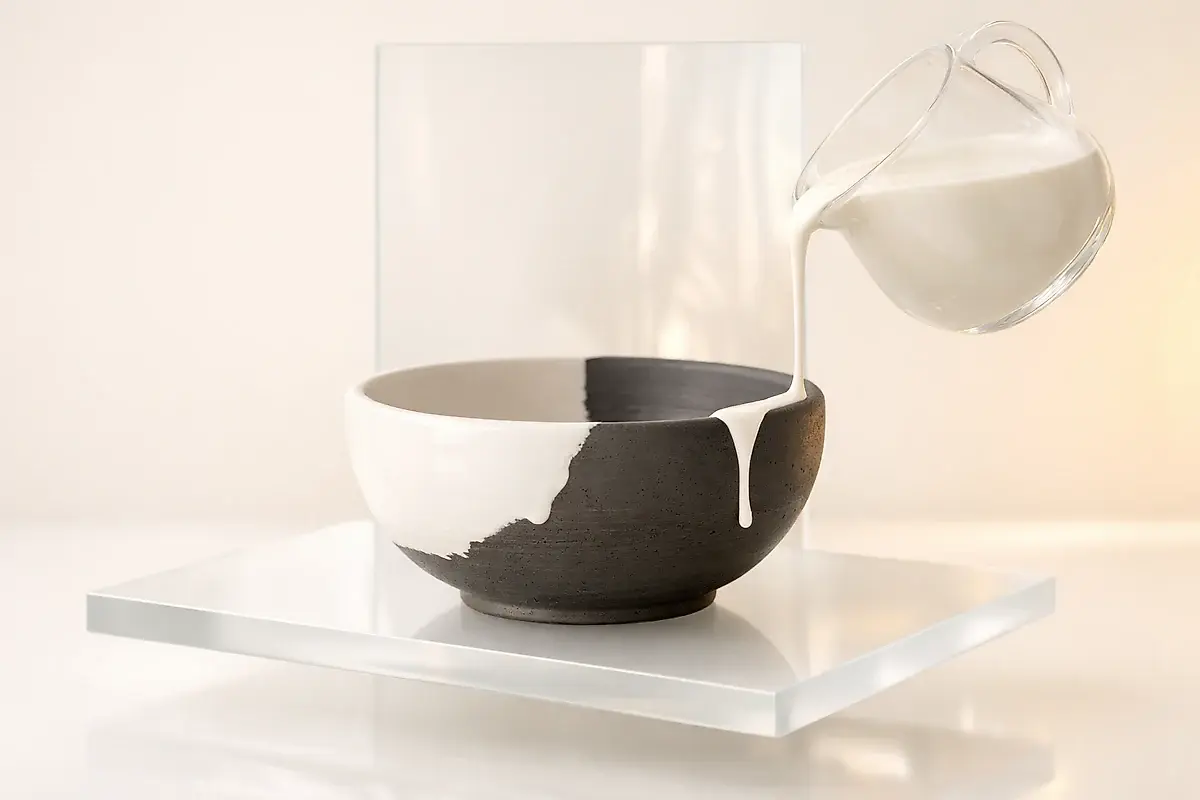
Engobe is a liquid clay applied to the biscuit of a piece before firing. It is used to smooth the surface and add color. The layer thickness varies from a thin veil to a substantial coating. After firing, the piece gets a velvety, matte, or slightly glossy effect.
Engobe is often confused with glaze, but there is a difference: glaze is glassy, while engobe remains softer and 'alive'. Artists like to combine both methods—for example, applying a design with engobe and then partially covering it with glaze. This creates a beautiful interaction between matte and glossy areas. Some craftsmen deliberately scratch into the raw engobe, revealing the clay color beneath—a technique called sgraffito.
In antiquity, engobes were used in Greece and China; today, they are experiencing a rebirth in studio ceramics, where the handmade, 'breathing' quality of the coating is valued.