
Camera obscura
Optical device for projecting an image onto a surface
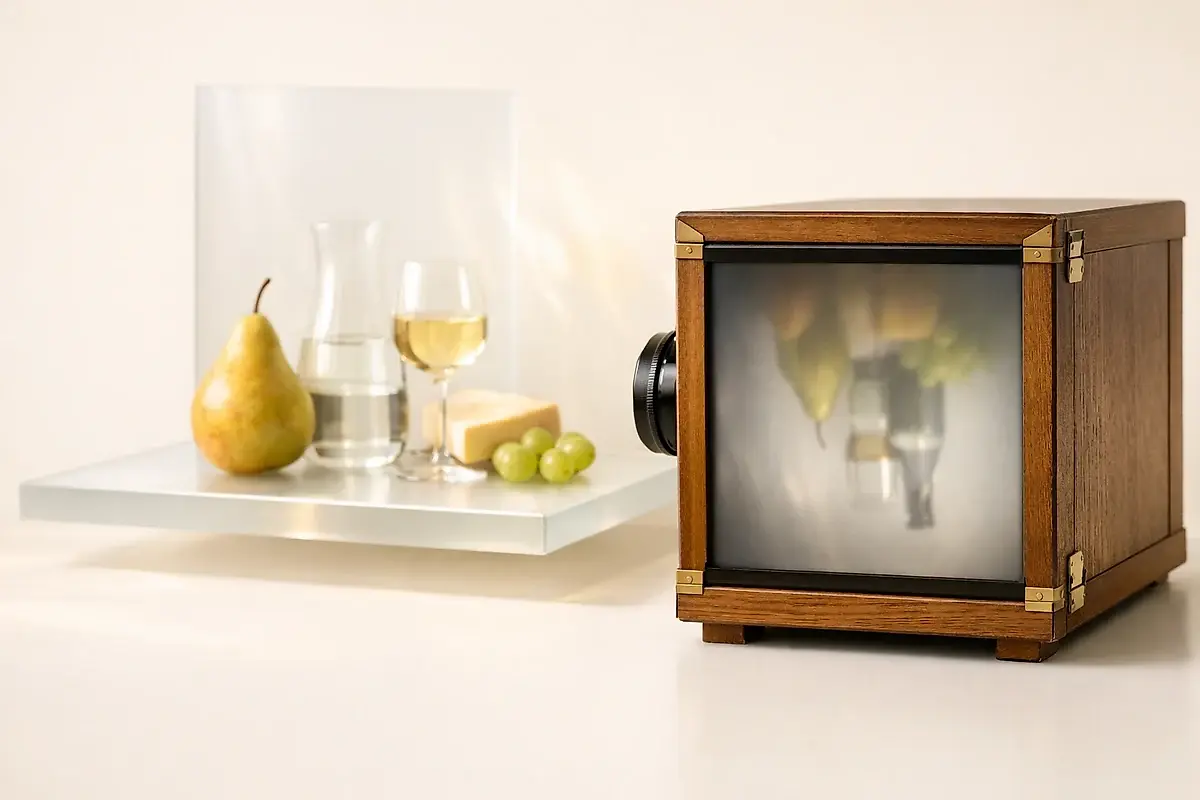
Camera obscura (from Latin camera obscura — 'dark room') is the simplest prototype of a camera, used already in antiquity. The principle of operation: through a small hole in a darkened box or room, the external image is projected onto the opposite wall, but inverted. The effect clearly demonstrates the work of the human eye and the phenomena of perspective.
Such a device was actively used by Renaissance artists — for example, Jan Vermeer and Canaletto — for accurate rendering of perspective and complex architectural details. Legends say that artists sometimes secretly carried heavy boxes to river views to achieve perfect accuracy in depicting water and houses. Today, the camera obscura has become a symbol of the transition from hand techniques to technical means in art, and in many museums one can find laboratories where visitors are offered to assemble their own optical 'dark room'.