
Majolica
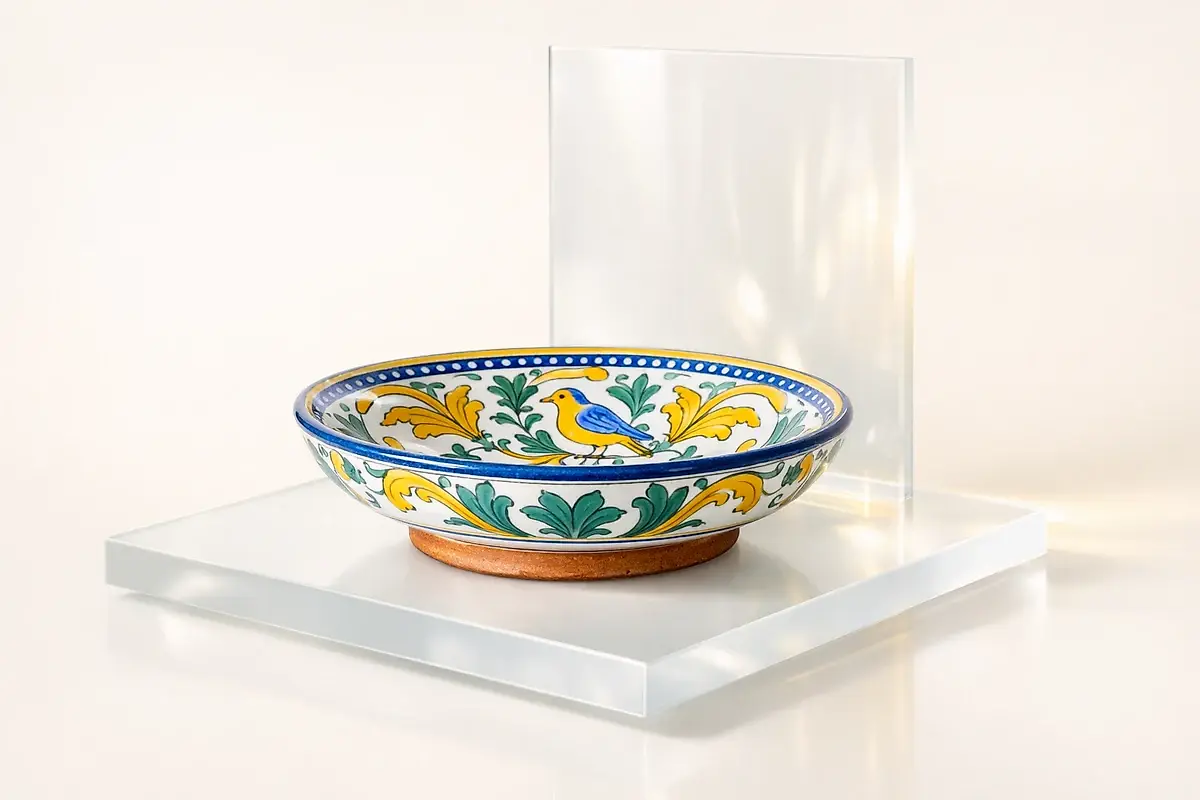
Majolica is a type of ceramics decorated with bright opaque glaze, most often lead-tin. The surface is white, like a canvas, on which colorful designs are applied. The technique originated in Spain and Italy in the 15th century, and its name comes from the island of Majorca, through which Oriental wares reached Europe.
The main feature of majolica is its picturesqueness. The pieces depicted scenes from the Bible, ancient myths, portraits, and ornaments. Italian masters, such as Luca della Robbia, achieved amazing vividness in color.
In Russia, majolica flourishes in the 19th century thanks to the Abramtsevo Circle and Vrubel's workshop—famous tiles and decorative panels adorned facades and interiors. Today, majolica is valued for its warm "handmade" aesthetic and the uniqueness of each piece.