
Smalti mosaic
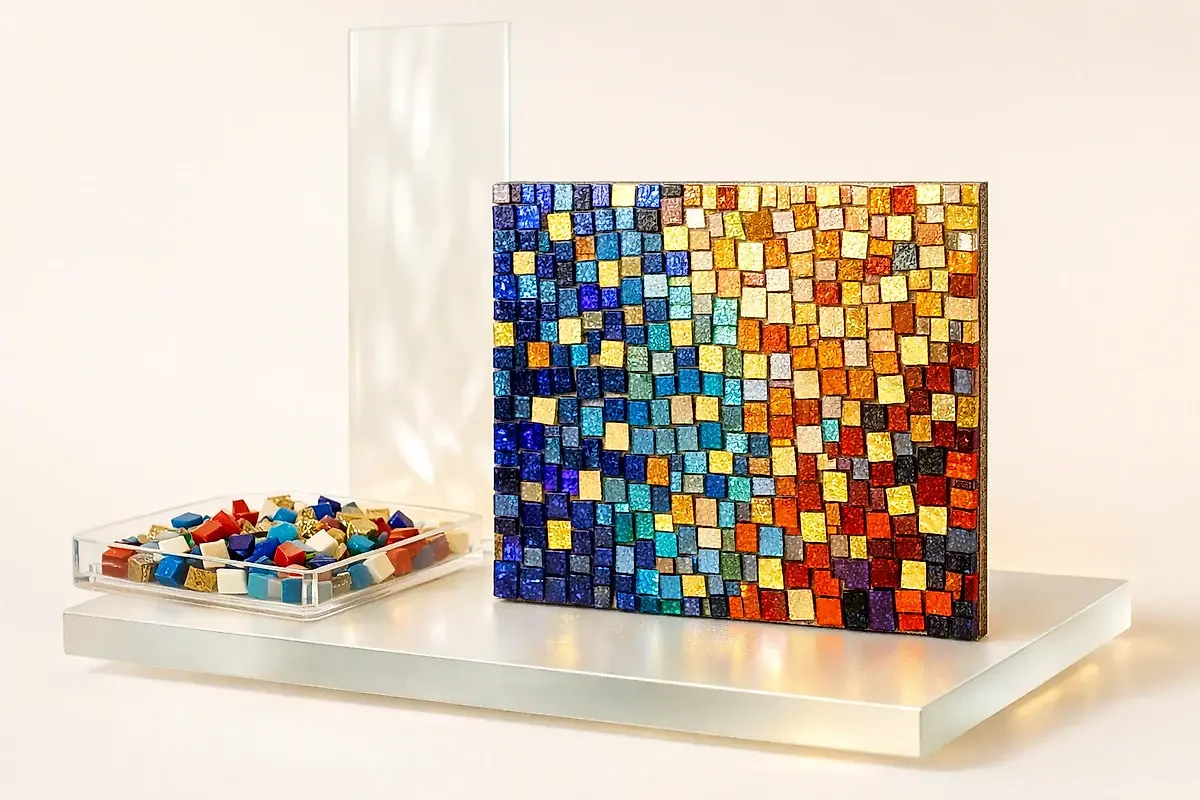
Smalti mosaic is an ancient decorative technique in which an image is created from tiny pieces of colored glass called smalti. These cubes have a special brightness and depth of color, as light does not reflect off them but seems to penetrate inside, creating a glowing effect. The works of Byzantine masters, which adorned the domes of temples and altars from Ravenna to Constantinople, were especially prized.
Smalti is made by hand: molten glass is colored with metal oxides and cut into small fragments. This process produced thousands of shades, from soft turquoise-golden to rich purple.
An important feature of mosaic is its durability. Even after centuries, the colors remain just as vivid. In the 20th century, modernists and monumentalists reinterpreted the technique, using smalti in facade panels and public buildings.