
Golden Ratio
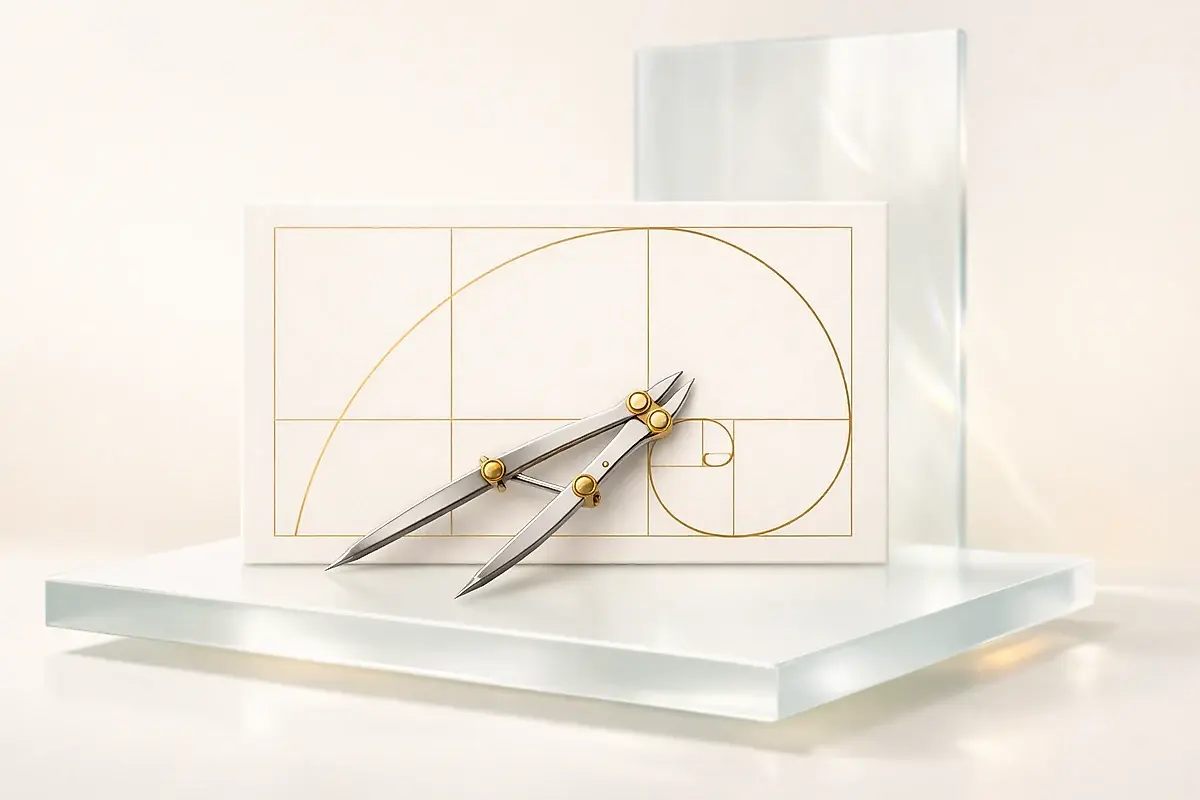
Golden Ratio is a universal principle underlying the harmony of form and composition. Its numerical expression is approximately 1:1.618. Since ancient times, artists, architects, and craftsmen have sought to subordinate lines and planes to this ratio in order to evoke a sense of natural beauty in the viewer.
In painting, the golden ratio helps to build a balanced composition—for example, placing the main object not in the center, but at the “golden point.” In architecture, it appears in the proportions of facades and columns, and in sculpture—in the structure of the body and posture.
Interestingly, Leonardo da Vinci applied this principle in the “Vitruvian Man,” and during the Baroque era it was used even in decorative ornaments. The golden ratio makes a work not merely beautiful, but internally balanced, as if it contains a hidden music of numbers.