
Porcelain with Translucency Effect
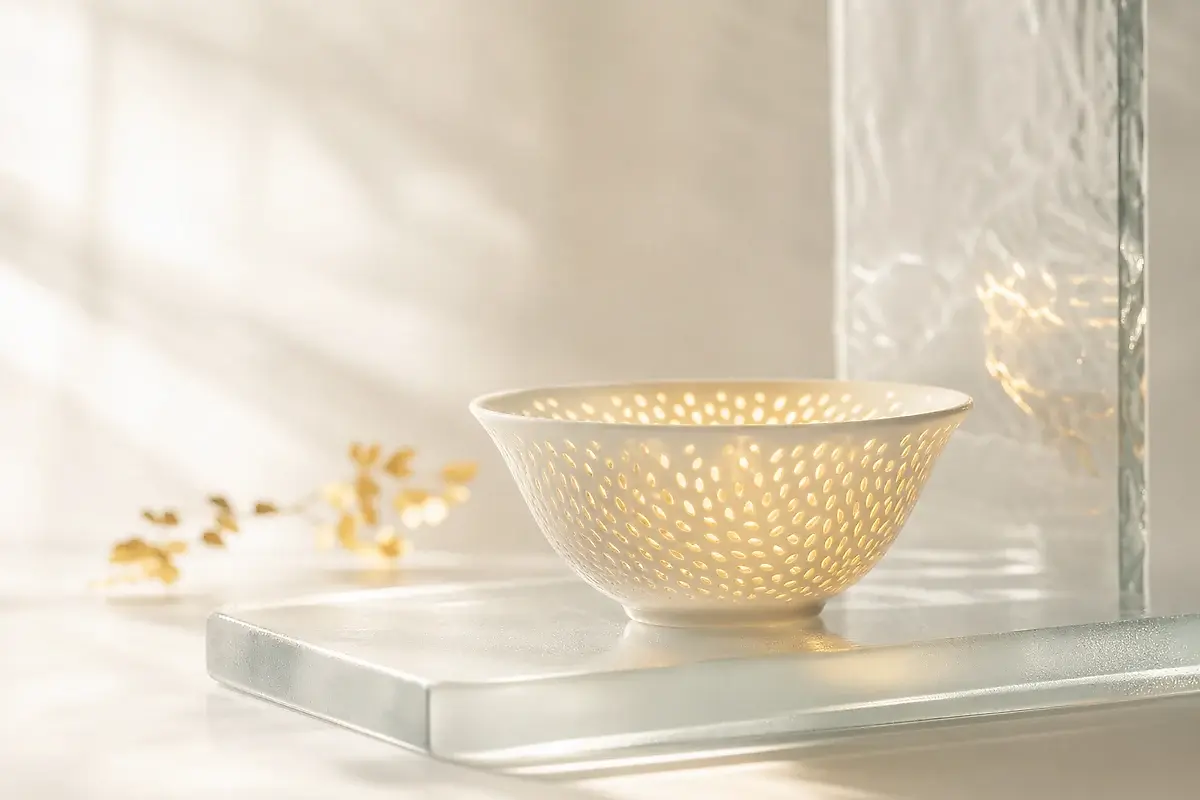
Porcelain with Translucency Effect is a rare type of ceramics where the main value lies not only in durability but also in the special optical property of the material. When thin, it transmits light, creating a feeling of glowing from within. This effect is achieved through an extremely thin wall, a perfectly balanced composition of kaolin, feldspar, and quartz, as well as high firing at temperatures up to 1400°C.
In the 18th century, porcelain was called "white gold" for its translucency — it was considered so precious that in Europe it was often used as currency. Craftsmen strove to achieve an invisible boundary between form and light, creating bowls through which one could read text.
Today, translucent porcelain is used not only in tableware but also in designer lamps and installations — when light passes through the material, it becomes part of the artistic concept.