
Contrast
A technique for creating expressiveness through the opposition of elements
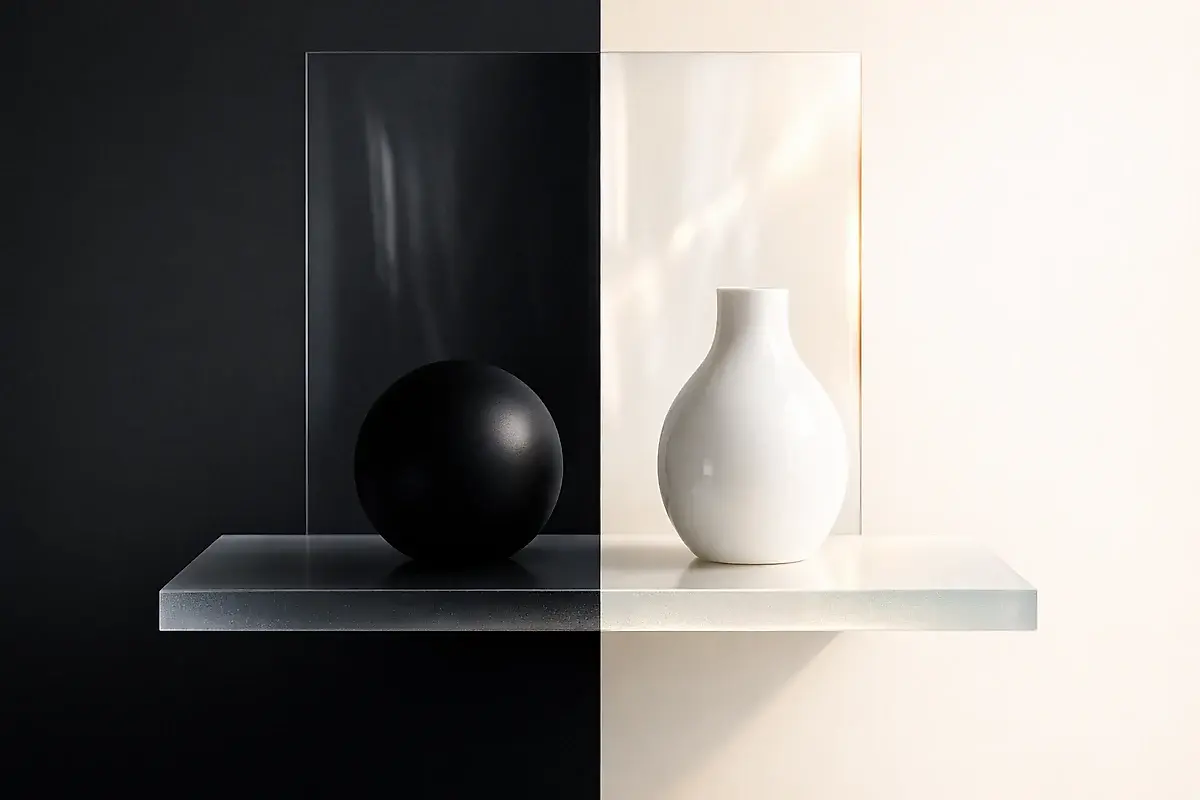
Contrast is a tool with which an artist enhances the expressiveness of a work. Contrast can manifest in colors (bright — dull), forms (circle — square), lines (straight — broken), textures (smooth — rough). Most often, the viewer intuitively reacts to the difference, perceiving the subject more emotionally and vividly.
For example, Caravaggio became almost legendary for his “contrast of light and shadow” — an effective technique that made his paintings “come alive”. In the decorative and applied art of porcelain, patterns were often built precisely on the contrast of shades, so that even in subdued lighting the pattern was readable. Contrast emphasizes important details, helps highlight the main theme of the work.
Sometimes playing with it led to unexpected results: once an 18th-century artist was so carried away by a dark palette that viewers mistook the painting for a fragment of an unfinished canvas. Contrast always makes one stop and look closely.